
Best Espresso Machines
Choosing the best espresso machine isn’t about just pulling a shot—it’s about how much control you want, how involved you want the process to be, and how consistent you need your results.
Some machines focus on convenience. Others prioritize precision. And a few are built for people who want to fully dial in every variable.
The best option isn’t the most expensive—it’s the one that matches how you actually make coffee.
If you're still comparing across different machine categories and brewing styles, reviewing Coffee Makers & Machines helps frame where espresso machines fit in a complete home setup.
Transparency Note: We may earn a commission from qualifying purchases. Product selections are made independently and are not influenced by manufacturers.
Quick Verdict
If you want an all-in-one system that balances performance and ease of use, the Breville Barista Express is the most complete setup.
For more control over grind, tamping, and extraction, the De’Longhi La Specialista gives you a more refined workflow.
If your goal is true espresso with long-term upgrade potential, the Gaggia Classic Pro delivers the highest ceiling.
If you just want fast, consistent coffee with zero effort, the Nespresso Vertuo is the easiest option.
Best Overall Espresso Machine
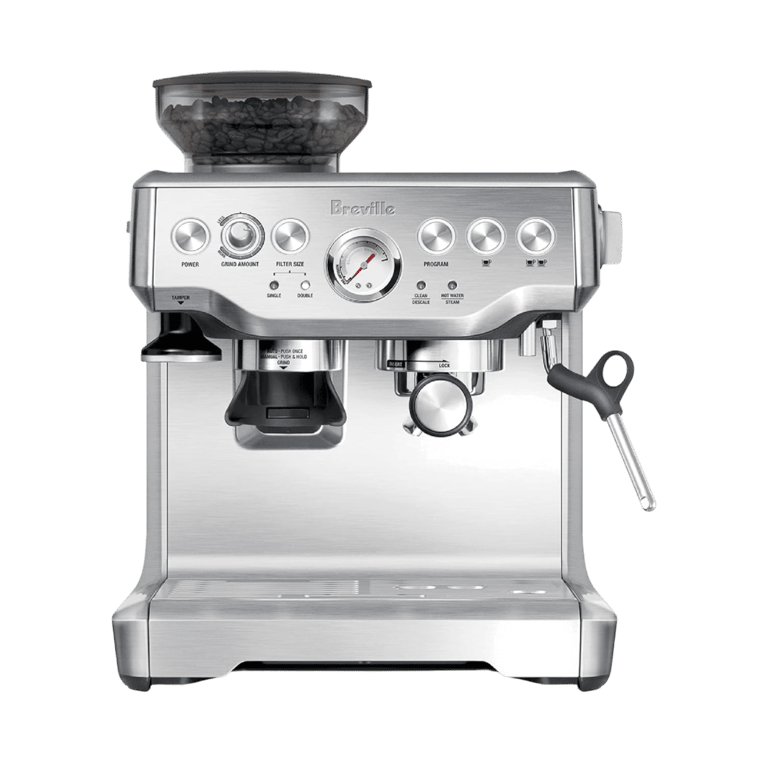
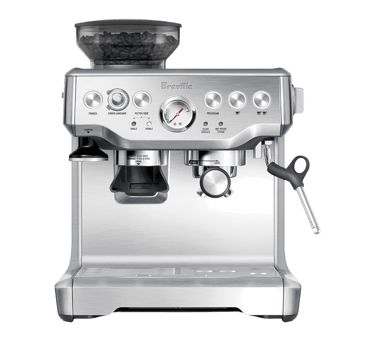
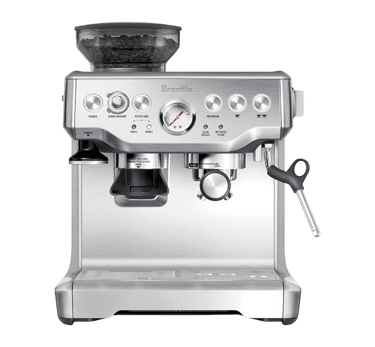
Breville Barista Express BES870XL
The Breville Barista Express is built for people who want real espresso without building a full multi-piece setup.
It combines a burr grinder, dosing system, and espresso machine into one unit, which simplifies the process without removing control completely.
You can grind fresh beans directly into the portafilter, adjust dose and grind size, and manually control extraction and milk steaming.
Specs
• Built-in conical burr grinder
• 15-bar Italian pump
• PID temperature control
• Manual steam wand
Best For
• Beginners who want real espresso
• Users upgrading from pod systems
• Balanced performance and simplicity
Avoid If
• You want separate high-end grinder control
• You plan to fully customize every variable
If you want to understand how machines like this actually function under the hood, How Espresso Machines Work (Beginner Guide) connects the process from grind to extraction.
Breville Barista BES870XL
Best Overall
BUZZ'S TOP PICK
Best for Control and Precision
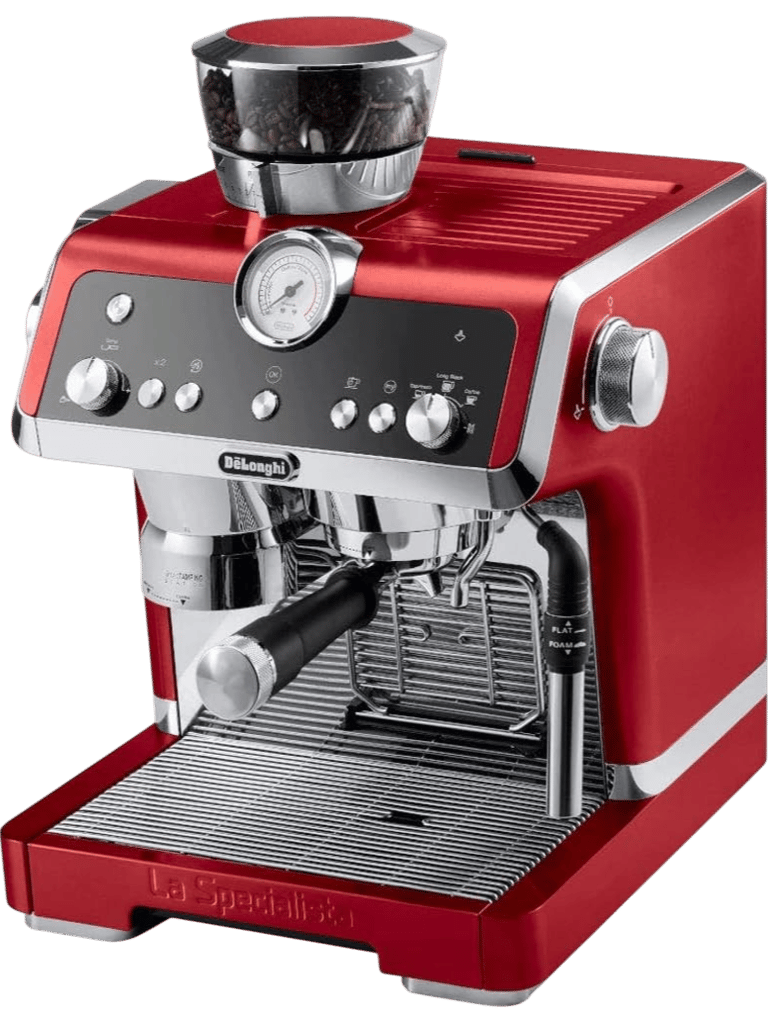
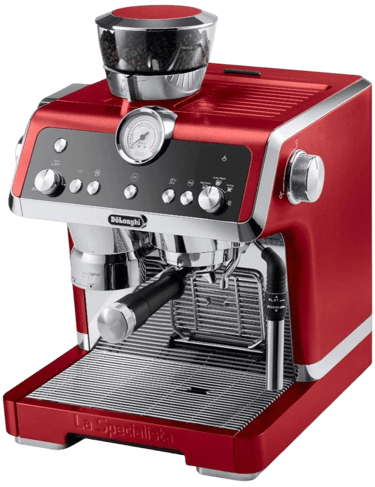
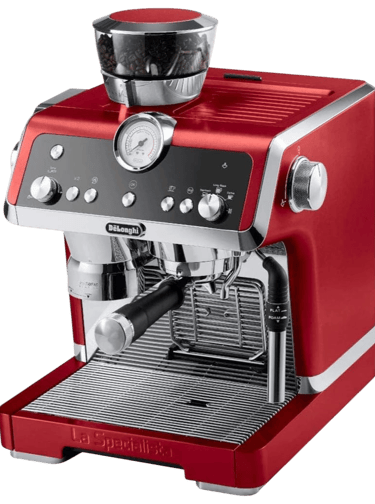
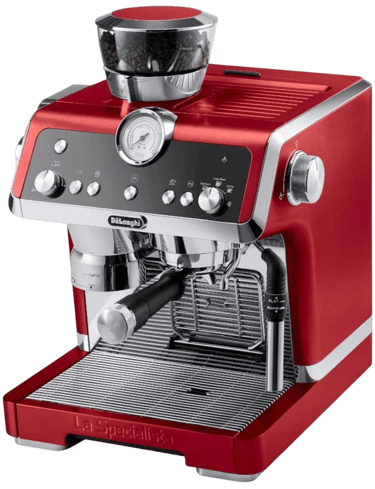
De’Longhi EC9335R La Specialista
The La Specialista is designed for users who want more control over the espresso process without jumping into a fully manual setup.
It separates grinding, dosing, and tamping more clearly, which allows for better consistency and repeatability.
The smart tamping system helps maintain even pressure, while the dual heating system improves temperature stability during brewing and steaming.
Specs
• Built-in grinder with dosing control
• Smart tamping station
• Dual heating system
• Advanced steam wand
Best For
• Intermediate users learning espresso technique
• More precise shot control
• Cleaner, more consistent workflow
Avoid If
• You want a simple one-step process
• You’re not interested in learning espresso variables
This type of workflow-focused design is exactly what separates mid-range machines from higher-end options, something explored in Do Expensive Espresso Machines Actually Make Better Coffee.
De’Longhi La Specialista
Best Control
BUZZ'S TOP PICK
Best for Espresso Enthusiasts
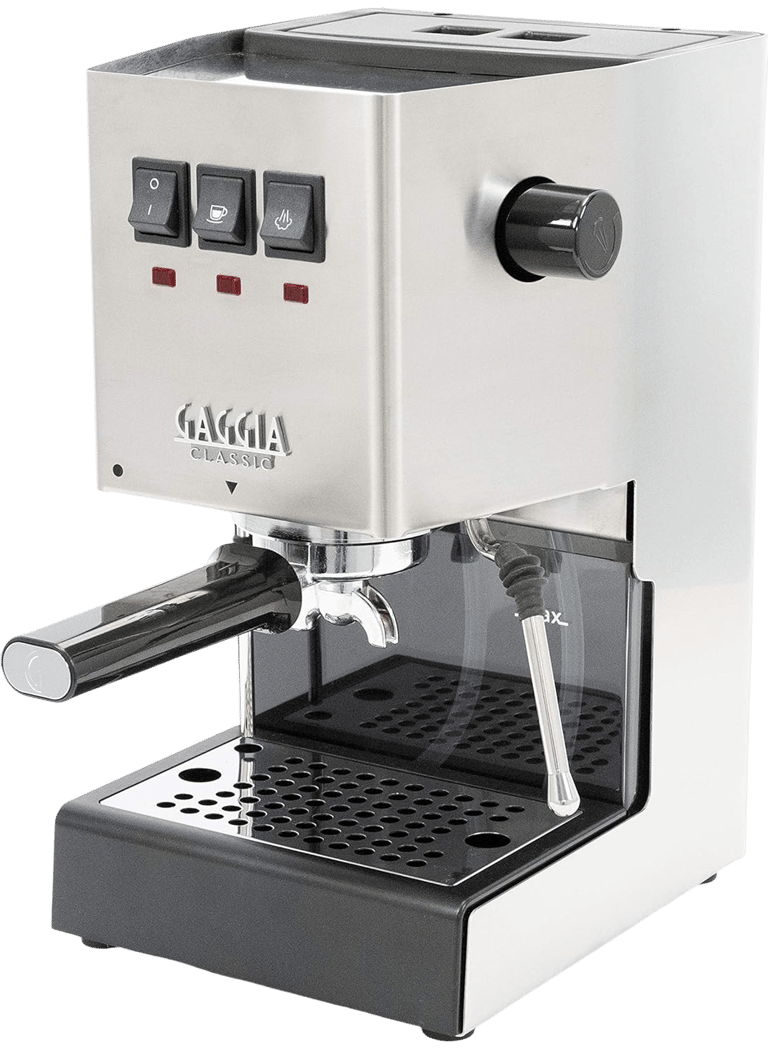
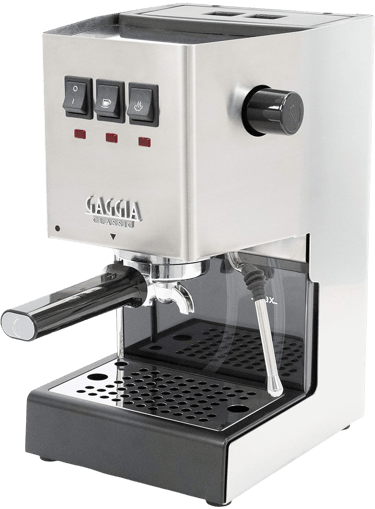
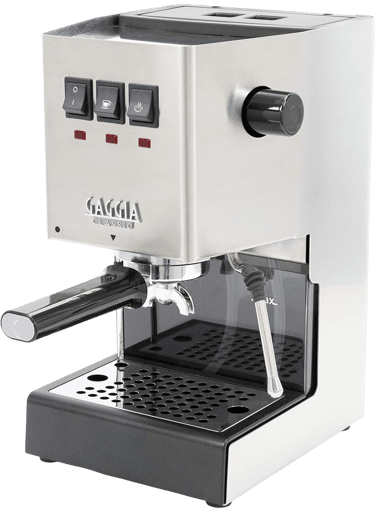
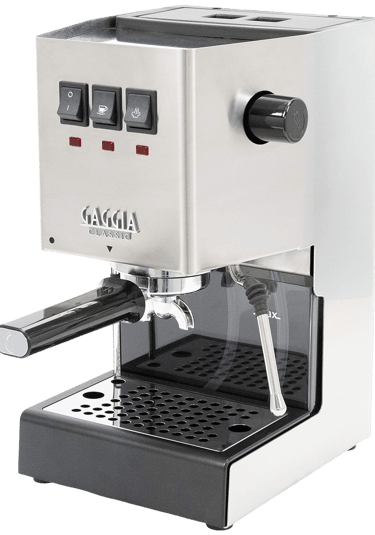
Gaggia RI9380/46 Classic Pro
The Gaggia Classic Pro is a true entry point into traditional espresso machines.
Unlike all-in-one systems, this machine focuses entirely on extraction quality and requires a separate grinder to perform properly.
It uses a commercial-style 58mm portafilter, which opens the door to better shot quality and more control over dialing in espresso.
Specs
• Commercial 58mm portafilter
• Single boiler system
• Manual steam wand
• Solid stainless steel housing
Best For
• Espresso enthusiasts
• Users building a long-term setup
• Maximum control over extraction
Avoid If
• You want an all-in-one machine
• You’re not willing to learn grind and workflow
Traditional machines like this fall into a different category entirely, and Types of Espresso Machines Explained (Simple Breakdown) helps clarify where manual and semi-automatic machines fit.
Gaggia Classic Pro
Best for Enthusiasts
BUZZ'S TOP PICK
Best for Convenience
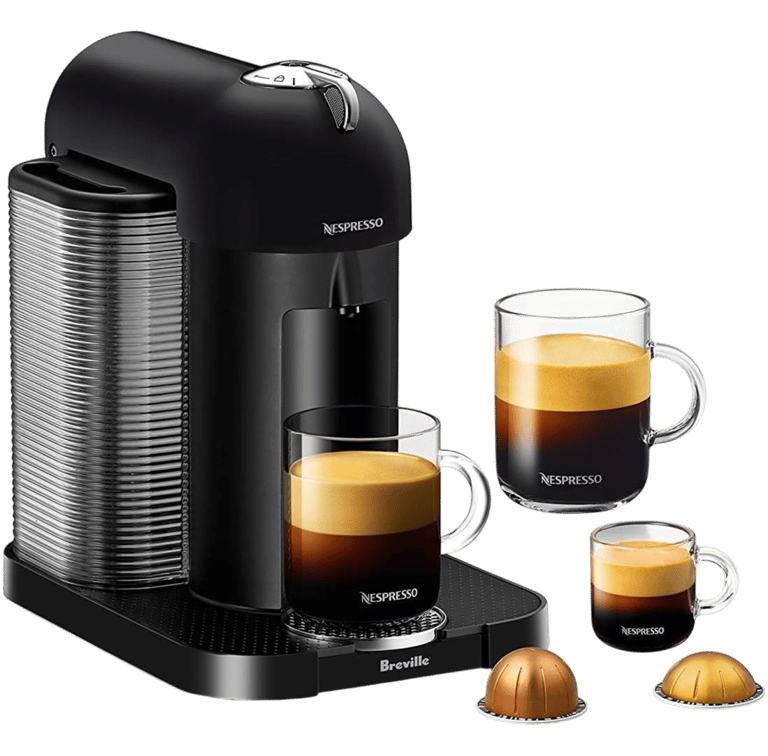
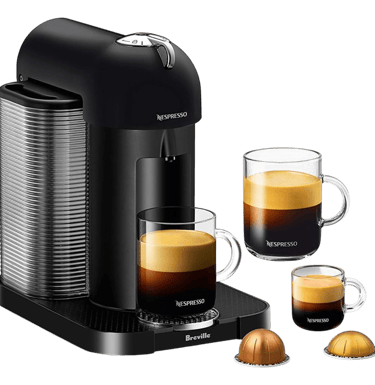
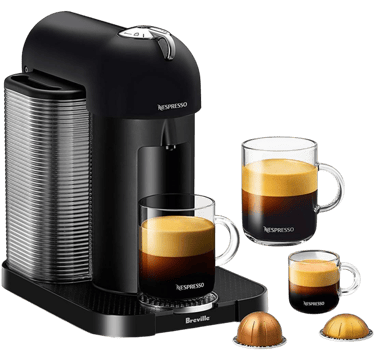
Nespresso Vertuo Coffee and Espresso
The Nespresso Vertuo is built for speed, simplicity, and consistency.
It uses capsule-based brewing to eliminate grinding, dosing, and tamping entirely. You insert a pod, press a button, and the machine handles the rest.
While it doesn’t produce traditional espresso, it delivers a consistent espresso-style drink with minimal effort.
Specs
• Capsule-based brewing system
• One-touch operation
• Fast heat-up time
• Automatic brew recognition
Best For
• Quick, no-effort coffee
• Small kitchens or shared spaces
• Users who prioritize convenience
Avoid If
• You want true espresso control
• You prefer fresh ground coffee
If you're deciding between convenience and control, comparisons like Jura E6 Platinum 15465 vs Breville Oracle Jet highlight how automation impacts daily use.
Nespresso Vertuo
Best for Convenience
BUZZ'S TOP PICK
How to Choose an Espresso Machine
Choosing the right espresso machine comes down to how involved you want to be in the process.
If you want simplicity, look for machines that combine grinding and brewing into one system.
If you want control, focus on machines that separate each step—grind, dose, tamp, and extract.
Pay attention to:
• Grinder inclusion (critical for espresso quality)
• Temperature stability
• Steam wand performance
• Workflow complexity
• Long-term upgrade potential
The biggest mistake is choosing based on features instead of how you actually plan to use the machine.
Espresso Machines vs Brewing Style
Different machines solve different problems.
Capsule systems prioritize speed and consistency.
All-in-one machines balance convenience with control.
Traditional machines prioritize performance and customization.
There’s no single “best” option—only the one that fits your routine.
For a deeper breakdown of what actually matters when choosing, How to Choose an Espresso Machine (Without Wasting Money) walks through the decision process step by step.
Understanding how machine design impacts extraction consistency comes down to core performance features, which are covered in What Makes a Good Espresso Machine? (Key Features Explained).
Frequently Asked Questions
What is the best espresso machine for beginners?
The best espresso machine for beginners is one that simplifies the process without removing control entirely. All-in-one machines with built-in grinders are ideal because they eliminate the need to buy separate equipment while still allowing you to learn grind size, dosing, and extraction basics.
They reduce the number of variables you need to manage at once, which makes it easier to get consistent results early on. Fully manual machines can produce better espresso over time, but they require a much steeper learning curve and additional gear.
What is the best espresso machine for beginners?
Do you need a grinder for espresso?
Yes—grind quality is one of the most important factors in espresso.
Espresso requires a very fine, consistent grind that most pre-ground coffee cannot deliver. Without the right grind size, water will either pass through too quickly (weak extraction) or too slowly (over-extraction), resulting in poor flavor.
Machines without built-in grinders require a separate burr grinder, and this is not optional if you want proper espresso performance.
If you're pairing machines with grinders, setups in Best Espresso Machines Under $1000 often balance built-in convenience with upgrade flexibility.
What’s the difference between a 15-bar and 20-bar espresso machine?
In real-world use, there is very little meaningful difference.
Most espresso is brewed at around 9 bars of pressure. Higher advertised pressure ratings (15-bar, 20-bar) are marketing numbers that indicate the pump’s maximum capability—not the actual pressure used during extraction.
What matters more is pressure stability and temperature control, not the maximum bar rating.
Are capsule machines like Nespresso real espresso?
Capsule machines produce an espresso-style drink, but they are not true traditional espresso systems.
They use pre-measured pods and automated extraction, which removes control over grind size, dose, and pressure profiling. While the results are consistent and convenient, they lack the depth, customization, and flavor complexity of freshly ground espresso.
They are best viewed as a convenience option rather than a replacement for a true espresso setup.
How much should you spend on an espresso machine?
Most people will find the best value in the mid-range category.
Entry-level machines often lack temperature stability and consistency, while high-end machines offer more control than most users will actually use. A well-built mid-range machine provides the best balance of performance, durability, and usability.
Spending more only makes sense if you plan to fully utilize the added control and precision.
Is a built-in grinder good enough?
Built-in grinders are good enough for most users, especially when starting out.
They provide convenience and a solid baseline for espresso, but they typically lack the precision and adjustability of dedicated standalone grinders. Over time, users who want more control often upgrade to a separate grinder.
For beginners and intermediate users, a built-in grinder is more than sufficient.
How hard is it to learn espresso?
Espresso has a learning curve, but it’s manageable with the right machine.
The difficulty depends on how much control the machine gives you. Fully manual setups require dialing in grind size, dose, and extraction timing, which can take time to master. All-in-one machines simplify this process and make it easier to get consistent results while learning.
Most users can start making good espresso within a few days and improve steadily from there.
How much maintenance do espresso machines require?
Espresso machines require regular maintenance to perform consistently.
This includes cleaning the portafilter, flushing the group head, descaling the machine, and maintaining the steam wand. Machines with built-in grinders also need occasional cleaning to prevent buildup.
Neglecting maintenance will impact both performance and flavor over time, so consistent upkeep is part of owning any espresso machine.
Quick Picks for Your Setup
Breville Barista
Express BES870XL
Built-in grinder with balanced daily espresso workflow.
BUZZ PICK - Best Overall
De’Longhi La
Specialista
Precision espresso workflow with smart tamp assistance.
BUZZ PICK - Best Control
Gaggia
Classic Pro
Traditional espresso machine with strong upgrade potential.
BUZZ PICK - Best Enthusiasts
Nespresso
Vertuo
Fast espresso-style drinks with simple one-touch brewing.
BUZZ PICK - Best Convenience
Final Verdict
There isn’t one perfect espresso machine—only the one that fits how you want to make coffee.
The Breville Barista Express offers the best balance for most people.
The De’Longhi La Specialista gives you more control without going fully manual.
The Gaggia Classic Pro delivers the highest potential for real espresso.
The Nespresso Vertuo is the fastest and easiest way to get consistent results.
The right choice isn’t about features—it’s about how much control, effort, and involvement you want in your daily routine.
If you want to compare more options across different budgets and workflows, Best Espresso Machines Under $500 and Best Espresso Machines Under $2000 break down what you actually gain as you move up in price.
Where Do You Want to Go Next?
Choose your path based on what you need right now.
Explore Everything
Dive deeper into:
espresso machine guides
drip coffee maker breakdowns
grinder compatibility
workflow improvements
brewing temperature education
beginner machine setups
This is the best place to better understand how different coffee machines actually perform in daily use.
Compare Before You Buy
Not sure which coffee setup fits your brewing style best?
Compare:
Ninja Luxe Café vs Philips 3300
workflow simplicity
milk frothing performance
drink versatility
beginner vs enthusiast usability
Seeing the real-world brewing differences makes choosing the right machine much easier.
Just Get It Done
If you simply want a reliable all-in-one espresso setup with built-in grinding and consistent daily performance, start with the Breville Barista Express BES870XL.
It offers:
built-in burr grinder
balanced espresso workflow
consistent extraction quality
simple all-in-one setup
dependable daily espresso use
For most home espresso users, it’s one of the safest overall semi-automatic machine choices available.
Contact@TheBuzzHQ.com
© 2026 Coffee Tech Buzz. All rights reserved.
Coffee Tech Buzz
Smarter brewing through better gear, clearer insights, and real-world performance testing.
Built for home users who want consistency without guesswork.
We focus on how machines actually perform — not just what they claim.
Home
Coffee Equipment Guide
Coffee Makers & Machines
Coffee Grinders
Espresso Gear & Guides
Coffee Beans & Roasts
Coffee Accessories & Tools
For educational purposes only.
We may earn commissions from qualifying purchases.
General Inquiries: