
Espresso Accessories
Espresso accessories are what turn a basic setup into a consistent workflow. While the machine and grinder handle extraction, accessories control everything around it—prep, measurement, and finishing.
Most espresso problems don’t come from the machine. They come from inconsistency in dosing, distribution, tamping, and timing.
The right accessories remove variables. They make each step repeatable, which is what leads to better shots over time.
You don’t need everything—but the right tools make a noticeable difference.
When each part of the workflow is controlled properly, consistency becomes repeatable, which is the foundation explained in Espresso.
Why Accessories Matter
Espresso is sensitive to small changes. Even minor inconsistencies can lead to uneven extraction, weak flavor, or excessive bitterness.
Accessories help control:
Dose accuracy
Distribution consistency
Tamp pressure
Shot timing
Milk texture and pouring
Each one removes a point of failure from the process.
Most inconsistencies show up in extraction balance, which is why understanding variables in Espresso Ratio Explained is so important.
Espresso Scales
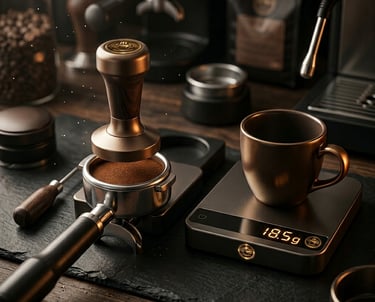
A scale controls both dose and yield. Without one, you’re guessing.
Tracking input (coffee weight) and output (liquid espresso) is the foundation of consistency. Even a 1–2 gram difference can change how a shot extracts.
A fast, accurate scale allows you to stop the shot exactly where you want it. Accurate measurement becomes essential when dialing in shot timing and yield, especially when following a process like How to Dial in Espresso.
Tampers
Tampers compress the coffee bed before extraction. A level, even tamp helps prevent channeling and uneven water flow.
Manual tampers offer full control, while spring-loaded or calibrated tampers improve consistency.
The goal isn’t force—it’s repeatability. Consistent tamping helps prevent uneven extraction issues that often show up in problems outlined in Common Espresso Mistakes.
Distribution Tools
Distribution tools help level the coffee bed before tamping. This reduces air pockets and uneven density.
Better distribution leads to more even extraction and fewer weak spots in the puck.
This is one of the simplest ways to improve shot consistency. Proper distribution plays a major role in reducing channeling, especially when comparing techniques in WDT Tool vs Distributor.
Dosing Tools
Dosing tools help control how coffee is transferred into the portafilter.
This includes dosing cups, funnels, and workflow tools that reduce mess and improve accuracy.
They don’t directly change extraction, but they improve consistency and reduce waste.
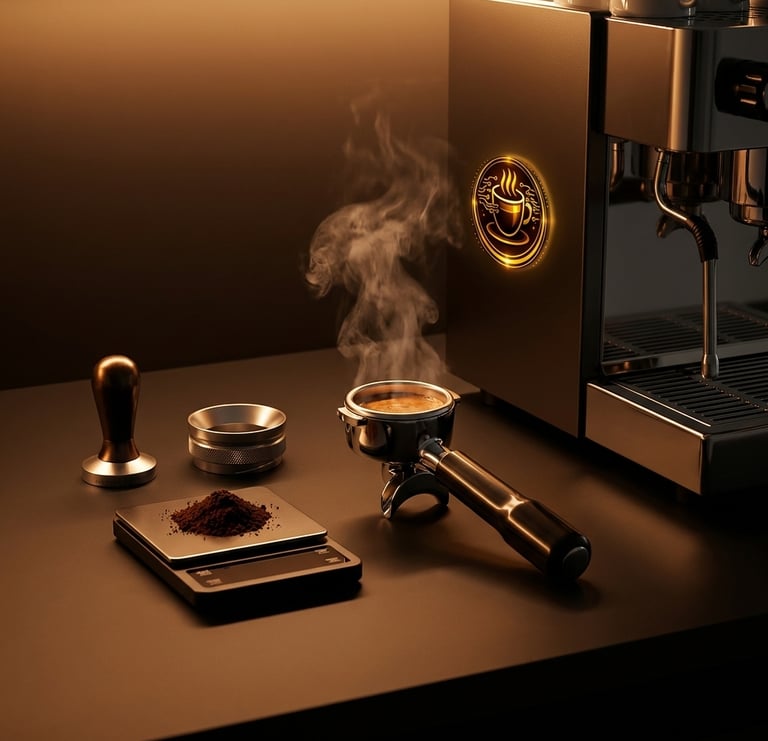
Core Espresso Accessories
These are the tools that directly impact extraction and shot quality.
Supporting Espresso Accessories
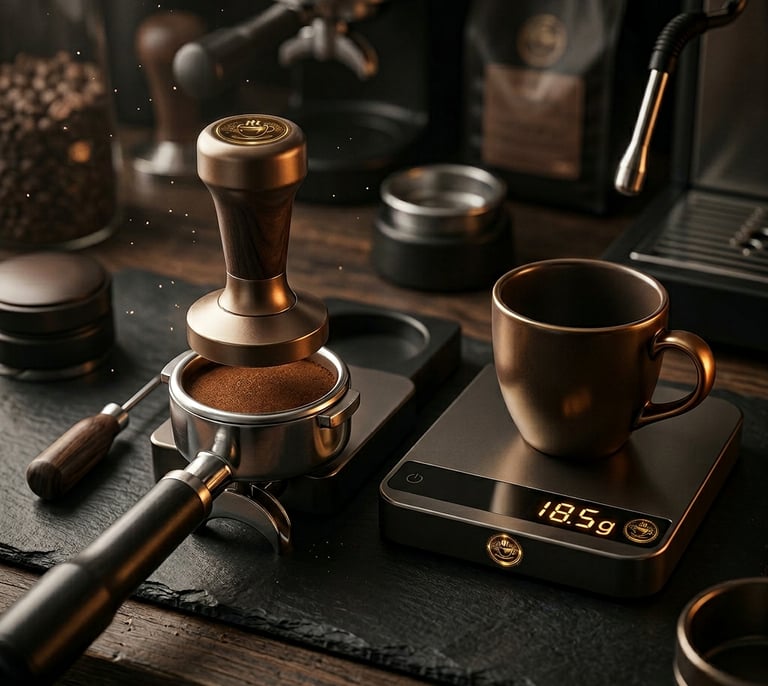
These tools don’t change extraction directly, but they improve workflow and usability.
Milk Frothing Pitchers
Milk pitchers control how milk is steamed and poured. Spout shape, size, and design all affect microfoam and latte art.
A good pitcher makes it easier to create smooth, consistent milk texture.
Milk texture and integration also depend on shot quality, especially when balancing flavor profiles explained in Light vs Dark Roast.
Knock Boxes
Knock boxes provide a clean way to dispose of used coffee pucks.
They don’t affect shot quality, but they improve workflow and keep your setup organized.
Cleaning Tools
Cleaning brushes, backflush tools, and descaling solutions help maintain your machine.
Clean equipment produces more consistent results and extends the life of your setup.
Advanced Accessories
Once the basics are covered, advanced tools allow for more precision and control.
WDT Tools (Weiss Distribution Technique)
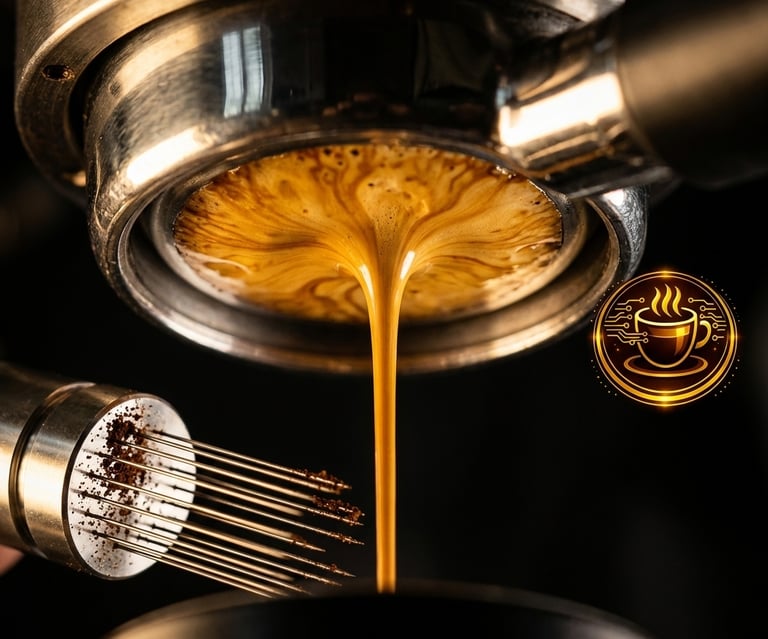
WDT tools use fine needles to break up clumps and evenly distribute coffee grounds.
This improves density and reduces channeling, especially with finer espresso grinds.
These tools directly impact extraction consistency and are a key part of the workflow compared in WDT Tool vs Distributor.
Bottomless Portafilters
A bottomless portafilter removes the spout, exposing the extraction.
This makes it easier to diagnose issues like channeling and uneven flow.
It doesn’t improve extraction directly—but it helps you fix problems faster.
Bottomless portafilters provide visual feedback during extraction, which is explored further in Bottomless vs Spouted Portafilter.
Precision Baskets
Precision baskets are designed with tighter tolerances to improve water flow and extraction consistency.
They require a more dialed-in workflow but can produce cleaner, more consistent shots.
Building Your Setup
You don’t need every accessory at once. The goal is to build a setup that supports consistency.
A typical progression looks like:
Scale
Tamper
Distribution tool
Milk pitcher
Workflow tools (funnels, cups)
Advanced tools (WDT, baskets)
Building a consistent setup is about controlling variables step-by-step, which is why process matters more than equipment, as explained in How to Dial in Espresso. Each step reduces variability and improves repeatability.
Common Mistakes
Most accessory mistakes come from overcomplicating the process.
Buying Too Much Too Early
Too many tools can make the workflow harder, not easier.
Ignoring the Basics
A scale and consistent tamp matter more than advanced tools.
Skipping foundational steps often leads to sour or bitter results, depending on how extraction is affected, as explained in Why Espresso Tastes Sour and Why Espresso Tastes Bitter.
Inconsistent Use
Even the best tools don’t help if they’re not used consistently.
Frequently Asked Questions
What espresso accessories do I actually need to start?
At minimum, you need a scale and a tamper. A scale ensures accurate dosing and yield, while a tamper creates an even coffee bed for proper extraction. Everything else improves workflow, but those two tools are the foundation of consistency.
Do espresso accessories really improve shot quality?
Yes—especially tools that affect preparation. Scales, tampers, and distribution tools directly impact how evenly water flows through the coffee. Better prep leads to more balanced extraction and more consistent flavor.
Is a scale necessary for espresso?
Yes. Without a scale, you’re guessing your dose and yield. Even small variations can change extraction time and flavor. A scale allows you to repeat good shots and fix bad ones with precision.
What’s the difference between a tamper and a distribution tool?
A distribution tool levels the coffee before tamping, while a tamper compresses it. Distribution improves evenness, and tamping creates resistance for water flow. Both work together to reduce channeling and improve consistency.
Are expensive espresso accessories worth it?
Higher-end tools often improve build quality, ergonomics, and consistency. However, basic tools can still perform well if used properly. Upgrading makes sense once your workflow is consistent and you want more precision.
What is a WDT tool and do I need one?
A WDT tool uses fine needles to break up clumps and evenly distribute grounds. It’s especially helpful with fine espresso grinds and can reduce channeling. It’s not required, but it can noticeably improve consistency.
How often should I clean espresso accessories?
Daily cleaning for tools like portafilters and baskets is recommended. Brushes and basic maintenance should be part of your routine, while deeper cleaning (like descaling or backflushing) should be done regularly based on usage.
Can accessories fix bad espresso shots?
They can help, but they won’t fix everything. If grind size, dose, or beans are off, accessories won’t compensate. They improve consistency and control, but good espresso still depends on dialing in the core variables.
Final Thoughts
Espresso accessories aren’t about adding complexity—they’re about removing variability.
Each tool plays a role in making the process more repeatable and predictable.
The best setups aren’t the ones with the most tools. They’re the ones where every step is controlled and consistent.
A complete workflow typically includes core tools like those in Best Espresso Scales, Best Espresso Tampers, and Best Milk Frothing Pitchers, all working together to improve consistency.
Once your workflow is stable, better results follow naturally.
Contact@TheBuzzHQ.com
© 2026 Coffee Tech Buzz. All rights reserved.
Coffee Tech Buzz
Smarter brewing through better gear, clearer insights, and real-world performance testing.
Built for home users who want consistency without guesswork.
We focus on how machines actually perform — not just what they claim.
Home
Coffee Equipment Guide
Coffee Makers & Machines
Coffee Grinders
Espresso Gear & Guides
Coffee Beans & Roasts
Coffee Accessories & Tools
For educational purposes only.
We may earn commissions from qualifying purchases.
General Inquiries: