

Espresso Ratio Explained: Mastering the Perfect Espresso Balance
Learn how the espresso ratio—coffee grounds to liquid espresso weight—affects flavor, body, and balance for a perfect shot every time.
ESPRESSO
The Coffee Tech Buzz Editorial Team - Led by AJ “Buzz” Eichman
4/13/20268 min read
Espresso is often perceived as a simple shot of concentrated coffee, but its quality depends heavily on precise control over extraction variables, among which the espresso ratio plays a foundational role. The espresso ratio—the relationship between the weight of coffee grounds and the weight of liquid espresso extracted—is more than just a number; it dictates the balance, body, and flavor clarity of each shot. Achieving consistency in espresso brewing requires not only knowing this ratio but understanding how it interacts with grind size, dose, tamping, and extraction time. Without this comprehension, even the best equipment will produce unpredictable results. For a full system overview, reference the Espresso pillar.
Quick Verdict
Espresso ratio defines the mass relationship between coffee grounds and extracted espresso liquid, typically expressed as coffee to water ratio.
Altering the ratio affects flavor intensity, body, and perceived sweetness, with common ranges from ristretto (1:1.5) to lungo (1:3).
Precise weighing of dose and yield is essential; volume measurements often lead to inconsistent results.
Adjusting espresso ratios must be done in conjunction with grind size, tamp pressure, and extraction time for optimal and repeatable extraction.
What Is Espresso Ratio? Definition and Basics
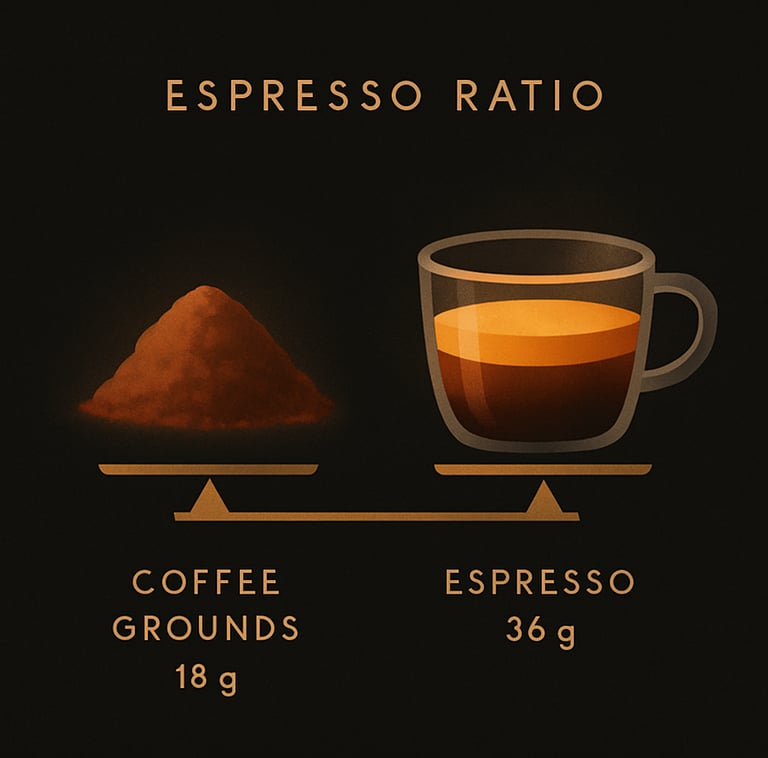
At its core, the espresso ratio represents the weight of dry coffee grounds compared to the weight of the liquid espresso extracted. For example, if you start with 18 grams of coffee and yield 36 grams of espresso, you are brewing at a 1:2 ratio. Understanding that this is a mass-to-mass relationship—not volume-based—is crucial because coffee density varies between beans, roast levels, and grind sizes. This ratio directly influences extraction yield, which determines how much flavor solubles get dissolved into the water. If you’re still building fundamentals, pairing this with How to Make Espresso helps connect ratio theory to real workflow.
It is important to note that the coffee to water ratio here refers specifically to the dose of ground coffee compared to the final liquid espresso weight. This is distinct from general brewing ratios used in methods like pour-over or drip coffee, where water weight and coffee grounds relate differently due to contact time and brew style.
How Espresso Ratio Impacts Flavor and Body
The espresso ratio is intimately tied to flavor concentration, body, and perceived balance. A lower ratio, such as 1:1.5 (known as ristretto), limits the amount of water passing through the puck relative to coffee dose, resulting in a more concentrated shot with pronounced sweetness and syrupy body. These shots often highlight syrupy, fruit-forward notes but risk under-extraction if not dialed in precisely, as the shorter contact time can leave the espresso tasting overly sharp or sour, which is further explored in Why Espresso Tastes Sour.
Conversely, a higher ratio closer to 1:3, typical for a lungo, produces a lighter, more diluted shot with less viscosity and more bitterness if extended too far. Here, more water extracts a broader spectrum of solubles, including those that bring astringency and dryness, often overlapping with issues explained in Why Espresso Tastes Bitter. The classic or normo espresso ratio sits roughly around 1:2, striking a balance between sweetness, acidity, and bitterness when parameters are dialed correctly.
These flavor distinctions arise because the espresso ratio influences the total dissolved solids (TDS) and extraction yield metrics that define how solubles dissolve into the shot. TDS relates to concentration, while extraction yield encompasses completeness; balancing these through ratio adjustment allows brewers to fine-tune espresso characteristics to personal or bean-specific preferences.
Common Espresso Ratios: Ristretto, Normo, and Lungo Explained
Espresso brewers generally categorize espresso shots by ratios, with each being a starting point rather than a strict rule. Ristretto, normo, and lungo represent a spectrum rather than absolutes:
Ristretto (approximately 1:1.5): A highly concentrated shot with a short extraction time. It offers heavy body and bright sweetness with less perceived acidity. This ratio emphasizes solubles extracted early in the shot before bitterness emerges.
Normo (around 1:2): The standard espresso ratio that balances sweetness, acidity, and bitterness. This moderate yield highlights a broad flavor profile and is most forgiving across bean types and roast levels.
Lungo (near 1:3): A longer extraction producing a larger volume with lighter body. This ratio often pulls more bitterness and astringency due to prolonged contact with grounds, shifting the balance away from sweetness.
It’s important to recognize that these ratios are starting points requiring adjustment based on coffee type, roast level, and grinder settings. Blindly following them without calibration often leads to inconsistency or undesirable flavors.
Measuring and Adjusting Espresso Ratio at Home
Consistency in espresso demands precise measurement rather than approximations. Using a digital scale that measures in grams is essential both for dosing the coffee and for weighing the liquid espresso pull. Many home baristas rely on volumetric guesses, such as timing or using shot glasses, which introduces inconsistency due to variations in espresso density and crema volume. Using tools from Best Espresso Scales helps eliminate this variable entirely.
Once equipped with a gram scale, begin by setting a fixed dose—commonly 18 to 20 grams for double shots. From there, weight the liquid yield to establish the espresso ratio. Adjusting the yield to the desired ratio allows you to control extraction intensity and body directly.
However, changing the yield alone is insufficient. Altering the espresso ratio affects flow rate and extraction time, which in turn demands recalibration of grinder settings and tamp pressure. For example, reducing shot volume to achieve a ristretto ratio without adjusting grind size may cause over-extraction, as the puck becomes more resistant to flow. This is where grinder precision becomes critical, especially when comparing options like Best Espresso Grinders Under $300.
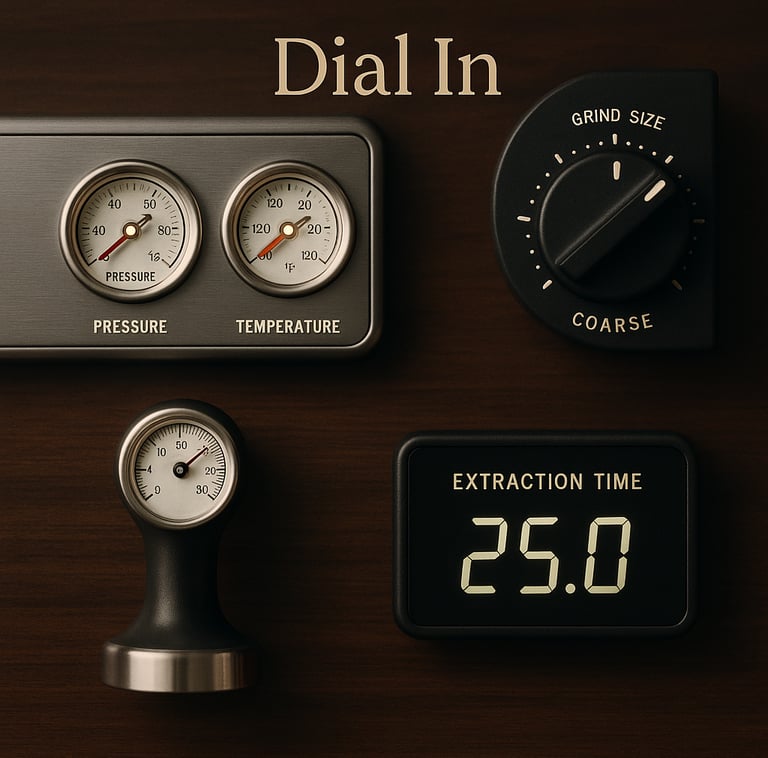
Keeping extraction times within an optimal range—typically 25 to 35 seconds—guards against under- or over-extraction as the ratio shifts. Therefore, when adjusting the espresso ratio, it is necessary to iterate grind size finely and monitor extraction duration closely.
Key Brewing Variables That Affect Espresso Ratio
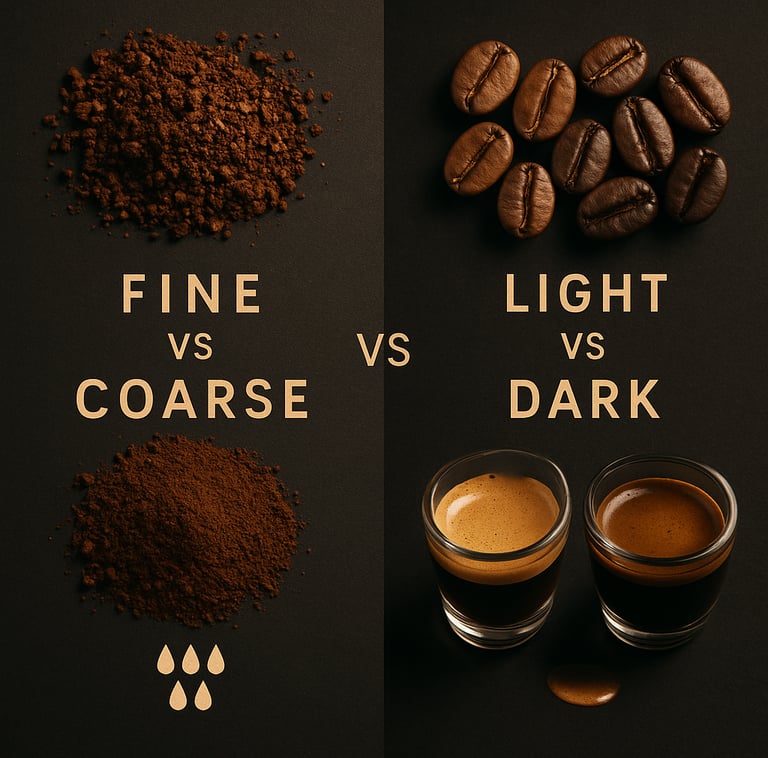
Beyond dose and liquid yield, grind size, tamp pressure, and extraction time interplay critically with espresso ratio to define shot quality. Grind size is particularly influential; a finer grind increases flow resistance, slowing extraction and effectively reducing yield for the same tamp and dose, which changes the ratio unintentionally if not measured.
Tamp pressure must remain consistent because uneven compression alters channeling inside the puck, influencing flow and extraction uniformity. Slight variations here can cause wide swings in the perceived ratio because shot volume and flavor can fluctuate disproportionately. Consistency here is easier with tools found in Best Espresso Tampers.
Extraction time offers another adjustment point. Extending or shortening shot duration modulates how much soluble material dissolves. If one targets a specific ratio but extraction time falls outside the ideal window, flavor imbalances are likely. For deeper workflow calibration, see How to Dial in Espresso.
These variables should be considered as a system rather than isolated factors. Experimenting with one while neglecting others introduces unpredictability. The goal is to lock down dose and yield first, then dial in grinder and tamp to maintain consistent extraction time within the target ratio framework.
Practical Tips for Consistent Espresso Extraction
Consistency comes down to controlled repetition, measurement, and subtle adjustment. Prioritize using precise scales for dose and shot yield above all, since volume measures fluctuate.
Establish a baseline dose reflective of your grinder and desired espresso volume. Weigh your liquid shot for an exact ratio rather than timing alone. Make incremental changes—small grit adjustments or slight tamp variations—while observing changes in shot weight and flavor. This methodical approach reveals cause and effect more clearly than drastic shifts.
Document each change and its results. Over time, you will recognize patterns linked to bean type, roast level, and machine behavior. This practice builds a reliable workflow instead of guesswork.
Maintain routine calibration of your grinder burrs and keep equipment clean. Grinding inconsistencies and channel clogging are common causes of ratio drift across multiple brews. Comparing burr performance across grinders like TIMEMORE Sculptor 064S vs Fellow Ode Gen 2 can highlight these differences.
Consider equipment investments that enhance control, such as precision coffee scales tailored for espresso and grinders with micro-adjustment capabilities, which improve your ability to make predictable changes.
Common Mistakes When Dialing In Espresso Ratio
Misunderstanding the espresso ratio concept often causes inconsistency in at-home brewing. A primary pitfall is relying on volume measurements to gauge shot size; this leads to inconsistent espresso due to variations in the liquid's density and crema thickness.
Another frequent error is neglecting to recalibrate grind size and extraction time when changing ratios. For instance, pulling a ristretto shot without tightening the grind usually results in under-extraction and sourness.
Some brewers confuse dosing language by mixing terms from other brew methods, such as using the typical brew water to grounds ratio instead of the dry coffee to liquid espresso weight ratio, which skews expectations.
Skipping taste testing when adjusting the ratio or blindly following “standard” ratios without consideration for bean type or freshness diminishes the ability to dial in shots effectively.
Failing to maintain consistent tamp pressure or overlooking grinder performance regularity are less obvious but common issues that disrupt the repeatability of achieving target ratios.
Troubleshooting Flavor Using Espresso Ratio Adjustments
When a shot tastes too bright, sour, or thin, it often signals under-extraction, which can be improved by lowering the espresso ratio—reducing yield relative to dose—or by fine-tuning grinder setting to slow flow and increase extraction time. In this scenario, a smaller shot volume concentrates flavors and boosts perceived sweetness.
Conversely, if bitterness or dryness dominate, moving toward a higher ratio or increasing shot volume can dilute those harsh notes, but only when paired with adjusted grind settings to prevent over-extraction. If neglected, simply extending shot duration without ratio measurement leads to uneven extractions and imbalanced flavors. Reviewing comparisons like Bottomless vs Spouted Portafilter can also help diagnose extraction visibility issues.
Tracking these modifications alongside consistent taste evaluation allows the home barista to resolve flavor faults systematically rather than guessing. Paying close attention to how ratio changes correlate with sensory shifts develops deeper understanding and control over the espresso.
Frequently Asked Questions
What is the ideal espresso coffee to water ratio?
There is no single ideal ratio; however, a standard espresso ratio around 1:2 is a reliable starting point for balanced flavor. Adjustments toward ristretto (lower ratio) or lungo (higher ratio) depend on bean characteristics and personal preference.
How does espresso ratio affect flavor and body?
Lower espresso ratios produce sweeter, more concentrated shots with fuller body, while higher ratios yield lighter, more diluted espresso with increased bitterness if extended too far. The ratio controls soluble concentration and extraction completeness.
What is the difference between ristretto, normo, and lungo ratios?
Ristretto is a short, concentrated shot (~1:1.5 ratio), normo is the classic balance (~1:2), and lungo is a longer, more diluted pull (~1:3). Each ratio alters extraction time and flavor profile distinctly.
How do I measure espresso ratio at home?
Use a precise digital scale to weigh both dry coffee grounds (dose) and liquid espresso yield after extraction, then calculate the mass ratio between the two. Avoid relying on volume or timing alone.
Can I use the same espresso ratio for different coffee beans or roast levels?
Not necessarily. Roast level and bean type affect extraction behavior, so espresso ratios may require adjustment to optimize flavor balance accordingly.
What common brewing mistakes affect espresso ratio and extraction?
Inconsistent dosing, ignoring grind size changes when adjusting ratio, using volume measurements instead of weight, and neglecting tamp consistency are frequent mistakes affecting extraction quality.
How does grind size impact the espresso shot ratio?
Finer grind size increases flow resistance, slowing extraction and potentially lowering shot volume for a fixed time, thereby affecting the ratio if not accounted for.
Is it necessary to weigh every shot to control the espresso ratio?
While it is the best practice for precision and consistency, some experienced baristas develop tactile cues; however, without weighing shots, maintaining repeatable espresso balance becomes significantly more difficult.
Conclusion
The espresso ratio is the cornerstone of predictable espresso brewing, governing the balance between intensity, sweetness, body, and bitterness. It is not simply a set-and-forget value but rather one dynamic element within a tightly integrated system including grind size, dose, tamping, and extraction time. For home baristas seeking consistency, this means prioritizing precise weighing, incremental calibration, and systematic taste evaluation over gimmicks or trend-driven methods.
Ultimately, mastering espresso ratio transforms brewing from guesswork into a disciplined process. With deliberate control over this variable and its companions, achieving a well-balanced shot that aligns with your preference is within reach. For deeper guidance on espresso grinding and equipment selection that complement thoughtful ratio management, exploring resources like Best Espresso Machines and Best Espresso Machines for Beginners will strengthen your setup decisions alongside technique.
Contact@TheBuzzHQ.com
© 2026 Coffee Tech Buzz. All rights reserved.
Coffee Tech Buzz
Smarter brewing through better gear, clearer insights, and real-world performance testing.
Built for home users who want consistency without guesswork.
We focus on how machines actually perform — not just what they claim.
Home
Coffee Equipment Guide
Coffee Makers & Machines
Coffee Grinders
Espresso Gear & Guides
Coffee Beans & Roasts
Coffee Accessories & Tools
For educational purposes only.
We may earn commissions from qualifying purchases.
General Inquiries: