
Best Espresso Setup for Beginners
Getting started with espresso doesn’t require a complicated or expensive setup—but it does require the right foundation.
Most beginner mistakes come from buying the wrong equipment or skipping essential tools. Espresso is a system, and each part affects the final result.
A good beginner setup focuses on:
consistency
control
simplicity
You don’t need everything at once. You need the right pieces that work together.
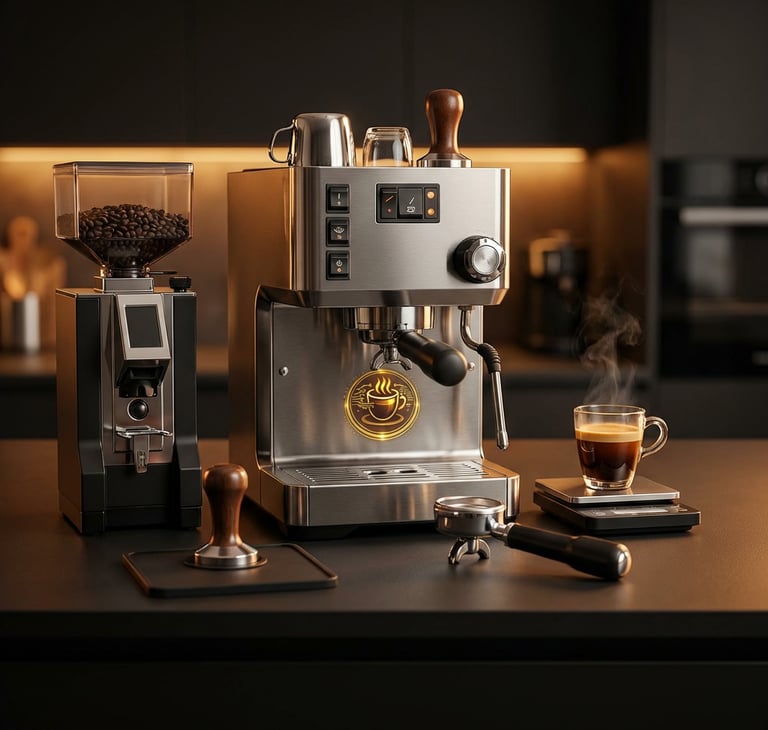
A complete espresso setup is built around four core components.
Espresso Machine
Grinder
Scale
Tamper
Everything else supports these.
If one of these is missing or underperforming, the entire workflow suffers.
What a Beginner Espresso Setup Actually Needs
The Espresso Machine
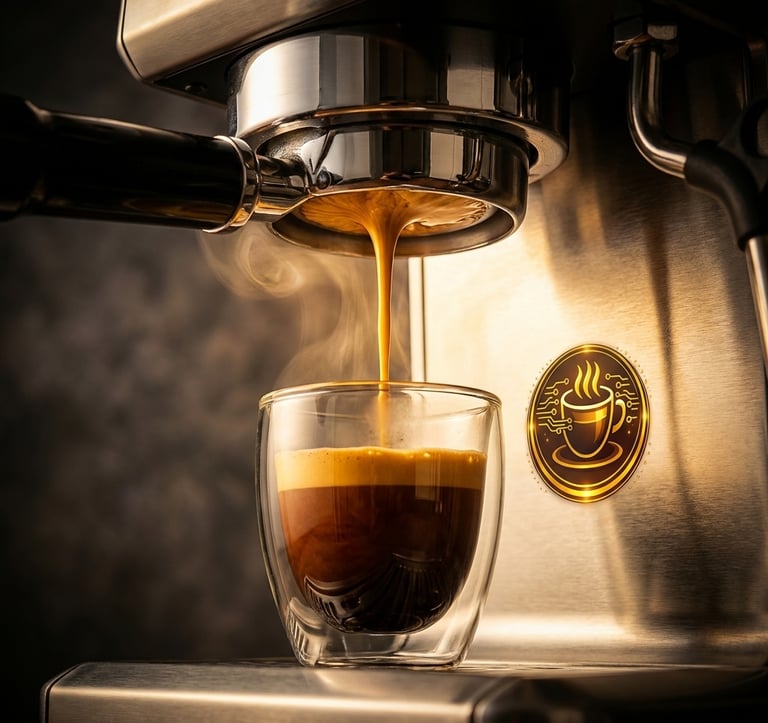
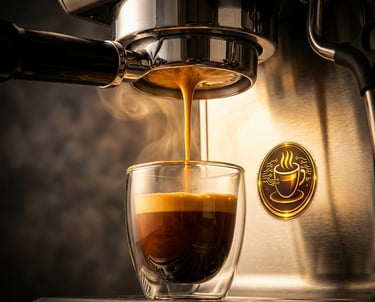
The machine controls pressure and water temperature—two critical parts of extraction.
For beginners, the goal is consistency, not complexity.
Look for:
stable pressure
consistent temperature
simple controls
Machines with too many advanced features can slow down learning. A reliable semi-automatic machine is usually the best starting point.
The Grinder
(Most Important Piece)
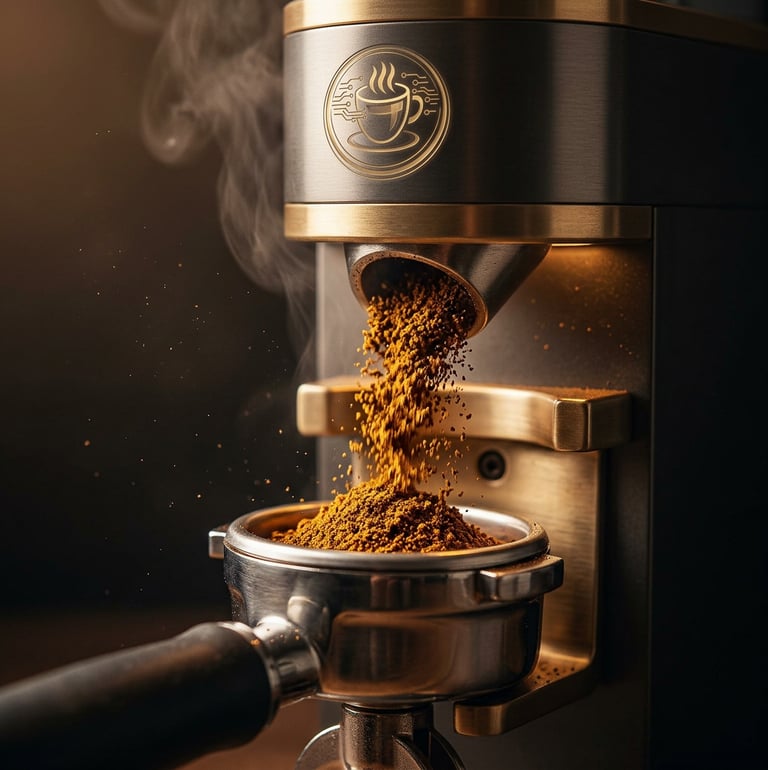
The grinder matters more than the machine.
Espresso requires a very fine, consistent grind. Without it, even the best machine can’t produce good results.
A proper espresso grinder should:
grind fine enough for espresso
allow small adjustments
produce consistent particle size
Inconsistent grind = inconsistent extraction.
If you invest in one piece first, it should be the grinder.
The Scale
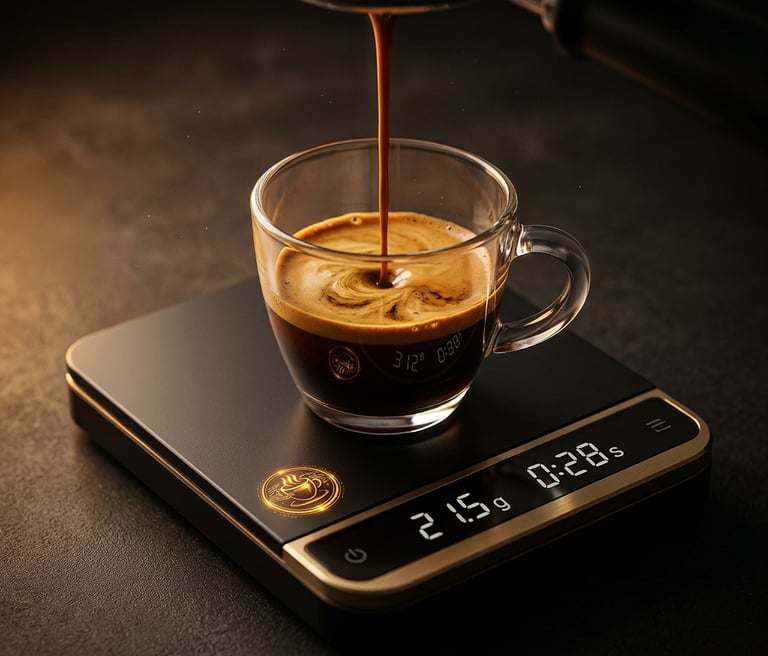
A scale controls dose and yield.
Without a scale, you’re guessing:
how much coffee you’re using
how much espresso you’re producing
This makes consistency almost impossible.
A beginner setup should always include a scale with:
0.1g accuracy
fast response time
This allows you to repeat good shots and fix bad ones.
The Tamper
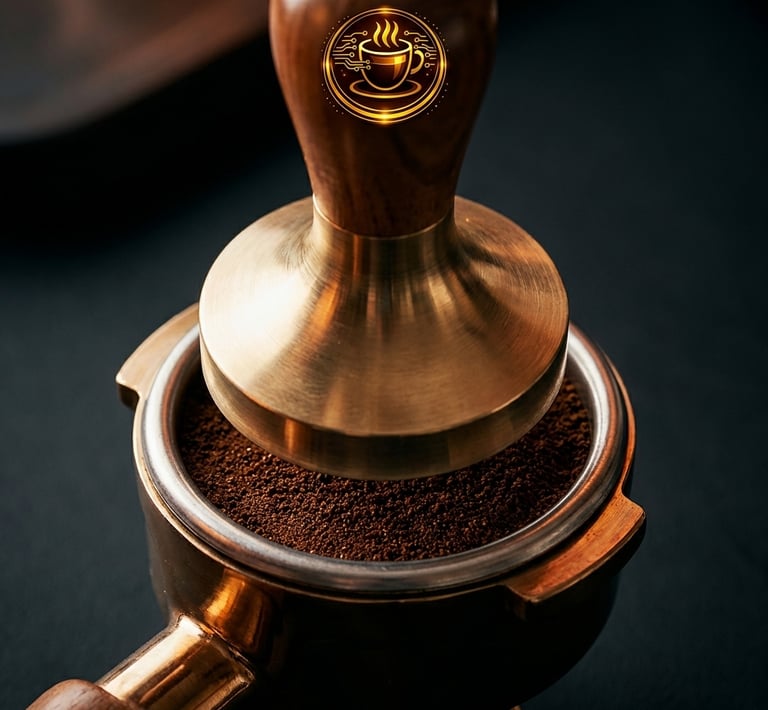
The tamper compresses the coffee into a uniform puck.
A level, even tamp:
improves water flow
reduces channeling
increases consistency
Manual tampers work well, but calibrated tampers can help beginners apply consistent pressure.
The goal isn’t force—it’s repeatability.
Recommended Beginner Setup (Simple Path)
Once your workflow is consistent, you can add tools to improve precision and ease.
Distribution Tools
Help level the coffee bed before tamping.
WDT Tools
Improve internal distribution and reduce clumping.
Bottomless Portafilter
Helps diagnose extraction issues and improve technique.
Milk Frothing Pitcher
Required for milk-based drinks like lattes and cappuccinos.
These are upgrades—not requirements.
Beginner Workflow (Step-by-Step)
A simple, repeatable workflow matters more than equipment.
Weigh your coffee dose
Grind to espresso size
Distribute and tamp evenly
Start extraction
Stop at target yield
Consistency in these steps is what produces good espresso.
Common Beginner Mistakes
Most issues come from misunderstanding the process.
Buying the Wrong Grinder
A poor grinder limits everything else.
Skipping the Scale
Guessing leads to inconsistent results.
Changing Too Many Variables
Adjust one thing at a time when dialing in.
Expecting Perfect Results Immediately
Espresso takes practice. Consistency improves over time.

How to Upgrade Over Time
Start simple, then improve based on experience.
Dial in your grinder and workflow
Add tools that improve consistency
Upgrade machine only when needed
Better technique will always outperform better equipment alone.
Why This Setup Works
A beginner setup should remove variables—not add them.
This approach:
simplifies the process
builds consistency
creates repeatable results
Once the fundamentals are solid, everything else becomes easier to control.
Frequently Asked Questions
What is the best espresso setup for beginners?
A beginner setup should include a semi-automatic espresso machine, a quality espresso grinder, a scale, and a tamper. This combination provides the control needed to produce consistent shots without adding unnecessary complexity.
How much should a beginner spend on an espresso setup?
A solid beginner setup typically ranges from $300 to $800. The grinder should take priority in the budget, as it has the biggest impact on espresso quality.
Do I need a grinder, or can I use pre-ground coffee?
You need a grinder. Pre-ground coffee loses freshness quickly and doesn’t allow you to adjust grind size, which is essential for proper espresso extraction.
What type of espresso machine is best for beginners?
Semi-automatic machines are the best starting point. They offer control over the brewing process while still providing consistent pressure and temperature.
Is a scale really necessary for beginners?
Yes. A scale allows you to measure both dose and yield, which is critical for consistency. Without it, dialing in espresso becomes guesswork.
What grinder should a beginner look for?
A grinder should be capable of producing a fine, consistent grind with small adjustment steps. Burr grinders are essential, as blade grinders cannot produce the consistency needed for espresso.
How long does it take to learn espresso basics?
Most beginners can start producing decent shots within a few days, but consistent results usually take a few weeks of practice and adjustment.
When should I upgrade my espresso setup?
Upgrade only after your workflow is consistent. If you can’t produce repeatable shots, better equipment won’t solve the problem. Technique should improve first.
Final Thoughts
The best espresso setup for beginners isn’t the most expensive—it’s the most consistent.
Focus on the grinder, control your variables, and build a repeatable workflow.
That’s what turns beginner equipment into good espresso.
Contact@TheBuzzHQ.com
© 2026 Coffee Tech Buzz. All rights reserved.
Coffee Tech Buzz
Smarter brewing through better gear, clearer insights, and real-world performance testing.
Built for home users who want consistency without guesswork.
We focus on how machines actually perform — not just what they claim.
Home
Coffee Equipment Guide
Coffee Makers & Machines
Coffee Grinders
Espresso Gear & Guides
Coffee Beans & Roasts
Coffee Accessories & Tools
For educational purposes only.
We may earn commissions from qualifying purchases.
General Inquiries: