

Best Milk Frothing Pitchers
Milk pitchers play a bigger role in espresso than most people expect. They control how milk textures, how it integrates with espresso, and how cleanly it pours.
The difference between average and high-quality milk drinks often comes down to microfoam. That’s created during steaming, but it’s shaped and delivered by the pitcher.
Spout design affects how precise your pour is. Body shape influences how milk spins while steaming. Thickness impacts heat retention and control.
Some pitchers are built for latte art precision. Others focus on durability or ease of use.
The right choice depends on how much control you want—and how refined your workflow needs to be.
Milk texture and integration become much easier to control when the full espresso workflow is understood through the Espresso system.
Transparency Note: We may earn a commission from qualifying purchases. Product selections are made independently and are not influenced by manufacturers.
Quick Verdict
For the most refined pouring control and latte art precision, the Fellow Eddy Pitcher leads with its sharp spout and balanced design.
If you want a durable, barista-style pitcher with strong control, the MHW-3BOMBER Pitcher offers a solid, well-built option.
For everyday usability with added grip and heat protection, the Kaffe Pitcher provides a practical and comfortable design.
If you’re starting out or just need a simple solution, the CASABREWS Pitcher covers the basics without added complexity.
Fellow Tally
Steaming Pitcher
BEST FOR: Latte art control
Precision pitcher with sharp spout for clean, consistent latte art pours.
Type
Precision
Control
High
Size
18oz
Build
Premium
WHY IT WINS
Sharp spout design
Excellent pour control
Balanced feel
USE CASE
Latte art
Precision pouring
Daily espresso
9.3
OVERALL SCORE
MHW-3BOMBER
Milk Froth Pitcher
BEST FOR: Durable daily use
Thick steel pitcher designed for stable handling and consistent milk steaming.
Type
Standard
Control
Medium
Size
12oz
Build
Durable
WHY IT WINS
Thick steel build
Stable during use
Holds heat well
USE CASE
Daily steaming
Durable setups
Balanced use
9.1
OVERALL SCORE
Kaffe Milk
Frothing Pitcher
BEST FOR: Comfortable handling
Grip-focused pitcher with sleeve for easier control and safer milk steaming.
Type
Comfort
Control
Medium
Size
20oz
Build
Mid
WHY IT WINS
Easy grip sleeve
Comfortable handling
Forgiving pour
USE CASE
Everyday use
Beginner setups
Multi-drink
8.9
OVERALL SCORE
CASABREWS Milk
Frothing Pitcher
BEST FOR: Budget setups
Simple stainless pitcher with reliable performance for basic milk steaming.
Type
Basic
Control
Medium
Size
12oz
Build
Basic
WHY IT WINS
Very affordable
Functional design
Easy to use
USE CASE
First setup
Budget builds
Simple workflow
8.6
OVERALL SCORE
Best Overall Milk Frothing Pitcher
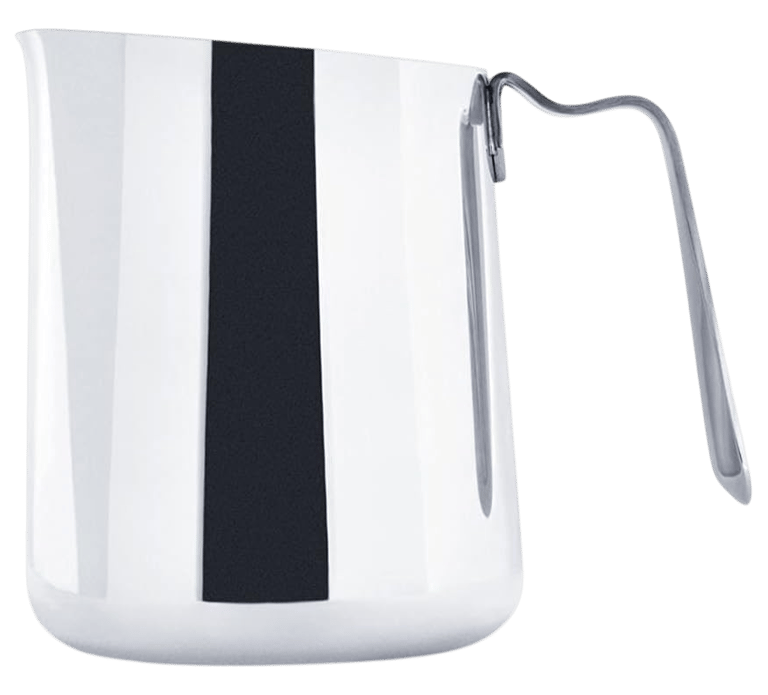
Fellow Eddy Steaming Pitcher
The Fellow Eddy is built for control. The spout is sharper and more refined than standard pitchers, which allows cleaner lines and better definition when pouring latte art.
The internal shape helps maintain a smooth milk vortex during steaming, making it easier to create consistent microfoam. That translates directly into better texture and more predictable pours.
The handle and balance also stand out. It feels stable in hand, which matters when transitioning from milk to foam mid-pour.
This is a pitcher designed for users who care about repeatability and precision—not just basic milk steaming.
Specs
18 oz capacity
Precision spout design
Stainless steel construction
Balanced handle geometry
Best For
Latte art control
Precision pouring
Daily espresso workflows
Avoid If
You want a budget option
You don’t need precision control
Precision pouring like this becomes far more consistent when your espresso base is dialed in correctly, which is covered in How to Dial in Espresso.
Best Durability Milk Pitcher
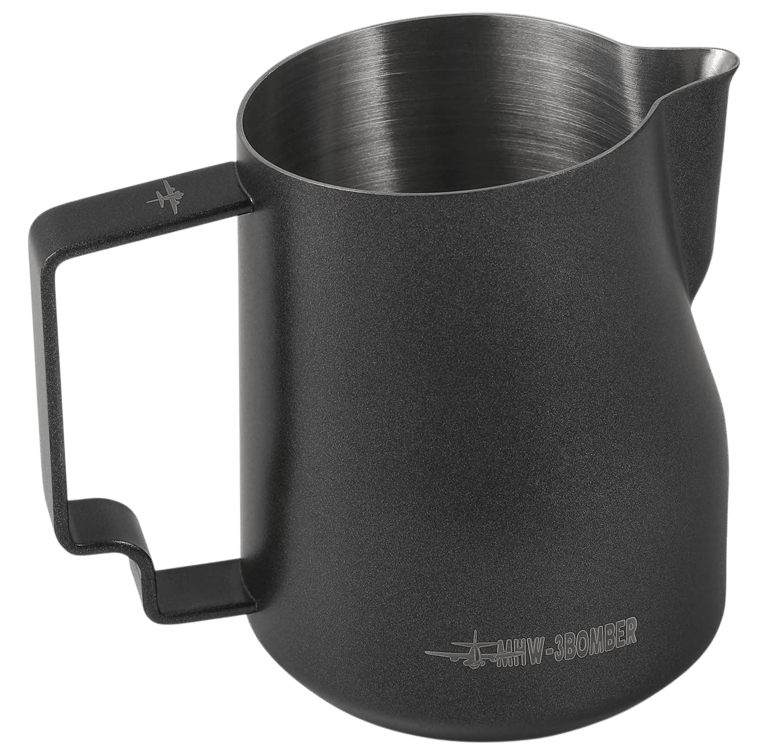
MHW-3BOMBER Milk Frothing Pitcher
The MHW-3BOMBER pitcher focuses on build quality and stability. The thicker steel and solid construction give it a more durable feel compared to lighter pitchers.
The spout is more rounded than precision pitchers, which makes it slightly less sharp for latte art but more forgiving during pours.
It holds temperature well during steaming, which can help maintain consistency, especially for beginners.
This is a strong all-around option that prioritizes durability and control without pushing into ultra-precision territory.
Specs
12 oz capacity
Thick stainless steel
Rounded spout
Matte finish
Best For
Daily use
Durable setups
Balanced performance
Avoid If
You want ultra-sharp latte art
You prefer lighter pitchers
Stable steaming performance helps avoid inconsistencies that often show up as imbalance in the final cup, similar to issues explained in Common Espresso Mistakes.
Best Practical Milk Pitcher
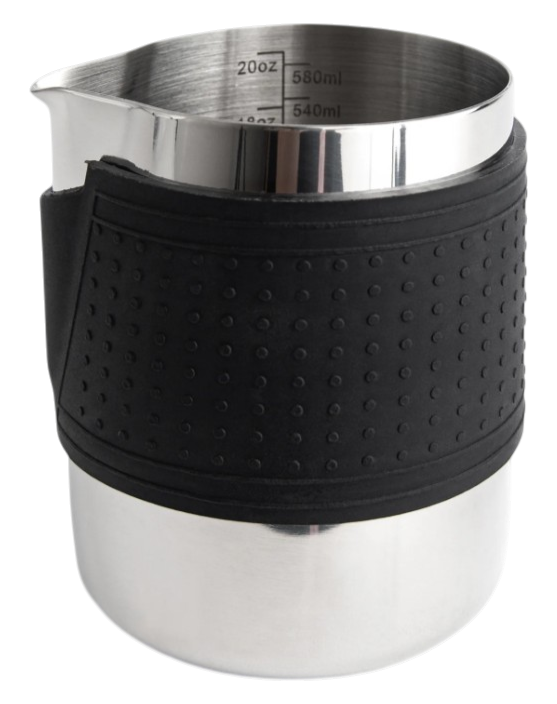
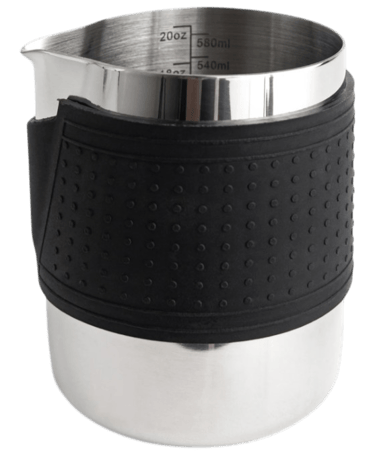
Kaffe Milk Frothing Pitcher (20oz)
The Kaffe pitcher is built around usability. The silicone sleeve provides grip and makes it easier to handle heat while steaming.
This is especially useful for beginners who are still learning milk texture and temperature control.
The spout is forgiving and easy to work with, though it doesn’t offer the same level of precision as higher-end pitchers.
Where it stands out is comfort and practicality—it’s easy to use, easy to control, and works well across different brewing setups.
Specs
20 oz capacity
Stainless steel body
Silicone grip sleeve
Dripless spout
Best For
Everyday use
Beginner setups
Comfortable handling
Avoid If
You want precision pouring
You focus on latte art detail
For beginner setups, pairing accessories like this with the right foundation in Best Espresso Setup for Beginners makes workflow much easier to manage.
Best Budget Milk Pitcher
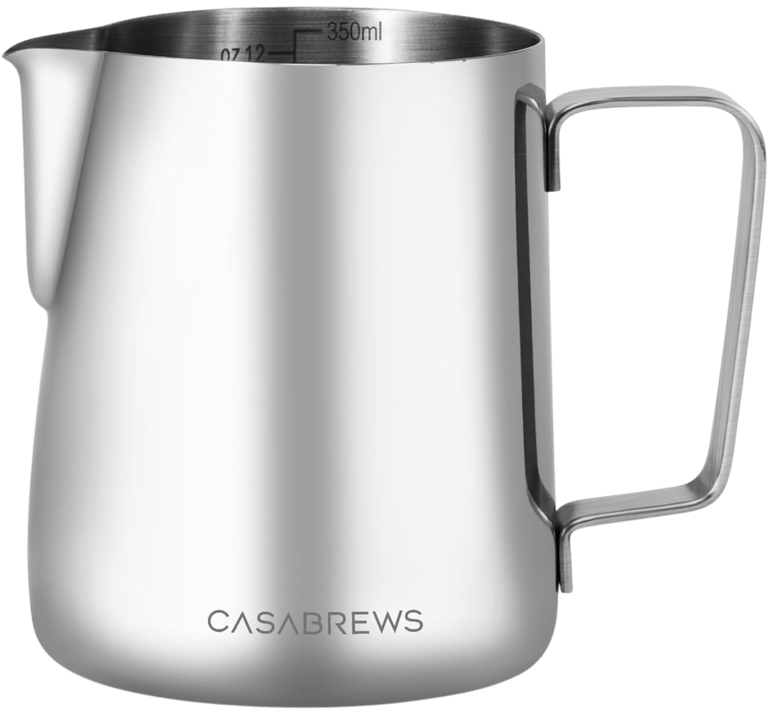
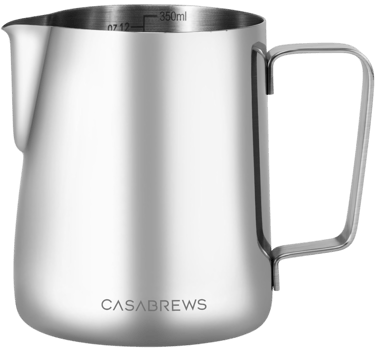
CASABREWS Milk Frothing Pitcher (12oz)
The CASABREWS pitcher covers the basics. It provides a standard stainless steel build with a functional spout and straightforward design.
The spout is sharper than most entry-level pitchers, which helps with basic latte art compared to rounder designs.
It doesn’t have the refinement or balance of higher-end options, but it performs well enough for everyday milk steaming.
For the price, it’s a solid starting point.
Specs
12 oz capacity
Stainless steel
Sharp spout
Lightweight design
Best For
Budget setups
First espresso accessories
Simple workflows
Avoid If
You want premium build quality
You need advanced control
Simpler setups benefit from forgiving extraction and balanced beans, especially when understanding differences like Light vs Dark Roast.
What Actually Matters in a Milk Pitcher
The biggest difference between pitchers is control.
Spout Shape
Sharper spouts give cleaner lines and more precise pours. Wider spouts are easier to use but less detailed. Pour control directly impacts how milk integrates with espresso, especially when working with shots that are properly extracted as explained in Espresso Ratio Explained.
Pitcher Shape
A good internal shape helps create a stable vortex, which is essential for consistent microfoam. A stable vortex during steaming complements consistent extraction, reducing issues like harsh bitterness covered in Why Espresso Tastes Bitter.
Steel Thickness
Thicker pitchers hold heat longer. Thinner ones respond faster but require more control.
Handling
Grip and balance affect how stable the pitcher feels during pouring.
How Size Affects Performance
Smaller pitchers (10–12 oz) offer more control and are better for single drinks.
Larger pitchers (16–20 oz) are more forgiving and better for multiple drinks or beginners.
Choosing the right size improves consistency and workflow.
Control during pouring becomes even more important when working with lighter, more acidic shots discussed in Why Espresso Tastes Sour.
Matching pitcher size to your setup also depends on your grinder consistency and workflow, especially when using setups outlined in Do You Need a Grinder for Espresso?
Frequently Asked Questions
What size milk pitcher should I use?
12 oz for single drinks, 16–20 oz for multiple drinks or easier control.
Do better pitchers improve latte art?
Yes. Spout design directly affects how cleanly you can pour.
Is a sharper spout harder to use?
Slightly, but it allows more precise control once learned.
Does pitcher size matter for steaming?
Yes. It affects how milk moves and textures during steaming.
Do I need a sleeve?
Not required, but helpful for grip and heat control.
Final Verdict
Milk pitchers directly affect how well you can control milk texture and pouring.
The Fellow Eddy Pitcher offers the highest level of control for latte art and precision pouring.
The MHW-3BOMBER Pitcher provides durability and strong everyday performance.
The Kaffe Pitcher focuses on comfort and usability.
The CASABREWS Pitcher keeps things simple and affordable.
Consistency across your setup improves significantly when accessories like this are paired with precise dosing tools from Best Espresso Scales.
The right choice depends on how much control you want and how refined your workflow needs to be.
Contact@TheBuzzHQ.com
© 2026 Coffee Tech Buzz. All rights reserved.
Coffee Tech Buzz
Smarter brewing through better gear, clearer insights, and real-world performance testing.
Built for home users who want consistency without guesswork.
We focus on how machines actually perform — not just what they claim.
Home
Coffee Equipment Guide
Coffee Makers & Machines
Coffee Grinders
Espresso Gear & Guides
Coffee Beans & Roasts
Coffee Accessories & Tools
For educational purposes only.
We may earn commissions from qualifying purchases.
General Inquiries: