
Complete Espresso Grinder Guide
Espresso doesn’t start with your machine—it starts with your grinder.
Grind size, consistency, and control directly determine how your espresso extracts—and even small changes can completely shift your results.
This guide breaks down everything that actually matters when choosing a grinder, from burr types and grind adjustment to workflow and long-term performance.
If you’re comparing options across categories, start with Coffee Grinders to see how everything fits together before dialing into the details here.
What Makes an Espresso Grinder Different?
Espresso grinders are built for precision.
Unlike standard coffee grinders, they need to produce extremely fine, consistent grounds while allowing small adjustments that directly affect shot timing and flavor.
What separates espresso grinders from regular grinders:
Finer grind range for proper extraction
Tighter consistency for even shots
More precise adjustment control
Better stability under pressure
Without these, even a high-end espresso machine won’t perform properly.
These differences become obvious when dialing in shots—especially when working through problems covered in Why Your Espresso Shot Is Too Fast or Too Slow.
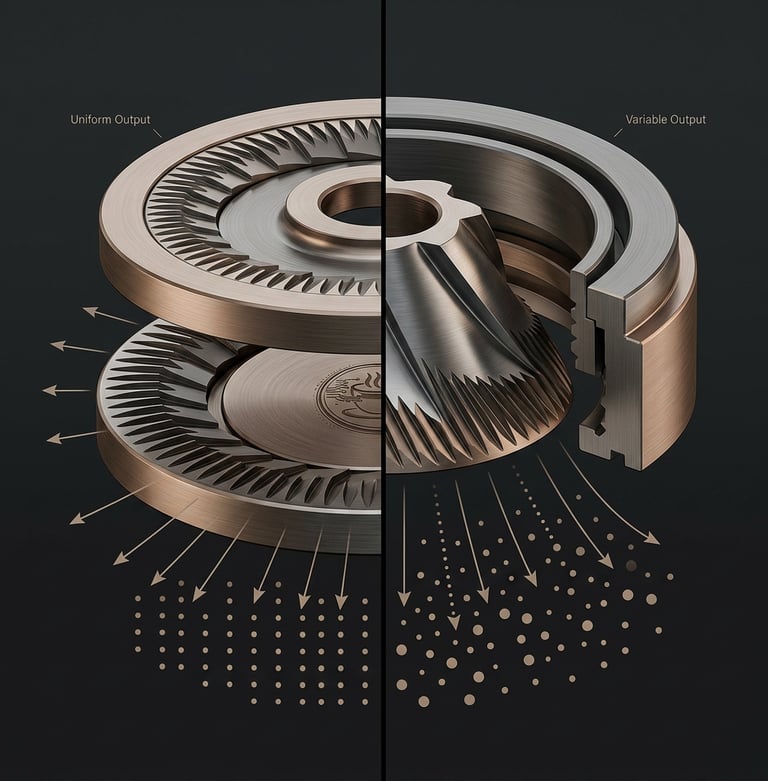
The type of burrs inside your grinder affects both flavor and workflow.
Flat Burr Grinders
Flat burrs produce a more uniform grind size, which helps create cleaner, more defined flavors in espresso.
They are typically preferred for:
Clarity and separation in flavor
More consistent extraction
Precision dialing
Flat burr grinders are often found in performance-focused setups.
Conical Burr Grinders
Conical burrs are more forgiving and easier to work with.
They tend to produce:
More body and texture
Slightly more forgiving grind distribution
Easier dialing for beginners
These are common in entry-level and all-purpose grinders.
Which Should You Choose?
Want precision and clarity → flat burr
Want ease and forgiveness → conical burr
Neither is “better”—they just produce different results.
The type of burrs inside your grinder affects both flavor and workflow, which is explained in detail in Flat Burr vs Conical Burr Grinders for Espresso.
Burr Types: Flat vs Conical
Grind Adjustment: Stepped vs Stepless
This is one of the most important differences in how a grinder feels to use.
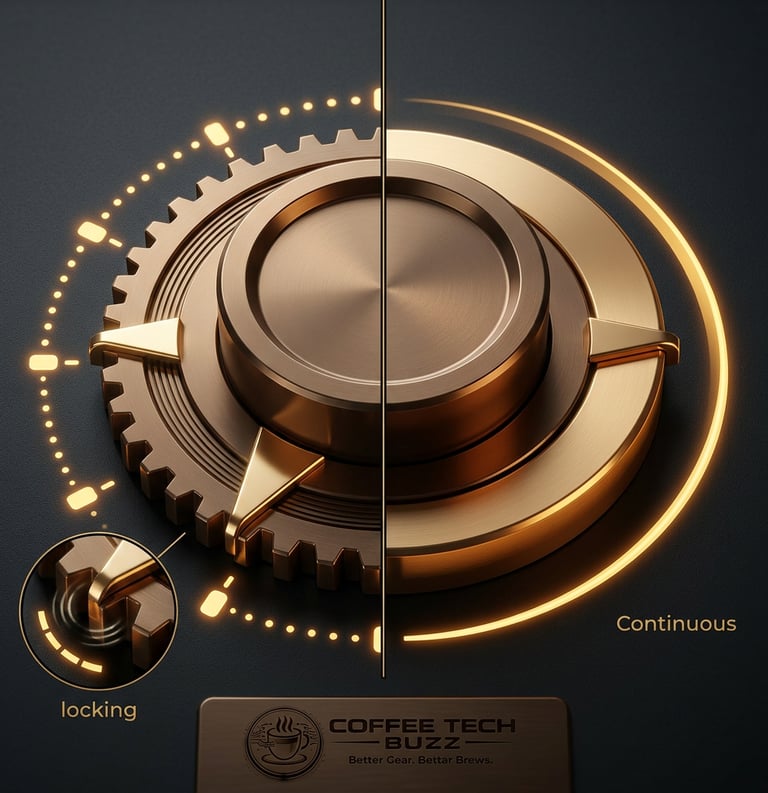
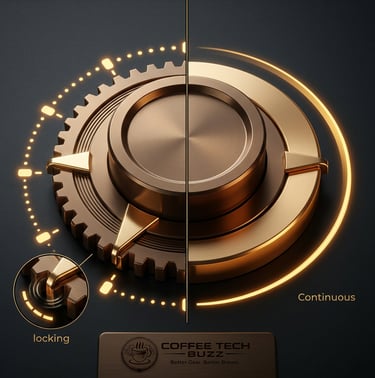
Stepped Adjustment
Fixed grind settings
Easier to dial in quickly
More beginner-friendly
Slightly less precise
Stepped grinders are great for users who want simplicity.
Stepless Adjustment
Infinite grind adjustments
Full control over shot timing
Better for dialing espresso precisely
Requires more effort
Stepless grinders are ideal if you want to fine-tune your espresso.
Quick Rule
Want easy dialing → stepped
Want full control → stepless
Adjustment style becomes even more noticeable when comparing grinders side-by-side, like in Turin DF54 vs Baratza Encore ESP.
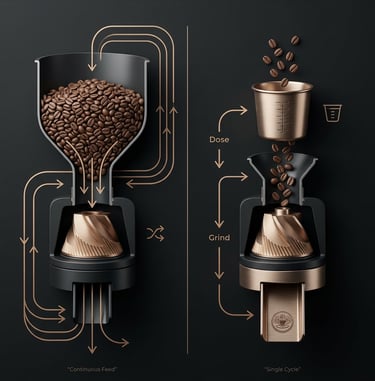
Workflow: Hopper vs Single-Dose
Your workflow determines how you interact with your grinder every day.
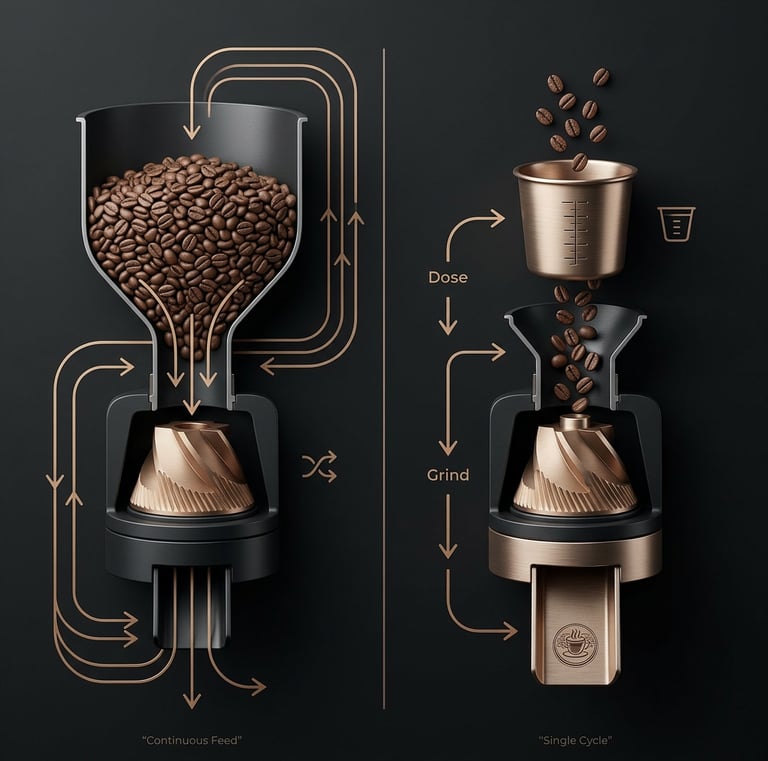
Hopper Grinders (Convenience First)
Load beans once
Grind on demand
Faster and easier
Better for daily routines
These are ideal for convenience and speed.
Single-Dose Grinders (Control First)
Weigh beans per shot
Grind only what you need
Lower retention
More consistent results
These are built for precision and freshness.
What Actually Matters
Want fast, simple coffee → hopper
Want better control and consistency → single-dose
Your workflow determines how you interact with your grinder every day, as explored further in Single Dose vs Hopper Grinders.
Grind Consistency
(Why It Matters More Than Anything)
Grind consistency is the single biggest factor in espresso quality.
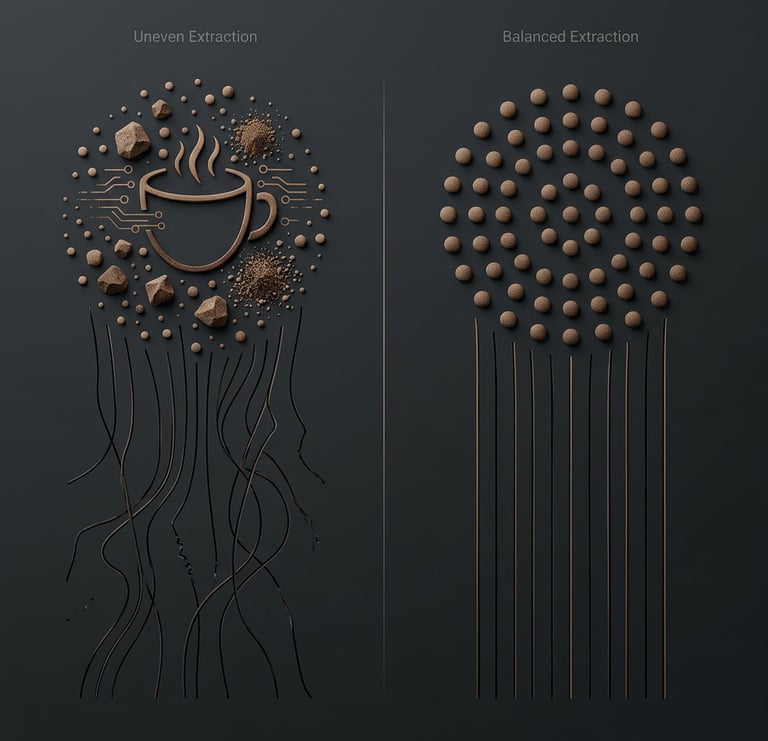
Inconsistent grind size leads to uneven extraction, which causes:
Bitter and sour flavors in the same shot
Poor crema
Unstable shot timing
Better grinders produce more uniform particles, which leads to:
Cleaner flavor
Better balance
More repeatable results
If you’re upgrading anything, upgrade your grinder first.
If you want a full breakdown of what actually impacts performance, What to Look for in an Espresso Grinder explains the key factors step by step.
How to Choose the Right Espresso Grinder
Choosing the right grinder comes down to how you want to make coffee every day.
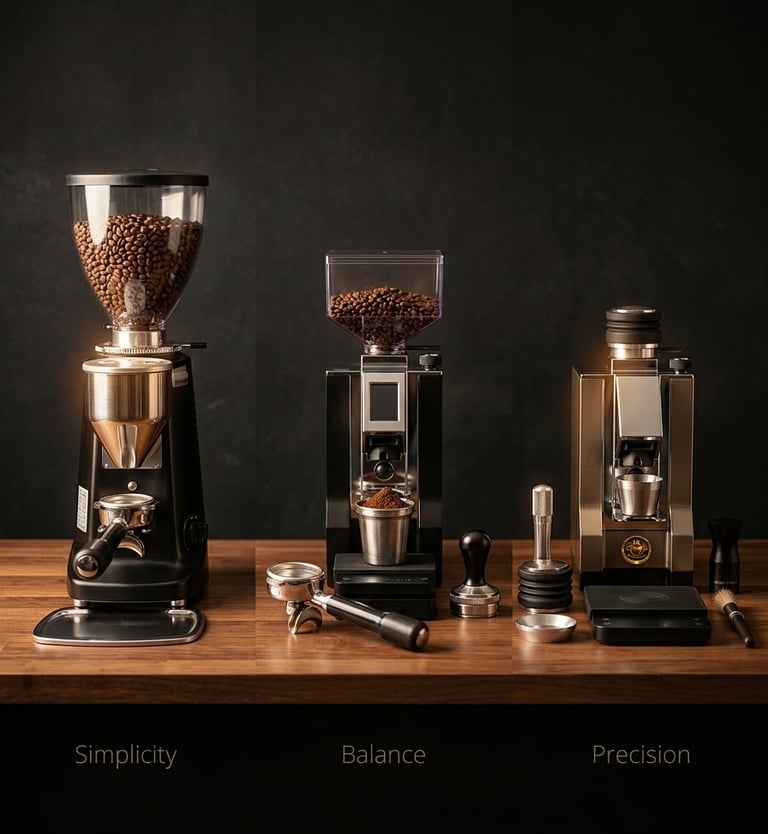
If You Want Simplicity
Stepped adjustment
Hopper workflow
Easy dialing
Less effort
Best for:
Beginners
Daily coffee routines
Low-maintenance setups
If You Want Precision
Stepless adjustment
Single-dose workflow
More control over grind size
Better long-term performance
Best for:
Espresso-focused users
People who want to improve their shots
More involved workflows
If You Want a Balance
Look for grinders that:
Offer good espresso range
Have manageable controls
Don’t overcomplicate workflow
This is where most users should start.
These differences become clearer when comparing real grinders in action, like in TIMEMORE Sculptor 064S vs Fellow Ode Gen 2.
Retention & Freshness
Retention refers to how much coffee remains inside the grinder after grinding.
High retention means:
Old grounds mix with fresh ones
Flavor becomes inconsistent
You waste coffee
Low retention means:
Fresher shots
More accurate dosing
Better consistency
Single-dose grinders are typically best for low retention.
Workflow and retention also tie into usability, which is covered in Manual vs Electric Espresso Grinders.
Common Mistakes
Choosing the wrong grinder usually comes down to expectations.
Buying based on price alone
Cheap grinders often lack the precision needed for espresso.
Ignoring grind adjustment
Without proper adjustment, you can’t dial in shots correctly.
Overcomplicating your setup
Not everyone needs a high-end precision grinder.
Choosing the wrong workflow
A grinder that doesn’t match your routine becomes frustrating fast.
How Much Should You Spend?
At different price levels, expectations change:
Entry-level → basic espresso capability
Mid-range → better consistency and control
Higher-end → precision and workflow improvements
The key isn’t spending more—it’s choosing the right type of grinder for how you make coffee.
If you're narrowing your options by price, comparing Best Espresso Grinders Under $300 and Best Espresso Grinders Under $600 helps clarify what changes at each level.
Which Grinder Should You Choose?
If you want easy, consistent espresso → go with a beginner-friendly grinder
If you want more control and better shot quality → choose a precision-focused grinder
If you want to improve over time → choose something you won’t outgrow quickly
For a full breakdown of top-rated picks across all categories, see Best Coffee Grinders for Espresso.
Frequently Asked Questions
Do you really need a dedicated espresso grinder?
Yes—if you want consistent espresso.
Espresso requires a very fine and precise grind size. Standard coffee grinders either can’t grind fine enough or lack the adjustment control needed to dial in shots properly.
A dedicated espresso grinder gives you:
Finer grind range
Better consistency
More control over extraction
Without it, even a good espresso machine won’t perform well.
What matters more for espresso: grinder or machine?
The grinder matters more.
Grind size directly controls how water flows through the coffee, which affects extraction time and flavor. If the grind is off, the shot will be under- or over-extracted regardless of the machine.
A better grinder will improve your espresso more than upgrading your machine in most cases.
Is a stepless grinder worth it for beginners?
Only if you want to learn and improve.
Stepless grinders allow for extremely fine adjustments, which is great for dialing in espresso—but they also require more effort and patience.
If you want:
Simplicity → go stepped
Control → go stepless
Beginners who enjoy the process will benefit from stepless. Others may find it frustrating.
Can one grinder handle both espresso and regular coffee well?
Some can—but usually with trade-offs.
Grinders designed for espresso can grind for other methods, but switching between settings can take time and effort.
Grinders designed for general brewing are easier to use across methods but often lack the precision needed for espresso.
If you plan to switch frequently, look for a grinder that balances both—but don’t expect perfection in every category.
What is retention, and why does it matter?
Retention is the amount of coffee left inside the grinder after grinding.
High retention leads to:
Stale grounds mixing with fresh coffee
Inconsistent flavor
Wasted coffee
Low retention improves:
Freshness
Consistency
Accuracy when dosing
Single-dose grinders usually perform better in this area.
How long should an espresso grinder last?
A good grinder should last several years, often longer with proper care.
What matters most:
Burr quality and replacement availability
Build quality
Maintenance and cleaning
Many grinders can last 5–10+ years if maintained properly, especially brands that support replacement parts.
Contact@TheBuzzHQ.com
© 2026 Coffee Tech Buzz. All rights reserved.
Coffee Tech Buzz
Smarter brewing through better gear, clearer insights, and real-world performance testing.
Built for home users who want consistency without guesswork.
We focus on how machines actually perform — not just what they claim.
Home
Coffee Equipment Guide
Coffee Makers & Machines
Coffee Grinders
Espresso Gear & Guides
Coffee Beans & Roasts
Coffee Accessories & Tools
For educational purposes only.
We may earn commissions from qualifying purchases.
General Inquiries: