
Why Your Espresso Shot Is Too Fast or Too Slow
Learn how espresso shot speed affects flavor and consistency, with tips on grind size, tamping, and machine settings for perfect shots every time.
ESPRESSOCOFFEE GRINDERS
The Coffee Tech Buzz Editorial Team - Led by AJ “Buzz” Eichman
4/30/20267 min read
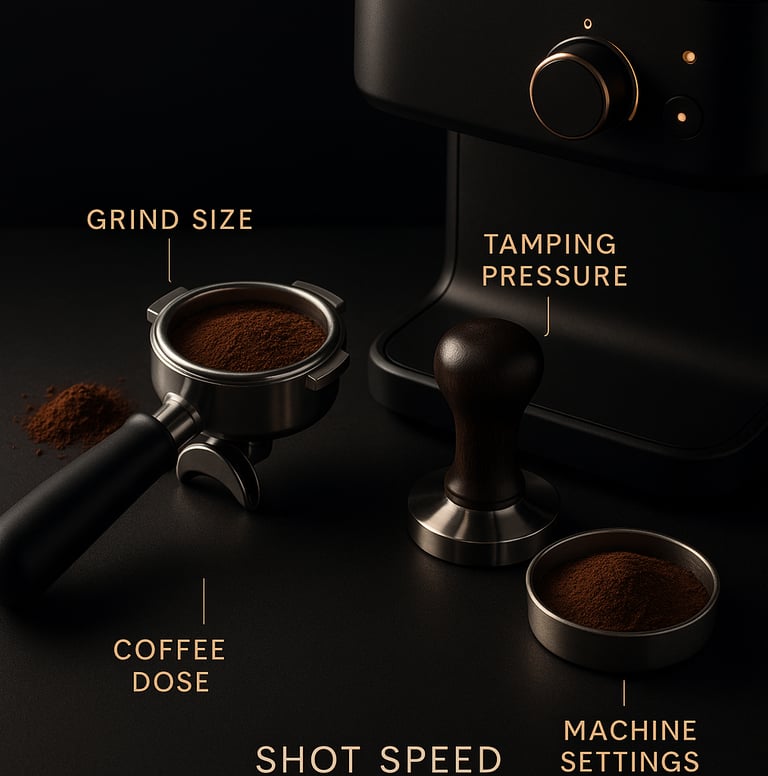
Espresso shot speed is one of the most critical variables impacting the quality and consistency of your espresso. A shot that pours too fast tends to yield flat, underdeveloped flavors, while one running too slow often results in bitterness and harshness. Understanding the underlying causes for these flow irregularities is essential for anyone serious about brewing espresso with precision. These factors—grind size, tamping pressure, coffee dose, and machine settings—interact in predictable ways, and learning to adjust them methodically will help you produce repeatable, high-quality espresso shots every time.
For a deeper understanding of how grinder performance influences these variables, start with Coffee Grinders and refine your setup further with the Complete Espresso Grinder Guide.
Quick Verdict
Espresso shot speed mainly depends on grind size and tamping pressure; finer grinds and firmer tamp increase shot time, coarser and lighter tamp decrease it.
Consistent tamping pressure around 30 pounds reduces variability and improves extraction balance.
Machine parameters such as pressure and temperature affect flow but should be fine-tuned after grind and tamp adjustments.
Monitoring shot time with a timer aims for a typical range of 25 to 30 seconds for a 1 to 2 oz espresso shot.
What Determines Espresso Shot Speed?
Fundamentally, espresso shot speed is governed by the resistance the water encounters as it passes through the compacted coffee bed. This resistance arises from the physical properties of the ground coffee—primarily grind size and how firmly it is tamped—as well as the mass of coffee in the portafilter and machine conditions like pressure and temperature. Any change in these variables shifts the flow rate in a predictable manner. Since espresso is a pressure-driven extraction, water seeks the path of least resistance, so uniformity in the coffee puck’s compactness is paramount to controlling shot time and extraction quality.
How Grind Size Impacts Extraction Time
Grind size serves as the primary control for shot flow rate and directly influences extraction time. Finer grinds increase the surface area and density of the coffee bed, elevating resistance to water flow. This slows down the shot, typically pushing extraction past the 30-second mark if too fine, leading to over-extraction characterized by bitterness and astringency. Conversely, grinding too coarse creates larger channels for water to flow through with less resistance, making the shot pour too fast, often under 20 seconds, which results in under-extracted, sour, or weak espresso.
The key is to adjust grind size in small increments. Even slight changes can have significant effects on shot speed. This sensitivity is why consistent grind calibration is critical; variations in burr sharpness or roast level necessitate readjustment to maintain shot time in the ideal range. For a breakdown of how burr design impacts this control, see Flat Burr vs Conical Burr Grinders for Espresso.
The Role of Tamping Pressure in Shot Flow
After dialing in the grind, tamping pressure becomes the next variable that shapes shot speed and extraction uniformity. Applying consistent pressure, generally in the vicinity of 30 pounds, compacts the coffee grounds evenly, minimizing gaps and channeling where water could flow preferentially. Too light a tamp leaves the coffee bed loose, which lowers resistance, causing the shot to rush through quickly and under-extract. On the other hand, excessive tamping can overly compress the coffee, slowing flow and increasing harsh or bitter notes due to prolonged contact with water.
What distinguishes effective tamping from guesswork is consistency. Variability in how firmly you press affects shot time as much as grind size alterations. Developing a stable tamp routine helps eliminate this source of shot time drift. Some baristas use calibrated tampers or pressure gauges to maintain a steady tamp force, but in home environments, a reliable, repeatable push with a focus on even distribution prior to tamping often provides the most noticeable improvement.
Adjusting Espresso Machine Settings for Consistency
Once grind and tamp are dialed in, machine settings provide the final layer of control over espresso shot speed. Factory presets for pump pressure are generally around 9 bars, and water temperature ideally falls between 90 and 96 degrees Celsius (194 to 205 degrees Fahrenheit). Deviations from these ranges impact how the coffee extracts and at what rate.
If the pressure is too low, water may struggle to push evenly through the puck, leading to slow extraction times, while excessive pressure can cause the shot to pour too fast by forcing water through any weak points more rapidly. Similarly, temperature influences solubility; higher temperatures speed chemical extraction and can intensify bitterness, which habituates some baristas to pull shorter, faster shots to counterbalance.
Machine performance consistency can drift as components wear or if maintenance lapses. Regular cleaning of group heads, baskets, and portafilters prevents channel clogging and uneven flow, both of which disrupt shot timing. Calibration and pressure profiling, where available, provide advanced users with precise control but must be approached cautiously, as indiscriminate changes can cause more inconsistencies.
Common Causes for Shots That Pour Too Fast or Too Slow
In practical troubleshooting, shots that pour too fast nearly always point back to grind size coarseness or insufficient tamping pressure. While it’s tempting to hastily cut grind size without checking dose or distribution, uneven coffee in the basket can create low-resistance paths known as channeling, causing water to bypass much of the bed and speed up extraction.
Shots that pour too slow, conversely, often result from overly fine grinds or tamping that compacts grounds beyond ideal levels. Another frequent culprit is overdosing—packing too much coffee into the portafilter—which increases puck density and retards flow. Furthermore, build-up of coffee oils or residue in equipment can obstruct flow rates gradually, leading to slower shots despite no visible changes in preparation.
Troubleshooting Tips for Espresso Shot Speed
If you observe that your espresso shot is too fast, start first with grind adjustments. Refine your grind size to a finer setting incrementally and watch how extraction time lengthens. Ensure coffee is evenly distributed in the portafilter before tamping to avoid channeling. Confirm your tamp pressure is consistent and firm but not excessive.
For grinder recommendations that allow finer adjustment control, see Best Espresso Grinders Under $300.
For slow shots, try coarsening your grind by small degrees while monitoring extraction time. Reassess your tamp pressure to confirm you are not over-compressing the grounds, and verify that your coffee dose matches your basket’s specifications. Cleaning equipment to remove any blockage or buildup should also be part of your troubleshooting routine because obstruction reduces effective flow.
Higher-performance options with tighter control can be found in Best Espresso Grinders Under $600.
When possible, use a timer to track shot duration, aiming for approximately 25–30 seconds for a 1–2 oz shot. Staying within this window usually indicates balanced extraction when paired with good taste assessment.
Tools and Techniques for Consistent Espresso Brewing
Achieving repeatable espresso shot speed demands tools that provide precise control over the critical variables. Quality burr grinders with stepless adjustment allow micro-changes to grind size, serving as the fastest lever for flow rate control. Calibrated tampers or tamping stations can help home baristas maintain pressure consistency, eliminating an often-overlooked cause of shot variability.
Pressure profiling machines and mass flow meters are valuable in professional or advanced home contexts, offering data to inform incremental tuning. However, for most, investing time in mastering distribution, tamping, and grind calibration will yield the most immediate improvements without adding complexity.
Workflow differences between grinder types can also influence consistency, especially when comparing dosing styles in Single Dose vs Hopper Grinders.
Interpreting Taste to Diagnose Shot Speed Issues
Taste remains the ultimate validation of shot quality and by extension, shot speed. If your espresso tastes sour, weak, or thin, it usually originates from shots pulling too fast, indicating under-extraction. This points toward coarser grind or insufficient tamp. If bitterness, astringency, or overly dry mouthfeel dominate, the shot likely runs too slow, suggesting the grind is too fine or tamp pressure too heavy.
Taste variations across shots that visually seem similar highlight the subtle impact of small inconsistencies in preparation. Establishing a process that controls one variable at a time allows you to correlate and understand how adjustments affect flavor and shot time, moving beyond guesswork toward reliable results.
Common Mistakes
Many home espresso brewers underestimate the sensitivity of grind size, often making large jumps and causing irreproducible results. Inconsistent tamping—whether in pressure or uneven puck distribution—is a frequent contributor to erratic shot speeds and extraction issues.
Neglecting routine equipment maintenance introduces unpredictable flow restriction, which changes shot speed without obvious cause. Another common oversight is failing to recalibrate grind or tamp technique when switching beans or roast levels, ignoring that each coffee behaves uniquely.
Overdosing or underdosing coffee grounds without consistent measurement affects puck density, thereby modifying flow resistance and extraction profile. Finally, ignoring signs of channeling, which is water finding cracks or weaker spots in the puck, leads to uneven extraction and misleading shot times.
FAQ
What is the ideal espresso extraction time?
Ideal espresso extraction for a standard 1 to 2 oz shot generally falls between 25 and 30 seconds. This range balances flavor development and extraction yield when paired with proper grind size and tamping.
How does grind size affect espresso shot speed?
Grind size determines the particle size distribution and packing density; finer grinds increase resistance, slowing shot speed and potentially causing over-extraction, while coarser grinds reduce resistance, speeding flow and causing under-extraction.
What tamping pressure should I use for espresso?
Around 30 pounds of tamping pressure is commonly recommended to maintain consistency but should be applied evenly to avoid channeling. Exact pressure can vary slightly depending on equipment and coffee.
Why does my espresso shot taste bitter if it pours slowly?
A slow shot usually indicates over-extraction, often caused by too fine a grind or excessive tamping pressure compressing the puck, both lengthening contact time and extracting harsher compounds.
Can machine pressure settings cause shots to pour too fast or slow?
Yes, espresso machines typically operate near 9 bars pressure; pressures outside this range can alter flow rate. Low pressure slows extraction, and excess pressure can force water through too quickly.
How do I diagnose channeling in espresso extraction?
Channeling occurs when water flows unevenly through cracks or less dense areas in the puck, often identified by fast, uneven flow and inconsistent taste. Visual cues include uneven puck surfaces after extraction and erratic shot times.
What tools can help improve espresso shot consistency?
Quality grinders with fine adjustment, calibrated tampers, pressure profiling machines, and timers are effective tools. Improved measurement and control reduce variable drift in shot preparation.
How often should I adjust grind size when changing beans?
Adjustments should be made with every new batch or roast because bean density, roast level, and oil content affect flow resistance and extraction speed.
Practical Conclusion
Consistent espresso shot speed hinges on methodical control of grind size and tamping pressure, supported by stable machine operation and precise dosing. Small, deliberate adjustments—rather than guesswork or random experimentation—lead to predictable changes in shot time and flavor. Understanding how these variables interact allows brewers to diagnose flow issues objectively and address them effectively.
A measured approach that prioritizes repeatability over trend-driven gear changes ensures that your espresso evolves through refinement, not chance. If you maintain your equipment diligently, monitor extraction with a timer, and respect the responsiveness of grind and tamp controls, achieving consistent, well-balanced espresso shot speed becomes a realistic and rewarding outcome.
Contact@TheBuzzHQ.com
© 2026 Coffee Tech Buzz. All rights reserved.
Coffee Tech Buzz
Smarter brewing through better gear, clearer insights, and real-world performance testing.
Built for home users who want consistency without guesswork.
We focus on how machines actually perform — not just what they claim.
Home
Coffee Equipment Guide
Coffee Makers & Machines
Coffee Grinders
Espresso Gear & Guides
Coffee Beans & Roasts
Coffee Accessories & Tools
For educational purposes only.
We may earn commissions from qualifying purchases.
General Inquiries: