

Coffee Grinder Settings Guide
Dialing in your grinder is where good coffee becomes great.
Grind size controls how water interacts with coffee. Too fine, and extraction slows down, pulling out bitter compounds. Too coarse, and water flows too quickly, leaving your coffee weak and underdeveloped.
If you’re new to grinders, start with the Coffee Grinders guide to understand how different grinder types affect consistency and performance.
This guide focuses on how to set your grinder correctly and adjust it based on your brew method and taste.
Why Grind Size Matters
Grind size directly controls extraction time.
Smaller particles increase surface area, slowing water flow and increasing extraction. Larger particles do the opposite, speeding up flow and reducing extraction.
If you want a deeper breakdown, Why Grind Size Matters explains how consistency impacts flavor.
You can also see how this translates into taste differences in How Grind Size Affects Taste.
Grind size is typically broken into three main categories:
Fine
Medium
Coarse
Each level is suited for a specific brewing method. If you’re unsure where to start, Best Grind Size for Each Brewing Method provides a full breakdown.
The key is matching grind size to brew time and extraction.
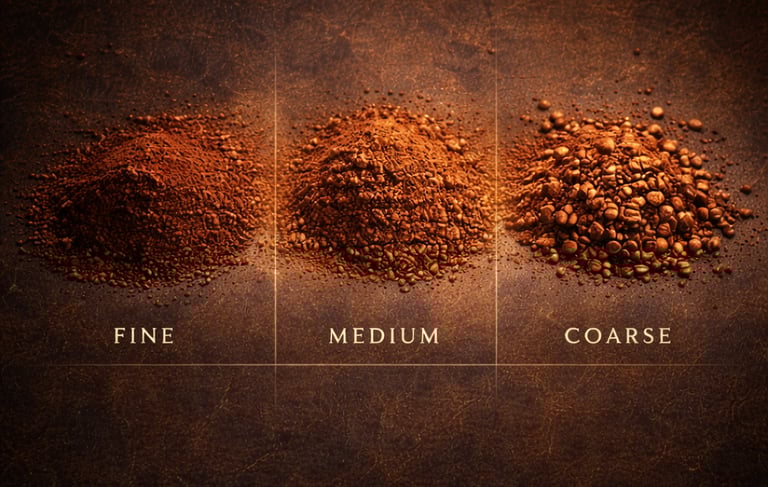
Understanding Grind Size Levels
Grind Size by Brewing Method
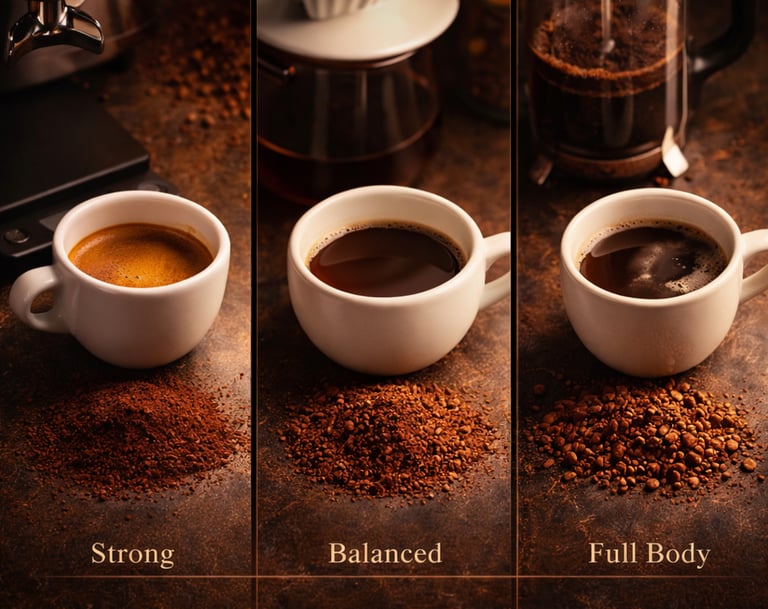
Each brewing method requires a specific grind size to work properly.
Espresso requires a fine grind to create resistance and pressure. Pour over uses a medium grind for balanced flow, while French press uses a coarse grind to prevent over-extraction.
If you want to understand the difference in more detail, Fine vs Coarse Grind Coffee explains how grind size affects strength and clarity.
How to Dial in Grind Size
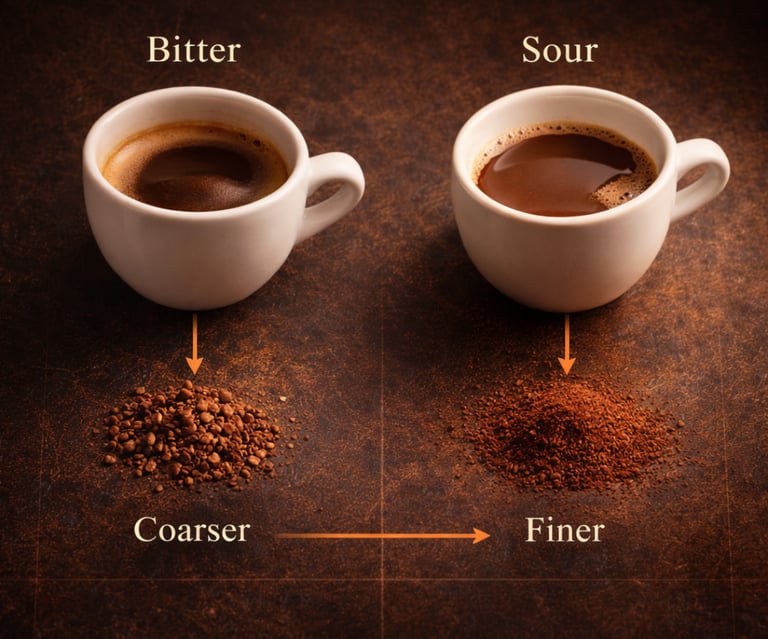
Dialing in grind size is a process of small adjustments.
Start with the recommended grind size for your brew method. Brew your coffee, then adjust based on taste:
Bitter → grind coarser
Sour → grind finer
Small changes can have a big impact. If you need a step-by-step approach, How to Dial in Grind Size walks through the process in detail.
If your results are inconsistent, How Grind Size Affects Extraction explains what’s happening during brewing.
Common Grind Size Mistakes
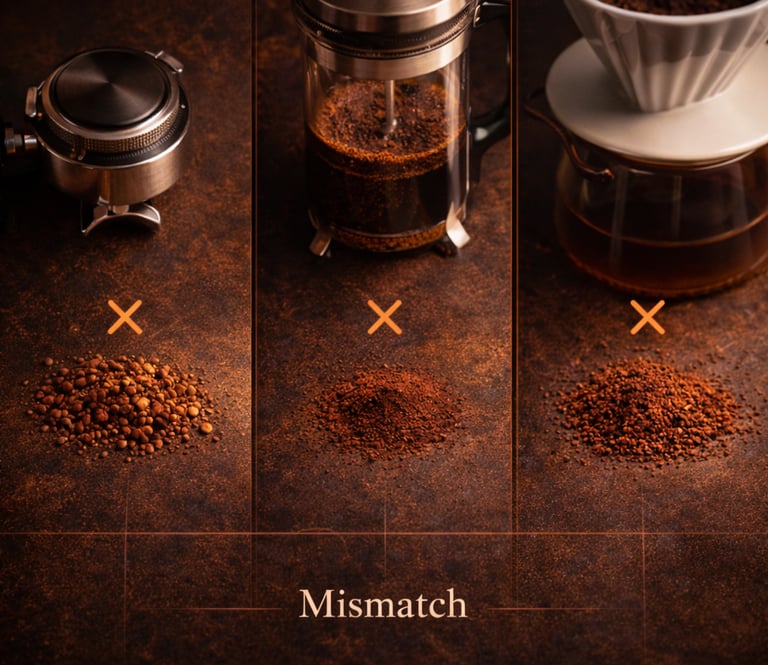
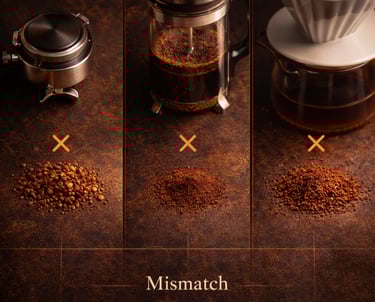
Most grind issues come from simple mistakes.
Using the wrong grind size for your brew method is the most common problem. Another issue is not adjusting grind size when changing beans or brew time.
If your coffee doesn’t taste right, Why Your Coffee Tastes Bitter or Sour helps diagnose the issue quickly.
Stepped vs Stepless Adjustments
Grinders use different adjustment systems.
Stepped grinders move between fixed settings, making them easier to use. Stepless grinders allow infinite adjustment, giving you more control but requiring more precision.
If you’re comparing grinder types, Manual vs Electric Coffee Grinders also highlights how control and workflow differ.
Consistency vs Adjustment
Having more settings doesn’t always mean better results.
Consistency matters more than the number of adjustments. A grinder that produces uniform particles will outperform one with more settings but poor consistency.
If you’re deciding how much to spend, Do Expensive Grinders Make a Difference explains where upgrades actually improve performance.
Maintaining Your Grind Settings
Once you dial in your grind, consistency depends on maintenance.
Coffee oils and residue can affect performance over time. Regular cleaning helps maintain accuracy and flavor.
For cleaning guidance, see How Often Should You Clean a Grinder.
If you’re storing coffee, proper handling also matters—How to Store Ground Coffee explains how to preserve freshness.
Frequently Asked Questions
What grind size should I start with?
Start with the recommended grind size for your brew method, then adjust based on taste.
How do I know if my grind is too fine?
If your coffee tastes bitter or brews too slowly, your grind is likely too fine.
How do I know if my grind is too coarse?
If your coffee tastes sour or weak and brews too quickly, your grind is too coarse.
Do I need to adjust grind size for different beans?
Yes. Different beans extract differently, so small adjustments are often needed.
What’s the easiest way to dial in grind size?
Make small adjustments and test one variable at a time until the flavor improves.
Does grind size affect brew time?
Yes. Finer grinds slow down extraction, while coarser grinds speed it up.
Can one grind setting work for everything?
No. Each brew method requires a different grind size for proper extraction.
How often should I adjust my grinder?
Adjust when changing beans, brew method, or if your coffee starts tasting off.
Final Thoughts
Grind size is one of the most important variables in coffee.
Once you understand how to adjust it, you gain control over flavor, strength, and consistency.
Use this guide to dial in your settings, then explore the Best Coffee Grinders to find equipment that matches your brewing style.
Contact@TheBuzzHQ.com
© 2026 Coffee Tech Buzz. All rights reserved.
Coffee Tech Buzz
Smarter brewing through better gear, clearer insights, and real-world performance testing.
Built for home users who want consistency without guesswork.
We focus on how machines actually perform — not just what they claim.
Home
Coffee Equipment Guide
Coffee Makers & Machines
Coffee Grinders
Espresso Gear & Guides
Coffee Beans & Roasts
Coffee Accessories & Tools
For educational purposes only.
We may earn commissions from qualifying purchases.
General Inquiries: