
Why Grind Size Matters in Coffee Brewing
Discover why grind size is crucial in coffee brewing and how it impacts extraction, flavor, and brew consistency for every method.
COFFEE GRINDERS
The Coffee Tech Buzz Editorial Team - Led by AJ “Buzz” Eichman
4/4/20268 min read
The role of grind size in coffee brewing is often underestimated, yet it holds considerable influence over the extraction process and therefore the flavor and consistency of the final cup. By controlling grind size precisely, you are controlling how water interacts with coffee grounds, which directly affects extraction rate, brew time, and taste balance. If you want a complete foundation, start with Coffee Grinders, where the core equipment and grind control principles are broken down in full. This article dissects why grind size is a fundamental variable for anyone serious about predictable and repeatable coffee brewing results, examining its impact across brewing methods, extraction, and overall brew quality.
Quick Verdict
• Grind size determines surface area exposure to water and thus shapes the pace and completeness of extraction.
• Consistent grind size avoids uneven extraction that usually causes sour or bitter flavor imbalances.
• Adjusting grind size is often the first and most effective lever for controlling brew time and taste profile.
• Burr grinders provide superior grind consistency and adjustability compared to blade grinders, crucial for achieving precise control.
Understanding Grind Size and Its Role in Coffee Brewing
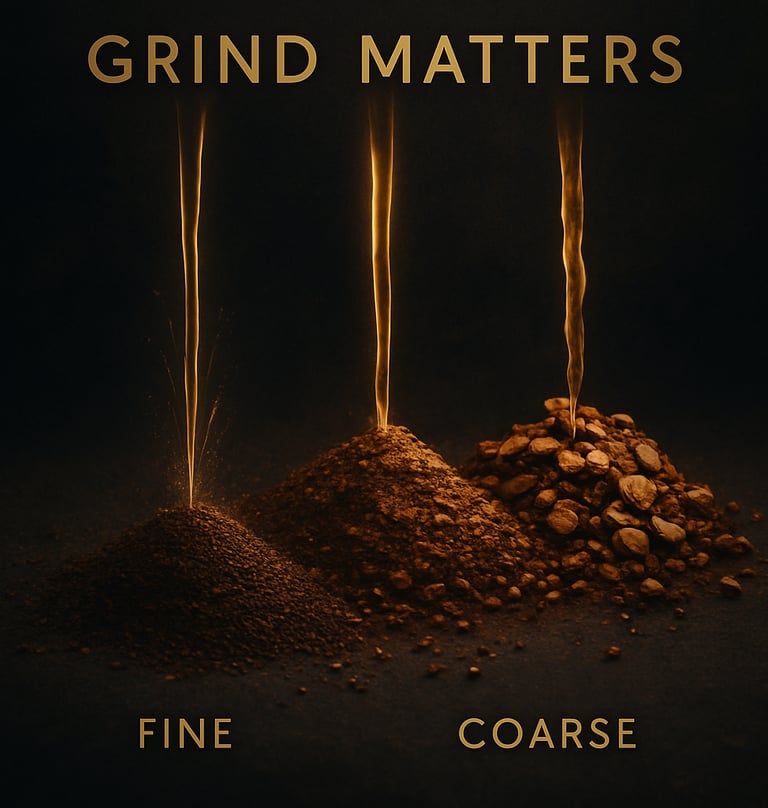
Grind size directly affects how water extracts soluble compounds from coffee grounds. Finer particles increase surface area that water contacts, accelerating extraction. This intensifies flavor and strength but also increases the risk of over-extraction, where bitterness and astringency become dominant. Conversely, coarser grinds slow extraction by reducing surface area and water resistance, often leading to a lighter, sometimes under-extracted cup with underdeveloped sweetness and acidity. Each brewing method comes with an extraction window optimized around a particular grind range to balance factors such as contact time, water flow, and agitation.
This interrelationship means grind size is not simply a cosmetic adjustment but a functional control that shapes the extraction curve. If grind size drifts unintentionally, even subtle shifts in final flavor result. This is usually where results start to vary without people realizing why. It also explains why repeatability requires methodical attention to grind, among other variables.
How Grind Size Affects Extraction and Flavor
Extraction depends on the solubles dissolved from grounds, and grind size influences surface area exposed and water flow dynamics. Finer grinds create more resistance to water, slowing flow and increasing contact time. This leads to a faster extraction rate but also potential over-extraction if other variables like brew time or water temperature remain unchanged. Over-extracted coffee manifests bitterness and harshness, masking nuanced flavors. On the other hand, coarse grinds produce less resistance, allowing quicker flow and often incomplete extraction, which emphasizes sour or acidic notes due to under-extraction.
Extraction’s sensitivity to grind size means adjusting grind size leads to significant shifts in flavor. A small change here tends to show up more than expected in the final cup’s balance. If you’re actively dialing in flavor, the process is expanded further in Coffee Grinder Settings Guide, where grind adjustments are treated as a repeatable system rather than guesswork.
Choosing the Right Grind Size for Your Brewing Method
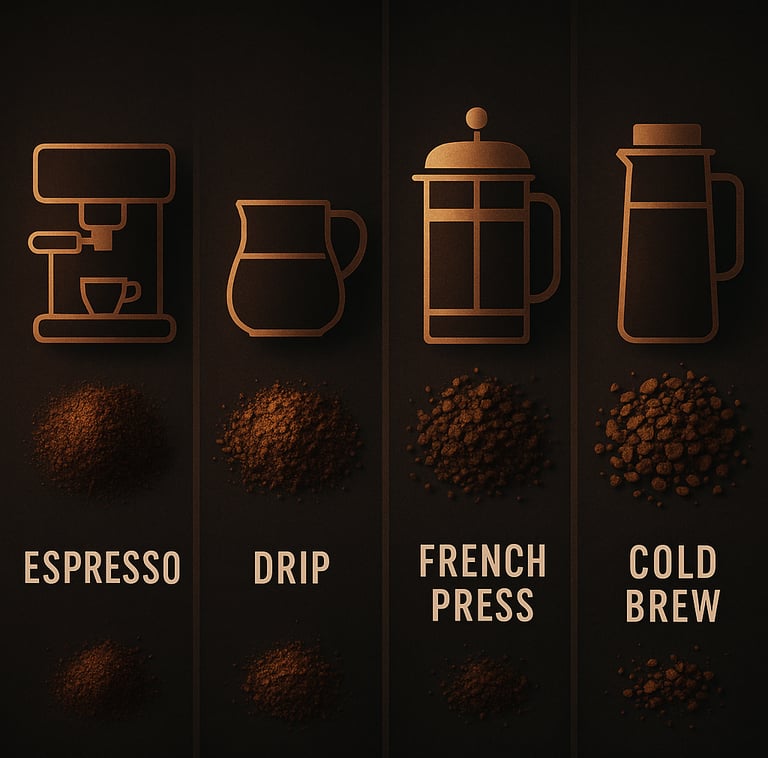
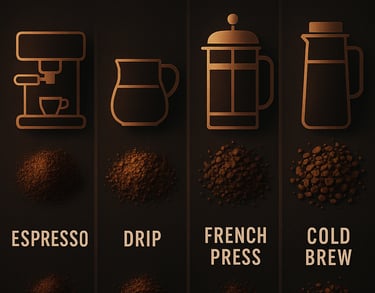
Different brewing methods produce their best results when paired with specific grind sizes matched to their extraction logic:
Espresso requires very fine grinds to create sufficient resistance for high-pressure extraction within a short brew time around 25–30 seconds. The grind must be extremely consistent to avoid channeling that leads to uneven extraction and flavor inconsistency. If you're setting up or upgrading your setup, reviewing Best Coffee Grinders for Espresso can help match grind precision to machine performance.
Drip coffee benefits from a medium grind size that balances flow rate and extraction time, usually between 4–6 minutes. The drip brewer relies on gravity and steady water saturation, making uniformity in grind essential to avoid over- or under-extracted pockets.
French press uses a coarse grind to minimize sediment and enable a steep brew time ranging from 4 to 5 minutes. Coarse particles reduce over-extraction risk during immersion since contact time is longer.
Cold brew demands very coarse grinds, coarser than French press, to accommodate steep extraction times exceeding 12 hours. The grind size slows extraction and reduces bitterness, creating a smooth profile. For this style specifically, Best Coffee Grinders for Pour Over also covers grinders that handle coarse consistency well for extended brew methods.
Each method’s optimal grind range must be respected because using an inappropriate grind can significantly degrade brew quality. A common mistake is using too fine a grind for immersion methods such as French press, which leads to clogged filters and excessive bitterness. If you’re unsure how these ranges compare, Fine vs Coarse Grind Coffee breaks down the differences in a more direct side-by-side format.
The Importance of Grind Consistency
Beyond average particle size, uniformity of grind distribution—grind consistency—is equally critical. Inconsistent grind yields a wide range of particle sizes that extract at different rates. Fine particles extract quickly and risk over-extraction, while coarse fragments extract slowly and may be under-extracted. This imbalance results in a final cup that tastes muddled or uneven. Investors in home grinding systems should prioritize burr grinders over blade grinders, as burrs mechanically crush beans and deliver a much tighter particle size distribution.
Consistency also matters over time. Regular calibration and cleaning of grinders are necessary to maintain consistent grind size. Burrs wear down, affecting grind results, and residues from coffee oils can clog burrs, resulting in erratic grind sizing that undermines brew uniformity. Without maintenance, even the best grinder will eventually produce inconsistent results, which you’ll notice more over repeated brews. If you're troubleshooting uneven results, Why Your Grinder Isn’t Consistent dives deeper into the root causes.
Tips for Adjusting Grind Size and Improving Brew Quality
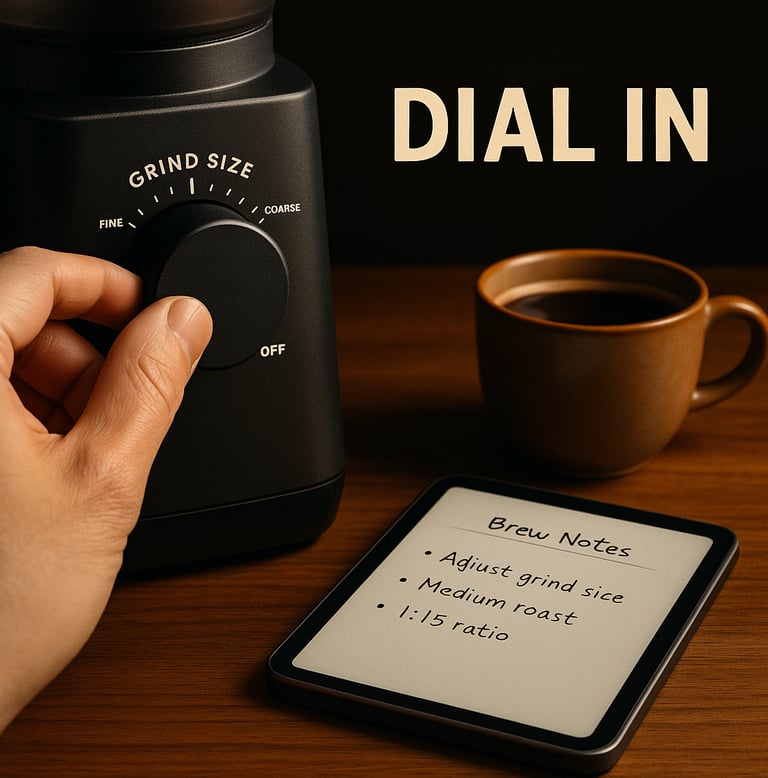
Adjusting grind size is the primary variable to tweak when dialing in a coffee recipe. If you focus on one variable first, start with grind size. Grain size affects extraction rate, brew time, and flavor balance, so it often has the most immediate impact.
When adjusting, make small incremental changes and test multiple brews to observe how flavor shifts. Decreasing grind size will generally speed extraction and increase intensity but watch out for signs of bitterness. Increasing grind size slows extraction, which may highlight acidity or thinness if overdone.
Keep notes of grind adjustments alongside other variables such as dose, temperature, and brew time. This systematic approach prevents overcomplication and helps isolate the effect of grind changes. If you're refining this process further, How to Dial in Grind Size provides a structured approach to making repeatable adjustments.
Common Grinder Types and Their Impact on Grind Size
The choice of grinder heavily influences the precision and repeatability of your grind size. Blade grinders chop beans with a spinning blade, producing a broad particle size distribution and little control over grind size. This inconsistency usually leads to uneven extraction and unpredictable flavor.
Burr grinders use two abrasive surfaces (burrs) to crush beans uniformly, yielding more consistent particle sizes. Burr grinders also offer adjustment mechanisms to control grind size precisely. Among burr grinders, there are stepped and stepless designs. Stepped grinders move in preset increments, making it easier to return to previous settings. Stepless grinders allow for infinitely variable adjustments, providing finer control but requiring more trial to find ideal settings. If you're comparing grinder styles directly, Burr Grinder vs Blade Grinder highlights the real-world differences.
For home use, investing in a quality burr grinder with reliable adjustment features will contribute more to brew quality than most coffee makers or accessories. This is where control matters most. For a broader breakdown of top-performing options across categories, see Best Coffee Grinders.
Troubleshooting Grind Size Issues
Common problems related to grind size often arise without immediate awareness because their symptoms mimic other brewing errors. If coffee tastes excessively sour or weak, the grind is likely too coarse, leading to under-extraction. Conversely, persistent bitterness or harshness can be caused by grind settings that are too fine.
Uneven extraction flavors may indicate inconsistent grind size, burr wear, or a need for grinder cleaning. If adjusting grind size doesn’t improve taste, investigating grinder maintenance and dosage accuracy is warranted. In many cases, flavor issues tie directly into extraction problems, which are explored further in How Grind Size Affects Extraction.
When switching brewing methods, a failure to adjust grind size accordingly is another frequent pitfall. Always remember that grind size should be the first parameter modified when changing devices or coffee type.
Regular grinder cleaning to remove buildup is necessary to maintain consistent particle sizes and flow. Neglecting this can cause clogged burrs, uneven crushing, and flavor deterioration over time.
Common Mistakes
Using the wrong grind size for a specific brewing method, such as espresso grind in a French press, which causes over-extraction and difficulty filtering.
Neglecting to adjust grind size when changing variables like dose, water temperature, or coffee origin, resulting in inconsistent flavor profiles.
Relying on blade grinders that produce uneven particle sizes, undermining extraction balance.
Failing to clean grinders regularly, which leads to clogged burrs and unpredictable grind consistency.
Overcomplicating grind adjustment patterns without systematic note-taking, which hampers repeatability and increases frustration.
FAQ
What grind size is best for espresso versus drip coffee?
Espresso requires a very fine grind, nearly powdery, to create sufficient extraction pressure in under 30 seconds. Drip coffee typically uses a medium grind, similar in texture to granulated sugar, to balance flow rate and extraction time of about 4–6 minutes.
How does grind size affect extraction and flavor?
Finer grinds expose more surface area, increasing extraction speed and concentration, but risk over-extraction leading to bitterness. Coarser grinds slow extraction, which can cause under-extraction and sour or weak flavors.
Why is grind consistency important?
Uniform grind particles ensure even extraction during brewing. Inconsistent grind size leads to a mix of under- and over-extracted flavors, reducing clarity and quality in the cup.
How often should I adjust my grind size?
Adjust grind size whenever brewing parameters such as dose, water temperature, brew time, or coffee origin change. Also adjust if flavor consistently leans sour (too coarse) or bitter (too fine).
What type of grinder provides the most consistent grind?
A burr grinder, especially one with stepless adjustment capability, offers the best grind consistency and control compared to blade grinders. Burrs produce uniform particle sizes leading to more predictable extraction.
Can grind size affect brewing time?
Yes. Finer grinds slow water flow and increase contact time, thus reducing brewing time for balanced extraction. Coarser grinds allow faster flow but require longer steeping times in immersion methods.
How do I know if my grind size is too fine or too coarse?
If coffee tastes bitter, harsh, or overly intense, the grind may be too fine. If it tastes weak, sour, or acidic with thin body, the grind may be too coarse.
Is it necessary to clean the grinder regularly to maintain grind quality?
Regular cleaning is essential. Residue buildup affects burr performance and leads to inconsistent particle sizes, disrupting extraction and flavor consistency.
Conclusion
Grind size is far more than a simple setting on your grinder; it is a fundamental control point that shapes every aspect of coffee extraction and final brew quality. Achieving predictable, balanced coffee requires precise and consistent grind size tailored to your brewing method and style. This demands equipment built for adjustability and consistency, routine maintenance, and a disciplined approach to calibration and note-taking. When grind size is managed as a process variable rather than a fixed parameter, the quality and repeatability of your coffee improve markedly. The goal is not occasional good cups, but reliable, reproducible results — and grind size adjustment is the clearest path to that outcome.
Contact@TheBuzzHQ.com
© 2026 Coffee Tech Buzz. All rights reserved.
Coffee Tech Buzz
Smarter brewing through better gear, clearer insights, and real-world performance testing.
Built for home users who want consistency without guesswork.
We focus on how machines actually perform — not just what they claim.
Home
Coffee Equipment Guide
Coffee Makers & Machines
Coffee Grinders
Espresso Gear & Guides
Coffee Beans & Roasts
Coffee Accessories & Tools
For educational purposes only.
We may earn commissions from qualifying purchases.
General Inquiries: