
Why Your Grinder Isn’t Consistent
Discover key reasons behind coffee grinder consistency issues and practical tips to ensure uniform grind size for better brew quality.
COFFEE GRINDERS
The Coffee Tech Buzz Editorial Team - Led by AJ “Buzz” Eichman
4/4/20267 min read
Introduction
Coffee grinding is an exercise in controlled repetition. Achieving consistent grind size is foundational for unlocking balanced extraction and predictable brew outcomes. When a grinder fails to deliver repeatable particle size uniformity, the entire brewing process becomes less reliable, resulting in flavor imbalances and frustrating variability. This is often where results start to vary without people realizing why. Understanding the underlying causes of coffee grinder inconsistency, alongside practical maintenance and calibration strategies, is crucial for anyone serious about performance-focused brewing.
If you want to understand the role grinders play in the full brewing system, Coffee Grinders breaks down how grinder performance impacts extraction from the start.
Quick Verdict
• Grinder inconsistency mainly stems from burr wear, improper maintenance, and dosing variability.
• Burr grinders outperform blade models in delivering uniform particle size but demand care and calibration.
• Inconsistent grind size directly affects extraction time, altering flavor balance and overall brew quality.
• Regular cleaning, burr alignment, and dosing control noticeably improve grind consistency over time.
Understanding Grinder Consistency and Its Importance
Consistency in grind size refers to producing uniformly sized coffee particles throughout the grinding process. This consistency influences water flow and extraction uniformity, both of which determine the flavor profile of the final cup. Variable grind sizes create uneven extraction; finer particles can over-extract quickly, pulling bitterness, while coarser ones under-extract, leaving sour or weak notes.
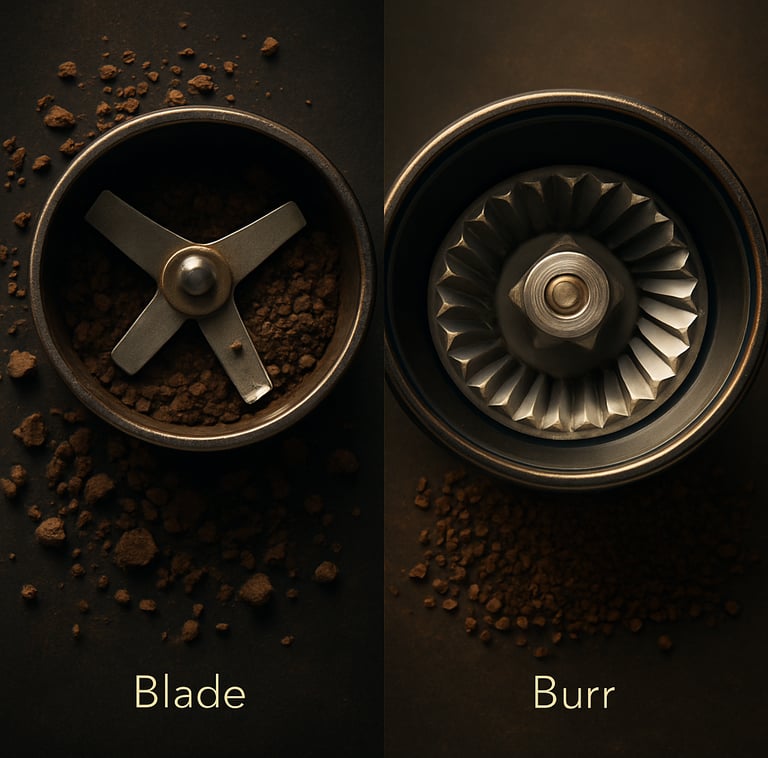
The degree of grind size uniformity a grinder produces depends primarily on its design, burr type, and condition. Burr grinders, with their fixed or adjustable burrs, crush beans into predictable particle distributions, whereas blade grinders chop irregularly, leading to wide variability. The challenge is that even burr grinders, without proper upkeep, develop inconsistencies that creep into every brew.
If you're comparing grinder types directly, Burr Grinder vs Blade Grinder highlights how consistency differs between designs.
Common Causes of Grinder Inconsistency
Several factors contribute to inconsistency during grinding, even when using high-quality equipment. Burr wear is a primary culprit; steel burrs tend to dull gradually through repeated use, altering the particle size distribution. Ceramic burrs maintain sharpness longer but are susceptible to chipping if mishandled. As burrs dull, grind size variability increases, which slows extraction unpredictably.
Dosing irregularities also play a significant role. Uneven coffee dosing changes the coffee bed density and flow characteristics, even if the grind size remains unchanged. Static charge and retention compound the problem by causing clumping or retention of grounds inside the grinder, leading to a mixture of old and fresh particles that skew consistency.
Neglecting calibration and the break-in period after burr replacement or major cleaning can introduce subtle deviations in grind quality. Misalignment or loosened burr mechanisms produce uneven crush pressure, translating to a greater spread in particle sizes.
If you’re troubleshooting this process step-by-step, Coffee Grinder Settings Guide helps structure calibration properly.
Types of Coffee Grinders and Their Impact on Consistency
Broadly, grinders fall into blade or burr categories, with burr types further divided by material and configuration. Blade grinders, though affordable, produce wildly variable particle sizes that undermine extraction uniformity, making them unsuitable for anyone aiming for precision brewing.
Burr grinders, whether conical or flat, provide far greater control over grind size distribution. Flat burrs excel at producing uniform particles but often require more frequent alignment and cleaning. Conical burrs are more forgiving in maintenance and retain flavor clarity well, but their particle distribution can be slightly broader.
Steel burrs are durable and maintain sharp edges long enough for heavy use, but dulling inevitably occurs and requires replacement to preserve consistency. Ceramic burrs resist wear better but must be handled carefully to avoid damage. Selection between these options comes down to desired brewing method, maintenance willingness, and lifetime performance expectations.
If you're comparing workflow and usability, Manual vs Electric Coffee Grinders breaks down how different grinder types affect daily use.
Maintenance Tips to Improve Grinder Performance
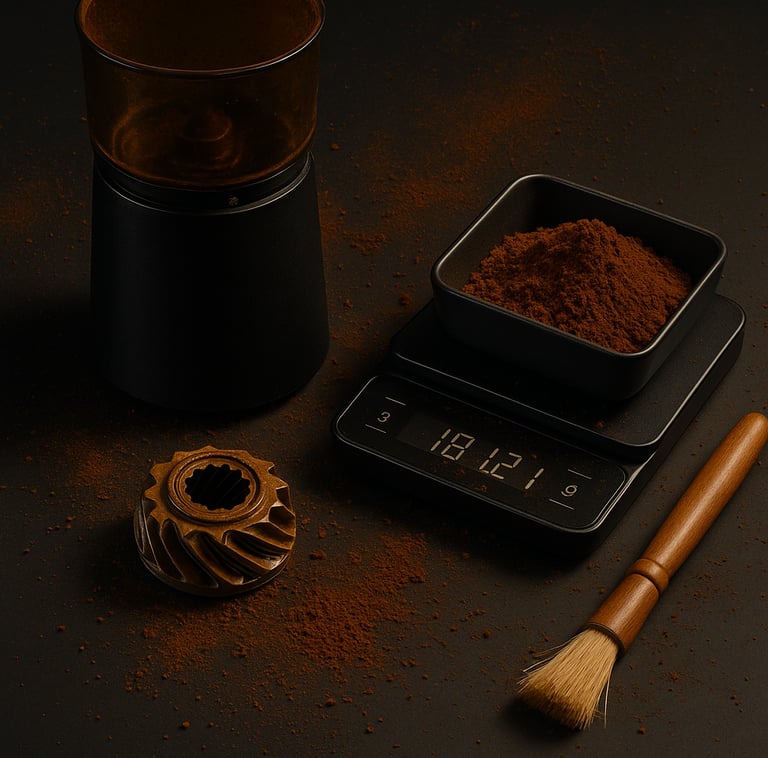
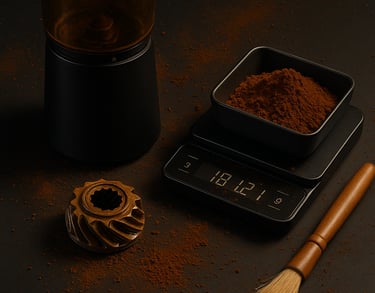
Maintenance is rarely the glamorous part of coffee brewing, but it is fundamental to predictable results. Routine burr cleaning prevents buildup of coffee oils and fines that alter crush mechanics. Coffee residue accumulates subtly but steadily impacts grind particle consistency, especially if left unaddressed over weeks.
Burr alignment should be checked and corrected regularly. A burr that is even slightly off-plane creates variations in grind size distribution that show up clearly in extraction inconsistency. If the grinder allows, perform calibration adjustments after cleaning or burr replacement to maintain optimal grind settings.
It is important to monitor burr condition over time and plan for replacements before sharpness declines noticeably. Ignoring burr dulling is usually where grind size variability starts increasing, often subtly enough to be overlooked at first.
Static control and retention management also contribute. Using anti-static tools or adjusting the grind chamber environment limits clumping and grounds retention, which otherwise adds inconsistency by mixing fresh and old particles during dosing.
If buildup is becoming an issue, How Often Should You Clean a Grinder outlines proper cleaning routines.
How Grind Variability Affects Extraction and Brew Quality
Grind size variability directly affects water resistance and flow rate through the coffee bed. Finer particles increase resistance, slowing extraction and surfacing bitterness more quickly. Coarser particles reduce resistance, hastening extraction and risking underdeveloped, sour flavors.
When grind size distribution is uneven, these effects compound unpredictably. Areas rich in fines over-extract while larger particles remain under-extracted, resulting in imbalanced cups. This variability is usually where things start to drift; your brew quality shifts subtly from one batch to the next without clear reasons.
Control over grind size uniformity enables precise adjustments to brew variables such as dose, water temperature, and brew time to compensate for slight inconsistencies when they arise. Without it, the system becomes unstable and inconsistent.
If you want a deeper breakdown of this relationship, How Grind Size Affects Extraction explains how grind variability impacts flavor.
Best Practices for Consistent Dosing and Grind Calibration
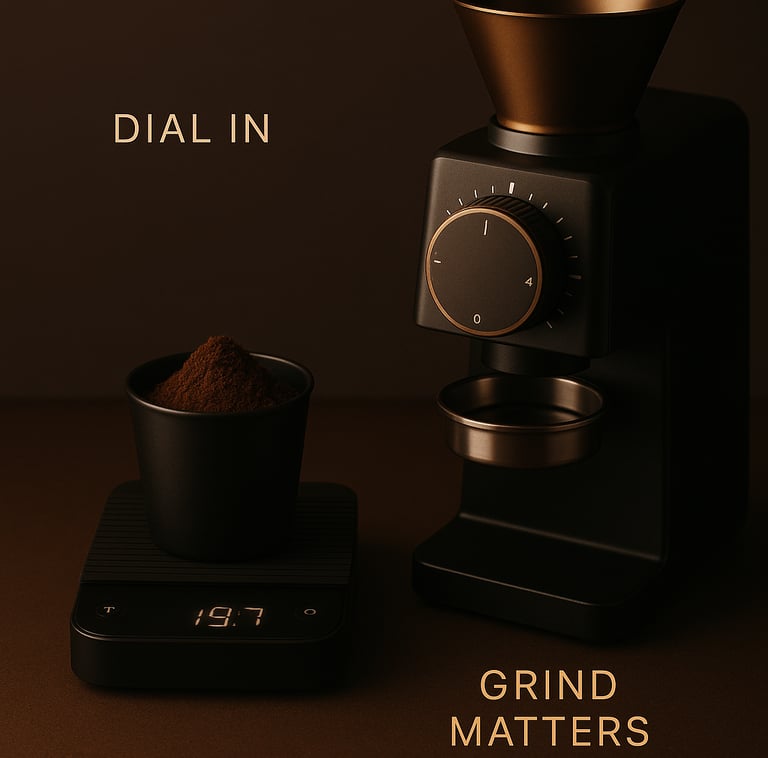
Dose consistency should receive equal attention as grind size adjustments. Even the most uniform grind will yield varying results if the amount of coffee in the basket shifts from one brew to another. Accurate scales and reliable dosing mechanisms help minimize this problem.
Calibrating your grinder after maintenance or burr replacement ensures that your grind size settings produce the intended particle distribution. This calibration process often involves dial adjustments and test brews until extraction times stabilize within expected ranges.
Focusing on one variable at a time is advisable, with grind size being the primary starting point since it influences nearly every other brewing parameter. Small changes here tend to show up more than expected in the final cup.
Troubleshooting Common Grinder Problems
If you observe inconsistent extraction or flavor variability despite using a burr grinder, start by inspecting burr condition. Look for dullness, chips, or alignment issues. Grinding small amounts of beans may reveal uneven particle distribution visibly.
Next, assess your maintenance routine. Build-up and oils compromise burr effectiveness over time, so cleaning frequency should match your usage load. Remember that neglecting routine grinder cleaning is one of the most common mistakes impacting consistency.
Evaluate your dosing method and check for grounds retention inside the grinder. If old coffee accumulates, it will blend with fresh grounds and skew your extraction unpredictably. Anti-static strategies or brushing between doses can reduce this effect.
When to Upgrade or Replace Your Grinder
Upgrading or replacing a grinder becomes necessary when maintenance no longer restores its performance or when inconsistent results persist despite careful attention to variables. Low-end burr grinders or blade models often fall short for those progressing beyond entry-level brewing due to inferior particle uniformity and poor durability.
Consider your brewing method and volume needs when selecting a replacement. Espresso machines demand tighter grind size distributions, favoring high-end grinders with fine calibration options. Pour-over and drip tend to tolerate slightly broader distributions but still benefit from consistent dosing and sharp burrs.
Switching from blade to burr grinders is the most accessible improvement for new home baristas, offering immediate gains in grind uniformity and brew quality.
If you're evaluating upgrades, Best Coffee Grinders highlights strong options for consistent performance.
Common Mistakes
Common errors in grinder use and upkeep contribute heavily to inconsistency. Among them, neglecting routine cleaning leads to burr dulling and buildup that distort grind size characteristics. Relying on blade grinders or low-quality burr grinders introduces inherent inconsistency into the brewing workflow.
Focusing solely on grind size settings without ensuring dose consistency overlooks how combined variables affect extraction quality. Ignoring static charge and grounds retention issues causes uneven dosing and unexpected taste shifts. Finally, assuming new grinders require no break-in or calibration is often where small inconsistencies begin to compound.
FAQ
What causes coffee grinder inconsistency?
Grinder inconsistency originates from burr wear, misalignment, buildup of coffee residue, dosing irregularities, and static or retention effects in the grinder chamber.
How often should I clean and maintain my grinder?
Cleaning frequency depends on usage, but general practice recommends at least weekly removal of grounds and oils, with burr cleaning and alignment checks monthly or more frequently for heavy users.
Are burr grinders always more consistent than blade grinders?
Yes. Burr grinders crush beans uniformly with adjustable burr spacing, producing much narrower grind size distributions compared to blade grinders.
Can grind inconsistency affect my extraction and brew taste?
Absolutely. Variability in grind size leads to uneven flow rates and extraction times, impacting flavor balance.
How do I know if my grinder burrs need replacing?
Signs include increased variability, inconsistent extraction times, visible burr wear, and declining cup quality.
Does grind retention contribute to inconsistency?
Yes. Retained grounds mix with fresh coffee, affecting flavor and grind distribution.
What is the best grind size for drip vs espresso machines?
Drip typically uses a medium grind, while espresso requires a fine grind for pressure-based extraction.
How can I improve dosing accuracy for better consistency?
Use a digital scale, maintain a consistent workflow, and minimize retention to improve accuracy.
Conclusion
Grind consistency is not an elusive ideal but a controllable outcome achieved through careful attention to grinder condition, maintenance, dosing routine, and calibration. Recognizing the subtle points where burr wear, buildup, or misalignment introduce variability helps isolate causes before they degrade brew quality. Burr grinders, when properly maintained and calibrated, offer the precision needed for repeatable extraction and flavor balance.
For performance-oriented home brewers, the small adjustments in burr sharpness, dosing, and static control create predictable results that elevate brewing from a guesswork exercise to a methodical process. When you understand why your grinder isn’t consistent, you can act systematically to restore control—turning the grinder from a variable into a reliable tool in your coffee workflow.
If you're comparing grinder performance more directly, Baratza vs Breville Grinders breaks down real-world differences.
Contact@TheBuzzHQ.com
© 2026 Coffee Tech Buzz. All rights reserved.
Coffee Tech Buzz
Smarter brewing through better gear, clearer insights, and real-world performance testing.
Built for home users who want consistency without guesswork.
We focus on how machines actually perform — not just what they claim.
Home
Coffee Equipment Guide
Coffee Makers & Machines
Coffee Grinders
Espresso Gear & Guides
Coffee Beans & Roasts
Coffee Accessories & Tools
For educational purposes only.
We may earn commissions from qualifying purchases.
General Inquiries: