
How Grind Size Affects Extraction in Coffee Brewing
Learn how grind size controls extraction time and flavor balance across coffee brewing methods for consistent, balanced cup quality.
COFFEE GRINDERS
The Coffee Tech Buzz Editorial Team - Led by AJ “Buzz” Eichman
4/4/20268 min read
When pursuing consistent coffee extraction, grind size is the most critical variable under your control. This is not a variable to guess but one to calibrate with precision, since it directly affects how water interacts with coffee grounds, influencing extraction time, flavor balance, and ultimately the quality of the brew. Across brewing methods, controlling grind size allows you to regulate surface area exposure and control extraction kinetics with reliability.
If you want to understand the foundation of grind control itself, Coffee Grinders explains how grinder design and consistency shape extraction from the start.
Inconsistent grind size—or neglecting to adjust it alongside dose, temperature, or brew time—typically explains many inexplicable shifts in cup profile. Understanding how grind size impacts extraction is the key to brewing repeatable, balanced coffee.
Quick Verdict
Grind size controls particle surface area and extraction time, directly influencing flavor clarity and balance.
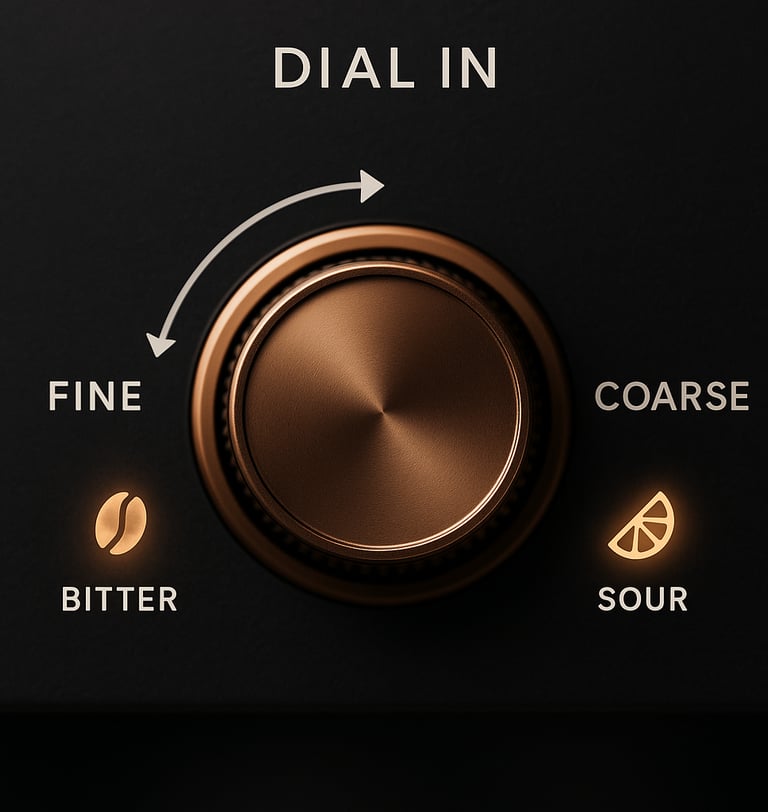
Finer grind sizes speed extraction but risk over-extraction and bitterness, while coarser grinds slow extraction, risking under-extraction and sourness.
Optimal grind size depends heavily on brewing method and should be dialed in to achieve consistent extraction yield.
Regular grinder calibration and maintenance are essential for preserving grind size consistency and predictable results.
What is Grind Size and Why It Matters
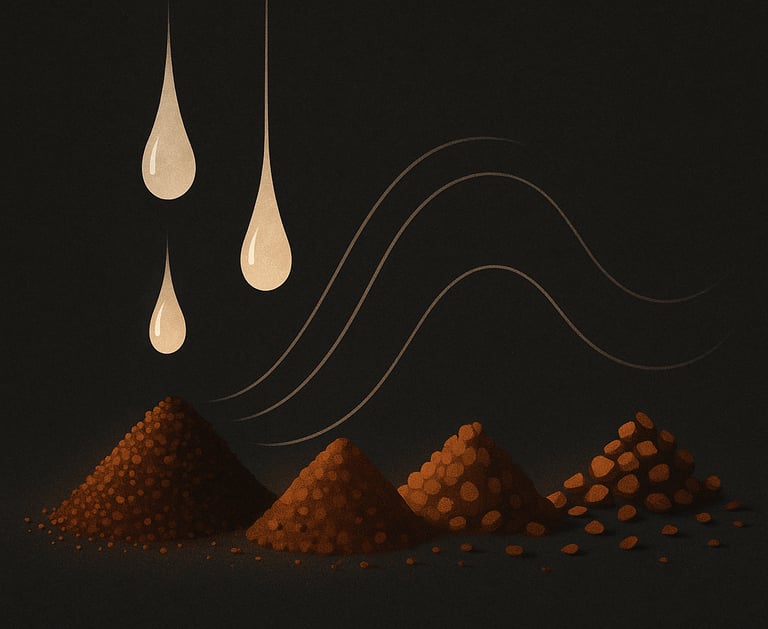
Grind size refers to the average particle size produced by grinding coffee beans. This measurement, though often expressed qualitatively as fine, medium, or coarse, dictates the total surface area available for water to extract solubles during brewing. Extraction is inherently a surface-driven process—water dissolves soluble compounds from exposed surfaces of coffee particles. The smaller the particles, the greater the surface area, accelerating extraction kinetics.
This is fundamental: grind size determines the speed at which water extracts flavor compounds. Too fine, and the extraction happens rapidly; fines clog filters and increase resistance, which slows flow but also extracts bitter compounds disproportionately. Too coarse, and contact between water and bean surface is insufficient, resulting in under-extracted coffee where acidity and raw flavors dominate. Neither extreme produces a balanced cup.
In practical terms, grind size serves as a control valve on extraction time and yield. Every brewing method demands a particular grind range to hit its target extraction window accurately. What makes this variable challenging is grind size does not exist in isolation; it must be balanced against dose, water temperature, and brew time to stabilize flavor outcomes.
If you're seeing flavor swings tied to this, How Grind Size Affects Taste breaks down how these changes show up in the cup.
How Grind Size Affects Coffee Extraction and Flavor
Extraction is a measure of how many soluble compounds dissolve from coffee grounds into the brew. The extraction yield correlates directly with grind size, but this relationship is nuanced. Grinding finer increases surface area, which expedites extraction rate but also increases resistance to water flow, especially in pressure-driven methods like espresso. Increased resistance prolongs contact time, compounding extraction beyond what grind size alone would predict.
The first effect of altering grind size manifests in extraction time. Finer grinds typically require shorter brew times or lower water temperatures to avoid over-extraction; conversely, coarser grinds require longer brew times or higher temperatures to reach the desired extraction yield. Adjustments to grind size often create cascading impacts on total extraction kinetics.
Grind size also influences the balance of flavors extracted. Lighter, volatile aromatics dissolve quickly and generally come from the early stages of extraction, favored by finer grinds and shorter contact times. Bitter compounds tend to emerge later and are emphasized when grind size is too fine or when brew time is excessive. Sourness and grassy notes often indicate under-extraction, typical of overly coarse grinds.
Over repeated brews, the effect of grind size on flavor balance becomes clearer. Small incremental changes, such as adjusting grind size by one or two steps on a burr grinder, produce noticeable differences in clarity, body, and acidity. This is the point where precise control pays dividends.
Grind Size Recommendations by Brewing Method
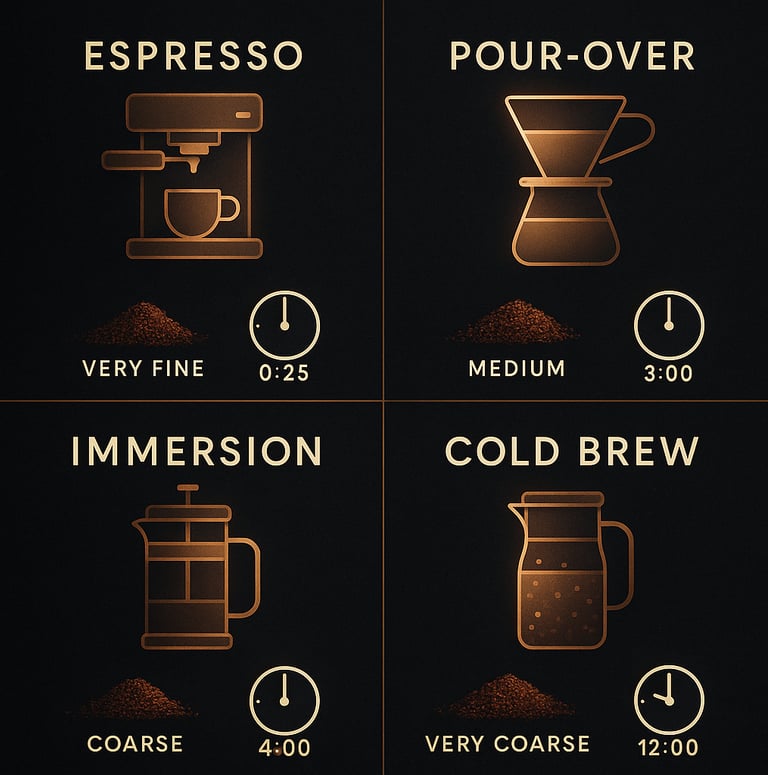
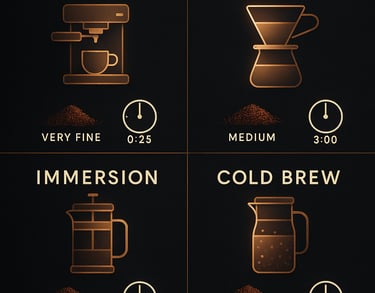
Different brewing methods impose constraints on the range of effective grind sizes, shaped by contact time and water flow dynamics. Espresso, relying on high pressure and short contact time, demands very fine grinds.
If you're dialing in espresso specifically, Best Grind Size for Espresso (Beginner Guide) provides more focused starting points.
Pour-over brewing methods such as V60 or Kalita Wave operate with medium grind sizes. These configurations balance flow rate and extraction time, typically in the range of 2.5 to 4 minutes. The grind must be fine enough to maintain consistent flow but coarse enough to avoid over-extraction from prolonged contact.
Immersion methods like French press or AeroPress generally require coarser grinds to compensate for longer steep times, typically 3–4 minutes or longer. A coarse grind reduces the extraction rate, balancing sustained water contact and preventing excessive bitterness.
Cold brew leans heavily toward very coarse grinds, reflecting extended steep periods frequently exceeding 12 hours. The goal is to moderate extraction rate over time, avoiding bitterness while extracting smooth, sweet flavor compounds.
If you're comparing these grind ranges directly, Fine vs Coarse Grind Coffee lays out the differences more clearly.
Practical Tips for Dialing in Grind Size at Home
Dialing in grind size is a methodical process rather than an art of guesswork. Begin by focusing on grind size first, as it has a broader impact on extraction than dose or temperature initially. Select a moderate grind setting appropriate for your brewing method and assess extraction via taste: sour notes suggest grind coarser than optimal, while bitterness or harshness indicates grind is too fine.
Use a resistance-based approach to flow during brewing. For immersion methods, if brew time consistently exceeds target time, a slightly finer grind will accelerate extraction; for drip and pour-over, sluggish flow usually signals grind is too fine.
Maintain grind size consistency by regularly calibrating your grinder. Burr grinders differ in how grind settings correlate to particle size, especially when roasting profiles change. Darker roasts often require slightly coarser settings due to altered bean brittleness.
Avoid changing variables independently and simultaneously. If you adjust grind size, note changes in brew time and adjust water temperature or dose accordingly to maintain extraction yield.
Consistency improves by tracking grind settings relative to coffee batch and roast level. This record allows faster adjustments and predictable outcomes in your daily routine. If you're building a repeatable system, Coffee Grinder Settings Guide walks through how to structure these adjustments properly.
Common Grind Size Mistakes and How to Avoid Them
A frequent error is using an overly fine grind for immersion methods like French press, which increases extraction rate beyond the intended steep time, pulling excessive bitter compounds into the cup. Conversely, using too coarse a grind for short-contact methods such as espresso leads to under-extraction, resulting in thin, acidic shots lacking balance.
Underestimating grinder performance adds variability. Blade grinders generate uneven particle sizes with large fines and boulders, making extraction unpredictable. Upgrading to a burr grinder provides consistent particle size distribution and repeatable calibration, critical for precise grind size control.
Another common oversight is neglecting to adjust grind size in accordance with roast level or bean origin changes. Coffee beans of different density and moisture respond differently to identical grind settings, leading to flavor drift when grind size remains fixed across changes.
Finally, ignoring interactions between grind size and other brewing variables—such as dose, water temperature, and brew time—is where results most frequently start to drift without clear explanation. If that’s happening, Why Your Coffee Tastes Bitter or Sour helps diagnose whether extraction imbalance is the issue.
Choosing and Maintaining Grinders for Consistent Grind Size
Selecting a grinder designed for precise and consistent grind size output is foundational. Burr grinders, whether conical or flat, outperform blade grinders in producing uniform particle size distributions. More sophisticated models allow micro adjustments in grind steps, enabling fine tuning for extraction control.
If you're comparing grinder types directly, Manual vs Electric Coffee Grinders highlights how workflow and control differ between setups.
Regular maintenance of grinders ensures performance stability. Retention of grounds within burr chambers can shift particle size distribution if grounds remain trapped and mixed with fresh batches. Cleaning burr chambers frequently prevents this accumulation.
Calibration should not be overlooked. Some grinders change grind size significantly over time as burrs wear; periodic recalibration against a reference coffee and measuring tools maintains accuracy.
Adjusting Grind Size Alongside Other Brewing Variables
Control over grind size must happen within an ecosystem of brewing variables. Changing grind size affects extraction time and resistance, which interact with water temperature, dose, and brewing method parameters.
For example, dialing a finer grind for espresso usually requires reducing dose or temperature slightly to avoid bitterness. Conversely, coarser grind may necessitate longer brew time or warmer water to extract sufficient sweetness.
When altering grind size, it is advisable to make one variable adjustment at a time and observe results across multiple brews. This systematic approach isolates the impact of grind size changes and informs subsequent tuning of other brewing variables.
Keeping detailed notes on settings and results aids in building understanding and refining your home coffee process with precision.
Common Mistakes in Grind Size Management
One of the most overlooked issues is the failure to recalibrate the grinder after changing roast profiles or coffee origins. Different beans grind differently despite nominal settings, so consistent results require corresponding grind size adjustments.
Another pitfall occurs when users assume dialing grind size alone will fix issues caused by poor dose measurement or inconsistent water temperature. While the grind is paramount, extraction is the sum of all variables—grind adjustment without controlling others can compound inconsistency.
Additionally, relying on overly fine grinds for immersion methods leads to over-extraction and unpleasant bitterness. This error is common when users attempt to “force” quicker brew times without considering how grind size accelerates extraction.
FAQ
How does grind size affect extraction time?
Grind size influences extraction time by controlling resistance and surface area exposure. Finer grinds increase resistance to water flow and accelerate the extraction rate due to higher surface area, while coarser grinds allow faster flow but slower extraction kinetics.
What grind size is best for espresso vs drip coffee?
Espresso requires a fine grind to build appropriate resistance and extract flavor within a short 25–30 second shot window. Drip coffee typically uses a medium grind that balances flow rate and extraction time over a longer brew.
How can I tell if my coffee is over-extracted or under-extracted?
Over-extracted coffee tastes bitter and harsh, while under-extracted coffee tastes sour or thin.
Why does grind size consistency matter?
Consistency ensures stable extraction and predictable flavor results.
Can grind size changes compensate for brew time or temperature?
Yes, but adjustments must be balanced carefully to avoid destabilizing flavor.
How often should I adjust grind size for different beans?
Every time you switch beans or roast levels.
What grinder types provide the best consistency?
Burr grinders provide the most consistent and controllable grind size.
Is there a simple way to dial in grind size at home?
Start with a method-appropriate setting, taste, and adjust incrementally.
Conclusion
Understanding and mastering grind size is fundamental to achieving predictable, balanced coffee extraction across brewing methods. It acts as a precise control over the extraction rate, influencing both timing and flavor balance in the cup. The process is straightforward but requires discipline: measure, adjust, observe, and record. Avoiding common mistakes like neglecting grinder maintenance or incremental calibration ensures stability.
Investing in a consistent grinder and treating grind size as a critical parameter elevates daily brewing from chance to control. Small adjustments produce meaningful improvements in flavor and consistency.
Contact@TheBuzzHQ.com
© 2026 Coffee Tech Buzz. All rights reserved.
Coffee Tech Buzz
Smarter brewing through better gear, clearer insights, and real-world performance testing.
Built for home users who want consistency without guesswork.
We focus on how machines actually perform — not just what they claim.
Home
Coffee Equipment Guide
Coffee Makers & Machines
Coffee Grinders
Espresso Gear & Guides
Coffee Beans & Roasts
Coffee Accessories & Tools
For educational purposes only.
We may earn commissions from qualifying purchases.
General Inquiries: