
Why Your Coffee Tastes Bitter or Sour
Discover why your coffee tastes bitter or sour and learn how grind size, brewing temperature, and time affect extraction for a balanced cup.
COFFEE GRINDERS
The Coffee Tech Buzz Editorial Team - Led by AJ “Buzz” Eichman
4/4/20267 min read
Brewing coffee is a deliberate process rooted in control and precision. When coffee tastes bitter or sour, it often signals an imbalance in extraction, where certain flavor compounds have been over- or under-extracted. These taste issues are not random defects or ‘bad beans’ but usually the result of variables such as grind size, brewing temperature, and brew time working out of sync. For a consistent, balanced cup, understanding how these variables interact and affect extraction is essential. If you want to understand where these issues typically begin, Coffee Grinders explains how grind consistency directly impacts extraction control. This article will explore why coffee can taste bitter or sour, breaking down the underlying mechanisms to help you regain control over your brewing results.
Quick Verdict
Bitter coffee typically points to over-extraction caused by fine grind size, too high a brewing temperature, or excessively long brew times.
Sour coffee is usually the sign of under-extraction related to coarse grind, low water temperature, or insufficient contact time.
Maintain brewing temperature between 195°F and 205°F to optimize extraction without pulling unwanted bitterness or excessive acidity.
Adjusting grind size with precision is the first step toward consistent flavor, as it governs extraction speed and solubility.
Understanding Coffee Extraction Basics
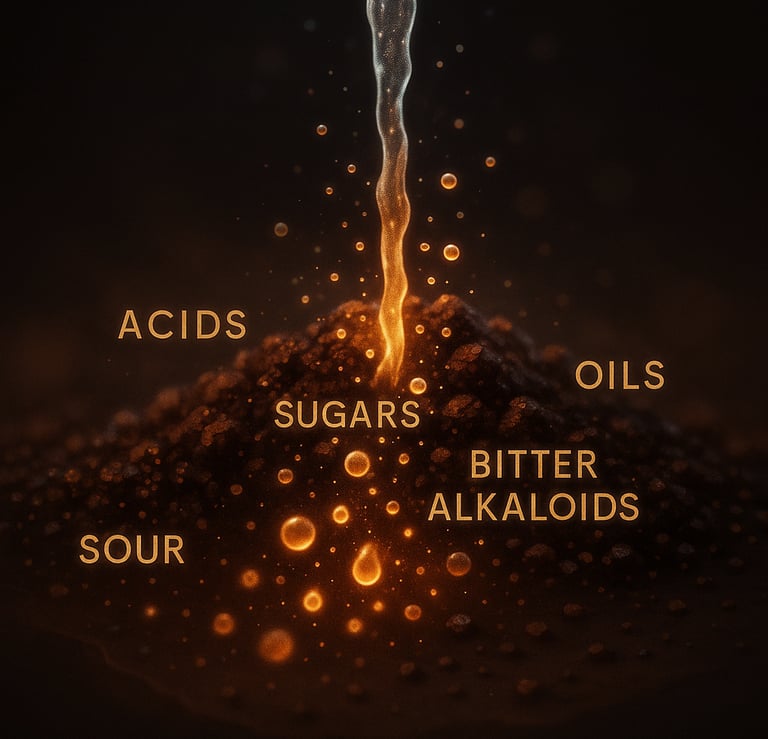
Extraction is the core chemical process in coffee brewing whereby water dissolves soluble compounds from ground coffee. These compounds include acids, sugars, oils, and bitter alkaloids—each contributing distinct flavor notes. Proper extraction balances these components; under-extracted coffee emphasizes acidic and sour flavors, while over-extracted coffee reveals bitterness and astringency.
Extraction yield, measured as the percentage of dissolved solids in the brew relative to the coffee dose, provides a technical guidepost. Yields below approximately 18% generally correspond with under-extraction, producing sour or thin-tasting coffee. Above 22%, over-extraction dominates, bringing forward bitterness and harshness. Most recommended extractions fall within the 18-22% range for balanced flavor.
The interplay of grind size, water temperature, brew time, and coffee-to-water ratio determines extraction yield. There is no single “ideal” recipe independent of context, but control over these variables is non-negotiable to avoid bitter or sour outcomes. For a deeper breakdown of this relationship, How Grind Size Affects Extraction explores how grind size drives extraction behavior.
How Grind Size Influences Flavor
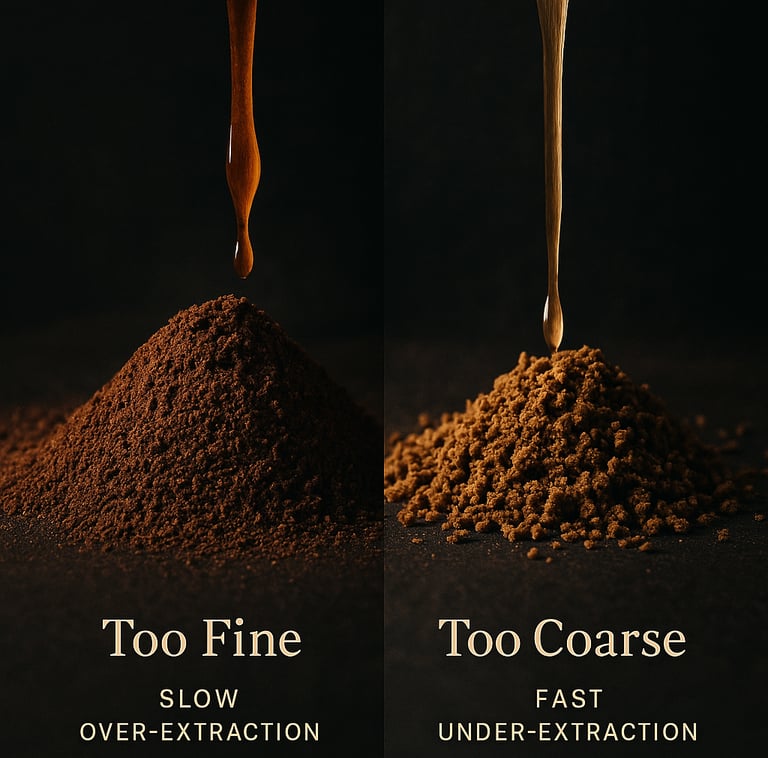
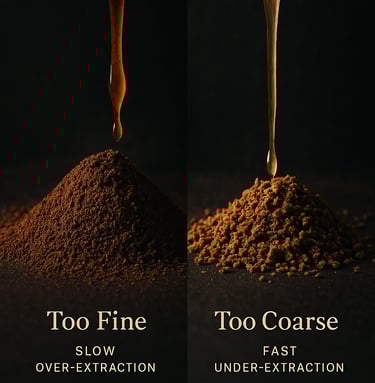
Grind size directly impacts the surface area exposed to water and therefore the rate of extraction. A finer grind increases surface area and extraction speed but also raises resistance through the coffee bed. This slows flow, making contact time longer and extraction heavier, often pushing toward bitterness. Conversely, a coarser grind reduces surface area and extraction rate, risking under-extraction if brew time or temperature are insufficient.
For example, espresso demands a fine grind to compensate for its short brew time and high pressure, but minor adjustments in grind size can dramatically change perceived bitterness. With manual methods like pour-over or drip, a grind that is too coarse will under-extract, allowing acidic and sour flavors to dominate.
Matching grind size precisely to your brewing method and adjusting it incrementally is usually where consistent coffee begins. When bitterness or sourness occurs, revisiting grind size before altering other variables is the most reliable way to regain balance. If you need structured starting points, Best Grind Size for Each Brewing Method maps these relationships clearly.
The Role of Brewing Temperature
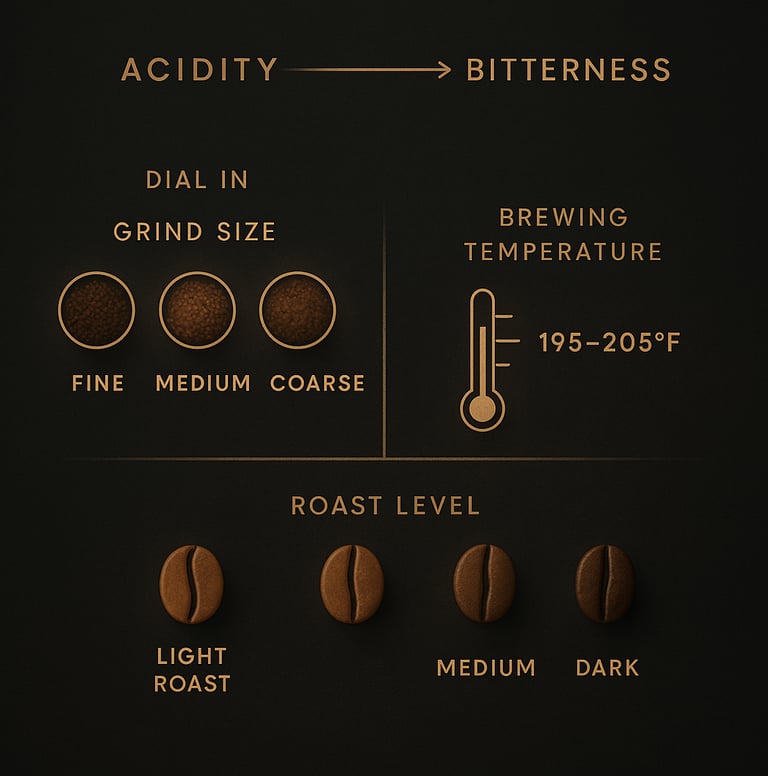
Temperature controls the solubility of coffee compounds in water. Water below 195°F slows extraction, leaving acids and lighter flavor compounds insufficiently dissolved, which leads to sour notes. Above 205°F, overly hot water extracts bitter alkaloids more aggressively and risks burning delicate flavors.
Maintaining a brewing temperature within the 195°F to 205°F window maximizes the extraction of sugars and pleasant acids while minimizing bitterness. This temperature range is a guideline rather than an absolute rule, depending on roast level and brew method. Lighter roasts, which naturally display more acidity, often benefit from slightly cooler water to avoid harshness, while darker roasts may tolerate the upper range for fuller extraction.
Many home brewers overlook accurate temperature control, leading to variation in flavor profile. Using kettles with precise temperature settings or allowing boiled water to rest briefly before brewing can reduce sourness or bitterness caused by temperature extremes.
Brewing Time and Its Impact on Taste
Brew time interacts closely with grind size and temperature to determine the amount of extraction. A short brew time—even with proper temperature—does not give water enough opportunity to extract adequate soluble compounds, making coffee taste sour or thin. Conversely, an excessively long brew time increases bitter extraction due to prolonged exposure.
Each brewing method has an optimal contact time range influenced by the bed resistance, grind particle distribution, and water temperature. For example, a French press typically requires 4-5 minutes steep time with coarse grounds to avoid under-extraction and sourness. A pour-over tends to extract fully within 2.5-3.5 minutes with a medium grind. Adjusting time without accounting for other variables will often cause flavor shifts.
Monitoring and standardizing brew time contributes to consistency. Using timers and replicable technique minimizes fluctuations that subtly impact extraction yield and taste balance over repeated brews.
Balancing Acidity and Bitterness
Acidity in coffee is not inherently negative; it contributes brightness and vibrancy. Bitterness, on the other hand, becomes undesirable when overpowering or unpleasant. Finding balance requires tuning extraction to dissolve the right proportion of acids, sugars, and bitter compounds.
Roast level influences acidity and bitterness profiles. Light roasts preserve more acidic compounds and origin characteristics, often requiring careful extraction to prevent excessive sourness. Dark roasts develop fuller body and bitterness as sugars caramelize and oils darken, demanding adjustments toward coarser grind or lower temperature to avoid harshness.
Additionally, the choice of coffee beans, freshness, and water quality all affect acidity and bitterness perception. High mineral content water, for instance, can enhance extraction and amplify bitterness if not controlled.
Regular cleaning of brewing equipment avoids contaminating flavors that can skew perceived acidity or bitterness. Residual oils and fines left uncleaned commonly impart bitterness and harsh notes. If buildup becomes an issue, How Often Should You Clean a Grinder helps establish a proper maintenance routine.
Common Brewing Mistakes to Avoid
Many coffee taste issues arise from simple but overlooked errors. Using the wrong grind size for your brewing method is one of the most frequent causes. For example, a grind that is too fine for drip brewing leads to slow flow and over-extraction, while too coarse a grind under-extracts in espresso.
Water temperature mistakes also figure prominently. Brewing with water straight from boiling (above 212°F at sea level) pulls bitter compounds quickly. Conversely, water that is too cool fails to solubilize acids and sugars adequately, causing sourness.
Brew time variability commonly disrupts flavor balance. In manual methods, inconsistent pouring or steeping time invites unpredictable extraction. Similarly, stale or unevenly roasted beans limit extraction predictability and flavor clarity.
Not cleaning equipment regularly allows rancid residues to accumulate and distort the cup profile. Finally, ignoring water quality or failing to maintain consistent coffee-to-water ratios introduces further extraction variance. If you're still seeing inconsistency after dialing variables, Why Your Grinder Isn’t Consistent breaks down deeper causes.
Choosing the Right Beans and Roast Level
Selecting beans appropriate to your preferred flavor profile and brewing method complements control over grinding and brewing variables. Lighter roasted beans often require finely tuned extraction parameters due to their higher acidity and delicate aromatics. Darker roasts accommodate a wider extraction window but risk bitterness if brewed too aggressively.
Understanding the origin and processing method also helps anticipate acidity and bitterness levels. Coffees from high-altitude regions tend to be more acidic, while beans processed by natural or honey methods can display more body and sweetness offsetting bitterness.
Rotating fresh beans frequently and storing them properly ensures more predictable extraction outcomes, further stabilizing your flavor consistency.
Tips for Consistent Coffee Brewing at Home
Consistency is a result of controlling variables with discipline and measurement. Using grinders that offer precise, repeatable settings rather than guessing grind size by feel is fundamental. Investing in coffee makers with temperature control and reliable flow rates minimizes variation in extraction temperature and brew time.
If you're upgrading or improving consistency, Best Coffee Grinders for Pour Over highlights grinders that maintain stable grind size in medium ranges, while still offering control.
Standardizing coffee-to-water ratios produces strength consistency, which, while separate from extraction quality, affects taste perception and balance. Use scales to measure doses accurately.
Finally, ensure your workflow includes equipment cleaning as a habit. Residue buildup rarely shows its effects immediately but gradually impacts flavor clarity and bitterness over weeks.
Common Questions About Bitter or Sour Coffee
Why does my coffee taste bitter?
Bitterness usually results from over-extraction, where water has dissolved too many compounds, including harsh alkaloids. This often stems from a grind that is too fine, excessively hot brewing water above 205°F, or brew times that exceed the method’s optimal range.
Why does my coffee taste sour?
Sourness signals under-extraction. This occurs when water contact time is too short, grind is too coarse, or brewing temperature is below 195°F, causing acids to dominate and sugars not to develop fully.
How does grind size affect coffee taste?
Grind size controls the speed and extent of extraction. Finer grounds increase extraction rate and can lead to bitterness if not balanced with other variables. Coarser grounds extract more slowly and risk sourness if brew time or temperature are insufficient.
What is the ideal brewing temperature for coffee?
Typically, brewing between 195°F and 205°F offers a balance that extracts sugars and acids evenly while minimizing bitterness. Slight adjustments within this range depend on roast level and method.
How does brew time influence coffee flavor?
Brew time determines the amount of flavor compounds dissolved. Short brew times lead to sour, under-extracted coffee. Long brew times encourage bitterness through over-extraction.
How can I balance acidity and bitterness in coffee?
Balancing acidity and bitterness involves tuning grind size for proper extraction, controlling water temperature, managing brew time, and selecting beans with roast levels suited to your extraction style.
Does roast level impact sourness or bitterness?
Yes. Lighter roasts emphasize acidity and can taste sour if under-extracted. Darker roasts develop bitterness more readily, requiring adjustments to grind, temperature, and time to avoid harshness.
What common brewing mistakes lead to bad taste?
Using the wrong grind size, inconsistent brewing temperature, irregular brew times, stale beans, and unclean equipment frequently contribute to bitterness or sourness.
In Conclusion
Addressing bitter or sour coffee requires a methodical approach focused on controlling extraction variables. Grind size, water temperature, and brew time form the axis on which coffee taste pivots. Start by mastering grind size adjustments appropriate to your brewing method, then refine temperature and timing to reach a balanced extraction yield. Consistent coffee stems from a predictable, measured process—not luck or trial and error.
Achieving balance also demands attention to equipment performance and cleanliness, alongside selection of beans that align with your flavor goals. With the foundation of these principles, you can elevate every cup from guesswork to precision.
Contact@TheBuzzHQ.com
© 2026 Coffee Tech Buzz. All rights reserved.
Coffee Tech Buzz
Smarter brewing through better gear, clearer insights, and real-world performance testing.
Built for home users who want consistency without guesswork.
We focus on how machines actually perform — not just what they claim.
Home
Coffee Equipment Guide
Coffee Makers & Machines
Coffee Grinders
Espresso Gear & Guides
Coffee Beans & Roasts
Coffee Accessories & Tools
For educational purposes only.
We may earn commissions from qualifying purchases.
General Inquiries: