
How to Dial in Grind Size for Perfect Coffee
Learn how to dial in grind size precisely to control extraction and brew consistently perfect coffee tailored to your method.
COFFEE GRINDERS
The Coffee Tech Buzz Editorial Team - Led by AJ “Buzz” Eichman
4/4/20266 min read
Dialing in grind size is a foundational step in optimizing coffee extraction and achieving a well-balanced cup. Precision in grind size adjustment allows you to control extraction rate, which directly influences flavor, brew time, and overall quality. Without careful calibration, even high-quality coffee beans and equipment can yield inconsistent or suboptimal results.
If you want to understand the equipment behind this process, Coffee Grinders explains how grinder design impacts control and repeatability. Understanding how grind size interacts with other brewing variables provides a repeatable pathway to consistently excellent coffee, whether you’re pulling espresso shots or preparing pour-over brews. This article aims to clarify the technical relationship between grind size and extraction, guide you through the process of dialing in your grinder, and highlight common pitfalls to avoid.
Quick Verdict
Proper grind size adjustment is essential for controlling extraction speed and flavor balance.
Grind size settings must be tailored to your brewing method; a one-size-fits-all approach compromises results.
Consistent calibration and controlled variable adjustments enable reproducible coffee quality.
Maintenance and understanding grinder mechanics ensure stability in grind size over time.
What is Dialing in Grind Size?
Dialing in grind size refers to the deliberate process of adjusting the coffee grinder’s particle size output to achieve an optimal extraction profile for a particular brew method. Unlike arbitrary or occasional changes, this process involves systematic testing of grind settings while holding other variables constant.
The goal is to find a grind size that produces a cup with a balanced flavor — neither too sour from under-extraction nor too bitter from over-extraction. If you’re seeing those flavor swings, Why Your Coffee Tastes Bitter or Sour helps identify whether grind size is the root cause.
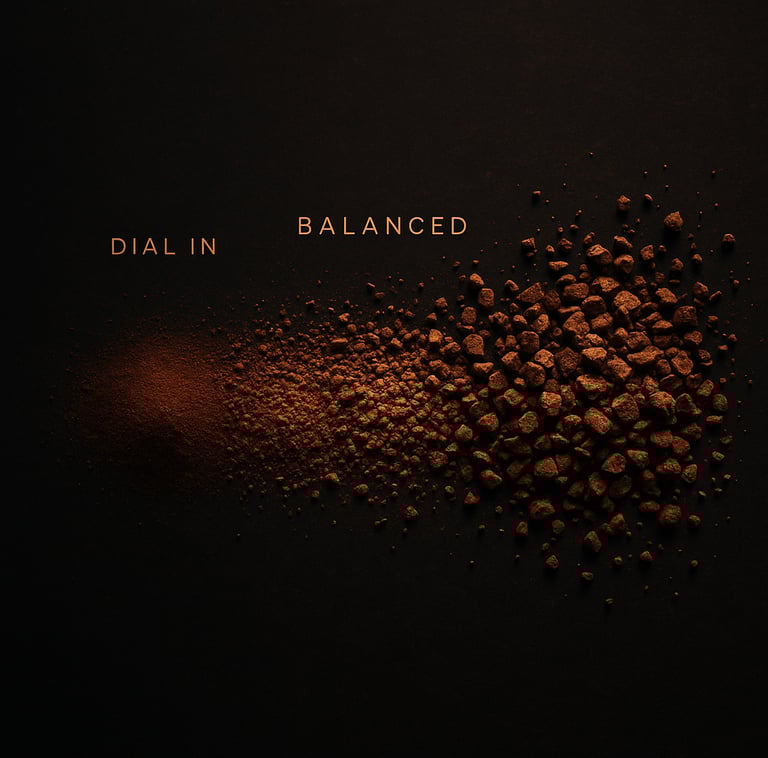
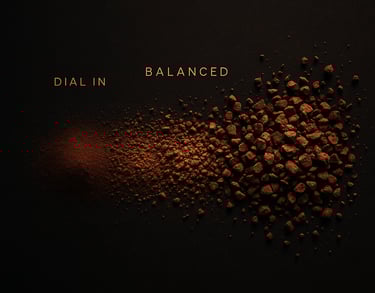
This calibration is methodical because grind size influences how fast water passes through the coffee grounds and how evenly coffee solubles dissolve during extraction. Smaller particles increase surface area and resistance, increasing extraction speed but risking over-extraction if too fine. Coarser particles offer less resistance, slowing extraction but risking underdevelopment if too coarse.
How Grind Size Affects Coffee Extraction and Flavor
Understanding grind size effectively means appreciating its cause-and-effect relationship with extraction dynamics. Finer grinds produce more surface area contact and create higher resistance to water flow, leading to faster extraction. This often emphasizes bitterness and can mute sweeter, acidic notes when pushed beyond a certain threshold.
Coarser grinds allow water to flow more freely, slowing extraction and may highlight acidity but risk sourness or a hollow flavor if extraction is insufficient. This relationship is broken down more technically in How Grind Size Affects Extraction, where extraction curves and flow behavior are explored in depth.
Beyond taste, grind size adjustments affect brew time and yield. A properly dialed grind size results in balanced extraction and repeatable flavor. If grind consistency starts drifting, even small changes will show up in the cup.
Adjusting Grind Size for Different Brewing Methods
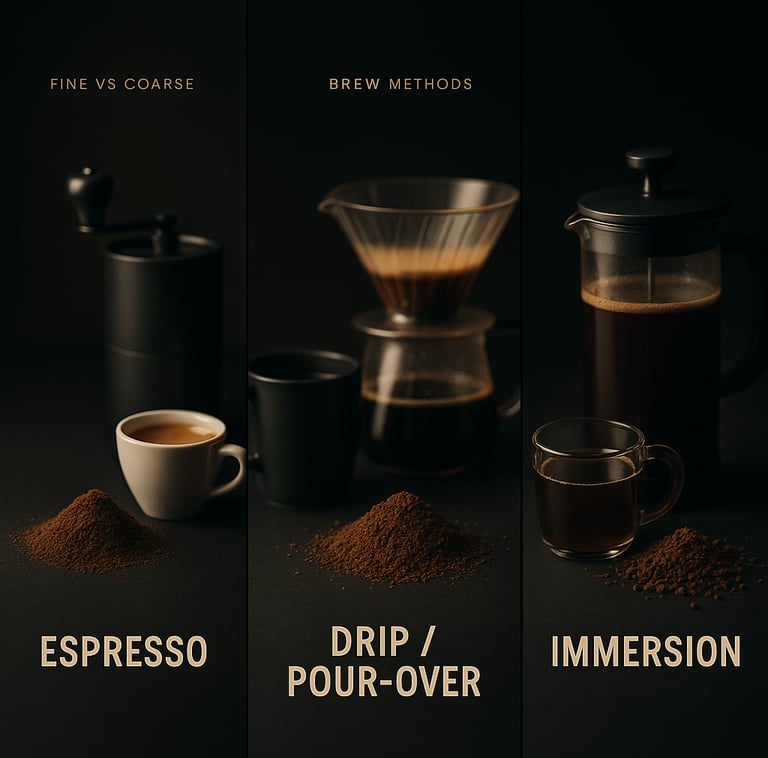
Not all brewing methods respond to grind size in the same way; this is a critical consideration in your dial-in process. Espresso requires a very fine grind because extraction occurs under pressure and in a short time frame.
If you're building consistency here, Best Coffee Grinders for Espresso highlights grinders capable of making the micro-adjustments required for stable shots.
Drip brewing and pour-over methods require a medium grind size where water flows primarily by gravity. If grind size is too fine, brew time increases and bitterness creeps in. If too coarse, extraction drops and acidity dominates.
For more structured ranges across brewing styles, Best Grind Size for Each Brewing Method lays out the ideal starting points before dialing in further.
Coarser grinds suit immersion methods like French press or cold brew, where longer contact time compensates for slower extraction.
Step-by-Step Guide to Dialing in Your Grinder
Beginning the process of grind size calibration demands consistency in other variables. First, ensure your dose is precise and constant. Likewise, fix water temperature and brew time at repeatable points.
Start with a middle-ground grind size setting appropriate for your method. Brew, taste, and observe results. If the coffee tastes overly sour or weak, adjust finer. If bitter or harsh, adjust coarser.
Adjust grind size in small increments. Even minor changes can significantly affect extraction. After each adjustment, brew again under the same conditions and compare results.
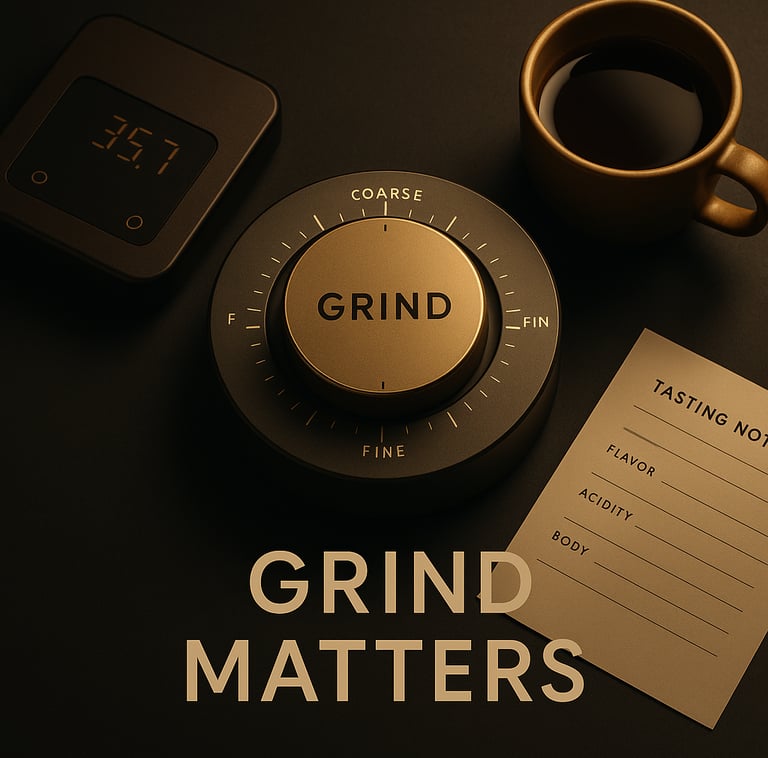
Recording your grind settings alongside brew outcomes creates a reference for future batches. This is where dialing in becomes repeatable instead of guesswork.
Common Problems and How to Avoid Them
Attempting to adjust grind size without controlling dose, brew time, or water temperature is a widespread error. Any change in grind size affects extraction rate and therefore brew time, meaning variables must be stabilized.
Large, sudden changes in grind size are another frequent mistake. These overshoot the ideal extraction window and make it harder to identify the correct setting.
Grinder retention and buildup also introduce inconsistency by mixing fresh and stale grounds. If this starts happening, How Often Should You Clean a Grinder becomes critical to maintaining accuracy.
Another common mistake is assuming one grind size fits all brewing styles. Each method has its own extraction profile and must be dialed independently.
Tips for Maintaining Consistent Grind Size
Maintenance is as important as calibration. Keep burrs clean and sharp to prevent drift in particle size. Regular cleaning and inspection preserve grind quality and flavor consistency.
When grinding in bulk, grinder behavior can shift slightly compared to single dosing. Adjustments may be required to maintain consistency.
Consistency in workflow is key — weigh doses, control brew variables, and give time between adjustments to properly evaluate results.
For grinders with advanced adjustment control, understanding how incremental changes translate to particle size is essential. If you’re comparing adjustment systems, Stepped vs Stepless Grinders Explained breaks down how each impacts dialing precision.
Tools and Equipment for Grind Size Calibration
Precision brewing begins with reliable equipment. A burr grinder with consistent alignment and minimal retention is essential.
If you’re upgrading or refining your setup, Best Coffee Grinders highlights grinders that prioritize consistency and control across brewing methods.
A scale capable of measuring to 0.1 grams ensures dosing accuracy. A timer and thermometer help standardize brew conditions, isolating grind size as the variable under adjustment.
More advanced users may incorporate refractometers to measure extraction yield, but even without them, controlled testing produces reliable results.
When and Why to Recalibrate Your Grinder
Recalibration is necessary whenever you introduce changes such as cleaning, burr replacement, switching beans, or changing brew methods.
Even consistent use causes burr wear over time, subtly altering grind output. Without recalibration, previously dialed-in settings drift and consistency declines.
If you notice grind variability increasing over time, Why Your Grinder Isn’t Consistent helps identify whether maintenance or calibration is the issue.
Common Mistakes in Grind Size Adjustment
Many brewers adjust grind size without stabilizing other variables, leading to inconsistent results. Large adjustments overshoot optimal extraction. Grinder retention and buildup introduce hidden variability.
Assuming one grind size works across methods ignores extraction differences. Skipping recalibration after maintenance undermines previous dialing efforts.
Avoiding these mistakes comes down to methodical adjustments and consistent process control.
Frequently Asked Questions
How do I know if my grind size is too fine or too coarse?
If your coffee tastes overly bitter and harsh with a short brew time, your grind is likely too fine. Sour, weak flavors with fast brew time indicate too coarse a grind.
How often should I recalibrate my grinder settings?
After cleaning, burr replacement, switching beans, or every few weeks depending on use frequency.
What is the impact of grind size on coffee flavor and extraction?
Grind size controls extraction speed and balance, directly influencing flavor clarity and strength.
Can I use the same grind size for different brewing methods?
No. Each method requires a specific grind size for proper extraction.
What tools help in dialing in grind size effectively?
A burr grinder, scale, timer, and thermometer help isolate grind size adjustments.
How does grinder type affect grind size adjustments?
Burr grinders offer consistent, controllable grind size, while blade grinders lack precision.
What are common signs of inconsistent grind size?
Fluctuating brew times, inconsistent flavor, and uneven extraction indicate inconsistency.
Practical Conclusion
Dialing in grind size is not an occasional tweak but a precise, methodological process central to predictable coffee quality. By understanding how grind size interrelates with extraction dynamics, you gain control over flavor balance and brew consistency.
Routine maintenance and recalibration guard against drift caused by burr wear or retention, preserving the fidelity of your settings over time. Precision in grind size calibration transcends equipment price and focuses on repeatability and performance.
With patience and discipline, dialing in grind size becomes a reliable system rather than a guessing game.
Contact@TheBuzzHQ.com
© 2026 Coffee Tech Buzz. All rights reserved.
Coffee Tech Buzz
Smarter brewing through better gear, clearer insights, and real-world performance testing.
Built for home users who want consistency without guesswork.
We focus on how machines actually perform — not just what they claim.
Home
Coffee Equipment Guide
Coffee Makers & Machines
Coffee Grinders
Espresso Gear & Guides
Coffee Beans & Roasts
Coffee Accessories & Tools
For educational purposes only.
We may earn commissions from qualifying purchases.
General Inquiries: