
What to Look for in an Espresso Grinder (Before You Buy)
Discover essential espresso grinder features to achieve consistent grind size, precise adjustments, and minimal retention for perfect espresso every time.
ESPRESSOCOFFEE GRINDERS
The Coffee Tech Buzz Editorial Team - Led by AJ “Buzz” Eichman
4/30/20263 min read
Achieving high-quality espresso at home begins with control over the grind. Unlike other brewing methods, espresso demands a fine, consistent particle size to ensure the precise extraction time, flavor balance, and crema quality.
To understand how grinder features impact performance, it helps to ground everything within Coffee Grinders, while dialing in espresso-specific requirements through the Complete Espresso Grinder Guide.
An espresso grinder is not simply a machine that crushes beans—it is a precision tool that determines whether your shots are repeatable or frustrating.
Quick Verdict
Grind consistency is the most important factor for espresso
Flat burr grinders typically offer tighter particle distribution
Stepless adjustment provides better control for dialing in shots
Low grind retention improves consistency and flavor clarity
What Makes an Espresso Grinder Different?
Espresso places unique demands on a grinder. Extraction happens fast—usually within a 25–30 second window—so grind size must be extremely precise.
Too coarse, and your shot runs fast and tastes sour. Too fine, and it chokes the machine and turns bitter.
This level of sensitivity is why many beginners struggle early on. If you're just getting started, exploring curated setups like Best Espresso Grinders for Beginners can help avoid common entry-level mistakes.
Types of Burrs: Flat vs Conical
Burr type plays a major role in grind consistency and heat management.
Flat burr grinders typically produce a tighter particle size distribution, making them ideal for espresso precision. Conical burr grinders operate at lower speeds and generate less heat, which can help preserve aroma.
If you want a deeper breakdown of how these differences actually impact extraction, see Flat Burr vs Conical Burr Grinders for Espresso, where particle distribution and flavor outcomes are compared directly.
Why Grind Size Precision Matters
Grind size is the primary variable controlling espresso extraction. Even small adjustments can completely change flavor balance and shot timing.
A finer grind increases resistance and slows extraction. A coarser grind speeds it up.
If you're struggling to find the sweet spot, issues usually show up as inconsistent shots—something covered in detail in Why Your Espresso Shot Is Too Fast or Too Slow.
Stepless vs Stepped Grind Adjustments
Grind adjustment mechanisms determine how precisely you can control your grind size.
Stepped grinders move between fixed settings, making them easier to use but limiting fine control. Stepless grinders allow continuous adjustment, making them ideal for dialing in espresso.
For most espresso users, stepless adjustment offers a clear advantage in consistency and repeatability.
Grind Retention: What It Is and Why It Matters
Grind retention refers to leftover coffee grounds trapped inside the grinder.
High retention introduces stale coffee into fresh doses and throws off consistency. Low-retention grinders reduce this issue, improving shot clarity and repeatability.
Retention becomes especially noticeable depending on workflow—whether you're grinding fresh each time or storing beans—something explored further in Single Dose vs Hopper Grinders.
Material and Build Quality Considerations
Build quality affects durability, heat control, and long-term consistency.
Steel burrs are standard for durability, while ceramic burrs offer heat resistance but are less common. Metal housings provide better stability than plastic, which can improve grind consistency over time.
If you're investing in higher-end performance, stepping into mid-tier options like those in Best Espresso Grinders Under $600 often delivers noticeable improvements in build and consistency.
Common Mistakes When Choosing an Espresso Grinder
Choosing based on price instead of performance
Using blade grinders or low-quality burr grinders
Ignoring grind retention
Overlooking adjustment precision
Expecting all grinders to perform the same across different beans
These mistakes lead to inconsistent espresso and unnecessary frustration.
Buyer Considerations: Budget, Use Case, and Upgrades
Your ideal grinder depends on your workflow and experience level.
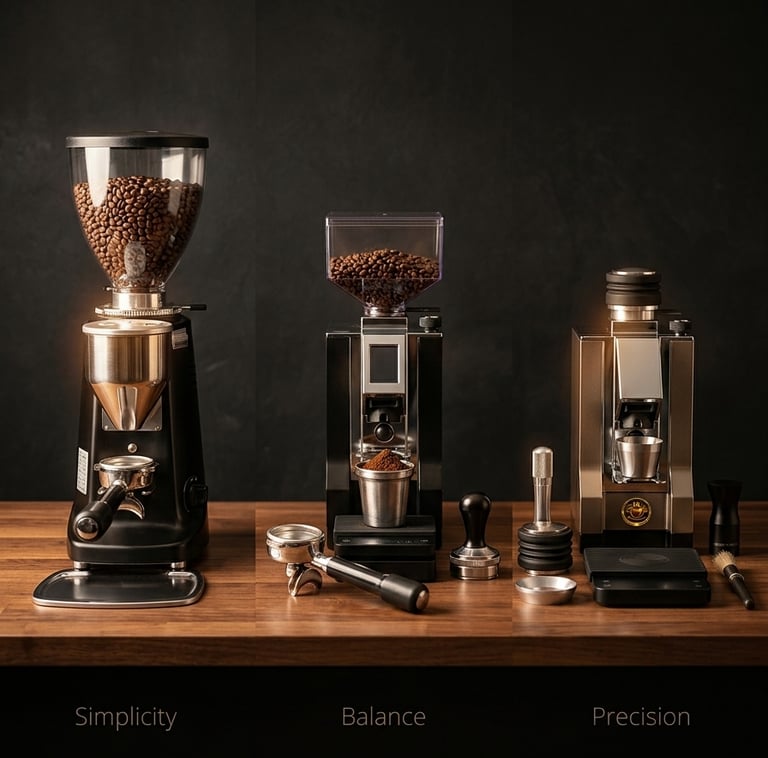
Beginners benefit from simpler, more forgiving grinders, while advanced users need precision and control.
Budget matters, but performance matters more. Investing in a grinder that allows consistent dialing-in will save time, beans, and frustration.
FAQs
What is the best burr type for an espresso grinder?
Flat burrs typically provide more consistent particle size, while conical burrs offer lower heat and quieter operation.
How fine should grind size be for espresso?
A fine grind—similar to table salt or finer—is required to achieve proper extraction timing.
What is grind retention and why does it matter?
It refers to leftover grounds inside the grinder, which can stale and affect flavor and consistency.
Are flat burrs better than conical burrs for espresso?
Flat burrs generally offer better consistency, while conical burrs provide ease of use and lower heat.
How often should I clean my espresso grinder?
Typically every one to two weeks, depending on usage.
Can I use one grinder for multiple brewing methods?
Yes, but switching grind sizes frequently can require recalibration and may reduce consistency.
Practical Conclusion
Choosing the right espresso grinder is one of the most important decisions in building a consistent coffee setup.
Precision, grind consistency, adjustment control, and retention all directly impact your ability to produce repeatable, high-quality espresso.
A well-chosen grinder doesn’t just improve your coffee—it removes frustration from the entire process and gives you control over every shot.
Contact@TheBuzzHQ.com
© 2026 Coffee Tech Buzz. All rights reserved.
Coffee Tech Buzz
Smarter brewing through better gear, clearer insights, and real-world performance testing.
Built for home users who want consistency without guesswork.
We focus on how machines actually perform — not just what they claim.
Home
Coffee Equipment Guide
Coffee Makers & Machines
Coffee Grinders
Espresso Gear & Guides
Coffee Beans & Roasts
Coffee Accessories & Tools
For educational purposes only.
We may earn commissions from qualifying purchases.
General Inquiries: