
Why Espresso Tastes Sour
Discover why espresso taste sour occurs and learn key adjustments in grind size, extraction time, and temperature to fix sour espresso.
ESPRESSO
The Coffee Tech Buzz Editorial Team - Led by AJ “Buzz” Eichman
4/13/20267 min read
Espresso can taste sour, a characteristic often misconstrued or unwelcome, yet rooted deeply in the brewing process. When this sourness dominates, it usually signals that extraction hasn’t balanced acidity with sweetness and bitterness. Variables such as grind size, extraction time, and water temperature directly influence this delicate flavor equilibrium. Understanding why espresso tastes sour and learning how to adjust your technique allows you to calibrate each shot, moving beyond guesswork toward consistency. For a full system breakdown, refer to the Espresso pillar.
Quick Verdict
Sour espresso primarily results from under-extraction caused by improper grind size, brewing temperature, or extraction time.
Adjusting grind size finer or increasing extraction time typically reduces sourness by improving solubles extraction.
Maintaining water temperature between 195°F and 205°F (90°C–96°C) is critical to avoid excessive acidity.
Consistency in dosing, tamping, and bean freshness significantly impacts the balance between acidity and sweetness.
What Causes Sourness in Espresso?
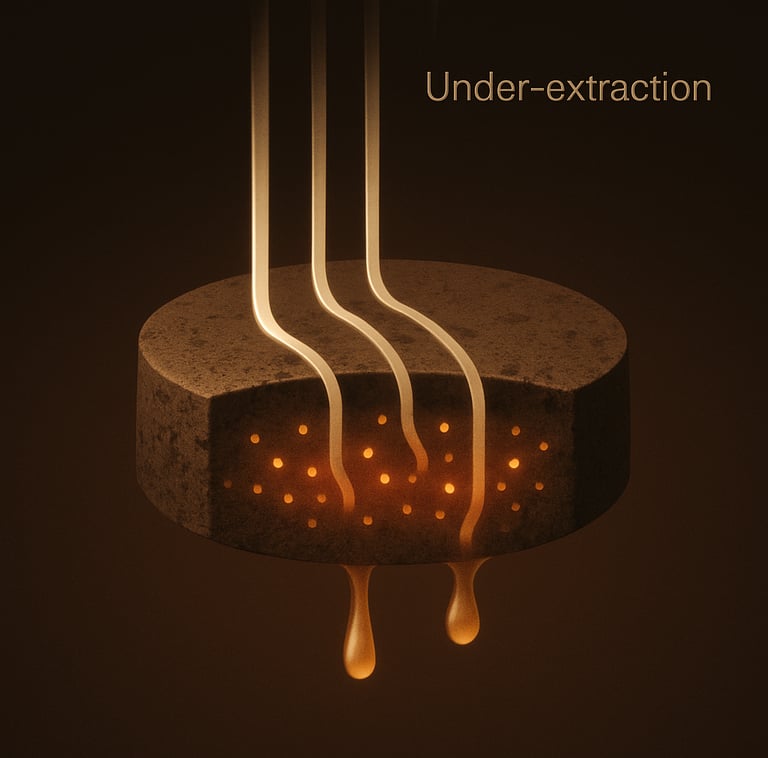
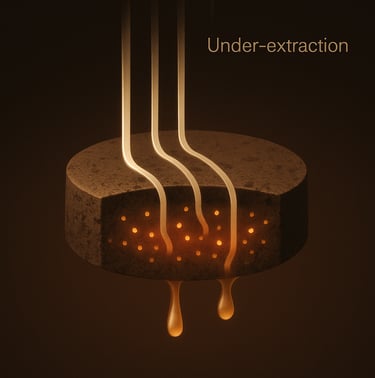
Sourness in espresso is a direct sign of under-extraction. Under-extraction occurs when the brewing process fails to extract sufficient solubles from coffee grounds, leaving acidic compounds more prominent. Acidity in coffee is not inherently negative—it gives brightness and complexity—but when sourness overwhelms, it points to an imbalance in extraction.
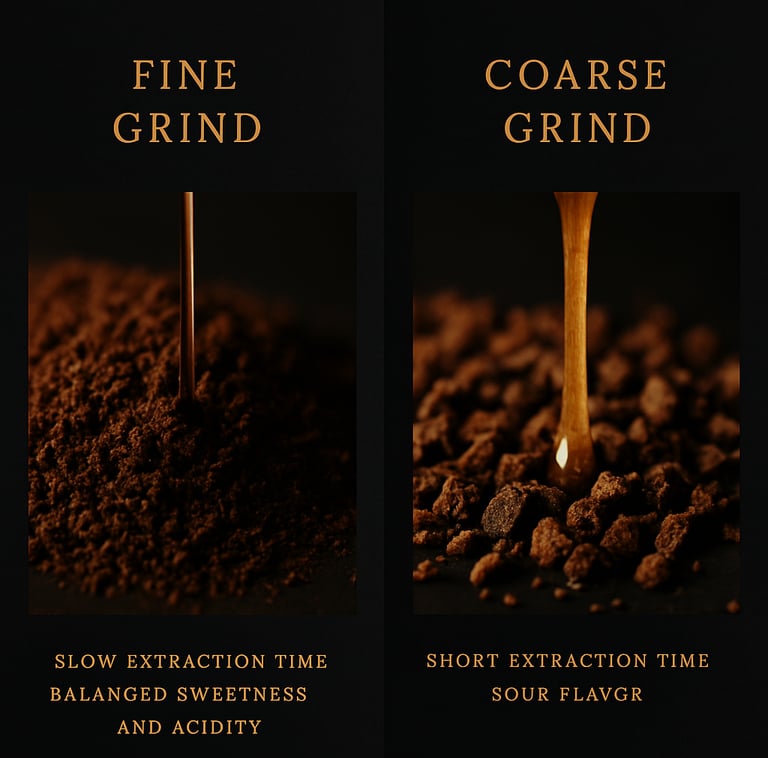
Several brewing variables can tip extraction toward sourness. A grind that is too coarse allows water to pass quickly without dissolving enough soluble acids, resulting in thin, sour shots. Conversely, a brewing temperature below the optimal range slows solubles dissolution, impairing sweetness and body development. Finally, a short extraction time does not give enough contact for flavors to evolve beyond acidity. These fundamentals are easier to visualize when paired with Espresso Ratio Explained.
This under-extraction is also common with lighter roast beans, which inherently have higher acidity levels and respond more sensitively to these variables. Recognizing how these factors interplay is key to diagnosing and rectifying sour espresso, especially when comparing roast profiles like Light vs Dark Roast.
Role of Grind Size in Espresso Sourness
Grind size is foundational in controlling extraction and by extension espresso taste. Finer grinds increase resistance to water flow, extending extraction time and encouraging a fuller dissolution of sugars and oils. If the grind is too coarse, water flows too rapidly, resulting in under-extraction where sour and acidic notes prevail.
When espresso tastes sour, the first variable to adjust is often the grind size. Moving to a finer grind incrementally slows extraction, enabling more complete extraction of soluble sugars which balance acidity. However, adjustments must be precise; extreme fineness can lead to over-extraction and bitterness, so changes should be incremental with careful tasting. Grinder quality plays a major role here, particularly when evaluating options like Best Espresso Grinders for Beginners.
Regular calibration of your grinder is critical. Burr wear, humidity changes, or inconsistent dosing can subtly alter the grind profile, which accumulates in flavor inconsistency. Tracking grind size stability is a practical method to reduce sour espresso caused by unintentional coarseness.
How Extraction Time Impacts Espresso Flavor
Extraction time represents the duration water spends in contact with coffee grounds, affecting flavor dissolution. A typical extraction window of 25 to 30 seconds balances the bright acids with sugars and bitters for a harmonious shot.
Extraction times shorter than this range tend to yield a sour, sharp espresso because the water has insufficient time to extract the full spectrum of soluble compounds. Conversely, excessively long extractions lead to bitterness and astringency, as explained further in Why Espresso Tastes Bitter.
Sour espresso is frequently a sign of rushing this phase—either through tamping too loosely, uneven distribution, or grind size that is too coarse. Consistent tamping pressure and dosing also maintain extraction time stability. Adjusting extraction time without revising grind or dose often proves futile; it’s the relationship between these variables that determines flavor balance. For a deeper workflow breakdown, see How to Dial in Espresso.
Effect of Brewing Temperature on Espresso Acidity
Brewing temperature control is one of the more impactful yet overlooked elements influencing espresso taste. Water temperature dictates the rate at which compounds dissolve—too low, and acidic compounds dominate because sugars extract more slowly; too high, and bitterness escalates.
Standard espresso brewing temperatures range from 195°F to 205°F (90°C to 96°C). Staying within this band optimizes extraction kinetics to balance acidity and sweetness. Lower temperatures yield sharper, sour profiles commonly mistaken as poor-quality coffee, when in fact it is simply a brewing parameter off-target.
Temperature stability is equally important. Fluctuations during extraction cause uneven solubles dissolution, introducing inconsistency linked to sourness. Investing in equipment with precise temperature control or preheating components mitigates this risk, ensuring the brew temperature remains consistent and predictable across shots. Comparing machine capabilities like DeLonghi EC9455M vs Rancilio Silvia M V5 can highlight these differences.
Importance of Coffee Beans’ Roast Level and Freshness
Roast level and bean freshness intersect critically with sourness perception in espresso. Light roasts inherently possess more acidity due to shorter roasting times preserving acidic precursors. This acidity is desirable within balance but becomes excessive if brewing variables are not adapted appropriately.
Fresh beans also influence extraction outcomes. Beans that have degassed sufficiently after roasting maintain chemical optimality for balanced extraction. In contrast, overly fresh beans tend to produce less stable extraction and higher perceived sourness, while stale beans may contribute to flat or dull flavors. Choosing from Best Espresso Beans helps ensure a balanced baseline before dialing in technique.
Adjusting brew parameters for lighter roasts often involves slightly higher brewing temperatures or longer extraction times to temper acidity. Conversely, darker roasts require less temperature elevation and finer grind adjustments to avoid over-extraction and excessive bitterness.
Troubleshooting and Fixing Sour Espresso Shots
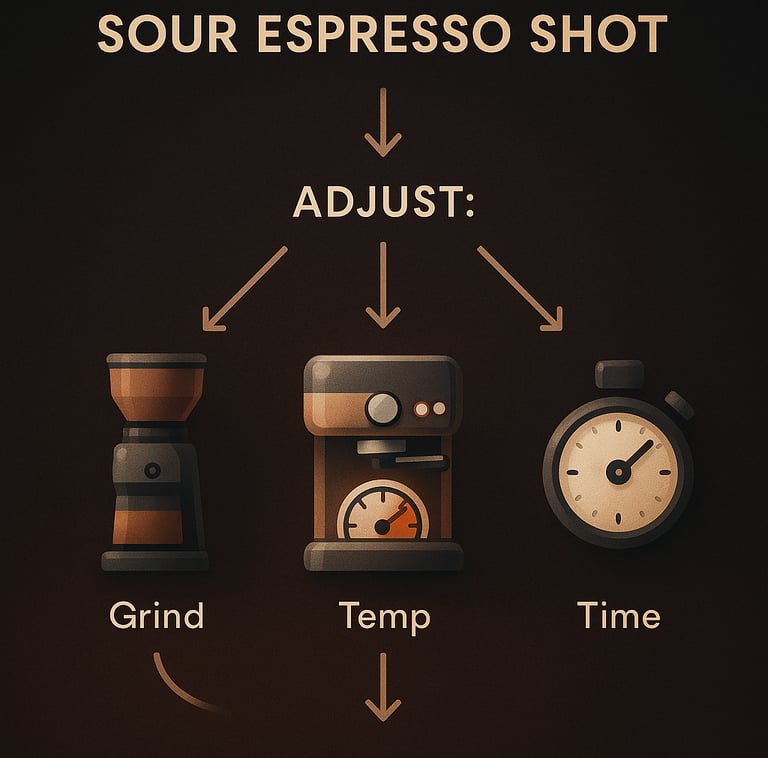
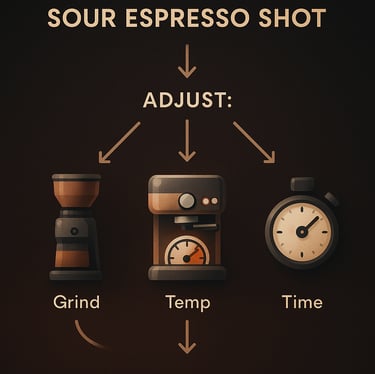
The key to fixing sour espresso lies in adopting a systematic approach—adjusting one variable at a time to assess its effect on taste. Begin with grind size: refine it finer in small increments to extend extraction and reduce acidity. If sourness persists, move to adjust extraction time by increasing the volume or duration within recommended parameters to extract more sugars.
The next area to inspect is brewing temperature—if adjustable, raise it incrementally toward 200°F (93°C) to facilitate fuller solubles extraction. Always allow equipment to stabilize before testing to ensure consistent shot-to-shot results.
Other practical considerations include verifying consistent dosing and tamping pressure, which influence flow rate and extraction uniformity. Equipment calibration, especially grinders, is often overlooked and can introduce sourness through unpredictable particle size distribution.
Lastly, the coffee beans themselves warrant evaluation. Using beans suited for espresso with proper roast profiles and freshness improves the baseline balance, making adjustments more effective and consistent.
Common Mistakes That Lead to Sour Espresso
One frequent error is using a grind size that is too coarse, causing water to rush through and fail to extract enough sweetness and body. This often happens when grinders aren’t recalibrated regularly or when users switch beans without adjusting settings.
Another prevalent issue is brewing at water temperatures below 195°F. Home machines without reliable temperature control can mislead users into accepting sourness as normal. Extraction times that are too brief due to hurried brewing or inconsistent tamping also contribute significantly.
Ignoring bean roast level and freshness further exacerbates sourness. Light roasts require more precise tuning to avoid harsh acidity, and stale beans lose the balance needed for sweet notes to develop.
Calibration mistakes such as uneven tamping or inconsistent dosing cause channeling, accelerating water flow in parts of the puck and resulting in under-extraction and sour flavors. The solution is to adopt repeatable, methodical practices that guarantee stability from session to session, which is covered further in Common Espresso Mistakes.
FAQ
Why does my espresso taste sour every time?
Sour espresso is usually a symptom of under-extraction caused by one or more factors: grind size too coarse, brewing temperature too low, or extraction time too short. Ensuring consistent grind calibration, raising water temperature within 195°F to 205°F, and targeting 25–30 seconds extraction time typically resolves persistent sourness.
How does grind size affect espresso sourness?
Grind size controls flow resistance; a coarse grind allows water to bypass quickly without extracting enough sugars, leading to sourness. Finer grind slows extraction, increasing sugar extraction and balancing acidity. Adjust grind size incrementally to find balance without tipping into over-extraction.
What is the ideal extraction time to avoid sour espresso?
For most espresso beans and equipment, a 25 to 30 second extraction time strikes the balance between acidity, sweetness, and bitterness. Time shorter than this favors acidity and can cause sour shots, while too long extraction risks bitterness.
Can brewing temperature cause sour espresso flavors?
Yes, brewing below approximately 195°F (90°C) slows dissolution of sugars and oils relative to acids, resulting in sour flavors dominating the shot. Maintaining temperature stability within 195°F–205°F (90°C–96°C) optimizes extraction balance.
How do roast level and bean freshness impact espresso acidity?
Light roasts maintain higher acidity and require precise brewing adjustments to avoid sourness. Freshness matters because overly fresh beans may produce inconsistent extraction and perceived sourness, whereas stale beans result in dull flavors. Properly rested and fresh beans support balanced extraction.
Is sour espresso always a bad thing?
Not necessarily. Acidity is a desired characteristic in espresso that provides brightness and complexity, but when sourness dominates due to extraction imbalances, it becomes unpleasant. The goal is achieving an espresso where acidity complements sweetness and bitterness.
What equipment adjustments can fix sour espresso?
Calibrating the grinder to a finer setting, stabilizing brewing temperature, and extending extraction time are primary adjustments. Consistent dosing and tamping pressure are crucial to maintain even flow and extraction. Equipment with precise temperature control and reliable grinders reduces risk of sour shots.
How to taste and diagnose sour espresso properly?
Taste sour espresso focusing on the sharpness and brightness of the shot. Observe if the sourness is dominant or balanced. Diagnose by systematically adjusting one variable—starting with grind size—monitoring changes in flavor, then moving to temperature and extraction time. Tracking parameter settings creates a data-driven path to desired taste.
Conclusion
Understanding why espresso tastes sour reveals that this flavor is seldom random but tied closely to the science of extraction. Sourness stems from under-extraction where acidity overshadows balanced sweetness. This under-extraction is often a controllable result of grind size, extraction time, and brewing temperature. Approaching each brew with calibrated adjustments, consistent technique, and awareness of bean characteristics transforms sour espresso from a frustrating experience into a predictable outcome to be fixed.
By refining grind fineness, maintaining stable brewing temperatures between 195°F and 205°F, and targeting extraction times near 25 to 30 seconds, home baristas can mitigate sour shots. Equally important is keeping dosing, tamping, and equipment calibration consistent to reduce variability, especially with light, acidic roasts. Remember that small, measured changes ripple through the flavor profile, allowing you to deliberately steer your espresso’s acidity rather than surrendering to it.
Achieving balance is a process of control, not chance. With patience and precision, sour espresso becomes a stepping stone toward mastering the craft. For deeper equipment guidance, exploring options like Best Espresso Machines Under $500 can help match your setup to your brewing goals.
Contact@TheBuzzHQ.com
© 2026 Coffee Tech Buzz. All rights reserved.
Coffee Tech Buzz
Smarter brewing through better gear, clearer insights, and real-world performance testing.
Built for home users who want consistency without guesswork.
We focus on how machines actually perform — not just what they claim.
Home
Coffee Equipment Guide
Coffee Makers & Machines
Coffee Grinders
Espresso Gear & Guides
Coffee Beans & Roasts
Coffee Accessories & Tools
For educational purposes only.
We may earn commissions from qualifying purchases.
General Inquiries: