
Common Espresso Mistakes and How to Fix Them
Learn how to identify and fix common espresso mistakes with practical tips on grind size, tamping, dosing, and equipment maintenance for perfect shots.
ESPRESSO
The Coffee Tech Buzz Editorial Team - Led by AJ “Buzz” Eichman
4/13/20267 min read
Espresso brewing offers a unique challenge among coffee preparation methods. It demands precise control over several interdependent variables to achieve a balanced, consistent cup. Yet, even experienced home baristas frequently fall into common espresso mistakes that subtly undermine flavor and repeatability. From grind size errors to uneven tamping, these issues often go unnoticed but immediately affect the quality of each shot. Understanding why these mistakes occur and how to systematically address them transforms espresso brewing from guesswork into a reliable process. This article will guide you through the typical espresso brewing errors, explain their causes, and provide measured approaches for correction—all grounded in reproducible technique rather than trends or assumptions. For a complete system overview, refer to the Espresso pillar.
Quick Verdict
Consistent grind size matched to your machine’s requirements is essential to avoid sour or bitter espresso.
Uniform dosing and tamping prevent channeling and uneven extraction, which distort flavor profiles.
Stable water temperature within 90–96°C and correct extraction timing (25–30 seconds) balance acidity and bitterness.
Routine cleaning of espresso equipment maintains extraction performance and cup quality.
Controlling these core variables methodically leads to predictable, repeatable espresso results.
Understanding Espresso: Key Brewing Variables
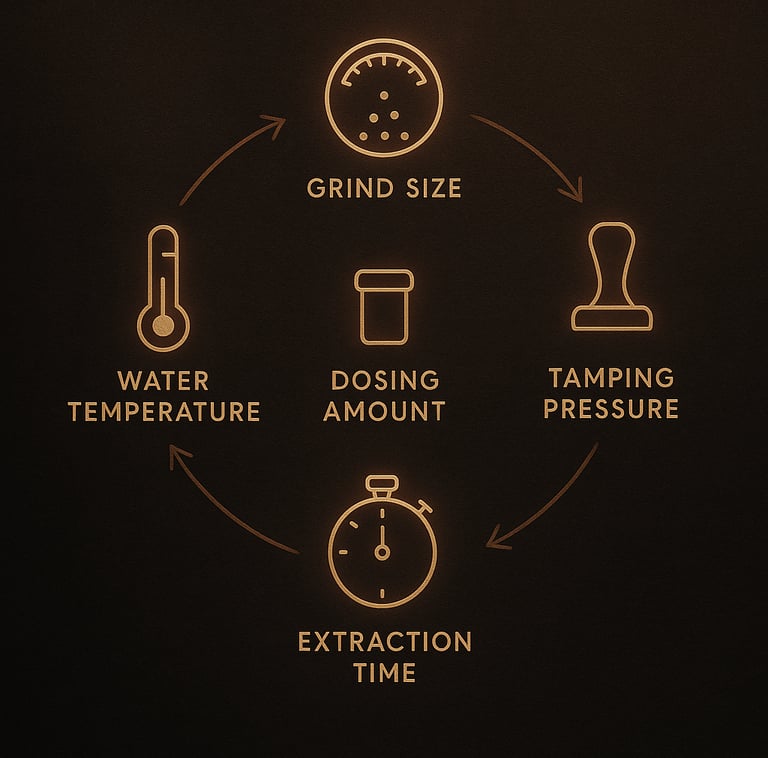
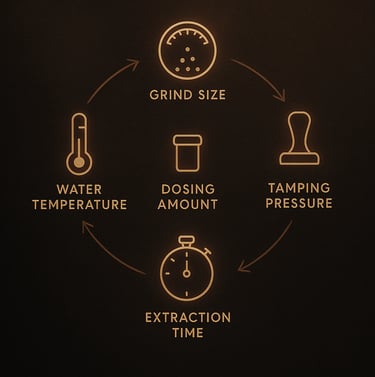
Espresso is a high-pressure, rapid extraction method requiring finely tuned balance among grind size, dose, tamping, water temperature, and extraction time. Each variable influences the extraction rate and solubility of coffee compounds, affecting taste, body, and aromatic profile. Grind size, for example, determines resistance to water flow; a finer grind increases resistance and extraction time, potentially pulling more bitterness if overdone. Dosage affects concentration and saturation of grounds, while tamping compresses the coffee puck evenly to prevent preferential water paths. Water temperature governs how quickly and which flavor compounds dissolve, generally optimized between 90°C and 96°C. Finally, extraction time reflects how long water interacts with grounds, with typical shots aiming for 25 to 30 seconds for balance. Neglecting control in any of these can make espresso inconsistent and unsatisfying. For a deeper breakdown of how these variables interact, see Espresso Ratio Explained.
Common Espresso Mistakes and Their Causes
Using Incorrect Grind Size
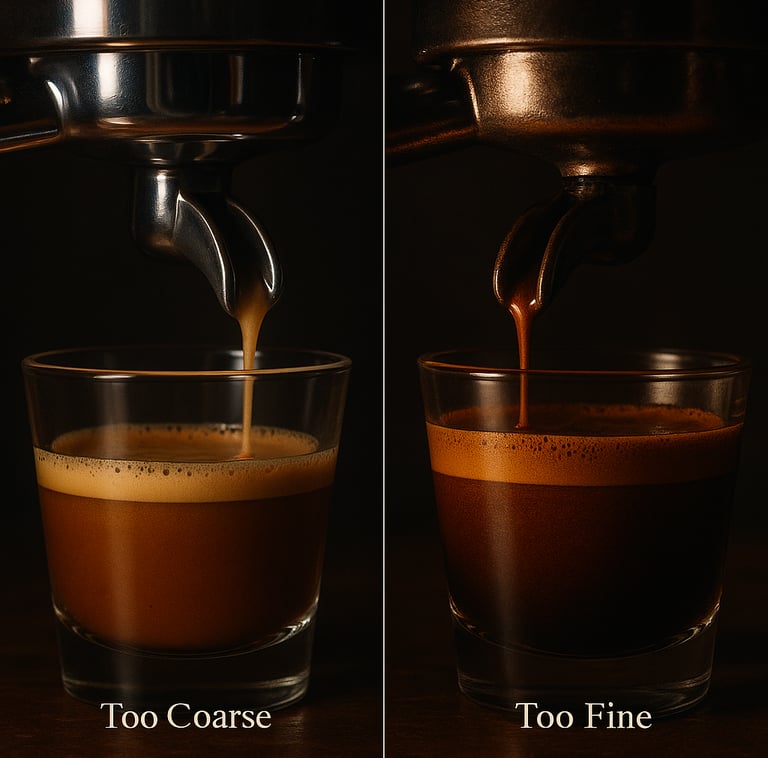
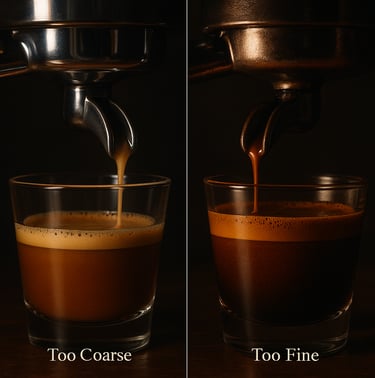
The grind size is a primary lever for adjusting extraction. Too coarse a grind lowers resistance, speeding water flow and under-extracting the coffee, which often results in sour, thin shots lacking sweetness and body. Conversely, a grind that is too fine slows extraction excessively, drawing out harsh bitterness and astringency. A grain of difference as subtle as a fraction can sway the final cup noticeably. In home settings, inconsistent grind adjustment or lack of precision grinders usually underlie this error. These issues often show up clearly when comparing Why Espresso Tastes Sour and Why Espresso Tastes Bitter.
Uneven or Insufficient Tamping
Tamping might seem straightforward, but uneven pressure or angle often leads to channeling—where water bypasses parts of the coffee bed, extracting unevenly. This causes patchy flavors with some parts under-extracted and others over-extracted in the same shot. Inconsistent tamping pressure also distorts puck density, altering flow rates unpredictably. While a standard tamp pressure around 30 pounds-force is commonly cited, consistency matters more than exact force. Using tools from Best Espresso Tampers helps maintain repeatable results.
Over or Under-Dosing Coffee Grounds
Dose weight determines how concentrated the coffee bed is during extraction. An over-dose can compact the coffee excessively, impeding flow and forcing over-extraction, whereas an under-dose creates a looser puck that lets water pass too quickly with insufficient extraction. Slight deviations in dosing often amplify inconsistencies in taste and body, especially without a reliable scale. Precision improves significantly with tools from Best Espresso Scales.
Incorrect Water Temperature
Water temperature outside the optimal 90–96°C range disturbs solubility balance—too cool water inhibits extraction of desirable sweetness and body, yielding sourness. Excess heat accelerates extraction, rapidly pulling bitter compounds and sometimes burning delicate flavors. Temperature fluctuations are common in home espresso machines without stable thermoregulation.
Neglecting Machine and Grinder Cleaning
Oils and coffee residues accumulate on portafilters, baskets, and grinder burrs. These residues can become rancid, impart stale or off-flavors to shots. Moreover, clogged grinders produce inconsistent grind sizes, undermining the core control over espresso variables. Regular cleaning routines are essential for consistent extraction performance.
How to Fix Grind and Dose Errors
If you notice your espresso has sour notes or seems weak and thin, begin by refining your grind size. Adjust your grinder to a slightly finer setting. This increases resistance and extraction time, allowing more solubles to dissolve and balancing acidity. In contrast, if the espresso tastes bitter or dry, coarsen your grind incrementally to speed flow and reduce over-extraction. These adjustments typically have an immediate impact and should be made in small, measured steps to avoid overshooting.
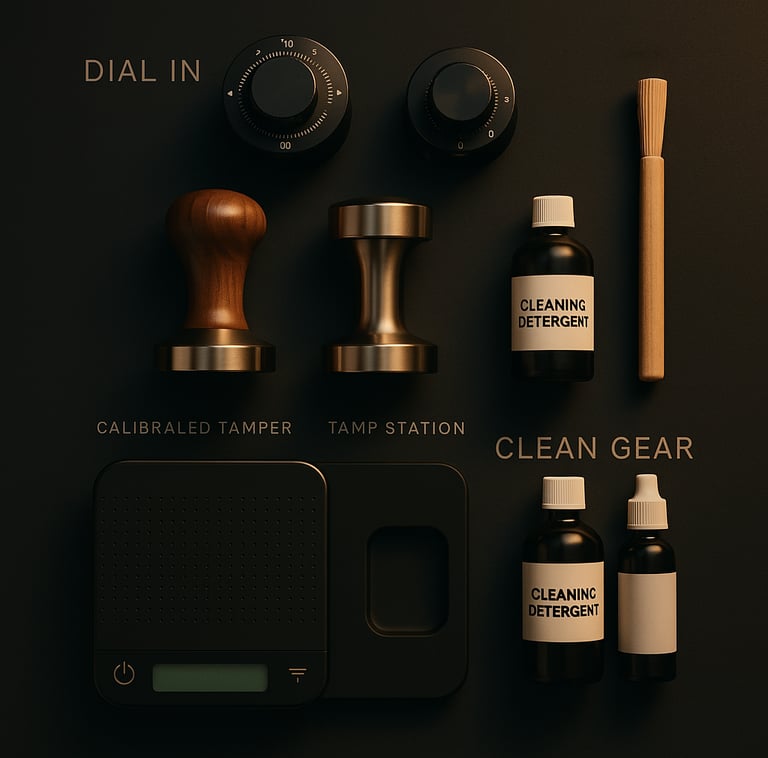
Once you dial in your grind, focus on dosing. Use a calibrated scale to measure your coffee dose precisely each time. Consistency here stabilizes extraction volume and strength. If dosing tools are unavailable, seek one; uniform weight is crucial. Experimenting with dose adjustments should only follow after grind size is settled, as dose and grind influence one another closely. For a structured workflow, reference How to Dial in Espresso.
Tamping Technique and Its Importance
Tamping serves to consolidate the coffee puck to ensure even water saturation and uniform extraction. The goal is a smooth, level surface, compressed firmly enough to resist water channeling but without deforming the puck. Developing a consistent tamping pressure and technique is vital; this typically involves applying steady pressure around 30 pounds-force with a level tamp. Using a calibrated tamp station can significantly improve repeatability if manual technique is inconsistent.
It’s important to tamp straight down without tilting. Tilted tamping creates uneven density, allowing water to find easy routes and bypass some grounds. You may not notice channeling by eye, but it shows in flavor inconsistencies and shot volume variations. Monitoring these symptoms helps gauge tamp effectiveness over time.
Water Temperature and Extraction Timing
Stable water temperature around 90–96°C is essential to balance flavor extraction. Most home espresso machines hover around this range, but variations during warm-up or between shots can cause noticeable shifts in taste profile. Water below this range often yields a sharp, sour espresso, while temperatures above risk bitterness and astringency.
Extraction timing correlates closely with grind and dose variables. Aim for a shot pull around 25–30 seconds. If your shot extracts too quickly, it suggests a coarse grind or under-dose, while a prolonged pull indicates a fine grind or over-dose. Timing outside this window typically signals imbalance, leading to under or over-extraction flavors.
Maintaining Your Equipment for Consistent Shots
Regular cleaning of your espresso machine and grinder is not optional if you want stable results. Residual coffee oils and grounds degrade flavor quality, accumulate as deposits inside brewing components, and promote bacterial growth that alters taste. Cleaning schedules vary by usage but generally include backflushing espresso machines daily or weekly with detergent, descaling periodically to prevent mineral buildup, and cleaning grinders at least weekly.
Drilling down into grinder burr condition is important; worn burrs lead to uneven grind particle size distribution, unpredictably affecting shot quality. Replacing burrs as recommended by manufacturers ensures consistent grind and extraction.
Troubleshooting and Espresso Quality Improvement Tips
When facing inconsistent espresso shots, approach adjustments methodically rather than simultaneously changing multiple variables. Start with grind size adjustments, as it influences flow rate and extraction most directly. Then verify dose consistency using a scale. Confirm tamp uniformity visually and by feel, and monitor extraction timing carefully with a timer.
Keep detailed notes of adjustments and resulting flavor changes. Over repeated brews, patterns emerge that disclose underlying issues. For example, if you observe sourness resurfacing despite stable grind and dose, check water temperature stability or machine cleanliness.
Using precision tools such as a quality grinder with micro-adjustments, a reliable scale, a pressure-calibrated tamper, and a timer enhances your ability to control the brewing parameters tightly. If workflow inefficiencies cause haphazard dosing or tamping, consider dedicated espresso accessories for dosing and tamping stations, which improve repeatability and speed. Grinder comparisons like Turin DF54 vs Baratza Encore ESP highlight consistency differences.
When selecting new equipment for your routine, prioritize devices that excel in precision and control rather than features or price. Espresso grinders that offer small incremental grind adjustments and machines with stable temperature and pressure management create a foundation for consistent home espresso. For machine comparisons, see Bottomless vs Spouted Portafilter to evaluate extraction visibility and workflow differences.
FAQ
What is the ideal grind size for espresso?
The ideal grind size is typically finer than drip coffee but depends on your specific espresso machine and beans. A grind that balances extraction time in the 25–30 second range without channeling or excessive flow rate is optimal.
How do I know if my espresso is under-extracted or over-extracted?
Under-extracted espresso tastes sour, sharp, and weak with thin body. Over-extracted espresso presents as bitter, dry, or astringent with harsh aftertaste. Extraction time, grind size, and flow rate analysis help diagnose these issues.
What is the proper dose of coffee for a single espresso shot?
A standard single espresso dose ranges from 7 to 9 grams, with many home baristas opting for around 18 grams for a double shot. Precision scales are essential to maintain dosing consistency rather than relying on volume.
How important is tamping pressure and technique?
Tamping pressure should be consistent, around 30 pounds-force, but maintaining even, level compression and avoiding puck tilt is more critical to preventing channeling and uneven extraction.
What water temperature should I use for espresso brewing?
Maintain water temperature between 90°C and 96°C to balance sweetness, acidity, and bitterness extraction. Fluctuations outside this range negatively impact flavor.
How often should I clean my espresso machine and grinder?
Daily or weekly backflushing of your espresso machine with detergent is recommended, along with regular descaling based on water hardness. Grinder burrs and dosing chambers should be cleaned weekly or as coffee residues accumulate.
How can I fix channeling during extraction?
Channeling commonly results from uneven tamping or inconsistent grind distribution. Use a level tamp with consistent pressure, ensure even dosing, and consider distributing grounds before tamping to avoid dense pockets.
What are signs of outdated or stale coffee beans?
Stale beans produce espresso with muted aromas, flat flavor, and off-notes resembling cardboard or rancidity. Freshness strongly affects extraction and overall espresso quality.
Practical Conclusion
Espresso brewing demands deliberate attention to detail, focusing on controlling reproducible variables rather than chasing the latest gear or shortcuts. Common espresso mistakes—incorrect grind size, uneven tamping, improper dosing, unstable water temperature, and neglected cleaning—are less about complexity and more about consistency. Each error introduces subtle but immediate effects on the cup's flavor and body, often hidden until multiple brews reveal unpredictability. Addressing these issues requires measured adjustments informed by understanding cause and effect, reinforced through routine and precision tools.
By refining grind adjustments first, then dialing in dose and tamp technique, and ensuring stable water temperature and clean equipment, home baristas unlock a process where espresso becomes predictable and performance-driven. A deliberate workflow that emphasizes control over variables reduces guesswork and elevates daily espresso routines from chance outcomes to reliable achievements in flavor.
For equipment upgrades that support this level of control, exploring options like Best Espresso Machines Under $1000 can help match your setup to your consistency goals.
Contact@TheBuzzHQ.com
© 2026 Coffee Tech Buzz. All rights reserved.
Coffee Tech Buzz
Smarter brewing through better gear, clearer insights, and real-world performance testing.
Built for home users who want consistency without guesswork.
We focus on how machines actually perform — not just what they claim.
Home
Coffee Equipment Guide
Coffee Makers & Machines
Coffee Grinders
Espresso Gear & Guides
Coffee Beans & Roasts
Coffee Accessories & Tools
For educational purposes only.
We may earn commissions from qualifying purchases.
General Inquiries: