
How to Dial In Espresso: A Step-by-Step Guide
Learn how to dial in espresso with precise adjustments to grind size, dose, and shot timing for consistent, high-quality espresso shots.
ESPRESSO
The Coffee Tech Buzz Editorial Team - Led by AJ “Buzz” Eichman
4/13/20268 min read
Dialing in espresso is a process grounded in precision. It is not about chasing the latest trends or making broad adjustments without cause. Instead, it involves carefully manipulating a few critical variables—grind size, coffee dose, shot timing, and machine settings—to extract a balanced, consistent espresso shot. For home brewers looking to gain control over their espresso brewing, understanding this process is essential. This guide breaks down the methodical steps to dial in espresso effectively, emphasizing repeatability and predictability above all else. For a full framework, start with the Espresso pillar.
Quick Verdict
The key to consistent espresso lies in adjusting one variable at a time, with grind size usually offering the most impactful control over extraction.
Maintaining a consistent coffee dose ensures reliable flavor profiles and repeatability across brews.
Shot timing within a 25–30 second range generally correlates with optimal extraction balance, though it may vary slightly depending on bean and roast.
Espresso extraction ratios between 1:1.5 and 1:2 help guide the appropriate brew yield relative to coffee dose.
A precise scale and timer are fundamental tools that support accurate dialing in and allow objective progress tracking.
What Does Dialing In Espresso Mean?
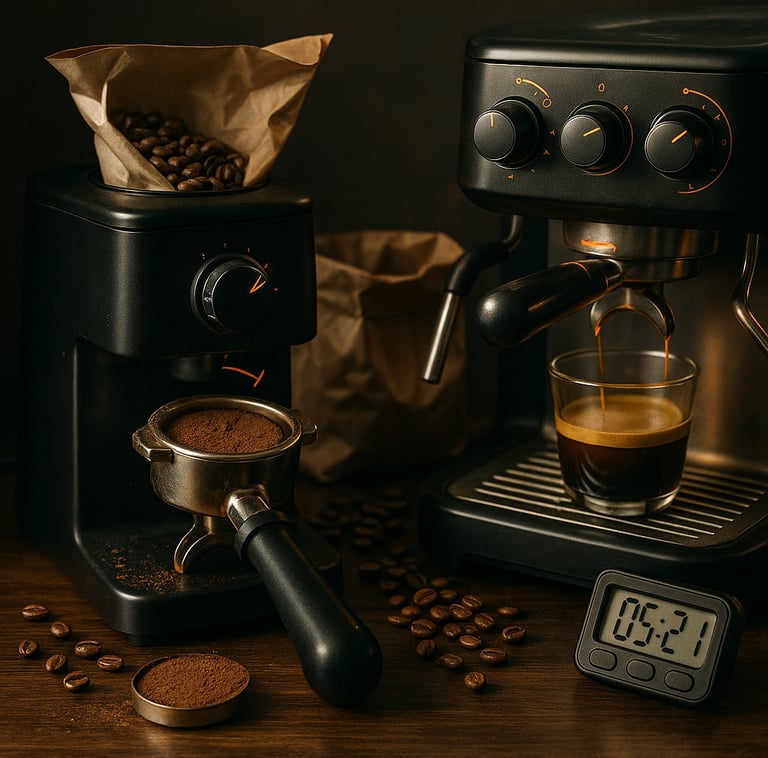
Dialing in espresso refers to the iterative process of tweaking brewing variables to achieve an ideal balance of flavor—neither under-extracted and sour nor over-extracted and bitter. Unlike casual coffee preparation, espresso dialing demands consistency and control because the espresso shot is highly sensitive to small changes. Slight shifts in grind size, dose, or shot timing immediately affect flow rate and extraction yield, resulting in noticeable differences in taste. If you’re seeing flavor swings, comparing Why Espresso Tastes Sour and Why Espresso Tastes Bitter helps isolate which side of extraction you’re landing on.
The aim is to establish a repeatable recipe tailored to a specific coffee bean and machine setup, one that can produce reliable, high-quality shots day after day. This process rejects guesswork and instead relies on detailed measurements and tasting feedback.
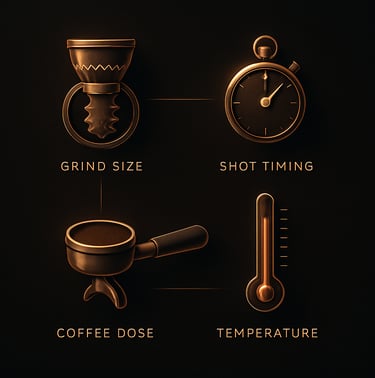
Key Variables in Espresso Dialing: Grind Size, Dose, Timing, and Temperature
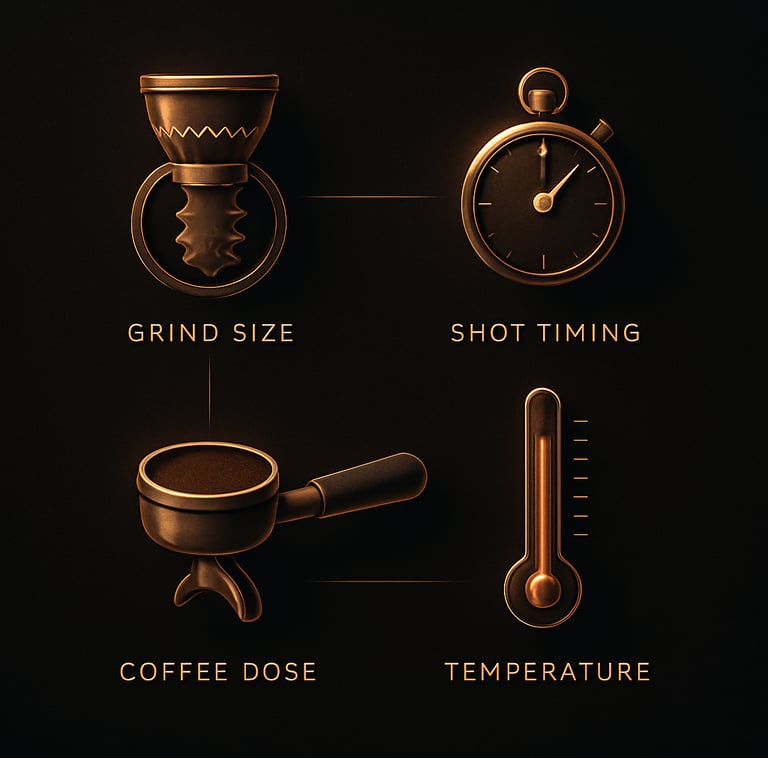
Four primary variables govern espresso brewing and deserve precise attention.
Grind Size
The grind size affects how quickly water flows through the coffee puck. Finer grinds increase resistance, slowing flow, which can extend shot time and lead to over-extraction if not balanced. Coarser grinds speed extraction but risk producing sour or under-extracted flavors. Adjusting grind size is usually the first and most effective step in dialing in because it directly controls flow rate and shot timing. Equipment choice plays a role here, especially when comparing grinders like Best Coffee Grinders for Espresso.
Coffee Dose
Consistent dosing stabilizes extraction by controlling puck thickness and overall coffee mass. A typical double shot dose ranges from 18 to 20 grams. Deviations here change contact time and extraction uniformity. Precise dosing with a reliable scale is essential for hit-after-hit consistency and makes other variables easier to control, which is why tools from sc are critical.
Shot Timing
The recommended shot time generally falls between 25 and 30 seconds for a 25–35ml yield, though this depends on coffee type and roast profile. Short shot times usually indicate under-extraction with brighter, potentially sour flavors. Longer shot times often pull bitter compounds from the coffee. Shot timing serves as an important gauge but should be interpreted alongside taste and yield measurements, which are explained further in Espresso Ratio Explained.
Temperature
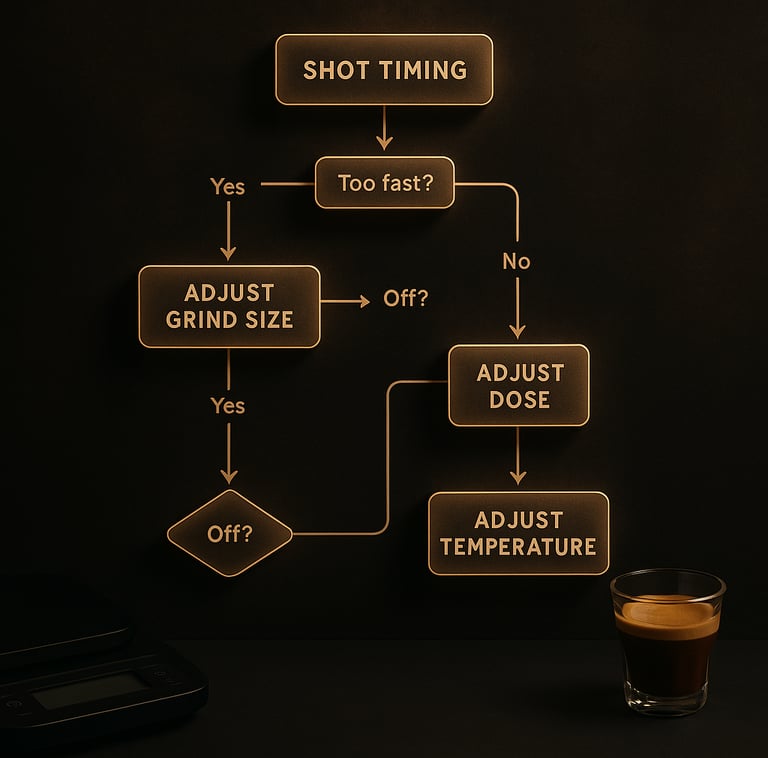
Brew water temperature influences extraction chemistry, flavor balance, and repeatability. Stability within the 90–96°C range is ideal, with some beans performing better at slight variations. Changes in temperature can shift sweetness, acidity, and bitterness profiles, but temperature adjustments should come after dialing grind size, dose, and timing unless machine performance requires correction.
Step-by-Step Process to Dial In Your Espresso
The path to a well-dialed espresso shot involves systematic experimentation and measurement. Follow these steps in sequence to isolate variables and optimize brew quality.
Start with a baseline recipe
Choose an initial setting based on the coffee’s roast and the machine’s capabilities. Set your grinder to a medium-fine setting consistent with espresso, dose 18g of coffee, target a 1:2 brew ratio (36g liquid output), and aim for a 25-second shot time.Pull the first shot and observe shot time
Use a scale to weigh the output and a timer to track duration. Note if the shot is running too fast (below 25 seconds) or too slow (above 30 seconds).Adjust grind size first to manipulate shot time
If the shot is too quick, grind finer to increase resistance; if it’s slow, grind coarser to allow faster flow. These adjustments can be small—typically moving one step on a grinder dial. Pull a new shot to test changes.Set dose consistently once shot timing is in range
Once your shot time lands between 25–30 seconds, confirm that you are dosing the same amount each time. Minor dose changes may require readjusting grind size.Refine brew yield to fine-tune taste
Adjust output weight towards a 1:1.5 to 1:2 ratio depending on desired strength and flavor concentration. Keep track of how extraction ratios impact balance.Taste and evaluate
Balanced espresso should present sweetness, appropriate acidity, and minimal bitterness. If flavors feel thin or sour, extraction may be low; overly bitter or hollow suggests over-extraction.Make small, isolated tweaks based on taste
Modify variables one at a time, usually grind size or brew ratio, to compensate for taste deviations. Avoid changing multiple parameters simultaneously as this obscures cause-effect understanding.Stabilize settings and repeat
Once the shot produces the desired flavor profile, maintain the same parameters consistently. Monitor for drift as beans age or machine conditions vary.
Tools and Accessories to Support Espresso Dialing
Achieving precision requires investing in reliable equipment that enhances control and measurement accuracy.
Scale and Timer
A digital scale accurate to 0.1 gram is non-negotiable for dosing coffee and measuring liquid yield. A timer integrated within or alongside the scale provides consistent shot timing without distractions.
Quality Burr Grinder
Stepless or micro-adjustable grinders allow fine control over grind size, which is vital for dialing in. Burr consistency reduces particle size variance, ensuring even extraction and less channeling. Comparing models like Turin DF54 vs Baratza Encore ESP highlights differences in consistency and workflow.
Thermometer or Temperature-Controlling Espresso Machine
Knowing or controlling brew water temperature improves repeatability. Machines with adjustable temperature settings or PID controllers maintain thermal stability critical to consistent flavor.
Distributer and Tamper
Even distribution and stable tamping pressure prevent uneven extraction although tamp pressure is less influential than grind consistency. Consistency in tamping method ensures variables are isolated to grind and dose. Tools from Best Espresso Tampers and distribution comparisons like WDT Tool vs Distributor help standardize puck prep.
Common Dialing Mistakes to Avoid
Improper dialing often stems from misunderstanding how variables influence extraction or from poor methodology.
Changing Multiple Variables at Once
Adjusting grind size, dose, and shot timing simultaneously complicates troubleshooting. This is usually where results start to vary without people realizing why. Change one variable per session to identify its precise impact.
Ignoring Coffee Freshness and Grind Uniformity
Using stale beans or inconsistent grind particles leads to unpredictable extraction and taste. Fresh, well-roasted beans and a consistent grind are fundamental prerequisites. Starting with quality options from Best Espresso Beans reduces variability before dialing even begins.
Inconsistent Tamping and Distribution
Uneven coffee beds cause channeling and uneven extraction. While tamp pressure matters less than grind, inconsistent tamping combined with poor distribution can ruin shots unpredictably.
Relying Only on Shot Timing Without Tasting
A nominally “correct” 25-second shot can still be improperly extracted if taste is not confirmed. Tasting is the final quality control, revealing subtle imbalances that timing alone cannot detect.
Not Considering Roast Level or Bean Variability
Darker roasts generally extract faster and may require coarser grinds or shorter shot times compared to lighter roasts. Machine temperature settings might need adjustments accordingly.
Expecting One Recipe to Always Work
Each coffee and machine combination demands its own dialing. Changes over time, like different bags or environmental factors, require regular adjustment.
Troubleshooting Poor Extraction
When extraction quality falters, the first step is to verify your variables systematically.
If your shot time is too low (<25 seconds), begin by making the grind finer to increase resistance. If the espresso tastes sour or weak, suspect under-extraction caused by fast flow or insufficient dose.
If shot time stretches beyond 30 seconds, inspect for overly fine grind or excessive dose causing over-extraction and bitterness. Machine temperature stability or channeling within the puck may also require attention.
Taste deviations often precede visible signs of foundation issues. Employ a scale and timer to confirm measurements and follow your established method for consistency.
Adjusting Recipes for Different Beans and Roast Levels
Changes in bean origin, roast profile, or freshness necessitate revisiting your dosing and grind parameters. Lighter roasts often benefit from slightly finer grinds and longer shot times to extract the delicate flavors fully, while darker roasts generally tolerate coarser grinds and shorter timing to avoid over-extraction.
Similarly, espresso machine temperature adjustments may unlock better balance. If your machine allows temperature control, strive to maintain stability but experiment within the 90–96°C range to find a sweet spot for your coffee.
Maintaining Consistency Over Time
Dialing in espresso is not a one-time event but a continual process that accounts for variables like bean age, humidity, and machine wear. Regular calibration of your grinder, consistent dosing, and tasting every few days ensure your espresso remains balanced. Invest time in tracking your results and resist making unnecessary changes unless quality deteriorates.
Embedding a daily routine around these methodical steps transforms espresso making from a variable experiment into a controlled process.
Essential Links for Further Precision
Deepening understanding of brewing methods related to espresso extraction is essential. For this, refer to reputable sources like the comprehensive brewing methods guides available to home baristas. If considering upgrades for greater consistency, exploring comparison reviews of espresso grinders and home espresso machines can guide your investment choice, such as Best Espresso Machines Under $2000 for higher-end setups.
FAQ
What grind size should I start with for espresso?
A medium-fine grind setting suited for espresso is a good starting point; you can then adjust finer or coarser depending on shot timing and taste.
How do I know when my espresso extraction is ideal?
Ideal extraction balances sweetness, acidity, and bitterness; it usually corresponds with a shot time between 25 and 30 seconds and an extraction ratio near 1:1.5 to 1:2.
What is the recommended shot timing for espresso?
Shot timing typically falls between 25 and 30 seconds for 25–35ml of espresso, adjusted as needed for bean and roast specifics.
How does coffee dose affect espresso quality?
Dose impacts extraction by controlling puck thickness and coffee mass; consistent dosing around 18–20g for doubles stabilizes results.
Should I adjust espresso machine temperature when dialing in?
Temperature affects extraction chemistry; maintaining 90–96°C is standard, but slight adjustments may improve taste for different beans.
How often should I dial in my espresso grind?
Dial in whenever you open a new bag, change beans or roast, or notice taste variation, which could be weekly or biweekly depending on use.
What tools do I need to dial in espresso effectively?
A precise scale with timer, a consistent grinder with fine adjustment, and a capable espresso machine with temperature stability are fundamental.
Can I dial in espresso consistently on a home machine?
Yes, with controlled variables, patience, and proper tools, home espresso machines can deliver repeatable, high-quality shots.
Conclusion
Dialing in espresso requires measured adjustments and attention to detail rather than guesswork. By focusing primarily on grind size, dose consistency, and shot timing, home baristas can develop recipes tailored to their coffee and machine. The process rewards diligence with predictability—each step calibrated to extract the best the bean can offer. Through deliberate practice, supported by precise tools, home espresso preparation becomes less about chance and more about mastery. Ultimately, this systematic approach transforms espresso from a variable craft to a consistent, repeatable performance.
Contact@TheBuzzHQ.com
© 2026 Coffee Tech Buzz. All rights reserved.
Coffee Tech Buzz
Smarter brewing through better gear, clearer insights, and real-world performance testing.
Built for home users who want consistency without guesswork.
We focus on how machines actually perform — not just what they claim.
Home
Coffee Equipment Guide
Coffee Makers & Machines
Coffee Grinders
Espresso Gear & Guides
Coffee Beans & Roasts
Coffee Accessories & Tools
For educational purposes only.
We may earn commissions from qualifying purchases.
General Inquiries: