

Espresso Machine Cleaning & Maintenance Guide
Espresso machines are precision brewing tools. Every shot you pull leaves behind coffee oils, microscopic particles, mineral deposits, and moisture inside the machine. Over time, these contaminants build up and affect extraction, temperature stability, steam performance, and flavor.
Proper maintenance is not just about keeping a machine looking clean. It directly impacts espresso quality, consistency, and machine lifespan. Whether you own a beginner machine or a high-end prosumer setup, routine care is one of the most important habits you can develop.
Many espresso problems that users blame on grinders, beans, or brewing technique are actually maintenance issues. Bitter flavors, weak steam pressure, inconsistent shots, and slow water flow often trace back to cleaning tasks that have been skipped.
Understanding a complete maintenance routine is just as important as understanding extraction itself, which is why cleaning should be considered a core part of Espresso Gear & Guides.
This guide covers daily cleaning, weekly maintenance, descaling, backflushing, steam wand care, and long-term upkeep so you can keep your machine performing at its best.
What Is Espresso Machine Maintenance?
Espresso machine maintenance refers to the routine cleaning and servicing required to keep all brewing components functioning properly.
Unlike drip coffee makers, espresso machines operate under pressure and heat. Coffee oils, mineral deposits, and moisture accumulate rapidly throughout the brewing system.
A complete maintenance routine typically includes:
Cleaning the group head
Cleaning the steam wand
Backflushing the machine
Cleaning the shower screen
Removing coffee oils
Removing mineral scale
Monitoring gaskets and seals
Each task serves a different purpose. Understanding when and why to perform each one helps prevent expensive repairs and protects shot quality.
Many espresso drinkers focus heavily on beans, grinders, and brewing ratios while overlooking machine cleanliness.
The reality is that dirty equipment can ruin even perfectly dialed-in espresso.
Coffee oils become rancid surprisingly quickly. These oils cling to shower screens, group heads, baskets, and internal passages. As they accumulate, they create bitterness and stale flavors that carry directly into the cup.
Mineral buildup creates another problem. Hard water leaves deposits known as scale inside boilers, pipes, and valves. This buildup restricts water flow and reduces heating efficiency.
If your espresso suddenly tastes different despite using the same coffee and recipe, cleaning should be one of the first troubleshooting steps.
Many flavor issues discussed in Why Espresso Machines Taste Worse Over Time originate from neglected maintenance.
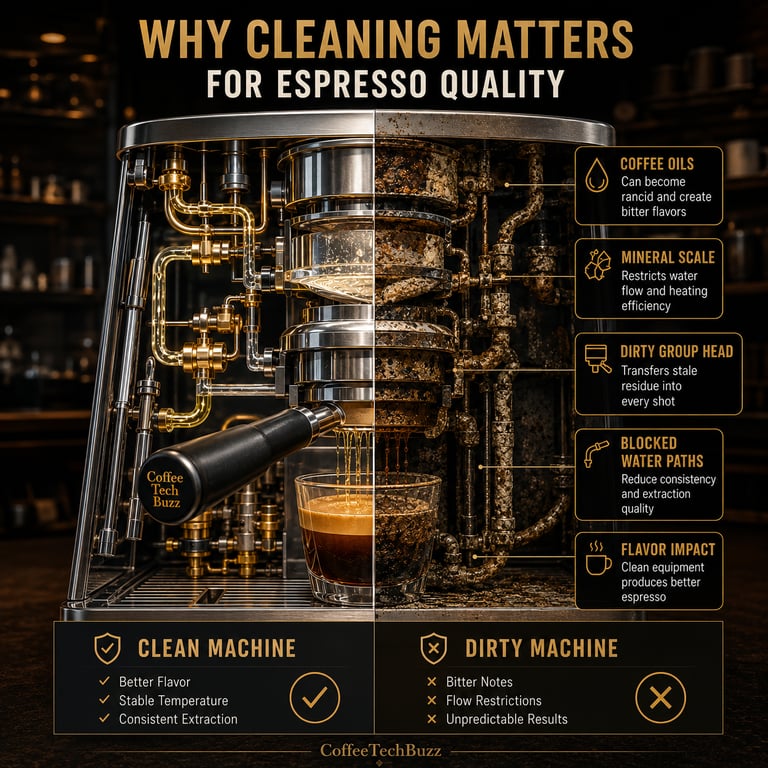
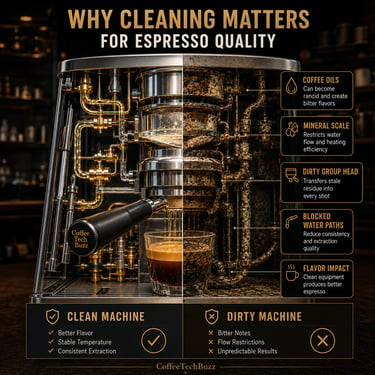
Why Cleaning Matters for Espresso Quality
Daily Espresso Machine Maintenance
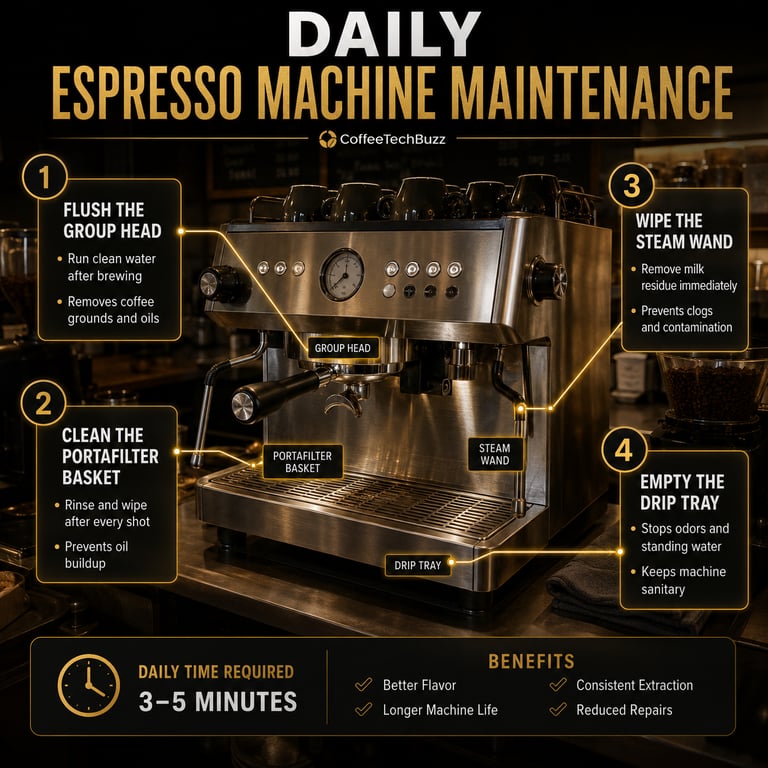
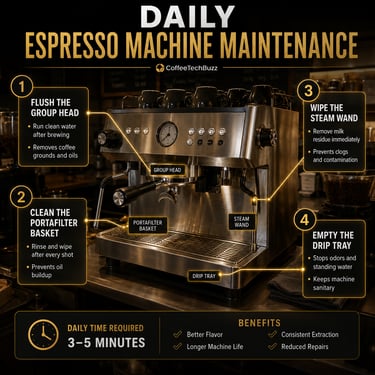
Daily cleaning requires only a few minutes but prevents most long-term problems.
Flush the Group Head
After brewing, run water through the group head to remove loose coffee grounds and oils. This simple step reduces buildup around the shower screen and dispersion system.
Clean the Portafilter Basket
Remove used coffee immediately after brewing. Rinse baskets thoroughly and wipe away residual oils before they harden.
Wipe Down the Steam Wand
Steam wands should be wiped immediately after every milk drink. Milk residue hardens quickly and becomes increasingly difficult to remove.
For detailed steam wand cleaning procedures, see How to Clean a Steam Wand.
Empty the Drip Tray
Standing water promotes bacteria growth and unpleasant odors. Emptying and rinsing the drip tray daily prevents these issues.
Weekly Espresso Machine Maintenance
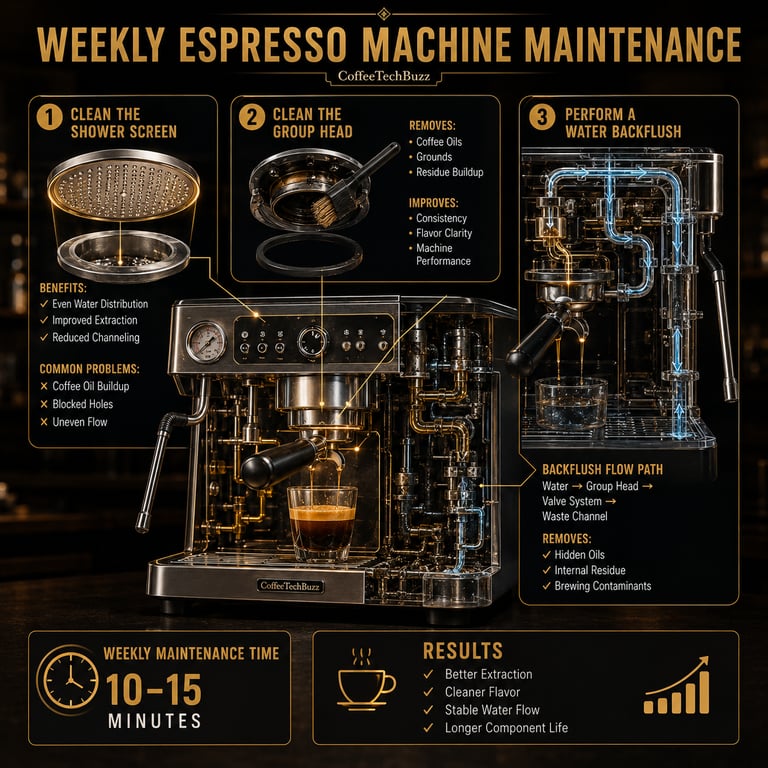
Weekly maintenance focuses on removing oils and debris that daily cleaning cannot eliminate.
Clean the Shower Screen
The shower screen distributes water evenly across the coffee puck. Over time, coffee particles accumulate behind and around the screen.
A dirty screen can cause:
Uneven extraction
Channeling
Reduced water flow
Inconsistent shots
For a complete walkthrough, see How to Clean an Espresso Machine Shower Screen.
Clean the Group Head Thoroughly
Use a group-head brush to remove oils and coffee grounds from hard-to-reach areas. Pay particular attention to the gasket area where residue commonly accumulates.
Perform a Water Backflush
Most machines with a three-way solenoid valve benefit from regular water backflushing. If you're unfamiliar with the process, start with What Is Backflushing? before attempting it.
Understanding Backflushing
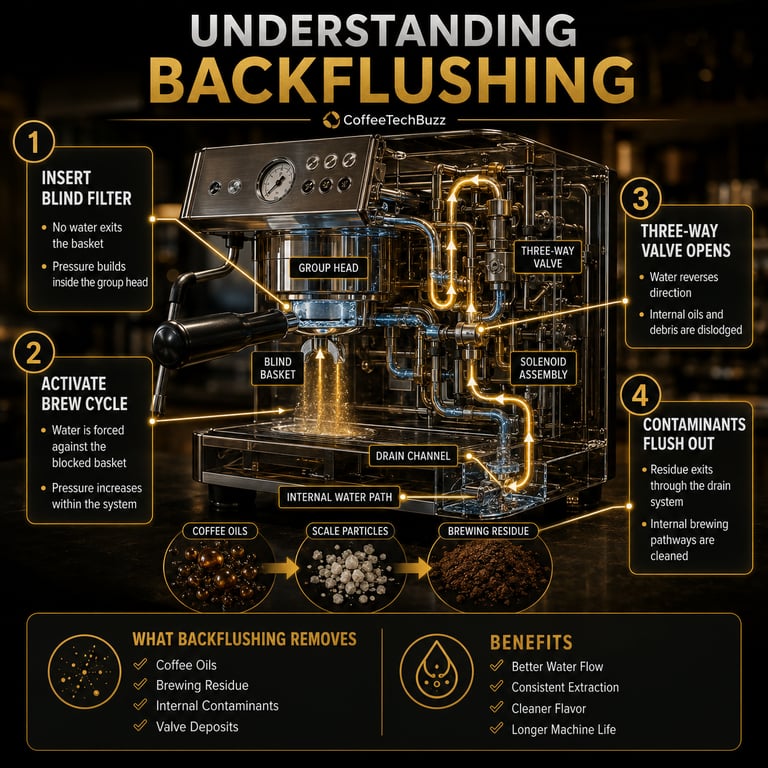
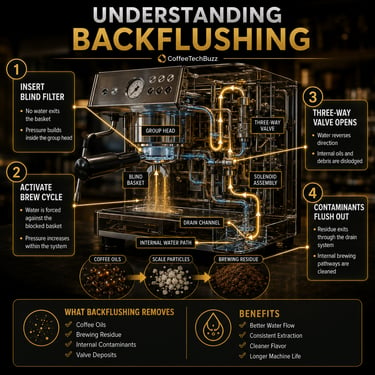
Backflushing is one of the most important maintenance procedures for espresso machines equipped with a three-way valve.
The process forces water backward through internal pathways to remove trapped coffee oils and debris.
Backflushing helps:
Remove oil buildup
Improve water flow
Protect internal valves
Maintain shot consistency
Many home users neglect this task because they do not understand how it works.
If you are new to the process, begin with What Is Backflushing? and then follow the full instructions in How to Backflush an Espresso Machine.
Cleaning Tablets and Why They Matter
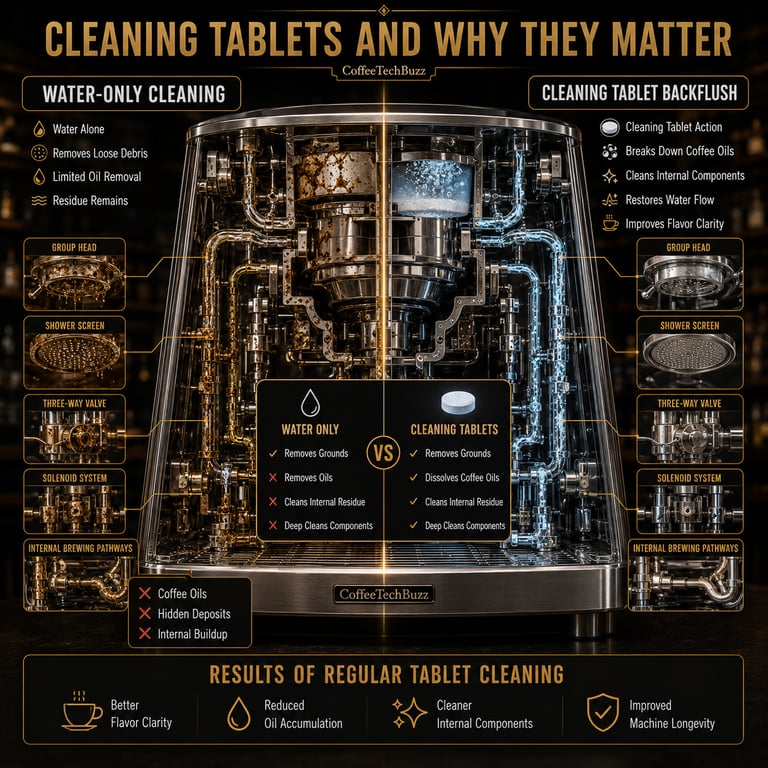
Water alone cannot fully dissolve coffee oils.
Cleaning tablets are specifically designed to break down coffee residue inside the group head and internal brewing system.
These products make chemical backflushing significantly more effective than water-only cleaning.
Benefits include:
Better flavor clarity
Reduced oil accumulation
Cleaner internal components
Improved machine longevity
For recommendations and product comparisons, visit Best Espresso Machine Cleaning Tablets.

Understanding Espresso Machine Scale
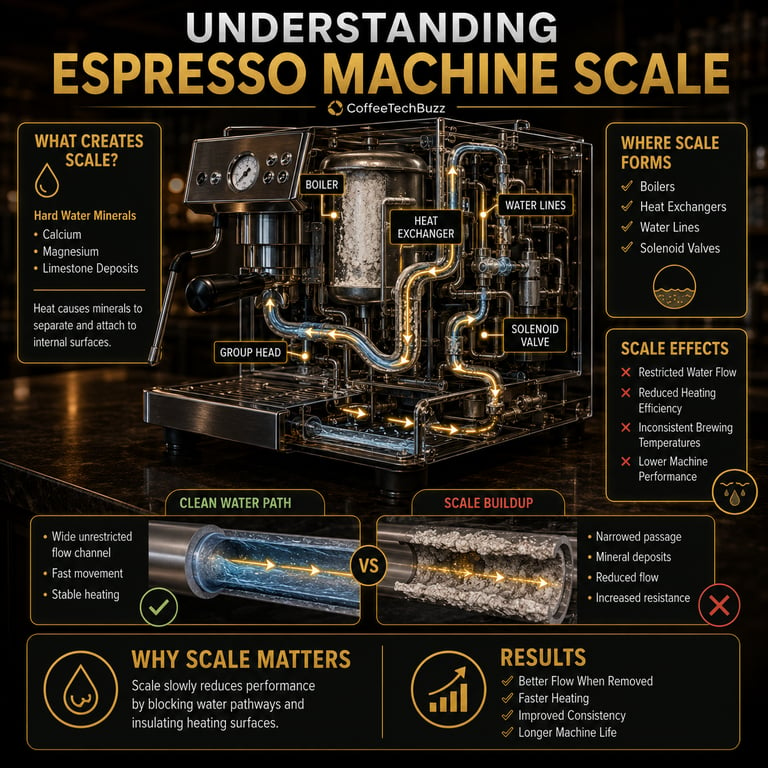
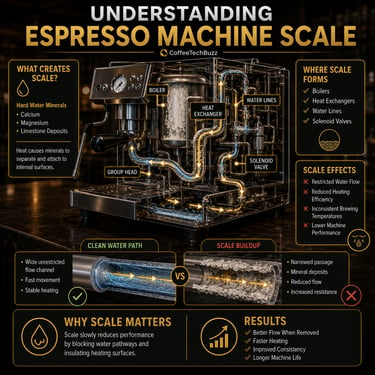
Scale is a mineral deposit created when water is heated repeatedly.
Machines operating with hard water are especially vulnerable.
Common minerals that create scale include:
Calcium
Magnesium
Limestone deposits
Scale develops inside:
Boilers
Heat exchangers
Water lines
Solenoid valves
Eventually scale restricts flow and reduces heating performance.
To learn more about the problem itself, see What Is Espresso Machine Scale?
Signs Your Espresso Machine Needs Descaling
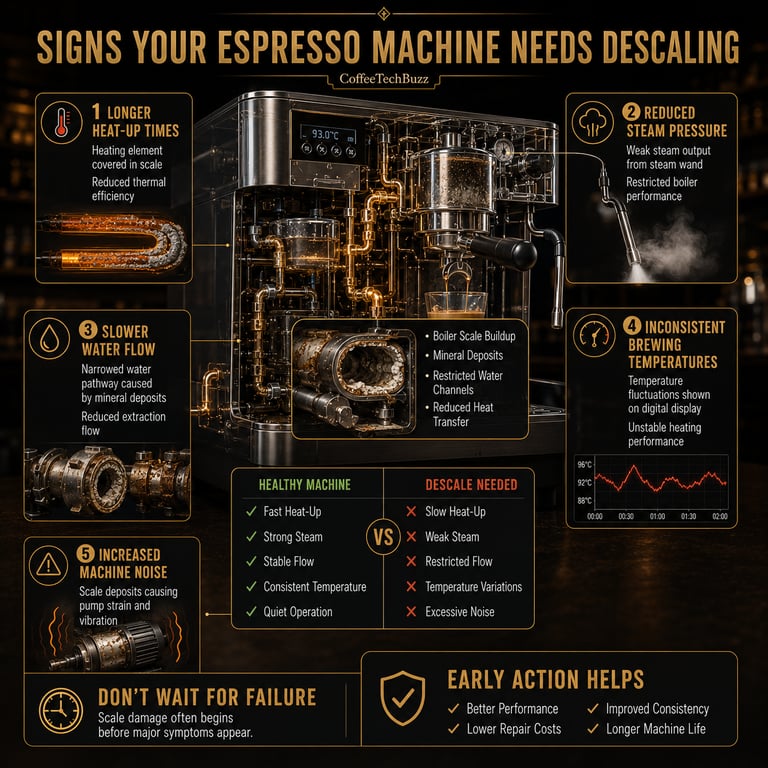
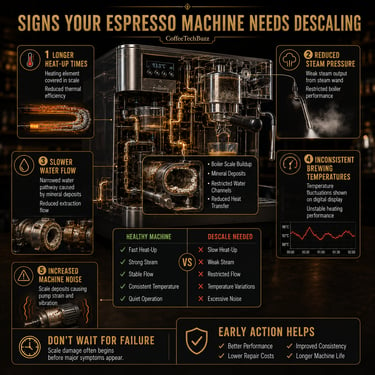
Many users wait until performance issues become obvious before addressing scale.
Unfortunately, scale often causes damage long before symptoms appear.
Common warning signs include:
Longer heat-up times
Reduced steam pressure
Slower water flow
Inconsistent brewing temperatures
Increased machine noise
For a deeper breakdown of warning indicators, see Signs Your Espresso Machine Needs Descaling.
Descaling Espresso Machines
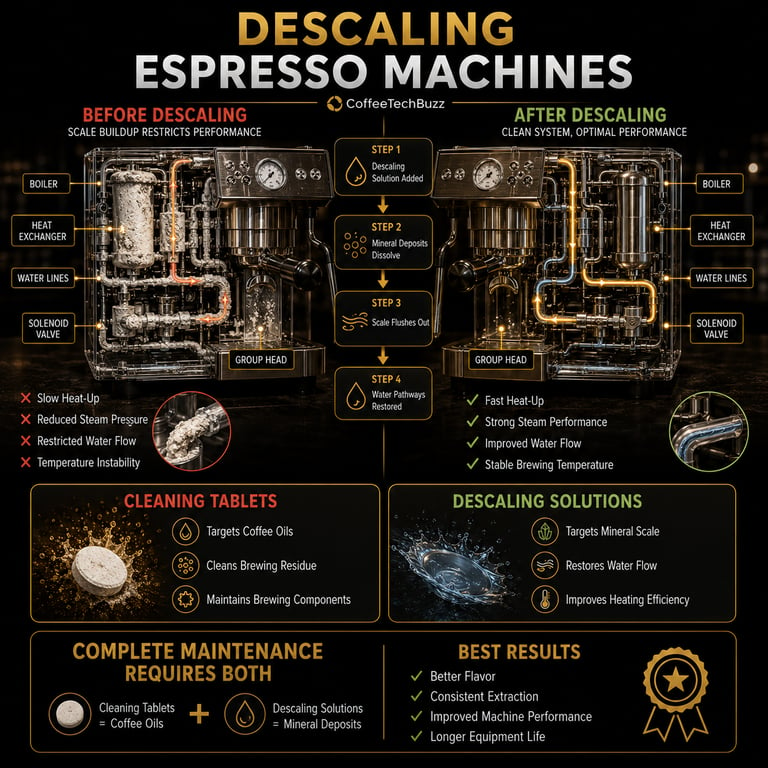
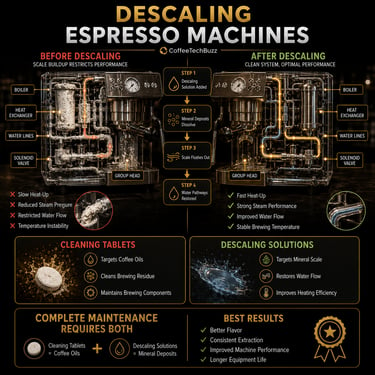
Descaling removes mineral buildup from internal water pathways.
Unlike cleaning tablets, descaling solutions target minerals rather than coffee oils.
Because these products perform different jobs, they should never be viewed as interchangeable.
A complete maintenance program generally requires both.
For product recommendations, see Best Espresso Machine Descaling Solutions.
If you're unsure which product type is appropriate, compare them directly in Cleaning Tablets vs Descaling Solutions.
Creating a Maintenance Schedule
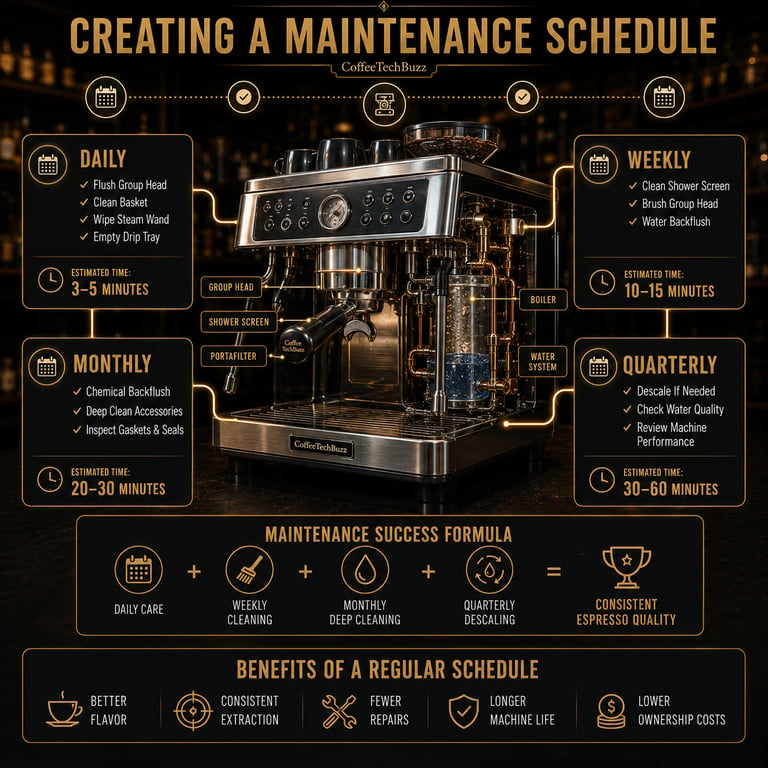
Consistency matters more than intensity.
A simple schedule is easier to follow and usually produces better results than occasional deep cleaning.
Daily
Flush group head
Clean basket
Wipe steam wand
Empty drip tray
Weekly
Clean shower screen
Brush group head
Water backflush
Monthly
Chemical backflush
Deep clean accessories
Inspect gaskets and seals
Quarterly
Descale if needed
Inspect water quality
Review machine performance
For a more detailed breakdown, see Daily vs Weekly vs Monthly Espresso Maintenance.
Common Maintenance Mistakes
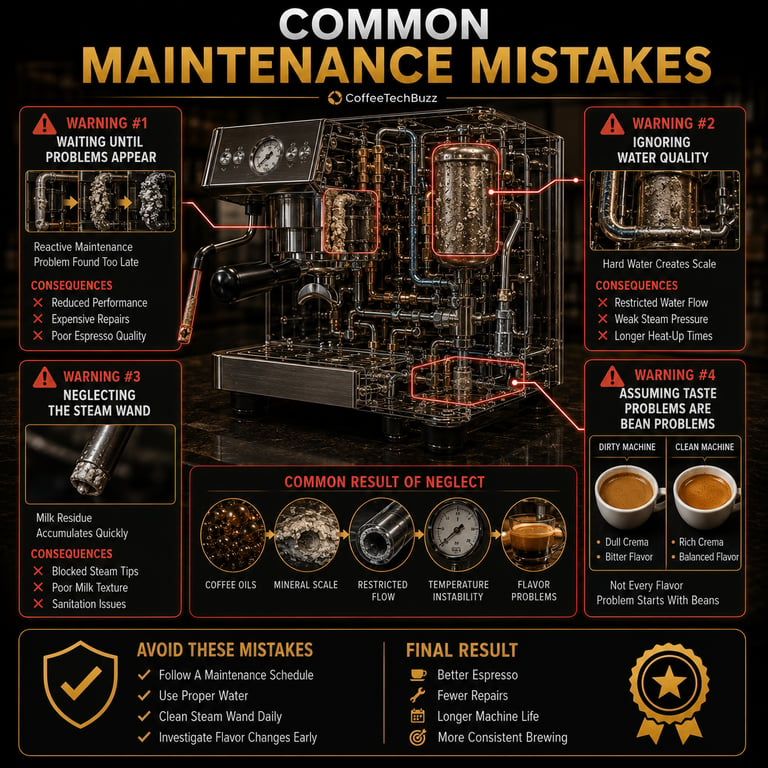
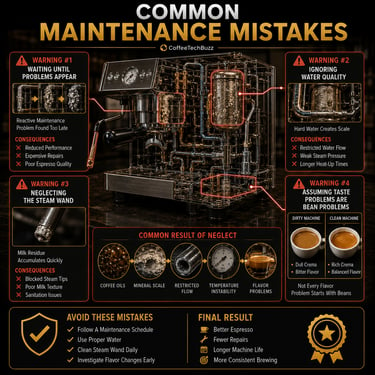
Waiting Until Problems Appear
Maintenance should be preventative. By the time symptoms appear, buildup is often significant.
Ignoring Water Quality
Water quality directly affects scale formation. Poor water can create maintenance problems much faster than expected.
Neglecting the Steam Wand
Milk residue can clog steam tips and create sanitation issues. Steam wand cleaning should happen after every use.
Assuming Taste Problems Are Bean Problems
Sometimes espresso quality issues are maintenance issues disguised as brewing issues. A dirty machine can absolutely affect flavor.
For examples, see Can a Dirty Espresso Machine Affect Taste?
Long-Term Machine Care
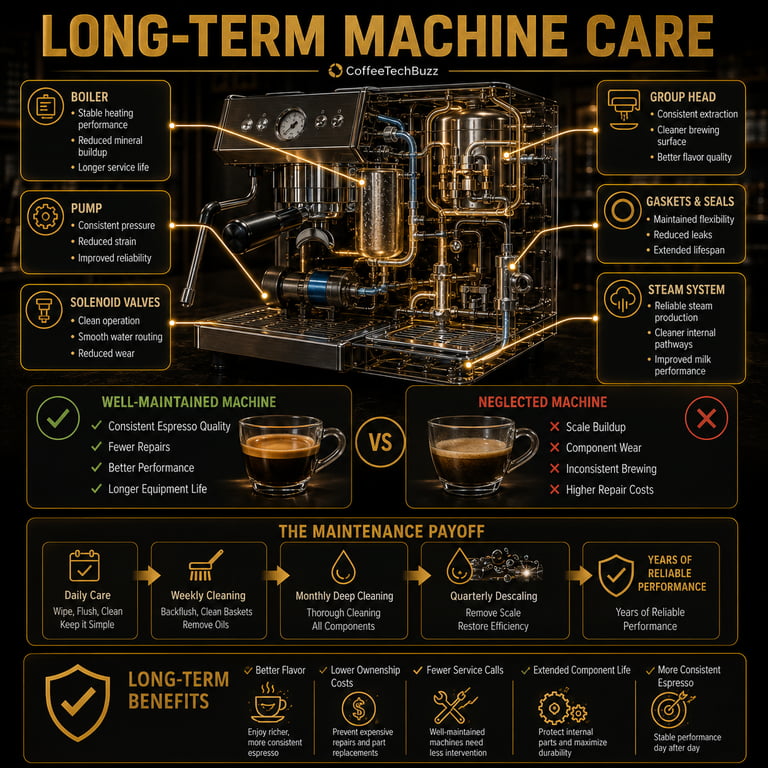
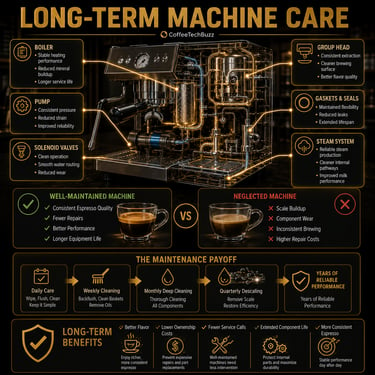
Regular maintenance does more than preserve flavor.
It also protects expensive machine components.
Consistent cleaning helps extend the life of:
Boilers
Pumps
Solenoid valves
Group heads
Gaskets
Steam systems
Machines that receive routine maintenance often remain reliable for many years longer than neglected machines.
The small amount of time invested in cleaning pays off through better performance, fewer repairs, and more consistent espresso.
Frequently Asked Questions
How often should an espresso machine be cleaned?
Basic cleaning should occur daily, while deeper maintenance tasks such as backflushing and shower screen cleaning are typically performed weekly. For a detailed schedule, see How Often Should You Clean an Espresso Machine?
What is the most important espresso machine cleaning task?
Steam wand cleaning and regular backflushing are among the most important maintenance tasks because they directly affect both flavor and machine health.
Are cleaning tablets and descaling solutions the same thing?
No. Cleaning tablets remove coffee oils while descaling solutions remove mineral buildup. Learn more in Cleaning Tablets vs Descaling Solutions.
How often should I descale my espresso machine?
The answer depends largely on water hardness and machine usage. Some users may descale every few months while others can wait longer.
Can a dirty espresso machine affect taste?
Absolutely. Old coffee oils and scale buildup can create bitterness, stale flavors, and inconsistent extraction. Learn more in Can a Dirty Espresso Machine Affect Taste?
Is maintenance more important than buying an expensive machine?
In many cases, yes. A properly maintained entry-level machine will often outperform an expensive machine that receives poor maintenance.

Final Thoughts
Espresso machine maintenance is not a separate task from brewing—it is part of brewing.
Every great shot depends on clean water pathways, clean brewing components, stable temperatures, and unrestricted flow. Ignoring maintenance eventually affects all of those variables.
Whether you're cleaning a steam wand after a morning cappuccino, backflushing after a week of brewing, or removing scale from a boiler, each step contributes directly to espresso quality.
The most successful espresso users build maintenance into their workflow rather than treating it as an occasional chore.
When paired with proper technique and the right equipment found throughout Espresso Gear & Guides, a consistent cleaning routine helps deliver better espresso, greater reliability, and a machine that performs at its best for years to come.
Contact@TheBuzzHQ.com
© 2026 Coffee Tech Buzz. All rights reserved.
Coffee Tech Buzz
Smarter brewing through better gear, clearer insights, and real-world performance testing.
Built for home users who want consistency without guesswork.
We focus on how machines actually perform — not just what they claim.
Home
Coffee Equipment Guide
Coffee Makers & Machines
Coffee Grinders
Espresso Gear & Guides
Coffee Beans & Roasts
Coffee Accessories & Tools
For educational purposes only.
We may earn commissions from qualifying purchases.
General Inquiries: