

What Is Espresso Machine Scale?
Explore what espresso machine scale is, how it affects performance and taste, and best practices for managing and descaling to extend machine life.
ESPRESSO
The Coffee Tech Buzz Editorial Team - Led by AJ “Buzz” Eichman
6/11/20266 min read
Quick Verdict
• Espresso machine scale is a mineral deposit primarily consisting of calcium carbonate that forms from heated water minerals inside the machine.
• Scale buildup impairs machine efficiency by insulating heating elements and clogging internal components, leading to inconsistent brewing temperatures and pressure.
• Regular descaling using manufacturer-approved agents combined with water quality control is essential to maintain espresso quality and machine longevity.
• Neglecting scale leads to reduced performance, mechanical issues, and negatively altered espresso flavor, typically more bitter and uneven.
What Is Espresso Machine Scale?
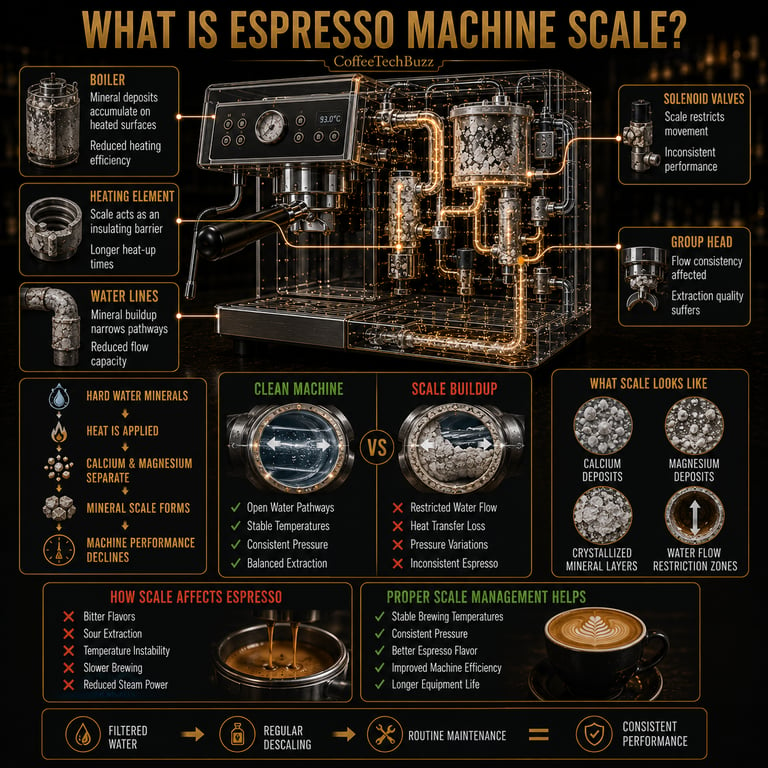
Espresso machine scale refers to the accumulation of hard mineral deposits, mostly calcium carbonate, within the internal systems of an espresso machine. This scale develops when hard water containing dissolved minerals such as calcium and magnesium is heated during the brewing process.
As the water temperature rises, these minerals precipitate out and adhere to surfaces like boilers, heating elements, and pipes. Over time, this mineral buildup forms a solid, crusty layer that resists removal under normal usage conditions.
Because scale is an inevitable byproduct of mineral-rich water exposure to heat, understanding its composition and how it forms is the first step toward managing its impact on an espresso machine’s performance. The internal surfaces most susceptible to scale accumulation include boilers and internal tubing where heated water contact is most direct and prolonged.
For a broader understanding of maintenance and machine care, begin with Espresso Gear & Guides and the Espresso Machine Cleaning & Maintenance Guide.
How Scale Builds Up in Espresso Machines
Scale formation in espresso machines results from a simple chemical interaction, but its effects multiply due to repeated exposure and insufficient maintenance.
When water is heated, the solubility of minerals decreases, causing calcium and magnesium ions to settle and crystallize as calcium carbonate. This creates a hard shell-like deposit that adheres firmly to metal surfaces.
As scale layers grow, they form an insulating barrier over heating elements, forcing the machine to expend additional energy to reach target temperatures.
This not only extends heat-up times but also degrades temperature stability during brewing, a critical factor in espresso quality. Additionally, scale can restrict or partially block water flow through internal pipes and valves, leading to pressure fluctuations that undermine consistent extraction.
Because heat and pressure remain constant in typical espresso brewing cycles, scale buildup tends to accumulate predictably but gradually. This slow accumulation rarely draws attention until performance declines become noticeable through subtle operational shifts or changes in espresso taste.
Effects of Scale on Espresso Taste and Machine Performance
The consequences of unaddressed scale buildup extend beyond mechanical wear to directly influence espresso flavor and extraction consistency.
Scale-insulated heating elements cause uneven temperature control, which can result in extraction temperatures that fluctuate or fail to reach the optimal range. Since temperature stability is paramount for balancing acidity, sweetness, and bitterness, even small deviations can distort flavor profiles.
Furthermore, scale-induced flow restrictions can alter water pressure, leading to over- or under-extraction. Insufficient water flow lowers extraction yield, producing sour or weak espresso, while excessive flow may cause bitterness or thinness.
The presence of scale can also foster off-putting bitter notes in espresso, a sensory sign often flagged by experienced home baristas as a red flag for maintenance needs. Many of these flavor issues overlap with those discussed in Why Espresso Machines Taste Worse Over Time.
Mechanical effects include increased strain on pumps and boilers, reducing machine efficiency and accelerating wear. Over time, unmitigated scale buildup can cause costly repairs or machine failure.
This is usually where results start to drift and small inconsistencies grow into systemic brewing issues.
How to Prevent Scale Buildup (Water Quality and Filtration)
Prevention of scale begins with control of water quality, as this is the primary source of mineral deposits.
Using filtered or softened water significantly reduces the dissolved mineral content entering the espresso machine, decreasing the rate at which scale forms. Water softeners or reverse osmosis (RO) systems remove calcium and magnesium ions, the main culprits for scale formation.
Many professional and high-end home espresso machines incorporate built-in filtration or water treatment systems to manage scale proactively. Machines with integrated water filters or scale indicators provide an early warning system, allowing adjustment of descaling frequency to actual water conditions and usage patterns.
However, pure water devoid of minerals can also cause issues such as corrosion or flat tasting coffee. Therefore, finding a balance with appropriately filtered or mineral-balanced water is crucial.
This calibrated approach to water quality ensures the water supports extraction while limiting harmful scale accumulation.
Step-by-Step Guide to Descaling Your Espresso Machine
Effective descaling interrupts scale buildup and restores machine efficiency. The process should follow manufacturer recommendations to avoid damage and ensure thorough removal.
Typically, descaling agents contain acidic components such as citric acid or specialized commercial formulations designed to dissolve calcium carbonate safely.
Begin by emptying the water reservoir and preparing the descaling solution according to instructions. Run the solution through the machine’s brewing cycle to circulate it through boilers and pipes, allowing acid to dissolve mineral deposits.
This step often requires several flush cycles and pauses to maximize contact time.
After completing the descaling cycle, flush the machine thoroughly with fresh water to remove residual acid and loosened scale.
Avoid homemade descalers such as vinegar in high concentrations unless explicitly approved by the manufacturer, as they can harm seals and metal parts.
For recommended products, see Best Espresso Machine Descaling Solutions.
Depending on water hardness and machine usage, descaling frequency may range from monthly to quarterly. Users with hard water should err on more frequent descaling, while those with softened or filtered water may extend intervals safely.
Recommended Descaling Products and Best Practices
Choosing the right descaling product matters for both effectiveness and machine preservation.
Commercial descalers formulated for espresso machines balance acid strength with machine compatibility, reducing risk of corrosion while efficiently removing scale.
Citric acid and lactic acid-based products offer good performance with milder profiles suitable for home machines.
It is essential to avoid abrasive or highly acidic household chemicals which may degrade internal components. Always consult the espresso machine’s user manual for descaling recommendations, as product formulations and descaling procedures vary by brand and model.
Adopting a regular maintenance schedule and monitoring signs such as slow heat-up times, diminished pump pressure, unusual noises, or changes in espresso flavor helps to time descaling interventions effectively.
Many users first notice the symptoms outlined in Signs Your Espresso Machine Needs Descaling before realizing scale buildup is responsible.
Common Maintenance Mistakes and How to Avoid Them
Neglecting regular descaling remains the most widespread error in espresso machine maintenance, inevitably leading to heavy scale accumulation that hinders machine operation and shortens lifespan.
Skipping scheduled maintenance may seem convenient but results in escalated repair costs and inconsistent espresso quality.
Another frequent mistake is using inappropriate chemicals for descaling. Harsh substances not designed for espresso machines can compromise seals, internal tubing, and heating elements.
Following manufacturer guidance preserves warranties and machine integrity.
Ignoring water quality is also detrimental; failing to address hard water accelerates scale buildup despite maintenance efforts.
Some users mistakenly believe filtered water eliminates the need for descaling altogether, but unless mineral content is reduced sufficiently, scale will still form.
Finally, neglecting to flush and rinse machines thoroughly after descaling can leave corrosive residues that damage internal parts.
Ensuring complete flushing is a subtle step that prevents cumulative harm.
Many users combine descaling schedules with the routines outlined in Daily vs Weekly vs Monthly Espresso Maintenance.
FAQs on Espresso Machine Scale and Maintenance
What exactly is espresso machine scale?
Espresso machine scale is a hard, mineral deposit composed mainly of calcium carbonate that forms when heated water minerals precipitate inside machine boilers and pipes.
How does scale buildup affect espresso flavor?
Scale reduces temperature stability and water flow, leading to inconsistent extraction and often causing bitter or sour flavors due to imbalanced brewing conditions.
How often should I descale my espresso machine?
Descaling frequency depends on water hardness and machine usage; monthly descaling is common in hard water areas, while soft or filtered water users may extend intervals to quarterly.
What are the best methods to remove scale safely?
The safest methods involve manufacturer-approved descaling products followed by thorough flushing to remove all residues.
Can using filtered water eliminate the need for descaling?
Filtered or softened water reduces but does not completely eliminate scale formation. Some descaling will remain necessary to maintain optimal machine performance.
What happens if I ignore scale buildup?
Ignoring scale leads to slower heating, pressure inconsistencies, mechanical failures, and degraded espresso taste, ultimately increasing repair costs or requiring machine replacement.
Are there specific descaling products recommended for espresso machines?
Yes, commercial descalers formulated for espresso machines are recommended as they balance efficacy with machine safety.
Does scale affect machine lifespan or just taste?
Scale directly affects both machine lifespan and taste by stressing components and causing uneven extraction conditions that degrade espresso quality.
Practical Conclusion
Effective espresso machine maintenance hinges on managing scale with deliberate, consistent actions rather than occasional interventions.
Understanding that scale is a predictable chemical byproduct of heated water minerals allows for precise control through water quality management and scheduled descaling. Each minor adjustment, from selecting filtered water to timing descaling cycles, contributes to maintaining stable temperatures, consistent pressure, and ultimately predictable espresso quality.
Consistency in maintenance routines fosters repeatability in brewing results, minimizing one of the most common sources of variability in home espresso systems.
Approaching scale control as a methodical process rather than an afterthought ensures long-term machine health and the dependable extraction performance essential for any precision brewer.
For a complete understanding of how scale removal differs from oil removal, compare Espresso Cleaning Tablets vs Descaling Solutions. Likewise, pairing descaling with Best Espresso Machine Cleaning Tablets and Best Espresso Machine Descaling Solutions creates a more complete maintenance strategy.
Selecting machines equipped with built-in filtration or scale indicator features can further mitigate scale issues, providing integrated tools for sustained control.
When paired with informed descaling habits and appropriate water treatment, these choices enhance both the lifespan and flavor potential of your espresso system.
In the pursuit of predictability and precision, scale management is not merely maintenance—it is fundamental technique.
Contact@TheBuzzHQ.com
© 2026 Coffee Tech Buzz. All rights reserved.
Coffee Tech Buzz
Smarter brewing through better gear, clearer insights, and real-world performance testing.
Built for home users who want consistency without guesswork.
We focus on how machines actually perform — not just what they claim.
Home
Coffee Equipment Guide
Coffee Makers & Machines
Coffee Grinders
Espresso Gear & Guides
Coffee Beans & Roasts
Coffee Accessories & Tools
For educational purposes only.
We may earn commissions from qualifying purchases.
General Inquiries: