

Signs Your Espresso Machine Needs Descaling
Learn how to identify signs your espresso machine needs descaling and keep your daily brew consistent with essential espresso machine descaling tips.
ESPRESSOCOFFEE MAKERS
The Coffee Tech Buzz Editorial Team - Led by AJ “Buzz” Eichman
6/11/20266 min read
If you make espresso at home regularly, you know that a machine that runs smoothly and consistently is key to a good daily cup. What doesn’t always get enough attention is descaling—that straightforward maintenance step that removes mineral buildup from your espresso machine.
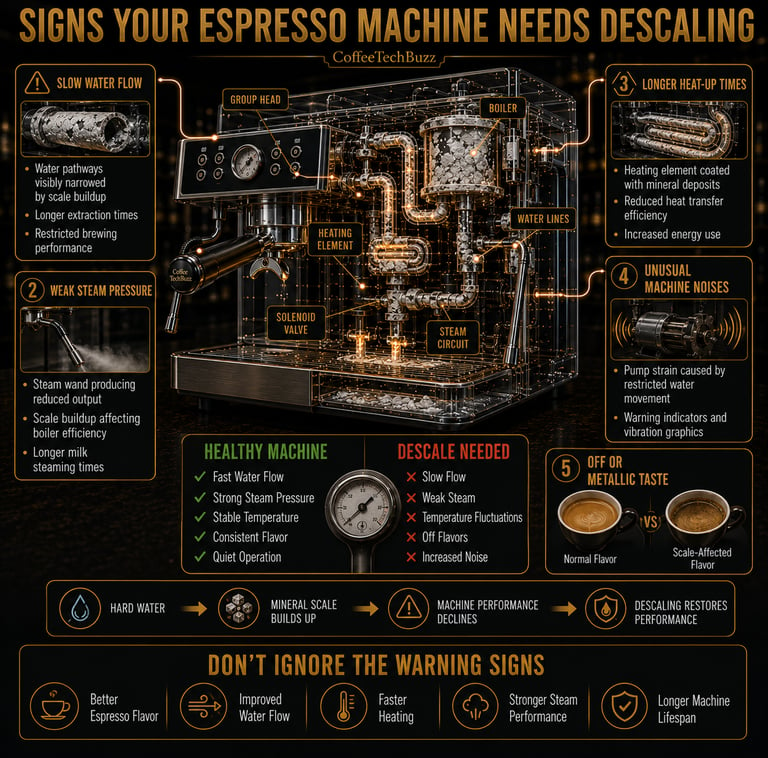
Over time, minerals from water, especially if it’s hard or untreated, collect inside the machine’s internal parts. This causes scale, which slows water flow, interferes with heating elements, and ultimately changes how your espresso tastes.
Knowing when to descale isn’t about obsessing over every detail; it’s about spotting the signs that your machine isn’t running like it used to. Keeping up with descaling is part of real-world espresso machine maintenance that saves you time, hassle, and keeps your routine on track.
For a complete maintenance strategy, start with Espresso Gear & Guides and the Espresso Machine Cleaning & Maintenance Guide.
Quick Verdict
Slow water flow during brewing is a clear indicator of scale buildup.
Changes in steam pressure or unusual noises often signal the need to descale.
Off or metallic tastes in your espresso usually mean mineral deposits are affecting water quality.
Many machines include built-in alerts or timers for descaling based on use.
Regular descaling keeps brewing consistent and prevents costly repairs.
What is Descaling and Why It Matters
Descaling is the process of removing mineral deposits that build up inside your espresso machine. These minerals mostly come in the form of calcium and magnesium compounds, especially if your tap water is hard or untreated.
Over time, this scale accumulates around heating elements and water pathways. The result is reduced water flow, uneven heating temperatures, and an increased risk of mechanical issues down the line.
You’re not aiming for some flawless machine, just one that performs reliably every day without fuss. Descaling is key because it helps maintain consistent brewing conditions, which translates into predictable shots with good flavor.
It’s not about chasing some perfect espresso—it's about avoiding surprises in your daily routine and preventing irritation from sluggish performance or weird aftertastes. If you're unfamiliar with the underlying problem, start with What Is Espresso Machine Scale?
Common Signs Your Espresso Machine Needs Descaling
If you’ve been brewing regularly, chances are you’ll notice a few warning signs that your machine is ready for a clean sweep of scale.
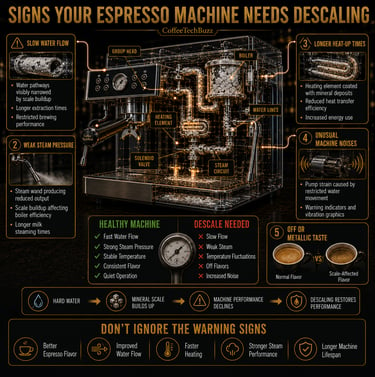
One of the first things you might spot is a slower water flow during extraction. Your shot times might drift longer even if everything else stays the same. This happens because mineral deposits narrow the water channels, making it harder for water to reach the coffee grounds efficiently.
Unusual noises or changes in steam output are another tip-off. If your steam wand takes longer to build pressure, or if you hear odd clunks and gurgles during operation, it often points to scale affecting your boiler or heat exchanger components. Steam performance issues can also become more noticeable if routine cleaning tasks like How to Clean a Steam Wand are neglected.
And then there’s taste. A quick way to tell if scale is interfering is if your espresso starts tasting off, flat, or slightly metallic. This isn’t just the coffee acting up—mineral buildup can subtly change water chemistry, which messes with how flavors extract.
Many modern espresso machines include alert systems or maintenance reminders tied to usage or time. These are useful but don’t ignore what your machine is telling you through actual performance.
How Often Should You Descale Your Machine?
Descaling frequency depends on several factors: water hardness, how often you brew, and whether you’re using filtered or softened water.
For most daily home use setups with average water quality, descaling every couple of months tends to keep scale under control without adding too much maintenance overhead.
If your water is particularly hard, or you notice signs sooner, it makes sense to adjust the schedule accordingly. Some users on soft or filtered water might stretch this out to four months or more.
The practical tip here—keep an eye on how your machine behaves rather than sticking blindly to a calendar. If you start seeing those slow flows or weird tastes, it’s time to act even if it’s early.
For a complete schedule, see How Often Should You Clean an Espresso Machine? and Daily vs Weekly vs Monthly Espresso Maintenance.
Step-by-Step Descaling Process Overview
Descaling involves running a cleaning solution through your espresso machine’s water circuits to dissolve mineral deposits.
Most manufacturers recommend specific descaling products designed to be tough on scale but gentle on your machine.
Start by emptying your water tank and adding the recommended amount of descaling solution mixed with water. Then run it through your machine following the manufacturer’s instructions—usually this means running it as if you’re pulling shots or steaming water, pausing for recommended soak times.
After the descaling cycle finishes, it’s critical to flush the machine thoroughly with fresh water. This prevents residual chemicals from lingering and affecting your coffee’s flavor.
This rinse step sometimes gets rushed or skipped, but it’s just as important as the descaling itself.
For recommended products, see Best Espresso Machine Descaling Solutions. If you're unsure how descalers differ from cleaning products, compare Espresso Cleaning Tablets vs Descaling Solutions.
Best Practices for Maintaining Your Espresso Machine
The best setup is one you actually keep up with. Simple routines work better than complicated ones that fall by the wayside.
If your machine supports filtered water, go ahead and use that. It reduces minerals upfront, meaning you won’t have to descale as often.
Clean your portafilter, group head, and steam wand regularly too—not just for hygiene but because these elements contribute to overall machine health.
When choosing descaling products, stick to those recommended for espresso machines to avoid damaging seals or internal parts.
Overcomplicated cleaning regimens or harsh household acids can do more harm than good.
Coffee oils can also contribute to declining machine performance and flavor quality. For product recommendations, see Best Espresso Machine Cleaning Tablets.
Common Mistakes to Avoid When Descaling
One of the most common pitfalls is ignoring early signs of scale buildup. By the time flow slows drastically or your shots taste off, some damage may already have accumulated. Don’t wait for serious performance drops. Using vinegar to descale is a frequent question. While vinegar can remove scale, it’s acidic enough to potentially harm certain machine components and leave behind unpleasant odors or residues.
It’s better to use commercial descaling agents formulated for espresso machines. Skipping descaling due to inconvenience is understandable, but it often creates a bigger problem later. Equipment failures or degraded espresso quality are more frustrating than a regular clean cycle. Not flushing your machine thoroughly after descaling is an easy mistake that can spoil the next few coffees with bitter chemical flavors. Don’t cut corners here.
How Water Quality Influences Scale Buildup
Water hardness directly impacts how quickly scale forms. Hard water means more calcium and magnesium minerals are available to settle inside your machine. Using filtered or soft water can make a world of difference—not just to your descaling schedule but to the overall taste and consistency of your espresso. If you live in a hard water area, investing in a water filter or softener for your home system is usually worthwhile in the long run. Many users experiencing scale-related flavor issues initially assume the beans are responsible when the real culprit is discussed in Can a Dirty Espresso Machine Affect Taste?
FAQs About Espresso Machine Descaling
How often should I descale my espresso machine?
For average home use with moderately hard water, descaling every two to three months works well. Adjust frequency based on water quality and machine usage.
What are the signs that my espresso machine needs descaling?
Look for slower water flow, longer shot times, unusual noises, decreased steam pressure, and off or metallic tastes in your coffee.
Can I use vinegar to descale my espresso machine?
It’s better to avoid vinegar because it can damage internal parts and leave residues. Use descaling products made specifically for espresso machines.
What happens if I don’t descale my espresso machine regularly?
Scale buildup can damage heating elements, slow water flow, and degrade coffee taste, leading to costly repairs and inconsistent performance.
Are there specific descaling products recommended for espresso machines?
Yes. It’s best to follow your manufacturer’s recommendations and use products formulated for espresso machines to ensure safe and effective descaling.
How do I know if my machine has a descaling alert feature?
Check your machine’s user manual or manufacturer's website. Many modern machines include alerts based on brew counts or operating time.
Can hard water damage my espresso machine?
Over time, yes. Hard water leads to scale buildup, which stresses the machine’s internal parts and impairs performance.
Is descaling necessary for coffee machines other than espresso makers?
Yes, though the frequency and method depend on the machine type. Any coffee equipment exposed to hot water can accumulate minerals that need regular cleaning.
Finding Your Maintenance Groove
Over time, simpler setups tend to win because they fit smoothly into daily routines. No need to chase perfection here—just keep your espresso machine in reliable shape with regular descaling tailored to your water and usage.
If your machine has built-in descaling alerts, lean on them. If not, listen to the signs your machine gives you, like slow flow or off tastes, and act promptly.
Using good water from the start cuts down maintenance and improves coffee quality. Skip unnecessary overcomplication, focus on usability, and you’ll end up with a system that just works, day in and day out.
In the end, the best espresso machine maintenance is the one that gets done regularly, not the one that promises perfection but sits neglected.
Keep it simple, stay consistent, and enjoy your espresso every morning without the fuss.
Contact@TheBuzzHQ.com
© 2026 Coffee Tech Buzz. All rights reserved.
Coffee Tech Buzz
Smarter brewing through better gear, clearer insights, and real-world performance testing.
Built for home users who want consistency without guesswork.
We focus on how machines actually perform — not just what they claim.
Home
Coffee Equipment Guide
Coffee Makers & Machines
Coffee Grinders
Espresso Gear & Guides
Coffee Beans & Roasts
Coffee Accessories & Tools
For educational purposes only.
We may earn commissions from qualifying purchases.
General Inquiries: