

Can a Dirty Espresso Machine Affect Taste?
A dirty espresso machine disrupts extraction and alters coffee flavor noticeably, making regular cleaning essential to maintain taste and hygiene.
ESPRESSOCOFFEE MAKERS
The Coffee Tech Buzz Editorial Team - Led by AJ “Buzz” Eichman
6/11/20266 min read
A dirty espresso machine impacts espresso taste more significantly than many realize. Residues from previous brews, including coffee oils and fine particles, accumulate quickly on components critical to flavor extraction. These residues interfere with how water flows and interacts with coffee grounds, altering extraction dynamics and, ultimately, the espresso’s flavor profile.
Maintaining rigorous espresso machine cleaning routines is essential not just for hygiene but to preserve the consistency and quality that a well-executed espresso demands.
For a complete maintenance framework, start with Espresso Gear & Guides and the Espresso Machine Cleaning & Maintenance Guide.
Quick Verdict
Residue buildup inside your espresso machine creates off-flavors like bitterness and sourness by disrupting extraction balance.
Regular cleaning of portafilters, group heads, and steam wands is vital to prevent accumulated oils from degrading espresso taste.
Descaling maintains stable pressure and temperature by removing mineral deposits that impair performance.
Neglected cleaning routines lead to inconsistent espresso shots and potential hygiene issues affecting flavor and health safety.
What Happens When an Espresso Machine Gets Dirty?
Espresso machines operate on tightly controlled pressure and temperature parameters to extract soluble compounds from coffee grounds efficiently. When components accumulate coffee oils, fine grounds, and mineral deposits, water flow becomes uneven, and heat transfer efficiency diminishes. This disrupts extraction consistency, often causing undesirable taste outcomes such as increased bitterness or stale, flat notes that mask coffee’s inherent complexity.
These residues also provide a breeding ground for bacteria and mold, which can further taint the flavor and raise hygiene concerns. As the machine ages without proper cleansing, these issues compound, making every shot less predictable and less reflective of your chosen coffee beans’ true character.
Key Components That Impact Espresso Taste
Several parts within the espresso machine play disproportionate roles in influencing flavor quality when dirty.
The group head and portafilter interface is critical, as coffee oils and particles sticking to these surfaces interfere directly with water dispersal across coffee grounds. This uneven saturation leads to channeling, where water bypasses parts of the puck, resulting in both over-extraction and under-extraction zones in the same shot.
The steam wand, often overlooked, accumulates milk residue rapidly when not wiped and purged immediately after use. This residue hardens with time and affects milk texture and sweetness, skewing the balance of milk-based drinks. For proper maintenance procedures, see How to Clean a Steam Wand.
Internally, mineral scale buildup in boilers and water pathways impairs temperature stability and pressure consistency essential for espresso’s signature crema and flavor clarity.
How Coffee Oils and Residues Alter Flavor Profiles
Freshly brewed espresso contains dissolved coffee oils contributing to body, aroma, and flavor complexity. However, once brewed, these oils oxidize and become rancid if left clinging to machine parts. When subsequent shots pass through those residues, they introduce stale, bitter, or sour notes unrelated to the fresh grounds.
Additionally, fine coffee particles accumulate and compact, creating barrier layers that slow water flow unevenly. This resistance alteration impacts extraction time, which is a key variable determining balance between acidity, sweetness, bitterness, and body.
Even minor residue layers can change the effective grind size needed or the shot time to achieve desired flavor, leading to unpredictable variability.
Many of these flavor changes occur gradually, which is one reason owners often wonder Why Espresso Machines Taste Worse Over Time.
Cleaning Techniques: Backflushing, Descaling, and Steam Wand Maintenance
Establishing a disciplined cleaning regimen governs espresso quality and machine longevity.
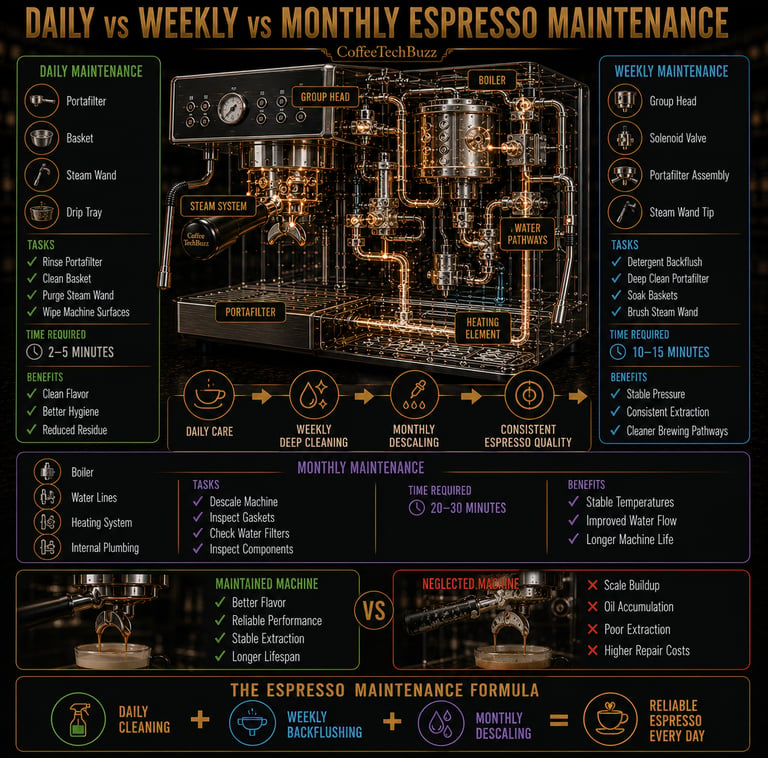
Backflushing with appropriate detergents removes trapped oils and fine grounds from the brewing group and three-way valve. This routine is typically recommended daily or after heavy use. Skipping backflushing often results in rapid accumulation that visibly and functionally degrades extraction. For a complete explanation, see How to Backflush an Espresso Machine.
Descaling addresses mineral scale deposits stemming from hard water usage. These deposits insulate heating elements and narrow internal water channels, reducing pressure and temperature control. Depending on water hardness and usage frequency, descaling every 1 to 3 months preserves mechanical stability and consistent thermal output.
Steam wand cleaning must be immediate after every milk steaming session. Wiping the wand with a damp cloth before purging prevents milk residues from hardening and harboring bacteria. Neglecting this leads to unpleasant odors and taints milk sweetness, compromising drink quality.
For descaling product recommendations, see Best Espresso Machine Descaling Solutions.
Common Mistakes in Espresso Machine Cleaning
One of the most frequent errors is neglecting the daily cleaning of portafilters and group heads. Users may focus on the exterior or visible parts but ignore internal pathways where residues accumulate aggressively.
Using non-recommended cleaning agents—such as harsh abrasives or soaps not designed for espresso machines—can leave harmful residues or damage seals and gaskets, compromising machine integrity.
Another oversight is ignoring steam wand hygiene. Milk residues left to dry are notoriously difficult to remove and directly affect coffee flavor in milk drinks.
Delayed or skipped descaling undermines machine functionality over time, causing longer heat-up times and uneven pressure, which translate to inconsistent shots.
Assuming a shiny exterior equates to internal cleanliness is a misconception that typically precedes flavor deterioration.
Lastly, failing to follow manufacturer guidelines about cleaning frequency and methods risks both coffee quality and machine lifespan.
Maintaining Consistency: Cleaning Schedules and Best Practices
Consistency in espresso preparation relies heavily on maintaining stable machine conditions through regular cleaning.
Establishing a schedule calibrated to your usage frequency is critical. For home users, daily backflushing after multiple espresso shots and immediate steam wand care are baseline necessities.
Descaling intervals vary but should not be neglected, particularly in regions with hard water.
Using manufacturer-approved detergents prevents damage while maximizing residue removal. Equally important is routine physical inspection of group heads and portafilters to identify stubborn deposits before they affect functionality.
A clean machine maintains predictable water flow, temperature stability, and pressure accuracy, which form the foundation of a repeatable espresso shot.
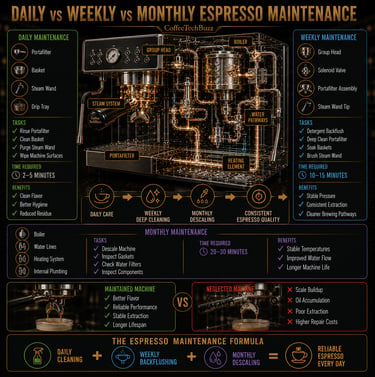
For a complete schedule, see Daily vs Weekly vs Monthly Espresso Maintenance.
Choosing the Right Cleaning Products Safely
Selecting cleaning products designed specifically for espresso machines ensures effective residue removal without component degradation.
Backflush detergents contain enzymes and surfactants formulated to break down coffee oils while being safe on seals and metals. For recommendations, see Best Espresso Machine Cleaning Tablets.
Descaling solutions should be acid-based but not corrosive enough to damage boilers or plumbing.
Homemade or inappropriate cleaners risk leaving residues harmful to taste or causing mechanical failure.
Always follow product instructions and machine manufacturer guidelines for concentration and contact time.
Using proper brushes for group heads and steam wands aids mechanical removal of stubborn residues, complementing chemical action.
If you're unsure which product performs which task, compare Espresso Cleaning Tablets vs Descaling Solutions.
FAQs About Espresso Machine Hygiene and Taste
How often should I clean my espresso machine to avoid taste issues?
Daily cleaning of group heads and portafilters after use, along with immediate steam wand care, prevents most taste degradation. Descaling frequency depends on water hardness but generally every 1–3 months.
What parts of the espresso machine affect flavor the most when dirty?
Group heads, portafilters, and steam wands are the most sensitive. Internal boilers and water pathways also matter due to temperature and pressure effects.
Can a dirty espresso machine cause bitterness or sourness in my espresso?
Yes, accumulated coffee oils and residues interfere with extraction balance, often pulling bitterness or sour notes forward unexpectedly.
What is the best method for cleaning a home espresso machine?
Routine backflushing with recommended detergents, daily steam wand wiping and purging, and periodic descaling per manufacturer instructions best maintain flavor.
Is descaling necessary for flavor, and how often should it be done?
Descaling preserves pressure and temperature stability crucial for balanced espresso extraction. Frequency depends on water hardness and usage but should not be skipped.
Are there safe cleaning products to use on espresso machines?
Yes, dedicated backflush detergents and descalers designed for espresso machines are safe and effective. Avoid generic cleaners or strong acids.
How does residue buildup affect extraction pressure and temperature?
Residues create flow resistance and insulate heating elements, causing unstable pressure and varied water temperatures that lead to inconsistent extraction.
Can a dirty machine lead to health risks or hygiene problems?
Neglecting cleaning allows bacteria and mold growth on used coffee oils and milk residues, posing potential hygiene concerns beyond flavor impact.
Practical Conclusion
A dirty espresso machine does more than just look unkempt; it fundamentally alters the brewing environment where precise pressure and temperature interplay.
Over time, residues disrupt water flow and heat transfer, forcing extractions off course and diminishing flavor clarity and balance. Maintaining a disciplined cleaning routine that includes backflushing, steam wand care, and regular descaling is necessary to preserve the integrity of each shot.
This approach not only elevates espresso taste but reinforces predictability, the cornerstone of precision brewing.
Equipment becomes an extension of your brewing variables only when it is clean, well-tuned, and responsive—not when restrained by unseen deposits refusing to yield to inconsistent shortcuts.

Contact@TheBuzzHQ.com
© 2026 Coffee Tech Buzz. All rights reserved.
Coffee Tech Buzz
Smarter brewing through better gear, clearer insights, and real-world performance testing.
Built for home users who want consistency without guesswork.
We focus on how machines actually perform — not just what they claim.
Home
Coffee Equipment Guide
Coffee Makers & Machines
Coffee Grinders
Espresso Gear & Guides
Coffee Beans & Roasts
Coffee Accessories & Tools
For educational purposes only.
We may earn commissions from qualifying purchases.
General Inquiries: