

How to Backflush an Espresso Machine
Learn how to backflush an espresso machine effectively to maintain flavor consistency and prolong machine life with this detailed step-by-step guide.
ESPRESSO
The Coffee Tech Buzz Editorial Team - Led by AJ “Buzz” Eichman
6/11/20266 min read
Backflushing an espresso machine is a fundamental step in maintaining its performance and ensuring the consistency of your espresso shots. This procedure involves forcing water and cleaning solution backward through the machine’s brew group, effectively removing coffee oils and residues that accumulate internally.
Without this routine maintenance, these buildup deposits gradually degrade extraction quality, impacting flavor and potentially causing mechanical issues. This guide explains how to backflush an espresso machine with precision, emphasizing careful adjustments and adherence to best practices to preserve machine longevity and coffee quality.
For a broader understanding of espresso machine maintenance, start with Espresso Gear & Guides and the Espresso Machine Cleaning & Maintenance Guide.
Quick Verdict
• Backflushing is essential for regular espresso machine cleaning to maintain flavor consistency and mechanical efficiency.
• Use a proper blind filter basket and espresso-specific cleaning detergent for effective and safe backflushing.
• Follow washing cycles with thorough rinsing to avoid detergent residue in your espresso.
• Backflushing frequency depends on machine type and use, but home machines typically require weekly care.
What is Backflushing? Understanding the Process
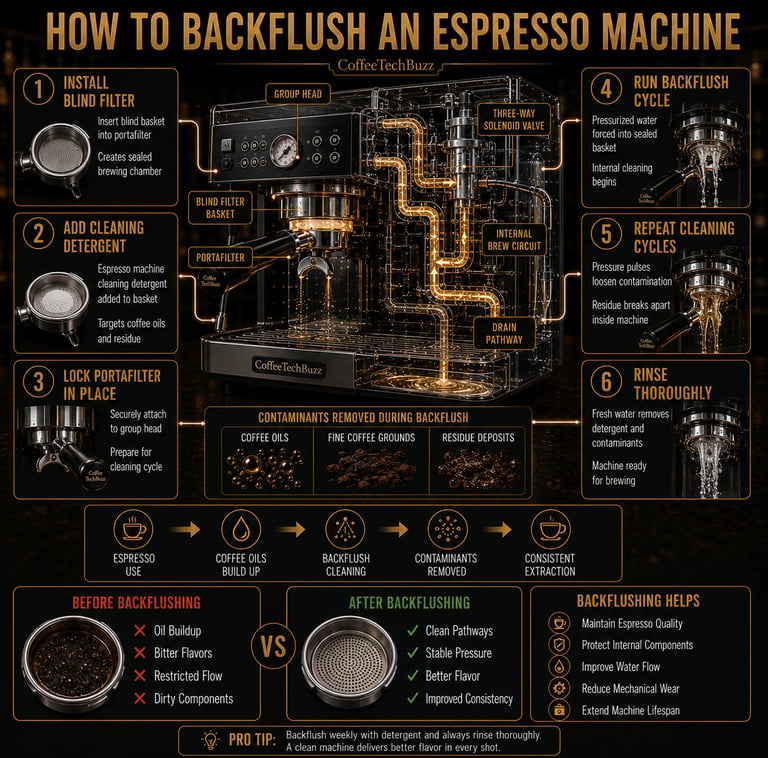
Backflushing is a maintenance process that targets the internal pathways of an espresso machine’s brew group, where coffee oils, fines, and detergent residue accumulate. Unlike basic cleaning, which addresses external components, backflushing forces pressurized water and a specialized cleaning agent backward through the system.
The core tool is a blind filter basket, which lacks holes, creating a sealed environment in the portafilter. This seal forces water and detergent to reverse through the machine’s internal channels when activated.
Done properly, backflushing restores optimal water flow and extraction balance by eliminating the oily residues that can cause bitter, sour, or flat espresso. If you're new to the concept, begin with What Is Backflushing? before attempting the procedure yourself.
Why Backflushing Matters for Your Espresso Machine
The presence of coffee oils and buildup in the brew group is often subtle but impactful. These residues alter how water interacts with coffee grounds during extraction, leading to unpredictable flavor shifts and increased pressure inconsistencies. By regularly backflushing, you remove these elements before they interfere with brewing parameters. From an equipment perspective, accumulated deposits impair group head valves and seals, potentially causing leaks, pressure drops, or wear that shorten machine lifespan.
Backflushing acts as preventative maintenance, reducing downtime and costly repairs. This is especially critical for semi-automatic machines, where manual intervention directly affects extraction control. For anyone serious about consistent espresso quality, backflushing is one variable that requires scheduled attention. Many flavor issues blamed on beans or grinders are actually maintenance problems discussed in Can a Dirty Espresso Machine Affect Taste?
Tools and Materials Needed for Backflushing
For an effective backflush, you will need:
A blind filter basket compatible with your espresso machine model, designed specifically for backflushing to create a proper seal.
An espresso machine-specific cleaning detergent, typically powder or tablet form, formulated to dissolve coffee oils without damaging seals or internal metal parts. For cleaning product recommendations, see Best Espresso Machine Cleaning Tablets.
Avoid using general household cleaners or detergents not designed for coffee equipment, as they risk corrosion or gasket deterioration. A clean water source for rinsing cycles to flush residual detergent out completely after cleaning. Access to the machine’s brew group and portafilter for assembling the blind basket and initiating flush cycles. Optionally, a timing device to ensure consistent cycle lengths during the process.
Having these elements organized before starting reduces variability in your maintenance routine and helps avoid mistakes that can influence both machine health and coffee flavor.
Step-by-Step Backflushing Procedure
Begin with a cooled machine to avoid burns and to ensure detergent effectiveness. The procedure follows a repeatable, controlled sequence:
Remove the regular coffee filter basket from the portafilter and replace it with the blind filter basket.
Add the measured cleaning detergent—usually about half a teaspoon or one tablet—directly into the blind basket.
Lock the portafilter into the group head securely to create a proper seal.
Initiate a brew cycle on the machine, allowing pressurized water to push back through the brew group via the blind basket.
Run the pump for approximately 10 seconds, then stop the water flow.
Repeat the brew cycle start-stop sequence 4–6 times in total.
Remove the detergent by running several rinse cycles without detergent.
Replace the blind basket with your regular filter basket when finished.
The precision and timing of each step influence how much residue is removed and how much detergent remains afterward.
This controlled approach ensures maintenance without risk of over-cleaning or equipment stress.
How Often Should You Backflush Your Machine?
Backflushing frequency varies depending on usage patterns and espresso machine models. For home espresso users brewing one to three shots daily, backflushing once a week typically strikes a balance between cleanliness and machine wear. Machines with heavier commercial use require daily backflushing to keep pace with oil and residue accumulation.
Ignoring regular backflushing leads to gradual declines in espresso quality and increased wear on internal seals and valves, making earlier intervention more costly. Reviewing your espresso machine’s manufacturer recommendations is critical, especially regarding cleaning agents compatible with your model to avoid voiding warranties.
For a complete schedule, see How Often Should You Clean an Espresso Machine? and Daily vs Weekly vs Monthly Espresso Maintenance.
Common Mistakes to Avoid During Backflushing
Several errors commonly undermine backflushing effectiveness or harm the machine.
Using a conventional coffee filter basket instead of a blind filter compromises the pressure buildup needed for cleaning, causing incomplete residue removal.
Skipping the rinsing phase after detergent cycles leaves cleaning agents trapped inside the brew group, resulting in off-tastes and potential contamination.
Backflushing too frequently or with improper cleaning detergents can degrade seals and gaskets prematurely.
Neglecting to adhere to manufacturer guidance on detergent compatibility may lead to corrosion of metal parts or swelling of rubber components.
Another common mistake is assuming backflushing and descaling perform the same job. In reality, they solve entirely different maintenance problems. Learn more in Espresso Cleaning Tablets vs Descaling Solutions.
Troubleshooting Backflush Issues
If your espresso machine consistently produces off-flavors despite backflushing, confirm the use of a correct blind filter model and ensure the detergent is fresh and designed for your machine.
Residual bitter or chemical notes in espresso usually indicate insufficient rinsing. Extending rinse cycles often resolves this issue.
If machine pressure behavior seems erratic, confirm that the cycles were not run continuously but with intended pause intervals to avoid overheating the pump or valves.
Mechanical noises during backflushing may signal worn gaskets or valve issues that require professional servicing.
If machine performance deteriorates despite regular backflushing, evaluate the need for descaling. Many users first notice the symptoms outlined in Signs Your Espresso Machine Needs Descaling before realizing scale buildup is contributing to their problems.
For descaling products, see Best Espresso Machine Descaling Solutions.
Professional Maintenance vs. Home Backflushing
While regular home backflushing reliably manages daily buildup, professional servicing remains essential for comprehensive machine care. Technicians can disassemble and deep-clean components such as group head gaskets, solenoid valves, and water lines unreachable by routine backflushing. In addition, professionals apply ultrasonic cleaning and more potent detergents that home users should avoid to protect seals and electronics.
Scheduling professional maintenance annually or biannually complements weekly backflushing, ensuring espresso machines operate at peak performance and prolonging equipment lifespan. For home enthusiasts aiming for consistency, combining precise backflushing with occasional expert servicing offers the optimal balance between control and comprehensive care.
FAQ
What is backflushing and why is it important?
Backflushing is a cleaning method that reverses water flow through the espresso machine’s brew group to remove coffee oils and residue. It helps maintain extraction quality, prevent mechanical issues, and extend machine life.
How often should I backflush my espresso machine at home?
Generally, weekly backflushing is sufficient for most home users, although higher-volume use may require more frequent cleaning.
Can I backflush without a cleaning detergent?
Water-only backflushing is useful between deep cleanings, but detergent is necessary to effectively dissolve coffee oils and stubborn residue.
What cleaning products are safe for espresso machine backflushing?
Use only detergents specifically designed for espresso machine cleaning. Generic cleaners may damage seals and internal components.
How do I know if my espresso machine needs backflushing?
Flavor deterioration, inconsistent pressure, visible residue, and slower extraction speeds are common indicators.
What if my espresso machine doesn’t have a backflush function?
Some machines cannot be backflushed. Always consult your manufacturer’s instructions before attempting the procedure.
Can backflushing damage the machine if done incorrectly?
Yes. Excessive detergent use, improper products, and skipping rinse cycles can create problems over time.
Is it necessary to disassemble parts for a complete cleaning?
Routine backflushing handles most internal cleaning, but occasional professional servicing provides a deeper level of maintenance.
Conclusion
Backflushing an espresso machine is a disciplined process central to maintaining reliable performance and flavor clarity.
It is not a casual step but a predictable, repeatable routine that demands attention to detail: the correct tools, measured detergent use, timed cycles, and thorough rinsing.
Small inconsistencies during backflushing manifest noticeably in espresso taste and machine function, so treating this step as critical ensures lasting control over brewing outcomes.
For home espresso enthusiasts seeking precision and repeatability, understanding and implementing an effective backflush routine extends beyond simple cleanliness. It preserves the exact mechanical parameters that allow espresso to emerge consistently shot after shot.
When combined with manufacturer guidelines, periodic descaling, and the maintenance practices covered throughout the Espresso Machine Cleaning & Maintenance Guide, backflushing becomes part of a structured care regimen that safeguards both equipment and coffee quality.
Contact@TheBuzzHQ.com
© 2026 Coffee Tech Buzz. All rights reserved.
Coffee Tech Buzz
Smarter brewing through better gear, clearer insights, and real-world performance testing.
Built for home users who want consistency without guesswork.
We focus on how machines actually perform — not just what they claim.
Home
Coffee Equipment Guide
Coffee Makers & Machines
Coffee Grinders
Espresso Gear & Guides
Coffee Beans & Roasts
Coffee Accessories & Tools
For educational purposes only.
We may earn commissions from qualifying purchases.
General Inquiries: