

How Often Should You Clean an Espresso Machine?
Discover practical steps and schedules to keep your espresso machine clean for smooth performance and great tasting coffee every day.
ESPRESSO
The Coffee Tech Buzz Editorial Team - Led by AJ “Buzz” Eichman
6/11/20267 min read
If you’re making espresso daily, you already know how much goes into a good shot. But there’s one part that sometimes gets overlooked: cleaning. Keeping your espresso machine clean isn’t about perfection or hours of scrubbing; it’s about taking simple steps frequently enough to keep your machine running smoothly and delivering the espresso you expect. Neglect it, and taste suffers, parts clog, and the whole routine becomes more frustrating than rewarding.
This guide distills what really matters when it comes to espresso machine cleaning frequency. Drawing from years of making coffee every morning, you’ll find practical advice that fits naturally in a daily routine. Whether you’re running a manual, semi-automatic, or automatic espresso machine, these straightforward habits keep the machine working well and keep your espresso tasting right. For a broader look at maintenance and machine care, start with Espresso Gear & Guides and the Espresso Machine Cleaning & Maintenance Guide.
Quick Verdict
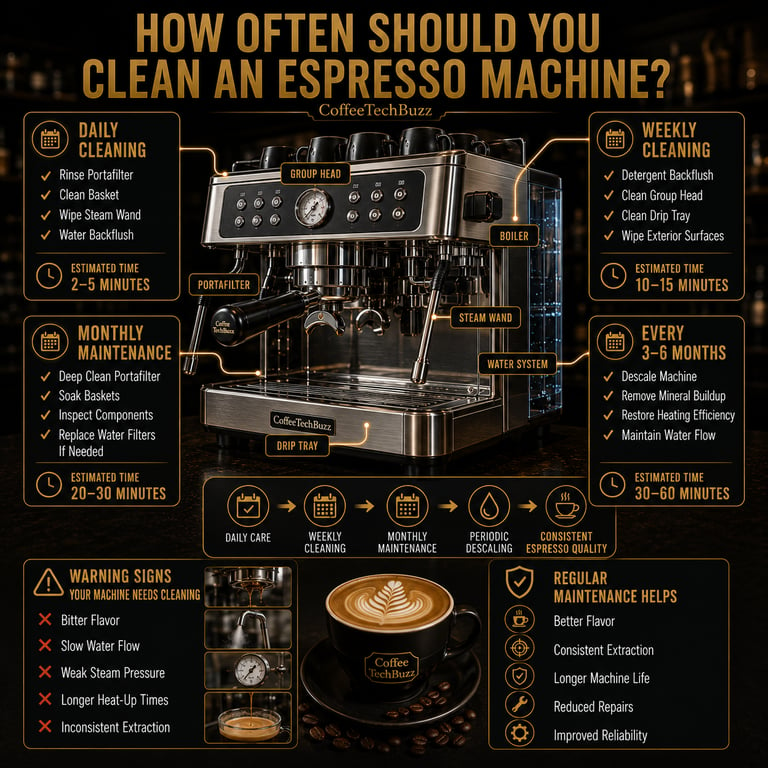
Clean the portafilter and basket after every use to prevent buildup of coffee oils and grounds.
Backflush the machine daily with water and weekly with a recommended cleaning detergent.
Descale every 3-6 months depending on your water hardness to avoid mineral buildup.
Clean the steam wand immediately after steaming milk to avoid residue and clogging.
Replace water filters regularly on machines that have them to protect water quality.
Follow your manufacturer’s specific cleaning instructions for best long-term results.
Why Cleaning Your Espresso Machine Matters
Espresso machines deal with heat, pressure, coffee oils, and milk residues daily. These factors leave behind buildup on key parts — the portafilter, group head, steam wand, and internal brew components. If allowed to accumulate, this residue interferes with water flow, temperature stability, and pressure consistency. The result is uneven extraction and espresso that doesn’t taste right.
Beyond flavor, buildup can cause mechanical issues. Mineral deposits from water harden inside boilers and pipes, compromising heat transfer and sometimes leading to costly repairs. If you're unfamiliar with how minerals affect machine performance, it's worth understanding What Is Espresso Machine Scale?
Over time, simpler cleaning routines tend to win because they remove these issues before they become serious. It’s worth developing a straightforward cleaning habit rather than skipping until something breaks or tastes off. Espresso machine maintenance isn’t about perfection, but about keeping your daily setup friction-free and consistent.
Daily Cleaning Tasks: What You Need to Do
For daily espresso makers, a few steps right after brewing are all it usually takes. Start by rinsing the portafilter and basket under hot water. This removes leftover coffee grounds and oils that would otherwise build up and affect flavor in future shots.
After that, a quick backflush with just water is useful to flush the brew group. Unless your machine doesn’t have a three-way valve or backflush capability, this keeps internal parts clean from oils accumulating inside. If you're new to the process, start with What Is Backflushing? before learning How to Backflush an Espresso Machine properly.
Then there’s the steam wand — wipe it immediately after each milk frothing session and purge it with steam to blow out leftover milk. Milk residue clogs the wand’s small holes quickly and makes cleaning harder if neglected. These daily steps usually take just a couple of minutes but keep things running smoothly.
For machines with water filters, check if they need replacing regularly (manufacturer guidelines vary). Clean water keeps your espresso cleaner inside and can extend the lifespan of your machine’s internal parts.
Weekly and Monthly Maintenance Routines
Once a week, it’s a good idea to do a deeper backflush using a cleaning detergent formulated for espresso machines. Plain water isn’t enough to remove stubborn oils and residue that build up in the group head and solenoid valve. For product recommendations, see Best Espresso Machine Cleaning Tablets.
This cleaning step improves consistency and avoids bitter or sour shots from old coffee oils. In fact, neglected maintenance is one of the leading causes discussed in Why Espresso Machines Taste Worse Over Time.
Monthly or every few weeks, give your portafilter and baskets a thorough soak in a cleaning solution designed for coffee equipment. This removes accumulated oils that a quick rinse can’t.
Descaling fits into this longer routine. Depending on your water hardness—if you’re in a hard water area, more often—every 3 to 6 months is a solid rule of thumb. Descaling dissolves mineral deposits inside boilers and pipes that hinder heating efficiency. Don’t skip this; it’s what keeps pressure and temperature stable over time.
For descaling products, see Best Espresso Machine Descaling Solutions. If you're unsure which maintenance product does what, compare them directly in Espresso Cleaning Tablets vs Descaling Solutions.
If you live in a soft water region, you might stretch this interval, but watch for signs of buildup or poor heating.
Clean the Steam Wand and Other Accessories
Cleaning the steam wand right away is non-negotiable. Milk dries fast and can clog the tiny nozzle holes inside. Wiping the wand with a damp cloth after steaming and purging it with steam ensures no milk sits inside.
If left unchecked, you risk clogs and worse — an unpleasant smell or bacteria growth. For a complete walkthrough, see How to Clean a Steam Wand.
Other accessories like drip trays, water reservoirs, and exterior surfaces benefit from regular cleaning too. Wiping these down once a week keeps everything tidy without adding extra hassle.
Common Cleaning Mistakes to Avoid
Overcomplex cleaning routines rarely last. Most people don’t need to go so far that cleaning becomes a second job.
The biggest mistake is neglecting backflushing, which causes oils and coffee residue to build up behind the group head. This leads to inconsistent shots and can cause pump strain.
Skipping descaling altogether is another frequent issue, especially for those using tap water without filters. Mineral deposits cut heating efficiency and risk machine damage long term.
Delaying steam wand cleaning invites milk residue and hygiene problems. Always wipe immediately after use — it’s a small step with a big payoff.
Using harsh, inappropriate cleaners can also harm your machine’s seals and metal parts. Stick to products made specifically for espresso machines or recommended by manufacturers.
Finally, ignoring early signs of poor performance — like odd tastes, slow flow, or strange noises — usually means it’s time to clean or maintain something.
Signs Your Espresso Machine Needs Cleaning
If your espresso starts tasting off—bitter, sour, or just “off” in a way that fresh beans don’t fix—it’s often a sign your machine needs attention.
Slow or uneven flow during extraction points to clogged group heads or portafilter baskets. A steam wand that sputters or takes longer to steam milk probably has buildup inside.
Other symptoms include pressure inconsistencies or prolonged heat-up times, which can indicate mineral deposits or dirty components affecting performance. Many of these warning signs overlap with Signs Your Espresso Machine Needs Descaling.
These signs don’t mean you need to overhaul your entire setup, but they shouldn’t be ignored. Addressing them with the cleaning steps above can often fix issues quickly.
Tips for Easy and Effective Espresso Machine Care
If cleaning routines feel overwhelming, keep it simple. Focus on daily quick rinses of the portafilter and steam wand wipes. Incorporate weekly backflushing with detergent and monthly descaling into your schedule—and adjust if you notice any taste or performance drop-off sooner.
Choose an espresso machine known for easy cleaning features if you’re shopping around. Machines with removable brew groups or built-in cleaning alerts noticeably reduce hassle. Some models even have automatic cleaning cycles, which simplify routine tasks.
Keep cleaning products dedicated to your coffee gear close by. Being able to clean as you go reduces the chance cleaning falls behind.
Backflushing is key for all but the most basic machines. While it can feel technical at first, it quickly becomes second nature if you stick with it. Use only espresso-cleaning detergents for best results—don’t substitute vinegar or household cleaners, which can damage your machine.
Maintaining your espresso machine fits into a workflow that prioritizes usability and consistency over chasing “perfect” espresso at every step. A well-maintained machine that gets used often beats a spotless one that sits unused because upkeep feels complicated.
Backflush, descale, rinse, wipe—the routine that sticks is the one you can rely on daily.
Frequently Asked Questions
How often should I clean the portafilter and baskets?
They should be rinsed after every use to remove coffee grounds and oils. A deeper clean with soaking in a coffee-specific detergent solution once a week works well for keeping buildup in check.
What is backflushing and how often should it be done?
Backflushing is the process of cycling water backwards through the group head to clean internal parts like the solenoid valve. For machines designed for it, daily backflushes with water and weekly with espresso machine detergent are a good baseline.
How frequently should I descale my espresso machine?
Typically, every 3 to 6 months depending on your local water hardness. In hard water areas, more frequent descaling helps prevent mineral deposits that affect performance.
Can I use vinegar to descale my espresso machine?
It’s generally not recommended because vinegar can damage internal parts and leave unpleasant residues. Stick with manufacturer-approved descaling solutions made for espresso machines.
How do I clean the steam wand properly?
Wipe it immediately after steaming milk with a damp cloth, then purge it by running steam through to clear any milk inside. Regularly check and soak the tip in cleaning solution if milk buildup occurs.
What maintenance tasks can improve my machine’s lifespan?
Routine cleaning of portafilters, baskets, backflushing, descaling, and prompt steam wand cleaning all help. Also, replacing water filters if your machine uses them protects against mineral buildup.
Are there signs that my machine needs urgent cleaning?
Bitter or sour off-flavors, slow espresso flow, inconsistent pressure, longer heat-up times, and steam wand clogs all signal cleaning or maintenance is overdue.
Is cleaning frequency different for home versus commercial espresso machines?
Commercial machines typically require more frequent cleaning due to higher volume use, but the principles remain the same. Daily rinses, frequent backflushes, and regular descaling are essential across the board.
Conclusion
Regularly cleaning your espresso machine isn’t complicated, but it is essential if you want dependable performance and good espresso every day. The goal isn’t perfection or elaborate routines but instead small, consistent steps that fit into your morning or evening ritual. Rinsing portafilters, backflushing, steam wand care, and periodic descaling keep your machine honest—not to mention your coffee tasting right.
Espresso machine maintenance often feels like extra work until you develop a rhythm around it. Most importantly, don’t chase complex setups that you won’t keep up with. Instead, focus on what works in your daily workflow and be patient with the process. Over time, this practical approach pays off with less hassle, fewer surprises, and a better cup every time.
If you’re selecting a new machine, consider models with simple cleaning features and clear maintenance instructions. And for more insights on getting the most from your home coffee gear, check out our broader coffee resources through Espresso Gear & Guides.
A clean machine is a happy machine—and a happy machine makes consistently great espresso without any fuss.
Contact@TheBuzzHQ.com
© 2026 Coffee Tech Buzz. All rights reserved.
Coffee Tech Buzz
Smarter brewing through better gear, clearer insights, and real-world performance testing.
Built for home users who want consistency without guesswork.
We focus on how machines actually perform — not just what they claim.
Home
Coffee Equipment Guide
Coffee Makers & Machines
Coffee Grinders
Espresso Gear & Guides
Coffee Beans & Roasts
Coffee Accessories & Tools
For educational purposes only.
We may earn commissions from qualifying purchases.
General Inquiries: