

How to Clean a Steam Wand
Learn how to clean steam wand properly with daily and weekly routines to keep your espresso machine performing smoothly and hygienically.
ESPRESSO
The Coffee Tech Buzz Editorial Team - Led by AJ “Buzz” Eichman
6/11/20266 min read
Cleaning a steam wand might not be the flashiest part of your espresso routine, but it’s one of those chores that pays off every day. A clean steam wand is essential not just for hygiene but for keeping your espresso machine working smoothly and your milk froth tasting right.
From experience, skipping this step or letting milk residue build up easily leads to clogging, inconsistent steam pressure, and off-flavors in your drinks. It’s a simple task that, when done regularly and properly, fits easily into any home setup without fuss.
For a complete maintenance overview, start with Espresso Gear & Guides and the Espresso Machine Cleaning & Maintenance Guide.
Quick Verdict
Purge and wipe the steam wand immediately after each use to prevent milk residue from drying inside.
Use a dedicated steam wand brush regularly to dislodge stuck milk proteins.
Soak the wand tip occasionally in a food-safe cleaning solution to keep buildup in check.
Follow a routine that balances quick daily cleaning with deeper weekly maintenance to keep things running without extra hassle.
Why Cleaning Your Steam Wand Matters
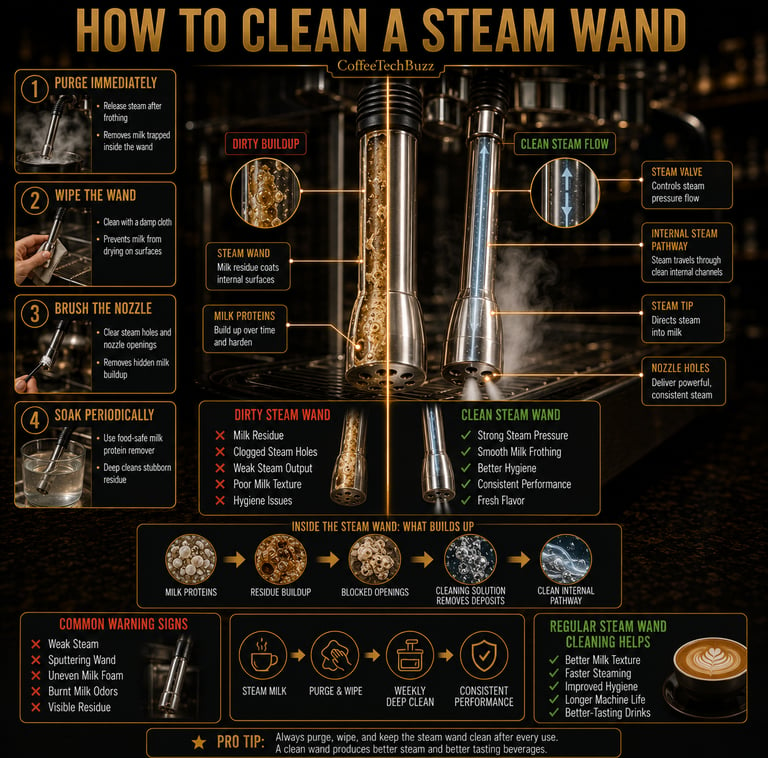
Milk proteins coagulate and harden quickly when exposed to heat, and the inside of a steam wand is a perfect spot for residue to cling and build up fast.
If you don’t clean it right after steaming, milk can harden and clog the tiny nozzle holes. This not only limits steam flow but also compromises milk froth texture and taste. More than that, leftover milk creates a breeding ground for bacteria, which no one wants in their coffee.
From real-world use, the best steam wand maintenance is less about sporadic deep cleans and more about preventing residue buildup in the first place.
Wiping and purging right after steaming, combined with regular brushing and occasional soaks, is what keeps your espresso machine ready when you are — day after day.
Daily Steam Wand Cleaning Routine: Step-by-Step
The routine I’ve stuck with works because it’s quick and it works. Here’s what actually gets done in a regular home setup:
Start by purging steam immediately after steaming milk. This means hitting the steam control briefly to blow out any milk stuck inside the wand. It only takes a couple of seconds but makes a huge difference.
Next, wipe the outside of the steam wand with a damp, clean cloth. This removes surface milk before it can dry and get sticky.
If you have a steam wand cleaning brush or a thin pipe cleaner, use it regularly to scrub inside the wand’s nozzle area. A quick swirl can free up milk that’s begun to cling inside the tip holes.
Most days, this is enough if you’re consistent. Letting milk dry is the biggest mistake, so this immediate cleanup keeps your routine smooth without adding friction.
Tools and Cleaning Agents Recommended
You don’t need a drawer full of specialized brushes, but having the right tool helps.
A small, flexible cleaning brush designed for steam wands is what gets used most since it fits inside the nozzle and scrubs tight spaces better than a cloth alone.
Some people try home remedies like vinegar, but that’s usually not ideal. Vinegar can leave lingering odors or be harsh on your wand’s finish.
Instead, go for food-safe milk protein removers or dedicated descaling solutions made for steam wands and espresso machines. For descaling product recommendations, see Best Espresso Machine Descaling Solutions.
These are gentle on the metal but effective at breaking down stubborn milk buildup.
If you steam milk daily, using a cleaning solution once a week or biweekly for a soak is a good habit. Soaking helps loosen anything that a quick brush might miss, especially if you’ve steamed a mix of dairy and plant-based milks, which can behave differently.
Deep Cleaning: How and When to Do It
Beyond daily wipes and brushing, a deeper clean helps prevent clogs and maintains consistent steam pressure.
This means soaking the steam wand tip for about 15–30 minutes in a warm solution made with an approved milk protein cleaner. After soaking, rinse thoroughly with water.
For the internal tubing, some models allow you to flush a cleaner through the steam circuit; check your espresso machine’s manual before attempting this.
Regular descaling of your whole machine also ties into steam wand maintenance because mineral buildup can collect inside. If you're unfamiliar with scale formation, see What Is Espresso Machine Scale?
Deep cleaning is best done weekly or whenever you notice steam pressure dropping or milk froth becoming inconsistent. It’s a good check-in to prevent bigger problems.
Common Mistakes to Avoid When Cleaning Your Steam Wand
The most common slip is skipping the immediate purge and wipe after steaming.
In practice, this quick step is what keeps milk from hardening inside the wand. When people skip it, they end up scrubbing at stubborn crust later or, worse, calling a service technician for clogs.
Another mistake is using harsh or inappropriate cleaning agents. Avoid anything not specifically food-safe or recommended for espresso machines.
This protects your wand’s finish and avoids unsafe residue.
Neglecting the tip openings is another common oversight. If those holes get clogged, no amount of surface cleaning will fix the performance.
That’s why a small steam wand brush is so useful—nothing else gets in those tight spots as effectively.
Finally, ignoring accessory maintenance—dirty brushes or forgotten replacement brushes—means your cleaning isn’t thorough.
Clean your tools, replace brushes regularly, and store solutions properly to keep everything working at its best.
For cleaning detergent recommendations, see Best Espresso Machine Cleaning Tablets.
Troubleshooting Steam Wand Issues Related to Cleaning
If your steam wand starts to spit or steam seems weak, milk residue or mineral buildup is usually the culprit.
Start with the basics: purge and wipe, then check the nozzle holes for blockages. A brushing session or gentle soak often clears things up quickly.
Inconsistent froth texture can also signal cleaning problems. When the steam flow gets uneven due to buildup, milk doesn’t aerate properly.
Regular cleaning stops this from becoming a daily headache.
If issues persist despite cleaning, revisit your machine’s manual for specific maintenance advice, especially around internal cleaning or descaling. Many of these symptoms overlap with Signs Your Espresso Machine Needs Descaling.
Sometimes, a minor repair or professional service is needed, but most blockages come down to skipped routine cleaning.
Tips for Maintaining Steam Wand Performance and Hygiene
Simplicity matters here.
Establish a cleaning habit that fits your routine. If you’re brewing daily, clean daily.
Weekly deeper cleans don’t need to be complicated — plan it like laundry or grocery shopping, a regular task that keeps things running without fuss.
Store cleaning brushes somewhere accessible, so they don’t become a forgotten task.
Keeping a small cleaning kit near your espresso machine helps, too.
Remember the importance of wiping the wand immediately after steaming. It’s the single most effective step to avoid hardened residue.
Avoid overcomplicating your setup with multiple tools or aggressive cleaning chemicals that add more time than they save.
Real-world use shows simpler, consistent habits work best. For scheduling ideas, see Daily vs Weekly vs Monthly Espresso Maintenance.
FAQ
How often should I clean the steam wand?
A quick purge and wipe after each use is best. Deep cleaning with soaking and brushing is ideal weekly or biweekly depending on milk use frequency.
What is the best way to remove milk residue from the steam wand?
Immediate steam purge followed by wiping with a damp cloth, plus regular brushing inside the nozzle, works well. Occasional soaking in a food-safe cleaner helps with tougher buildup.
Can I use vinegar or other home remedies to clean my steam wand?
Vinegar isn’t recommended as it can leave unpleasant odors and may damage finishes. Use food-safe steam wand cleaners designed for milk protein removal.
What tools or brushes are recommended for cleaning steam wands?
A flexible, small-diameter steam wand cleaning brush that fits inside the nozzle openings is ideal. Regular cloth wiping alone isn’t enough.
How do I prevent steam wand clogs?
Purge and wipe immediately after steaming, clean nozzle openings regularly, soak periodically in appropriate cleaning solution, and descale your machine as needed.
Is it necessary to deep clean the steam wand weekly?
It depends on usage, but weekly or biweekly deep cleaning helps prevent stubborn clogs and maintains consistent steam pressure.
What cleaning solutions are safe and effective for steam wands?
Look for food-safe milk protein removers and descaling agents recommended by espresso machine manufacturers.
How does a dirty steam wand affect espresso flavor and milk frothing?
Residue blocks steam flow, leading to weak or uneven froth, and can introduce off-flavors from old or burnt milk.
Conclusion
Cleaning your steam wand doesn’t need to be a chore that slows down your coffee routine.
From years of making coffee every morning, the best approach is consistent, quick cleanup right after each use combined with periodic deeper maintenance.
It’s the little habits—purging steam, wiping surfaces, brushing nozzle holes, soaking as needed—that keep your espresso machine performing smoothly and your milk froth tasting fresh.
When your steam wand is clean, it just works, without extra steps or stressing over details that don’t matter.
Stick to what fits your routine, and you’ll keep your coffee moments enjoyable and reliable, day in and day out.

Contact@TheBuzzHQ.com
© 2026 Coffee Tech Buzz. All rights reserved.
Coffee Tech Buzz
Smarter brewing through better gear, clearer insights, and real-world performance testing.
Built for home users who want consistency without guesswork.
We focus on how machines actually perform — not just what they claim.
Home
Coffee Equipment Guide
Coffee Makers & Machines
Coffee Grinders
Espresso Gear & Guides
Coffee Beans & Roasts
Coffee Accessories & Tools
For educational purposes only.
We may earn commissions from qualifying purchases.
General Inquiries: