

Daily vs Weekly vs Monthly Espresso Maintenance
Master your espresso maintenance with daily cleaning, weekly backflushing, and monthly descaling to keep your machine performing at its best.
ESPRESSOCOFFEE MAKERS
The Coffee Tech Buzz Editorial Team - Led by AJ “Buzz” Eichman
6/11/20267 min read
If you’re serious about getting good espresso at home, keeping your machine in shape is a must. Over time, I’ve seen how the small habits of maintenance make a world of difference—not just for taste but for the machine’s lifespan. Espresso maintenance isn’t complicated once you get the hang of when and what to clean.
Breaking it down by daily, weekly, and monthly tasks helps you fit upkeep right into your routine without feeling like a chore.
For a complete maintenance framework, start with Espresso Gear & Guides and the Espresso Machine Cleaning & Maintenance Guide.
Quick Verdict
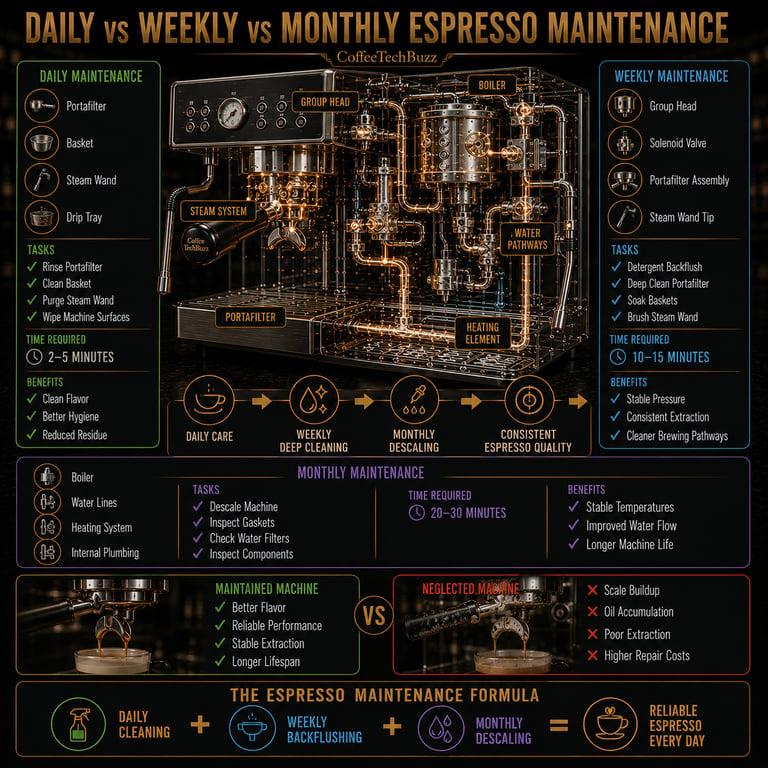
Daily maintenance focuses on cleaning coffee contact points and steam wand to prevent buildup and keep flavors clean.
Weekly routines involve backflushing with detergent to clear internal parts and keep pressure consistent.
Monthly maintenance dives deeper with descaling to remove mineral deposits that affect heating and flow.
Sticking to these intervals keeps your espresso tasting right and avoids common breakdowns.
Why Maintenance Matters for Espresso Machines
The espresso machine is more than just a tool—it’s a system of parts working together under heat and pressure. Coffee oils, grounds, milk residue, and minerals all build up over time, and neglecting this means your shots start to feel off, your machine struggles to maintain pressure, or even breaks down prematurely.
Based on years of use, I can say the best maintenance is the kind you actually do, consistently. Overdoing it only complicates your workflow without real gains. The goal is smooth operation with minimal fuss.
Espresso machine cleaning isn’t about chasing perfect cleanliness but stopping common messes that affect flavor and functionality. Daily cleaning stops grounds and milk from clogging portafilters and steam wands. Weekly backflushing keeps those valves inside fresh and flowing. Monthly descaling removes mineral scale that reduces heating efficiency. Skipping any of these invites trouble sooner rather than later.
Daily Espresso Maintenance Tasks and Best Practices
When you make espresso every day, daily cleaning is what keeps things humming. It tends to be the simplest—nothing drastic—just the basics that, if skipped, cause real problems fast.
Start with the portafilter and baskets. After each session, knock out used grounds and rinse them under warm water to clear oils and residues. This prevents buildup that can turn bitter or stale and interfere with tamping. The basket holes also tend to clog if left unchecked.
Equally important is the steam wand. After steaming milk, purge it by blowing steam through the wand for a few seconds. Then wipe the wand exterior with a damp cloth before the milk fats dry and harden. This prevents thick milk residue that can clog nozzles and affect frothing performance. For a complete walkthrough, see How to Clean a Steam Wand.
Finally, wipe down any surfaces around your group head, drip tray, and machine exterior. Coffee grounds and moisture can collect here, so keeping these areas tidy reduces the chance of mold or bacteria buildup.
This daily routine usually takes just a couple of minutes but keeps your espresso tasting clean and prevents common sticking points. Over time, simpler daily setups tend to win because they become part of the ritual—not a hassle.
Weekly Maintenance: Deep Cleaning and Backflushing
Once or twice a week, it helps to do a deeper clean. Backflushing is the centerpiece of this routine.
If you have a semi-automatic machine with a three-way valve, backflushing forces water and detergent back through the group head, clearing out coffee oils and grounds trapped in valves and plumbing. If you're unfamiliar with the process, start with What Is Backflushing?
Doing this weekly keeps pressure and flow consistent, which is vital for shot quality. When those valves start clogging, you might see signs like poor pressure or uneven extraction. Backflushing also refreshes seals and gaskets that otherwise collect a layer of old coffee oils.
For backflushing, use a cleaner designed for espresso machines—not household detergents. The right products remove coffee oils effectively without harming your machine’s internal parts. For recommendations, see Best Espresso Machine Cleaning Tablets.
Follow your machine’s guidelines for how long and how often to backflush. Overdoing it or using harsh detergents can backfire.
Besides backflushing, this is a good time to soak your portafilter and baskets in a cleaning solution designed for coffee gear. This loosens baked-on oils that rinsing alone won’t remove.
Don’t skip steam wand maintenance here either. Give it a thorough clean with a wand brush if you use milk regularly. Sometimes milk fats can clog tight spaces no matter how careful you are with daily wipes. This deeper clean restores full steam flow and frothing power.
Monthly Maintenance: Descaling and Component Inspection
Mineral buildup from water is the slow creep that can undermine your machine’s heating elements and water flow over time. This part of maintenance is especially critical if you use hard water.
Descaling agents, usually acidic solutions, dissolve calcium and scale inside your boiler and water lines. Without regular descaling, your machine might take longer to heat, deliver inconsistent temperature, or even give you hardware faults.
Monthly descaling fits well for machines used daily, but frequency depends on your water hardness and manufacturer recommendations. If you notice slower heating or weird noises during brewing, it might be time to descale sooner.
Descaling isn’t a daily or weekly task because it involves running the solution through your machine and then flushing thoroughly. It can disrupt your routine, so weekly and daily cleaning are the best defense to minimize how often you need to descale.
This is also a good checkpoint for inspecting removable parts for wear or damage—especially gaskets, filters, and portafilters. Replace anything showing cracks or excessive wear to avoid leaks or pressure issues.
A common mistake is skipping this step or using harsh household acids instead of approved descalers. For product recommendations, see Best Espresso Machine Descaling Solutions.
Common Maintenance Mistakes to Avoid
Having made these mistakes myself on a few early setups, here’s what I’ve seen trip people up most often.
Neglecting daily cleaning lets residual coffee and milk build up quickly, which then affects taste and machine hygiene. It’s surprising how fast this adds up once you skip a few sessions.
Skipping or improperly doing backflushing is another common issue. Some don’t realize the need for detergent in backflushing, or they use unsuitable cleaners—both cases can damage internal valves. And then there’s the “too much” problem; excessive backflushing or using strong chemicals more often than recommended compounds wear.
Delaying descaling is probably the biggest mistake for machine longevity. It doesn’t feel urgent until you notice symptoms, but by then, the damage starts adding up. Many users first notice the warning signs covered in Signs Your Espresso Machine Needs Descaling.
Another blunder is using abrasive tools or household cleaners on machine components that need gentle care and specific products.
Finally, not following the manufacturer’s maintenance schedule at least roughly will cause problems over time. Each machine is built differently, and ignoring those pointers risks warranty voids or costly repairs.
Choosing the Right Cleaning Products and Tools
Not everything labeled “cleaner” is suitable for espresso machines. Stick with products made for coffee gear and check if your machine maker recommends specific brands. This applies to detergents for backflushing, descaling solutions, and daily cleaning agents.
Using proper tools also matters. For example, a stiff brush to scrub baskets and portafilter, a steam wand brush designed to fit small orifices, and soft cloths for wiping help avoid damage while keeping grime at bay.
Avoid abrasive pads, anything metallic for delicate parts, or household detergents with harsh chemicals. These can wear seals prematurely or corrode components.
Your cleaning routine will be more effective with the right tools, and it won’t take longer than necessary.
If you're unsure which maintenance product performs which task, compare Espresso Cleaning Tablets vs Descaling Solutions.
Maintenance Tips Based on Usage and Water Quality
How often you maintain your espresso machine depends largely on how much you use it and the quality of your water.
Daily drinkers get away with daily and weekly tasks on a rigid schedule, plus monthly descaling. If you only make espresso a few times a week, weekly cleaning and less frequent descaling might suffice.
In hard water areas, descaling and changing water filters more often are essential. Installing a water softener helps reduce scale buildup and extends time between descaling. It also protects heating elements and temp stability, which matter more than you’d expect for a quality shot.
Machines with automatic cleaning cycles simplify some tasks but don’t eliminate the need to inspect key parts and clean elements like steam wands manually. Manual cleaning remains the backbone for consistency.
If you have a grinder integrated into your setup, don’t forget regular burr cleaning and calibration. While outside espresso machine maintenance, it’s part of the bigger picture in keeping your espresso routine hassle-free.
Frequently Asked Questions About Espresso Machine Maintenance
What does daily espresso maintenance usually involve?
Mostly rinsing your portafilter and baskets after use, purging and wiping the steam wand, and wiping down surfaces to remove ground coffee and milk residue. This prevents buildup that affects taste and function.
How often should I backflush my espresso machine?
Weekly backflushing is typical for home semi-automatic machines used daily. Some users backflush more often, but more than twice a week can wear seals faster unless otherwise recommended.
Why is descaling important and how often should it be done?
Descaling removes mineral deposits that build up inside boilers and water lines over time. For daily users, monthly descaling works well, but adjust frequency based on water hardness and any heating issues.
Can I use household cleaning agents for espresso machine maintenance?
Generally no. Household agents often have harsh chemicals or abrasives that can damage machine components. Always use manufacturer-recommended or specialty coffee machine cleaners.
How do I clean the steam wand properly?
After every milk steaming, purge steam through the wand to clear milk residue inside, then wipe the outside with a damp cloth. Weekly, use a dedicated steam wand brush to clean inside nozzles thoroughly.
What are signs my espresso machine needs maintenance?
Common signs include poor pressure, uneven extraction, bitter or off-flavors, slow heating, or strange noises. Milk froth inconsistency also hints at steam wand issues.
Does maintenance frequency change based on machine type or usage?
Yes. Machines with built-in cleaning cycles may need manual tasks less often. Heavy use or hard water increases maintenance frequency. Adjust your schedule to how much you brew and quality of local water.
Is it necessary to replace parts during regular maintenance?
Occasionally. Gaskets, filters, and portafilter baskets wear over time. Inspect monthly and replace anything showing cracks, wear, or deformation to maintain pressure and prevent leaks.
Practical Conclusion
You don’t have to get fancy with espresso maintenance to see benefits. The key is consistency and keeping routines manageable for your daily life. Daily cleaning keeps your machine ready to brew great espresso without bitter buildup. Weekly backflushing clears internals that impact quality and pressure. Monthly descaling addresses the slow but damaging scale inside boilers and pipes.
Over time, this simple schedule has proven to work with almost every setup I’ve used, whether a basic home machine or a more complicated semi-automatic. Avoid the trap of overcomplicating your maintenance—it rarely pays off unless you’re managing commercial-level volume. Instead, focus on a practical upkeep rhythm that fits your routine. That way, your espresso stays enjoyable, and your machine doesn’t become a hassle.
For more on maintaining espresso quality over the long term, see Why Espresso Machines Taste Worse Over Time.
Contact@TheBuzzHQ.com
© 2026 Coffee Tech Buzz. All rights reserved.
Coffee Tech Buzz
Smarter brewing through better gear, clearer insights, and real-world performance testing.
Built for home users who want consistency without guesswork.
We focus on how machines actually perform — not just what they claim.
Home
Coffee Equipment Guide
Coffee Makers & Machines
Coffee Grinders
Espresso Gear & Guides
Coffee Beans & Roasts
Coffee Accessories & Tools
For educational purposes only.
We may earn commissions from qualifying purchases.
General Inquiries: