

Why Espresso Machines Taste Worse Over Time
Understand the causes behind espresso machine taste deterioration and learn essential maintenance to preserve flavor and machine longevity.
ESPRESSO
The Coffee Tech Buzz Editorial Team - Led by AJ “Buzz” Eichman
6/11/20267 min read
Espresso machines are precision instruments designed to deliver consistent, high-quality coffee when properly maintained. However, even the best machines can produce espresso that tastes progressively worse over time. This decline in coffee taste is rarely due to a sudden mechanical failure; rather, it results from the gradual accumulation of residues and mineral deposits inside the machine.
Understanding why espresso machine taste deterioration occurs requires a methodical examination of how these deposits affect extraction, temperature stability, and overall machine performance. Addressing these factors with consistent espresso machine cleaning and maintenance is essential for preserving flavor clarity and machine longevity.
For a complete maintenance framework, start with Espresso Gear & Guides and the Espresso Machine Cleaning & Maintenance Guide.
Quick Verdict
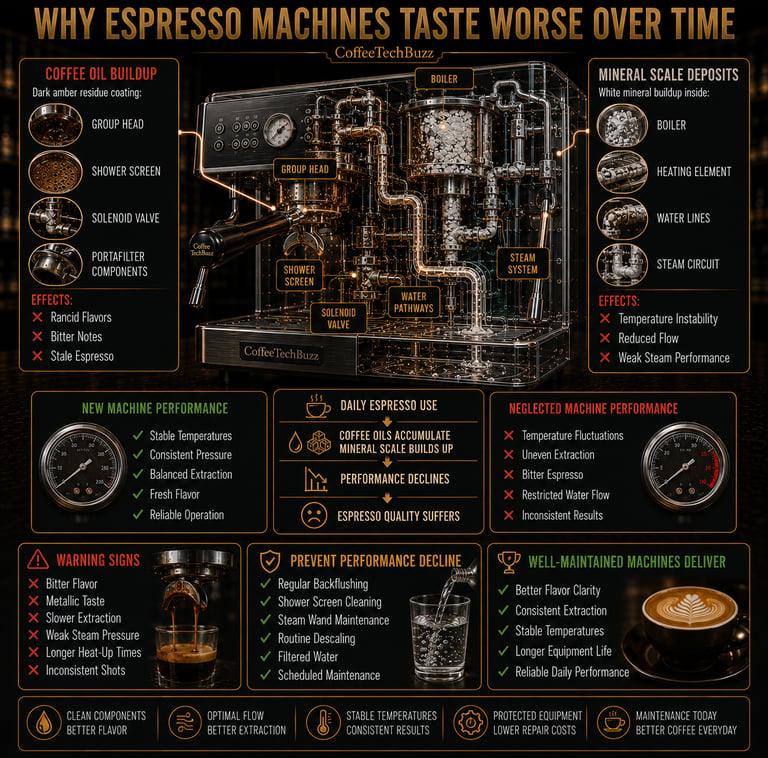
• Espresso machine taste deterioration primarily results from buildup of coffee oils, grounds, and mineral scale within brew pathways.
• Coffee oil buildup causes rancidity and off-flavors that subtly degrade espresso taste over repeated brews.
• Scale deposits reduce thermal efficiency, leading to unstable brewing temperature and compromised extraction.
• Routine cleaning of group heads, portafilters, and steam wands, combined with regular descaling, maintains espresso quality and machine performance.
How Espresso Machines Work and Why Cleanliness Matters
Espresso machines operate by forcing hot water at controlled temperature and pressure through finely ground coffee. The quality of the espresso depends on precise control of these variables, which in turn relies on machine cleanliness.
Water flows through intricate pathways including boilers, group heads, and portafilters; each of these components is susceptible to deposits that alter flow rates or temperature stability. Over time, traces of coffee oils and grounds adhere to surfaces inside the brew group, and minerals dissolved in water precipitate as scale in the boiler and tubing.
These microscopic changes might seem insignificant at first, but their cumulative impact affects how water interacts with coffee grounds during extraction.
When coffee oils accumulate, they can create a sticky residue that interferes with the release of fresh coffee solubles. Mineral scale, primarily composed of calcium and magnesium salts, forms insulating layers that reduce heat transfer. This results in fluctuations to boiler temperature that affect water temperature at the group head.
Since temperature stability is fundamental to proper espresso extraction, any inconsistency translates into flavor imbalance, increased bitterness, or muted aromatic complexity. Therefore, maintaining cleanliness is not simply about machine hygiene; it is about preserving the essential physical conditions that define espresso quality.
Common Causes of Espresso Taste Decline Over Time
The decline in espresso flavor typically stems from two interrelated sources: coffee residue buildup and mineral scale formation.
Coffee oil buildup occurs as the machine extracts espresso repeatedly without adequate cleaning. These oils oxidize and become rancid, undermining brightness and introducing off-notes. Coffee grounds, if not properly rinsed away, create a compacted layer that affects water flow and extraction uniformity.
This phenomenon is usually noticeable only after weeks or months of daily use.
Scale deposits accumulate when hard water is used consistently without descaling. Minerals precipitate inside the boiler, heat exchanger, and water lines, impairing heat exchange and reducing flow efficiency.
This alters pressure profiles and extraction speeds, resulting in unpredictable espresso yields. Scale can also cause long-term damage by corroding heating elements, shortening the lifespan of critical components.
This combination of factors contributes to a gradual but measurable deterioration in espresso quality and machine reliability. For a deeper understanding of scale formation, see What Is Espresso Machine Scale?
The Role of Coffee Oil Buildup in Flavor Degradation
Coffee oils are an inherent component of the espresso extraction process, carrying much of the coffee’s aromatic and flavor compounds.
However, during brewing, these oils adhere to metal surfaces within the group head and portafilter basket. If not removed regularly, they oxidize and develop a rancid character. This rancidity manifests as stale, greasy, or sour flavors that conflict with fresh espresso notes.
The impact of oil buildup may be subtle initially yet becomes more pronounced over time.
This is usually where results start to vary without people realizing why: slight shifts in espresso balance or texture are often attributed to coffee or grind changes rather than machine hygiene.
Consistent group head backflushing with detergent is necessary to disrupt this accumulation. It is advisable to perform this cleaning at least weekly when using a semi-automatic machine. If you're unfamiliar with the process, start with What Is Backflushing?
Neglecting the steam wand further compounds flavor issues, as milk residues can harbor bacteria and spoil flavor integrity.
Impact of Scale Deposits on Machine Performance and Taste
Scale deposits represent a more stubborn and mechanistically damaging threat to espresso quality.
Formed from calcium and magnesium salts present in water, these deposits adhere to internal components that manage heating and water delivery. The insulation caused by scale reduces the boiler’s thermal conductivity. Consequently, the water temperature fluctuates more widely, deviating from the ideal 90–96°C extraction range.
Temperature instability affects flavor extraction directly: too hot a brew pulls excessive bitterness, while too cool a brew results in under-extracted, sour espresso.
Scale deposits can also restrict water flow, changing the brew pressure and extraction time unpredictably. Over time, this degrades the machine’s ability to deliver an optimal shot, even if other variables remain constant.
Regular descaling interrupts this process, restoring thermal efficiency and hydraulic flow. For product recommendations, see Best Espresso Machine Descaling Solutions.
Essential Cleaning and Maintenance Practices for Home Users
Home espresso users often underestimate the importance of routine cleaning.
Daily maintenance should include flushing the group head after each shot and wiping the portafilter basket to remove residual grounds.
A thorough backflush procedure with an appropriate espresso detergent should be performed at least once a week. This cleans the internal brew pathways and mitigates coffee oil buildup. For cleaning product recommendations, see Best Espresso Machine Cleaning Tablets.
The steam wand requires frequent purging and wiping after every use to prevent milk residue from hardening and affecting future milk textures or taste.
Descaling remains the most critical long-term maintenance task for any machine exposed to hard water. Its frequency depends largely on local water hardness, but a baseline is once every two to three months for most home users.
Using filtered or softened water reduces the frequency needed and prolongs machine lifespan. Most manufacturers provide specific descaling instructions and approved chemicals; following these precisely ensures effective cleaning without damaging machine components.
How Water Quality Affects Espresso Machine Longevity
Water quality directly influences both maintenance demands and espresso flavor stability.
Hard water contributes to more rapid scale accumulation, affecting thermal performance and causing mechanical wear. Conversely, filtered water reduces scale, minimizing the need for frequent descaling and maintaining steady brewing temperature.
This consistency is critical for repeatable extraction results.
Inconsistent water chemistry can produce variable extraction results, even if grind size and dose remain unchanged. Minerals in hard water can also interfere with coffee solubles, subtly impacting perceived taste.
Therefore, incorporating water filtration aligns with the Precision Brewer’s goal of controlling every variable that affects espresso taste and machine performance.
Paying attention to water quality often separates machines that remain consistent over years from those that degrade noticeably over months.
Recognizing Signs Your Machine Needs Cleaning or Repair
Home baristas preparing espresso regularly should develop awareness of performance cues indicating maintenance is required.
Prolonged changes in extraction time—either faster or slower than usual—often signal brewing pathway obstructions from oils or scale. Changes in brewing pressure or unusual noises from the pump or boiler may also suggest internal scale buildup or malfunction.
Flavor cues include increased bitterness, sourness, or a dull, flat taste with reduced body. These symptoms usually emerge gradually and are frequently dismissed as changes in coffee beans or grind.
Difficulty maintaining steam wand pressure or milk foaming inconsistencies are also indicators of milk residue buildup.
Following manufacturer maintenance schedules closely helps avoid more serious machine damage. Delays in addressing these signs tend to escalate cleaning requirements and repair costs. A well-maintained machine is not only more reliable but also produces a repeatable espresso experience that respects the effort put into refining other brewing variables such as grind and dose.
For additional warning signs, see Signs Your Espresso Machine Needs Descaling.
Common Mistakes in Espresso Machine Maintenance
Common maintenance mistakes contribute significantly to taste decline and hardware issues.
Skipping daily backflushing is probably the most frequent oversight, allowing coffee oils to accumulate unnoticed.
Many home users also assume descaling is only necessary when brewing slows, which is generally too late to prevent flavor degradation.
Using unfiltered hard water without a regular descaling schedule accelerates damage and taste decline, often without immediate detection.
Neglecting the steam wand cleaning allows milk residue to harden quickly, fostering bacterial growth that compromises both flavor and safety.
Overcomplicating cleaning routines with unnecessary products can sometimes damage seals and components, so sticking to manufacturer-recommended detergents and descalers is prudent.
Finally, disregarding manufacturer maintenance schedules or ignoring signs of pressure and extraction changes will eventually compromise both taste quality and machine longevity.
Recognizing these mistakes and addressing them systematically aligns with a controlled, precision-driven approach to espresso brewing.
Frequently Asked Questions
Why does espresso taste bitter or metallic after some months of use?
Bitter or metallic flavors often result from oil buildup and scale deposits interfering with proper extraction and temperature stability. Rancid oils impart bitterness and off-flavors, while scale causes temperature fluctuations that enhance undesirable compounds.
How often should I descale my espresso machine at home?
Descaling frequency depends largely on water hardness but generally ranges from every 2 to 3 months for home users. Using filtered water can extend this interval. Regular monitoring of taste and machine performance helps guide timing.
What is the best way to clean the group head and portafilter?
Daily rinsing and wiping removes residual grounds. Weekly backflushing with an espresso-specific detergent cleans internal brew circuits effectively, preventing oil buildup that deteriorates flavor over time.
Can using hard water damage my espresso machine?
Yes. Hard water leads to mineral scale deposits that reduce heating efficiency, cause temperature instability, and restrict water flow, ultimately affecting both performance and machine lifespan.
Are there any risks if I don’t clean my espresso machine regularly?
Neglecting cleaning risks bacterial contamination from coffee and milk residues, scale buildup that damages internal parts, and progressive flavor degradation, making espresso unpredictable and less enjoyable.
How does scale buildup affect espresso flavor and machine longevity?
Scale reduces thermal conductivity, causing erratic water temperature during extraction, which alters flavor balance. It also restricts water and steam flow, forcing the machine to work harder and increasing wear on components.
What cleaning products are safe for espresso machines?
Manufacturers typically recommend specific detergents and descalers formulated to effectively clean without damaging seals or metal parts. Using these designated products avoids premature wear and ensures thorough cleaning.
How do I know if my machine needs maintenance or repair?
Signs include longer or shorter extraction times, inconsistent pressure, brewing temperature fluctuations, off-flavors in espresso, and difficulties with steaming or milk frothing. Regular inspections and adherence to maintenance schedules reduce repair needs.
Practical Conclusion
Espresso machine taste deterioration is a predictable and manageable issue when approached with the discipline it demands.
The key variables that degrade flavor over time—coffee oil residues and mineral scale deposits—are largely invisible yet impactful on extraction consistency and temperature control.
Regular cleaning practices including backflushing, steam wand maintenance, and descaling are not optional tasks but integral to maintaining the precise physical environment espresso requires.
Focusing on these controlled maintenance routines enables home baristas to enjoy espresso that aligns closely with their brewing intentions, preserving vibrant flavor and body consistently.
Combined with a stable grind size, dose, and water quality, machine cleanliness forms the foundation for achieving repeatable excellence.
Investing attention in these areas ultimately reflects the precision brewing philosophy: controlling variables, understanding cause and effect, and trusting the process—never guessing at results. For users committed to performance-driven home espresso, maintenance is the fundamental lever pushing taste beyond occasional success toward daily reliability.
Contact@TheBuzzHQ.com
© 2026 Coffee Tech Buzz. All rights reserved.
Coffee Tech Buzz
Smarter brewing through better gear, clearer insights, and real-world performance testing.
Built for home users who want consistency without guesswork.
We focus on how machines actually perform — not just what they claim.
Home
Coffee Equipment Guide
Coffee Makers & Machines
Coffee Grinders
Espresso Gear & Guides
Coffee Beans & Roasts
Coffee Accessories & Tools
For educational purposes only.
We may earn commissions from qualifying purchases.
General Inquiries: