
How to Make Espresso: A Step-by-Step Guide
Learn how to make espresso with precise control over grind size, machine settings, tamping, and extraction time for consistently delicious shots.
ESPRESSO
The Coffee Tech Buzz Editorial Team - Led by AJ “Buzz” Eichman
4/13/20268 min read
Espresso is a brewing method that demands precision and control rather than luck or guesswork. Making a quality espresso shot involves managing several variables: grind size, machine pressure, water temperature, tamping technique, and extraction time. Each of these elements interacts directly within the brewing process and influences the balance, flavor, and texture of your shot. Understanding how these factors affect extraction will help you produce consistent espresso, whether you are brewing at home or working in a professional environment. For a deeper breakdown of the process as a whole, see the Espresso pillar.
Quick Verdict
Use a fine, consistent coffee grind size specifically calibrated for espresso to avoid under- or over-extraction.
Set your espresso machine pressure near 9 bars and maintain water temperature between 90 to 96 degrees Celsius to optimize extraction.
Target an extraction time around 25 to 30 seconds for a standard single or double shot to achieve balanced flavor and body.
Apply even tamping pressure close to 30 pounds to ensure uniform water flow and avoid channeling.
Regular cleaning and maintenance of your equipment are essential to keep shot quality consistent over time.
What is Espresso? Understanding the Basics
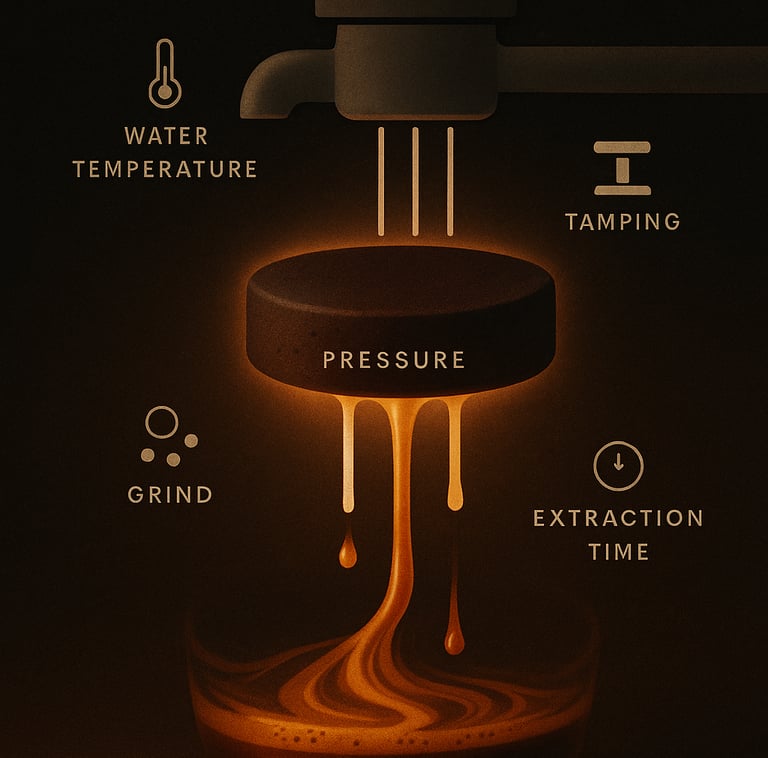
Espresso is not simply a way to brew coffee; it is a precise brewing system designed to extract a concentrated and flavorful espresso shot by forcing hot water through finely ground coffee at high pressure. The essential mechanics include controlling how quickly water passes through the coffee puck, extracting solubles efficiently without pulling excessive bitter compounds. The fundamental elements—grind size, water temperature, brewing pressure, tamping, and time—must be managed carefully because small deviations in any variable become immediately evident in the finished shot. This is usually where results start to vary without people realizing why, especially in home environments where consistency is harder to maintain. If you're new to the process, start with Best Espresso Setup for Beginners to understand how all components come together.
Essential Equipment: Espresso Machines and Grinders
Espresso machines vary greatly, from manual lever models that grant full control over pressure and flow rate, to fully automatic machines designed for convenience and repeatability. Semi-automatic machines strike a balance by automating pressure and temperature while giving the user control over timing and tamping. Each type affects workflow and shot consistency differently. For example, manual machines allow for nuanced pressure profiling but require skill and practice, whereas automatic machines reduce human error but limit experimentation. If you're comparing entry-level machines, see Breville Bambino vs Gaggia Carezza De Luxe Espresso for a practical breakdown.
Equally important is the grinder, which must deliver a very fine and uniform grind size. Espresso requires a grind finer than typical drip or pour-over coffee, but an excessively fine grind increases resistance too much, resulting in over-extraction and bitterness. Conversely, a grind that is too coarse leads to fast water flow and under-extraction, producing watery and sour shots. Precision grinders with stepless adjustments and stable burrs provide the control necessary to dial in your grind size for espresso brewing. Pay attention to your grinder performance as fluctuations here are a common source of inconsistency, especially when comparing options like Best Coffee Grinders for Espresso.
Choosing the Right Coffee Beans and Roast Levels
The quality and roast profile of your coffee directly impact how you adjust brewing parameters. Espresso typically uses medium to dark roast beans, where the roasting level enhances body and extractable oils that form the signature crema. However, roast preference and bean freshness influence grind size and extraction times. For instance, a lighter roast often requires a slightly finer grind or longer extraction due to its denser bean structure. Conversely, darker roasts tend to extract faster and may need coarser adjustments. Adjust increments gradually, as small changes in grind or dose are magnified during espresso brewing. For deeper insight into roast impact, review Light vs Dark Roast and explore high-quality options in Best Espresso Beans.
Step-by-Step Guide to Grinding and Tamping
Begin by dosing your portafilter with the appropriate amount of coffee: generally between 7 to 9 grams for a single shot and 14 to 18 grams for a double. Distribute the grounds evenly to prevent channeling where water finds less resistant paths, failing to extract uniformly. Techniques such as tapping or using distribution tools help reduce uneven density in the puck, which becomes more important when comparing techniques like WDT Tool vs Distributor.
Tamping must be consistent in pressure and angle. Applying roughly 30 pounds of pressure ensures the grounds compact adequately, creating resistance without sealing the puck completely. An uneven tamp often causes water to flow irregularly through the coffee, extracting some areas excessively and others insufficiently. This imbalance reflects immediately in your espresso’s flavor, with sour or bitter notes surfacing erratically. If you focus on one variable first, start with grind size, as it influences resistance more than any other factor, guiding you to the right tamping and extraction parameters. Using a properly weighted tool from Best Espresso Tampers helps maintain consistency here.
Setting Your Espresso Machine: Temperature and Pressure
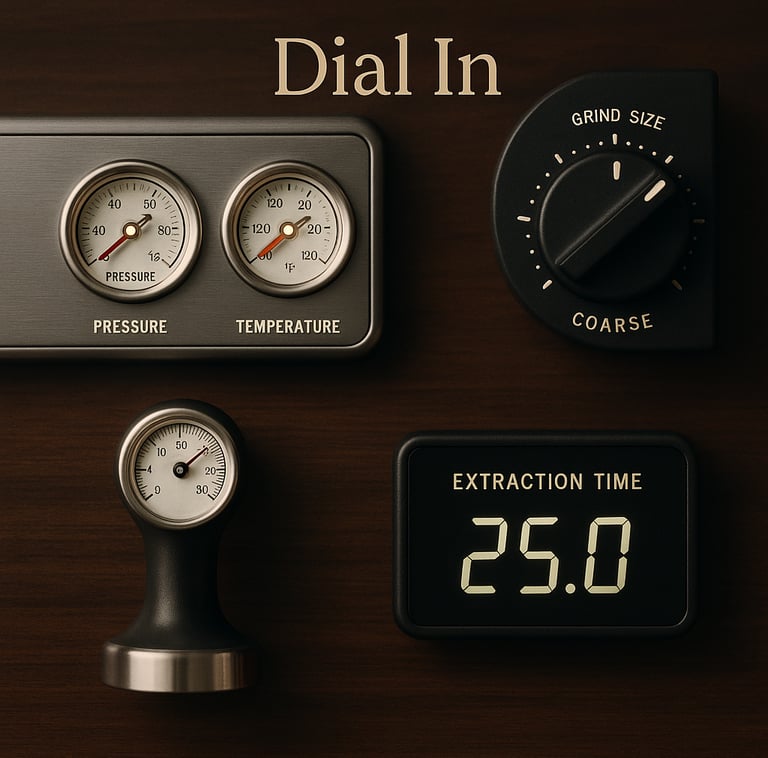
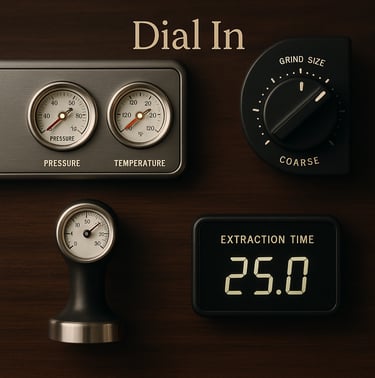
Espresso extraction requires stable water temperature within a narrow window, typically between 90°C and 96°C. Temperatures below this range slow extraction, often yielding sour or acidic shots, while higher temperatures accelerate extraction and draw out harsh bitterness prematurely. Most machines stabilize around 93°C, which balances sweetness and acidity well under normal operating conditions. However, variations in your beans or environment may require fine-tuning within this range.
Pressure settings also play a critical role. The industry standard is approximately 9 bars during extraction. Some machines allow pressure profiling, which can enhance complexity but demands advanced technique. Consistent pressure ensures water saturates the coffee puck evenly and extracts solubles effectively. Fluctuations in pressure often translate to inconsistency across multiple shots, where puck wetting and flow rate change unpredictably.
Timing Your Extraction for the Perfect Shot
Extraction time is the culmination metric reflecting the interaction of all previously controlled variables. Typically, aiming for 25 to 30 seconds is a reliable baseline for standard single or double espresso shots. Extraction times shorter than this generally lead to under-extraction, characterized by weak body, thin texture, and sour or grassy flavors. Longer than 30 seconds risks over-extraction, drawing out bitter, astringent compounds that dominate the cup.
However, exact timing can vary depending on dose, grind, and roast level. Experienced brewers learn to read puck resistance during extraction and adjust grind size incrementally to bring the shot time into the desired range. The goal is balanced flavor with a thick mouthfeel and crema that is neither too light nor too dark. If you're troubleshooting timing issues, see How to Dial in Espresso for a deeper breakdown.
Troubleshooting Common Espresso Problems
Inconsistent espresso quality often hides in small inconsistencies. A grind size that shifts too coarse or fine from dose to dose is usually the starting point. This may result from burr wear or user adjustments made without clear measurement. If your shots are weak, thin, or sour, try a finer grind and retime extraction. Bitter, hollow shots suggest dialing back grind fineness or reducing brew temperature slightly, which is further explained in Why Espresso Tastes Bitter and Why Espresso Tastes Sour.
Uneven tamping resulting in channeling deserves attention if you see quick, uneven flow or watery crema. Distribute grounds evenly and use consistent tamp pressure to avoid this.
Machine issues like unstable temperature or pressure swings are more common than most realize. Clean group heads, flush the machine before brewing, and maintain grinder burrs regularly to prevent buildup that disrupts flow and flavor extraction. These maintenance steps affect performance and taste consistency more than upgrading gear alone. Over time, neglected equipment will produce erratic results regardless of your technique.
Routine Maintenance for Consistent Performance
Espresso brewing is only as reliable as the care you give your equipment. Regular cleaning of the espresso machine, including group heads and portafilters, ensures water passes evenly through the puck. Oils and residue buildup in grinders dull burr sharpness and alter grind distribution, so scheduled burr replacements and precise calibration are necessary.
Water quality and dosing accuracy also deserve equal attention. Using filtered water prevents mineral buildup and preserves machine longevity. A calibrated scale for dosing helps maintain shot consistency since even small differences in dose affect extraction dynamics meaningfully, which is why tools featured in Best Espresso Scales are essential for repeatability. This is usually where things start to drift in home setups over time, unnoticed. Approach maintenance as a rhythm integral to your brewing process, not an occasional chore.
Common Mistakes When Making Espresso
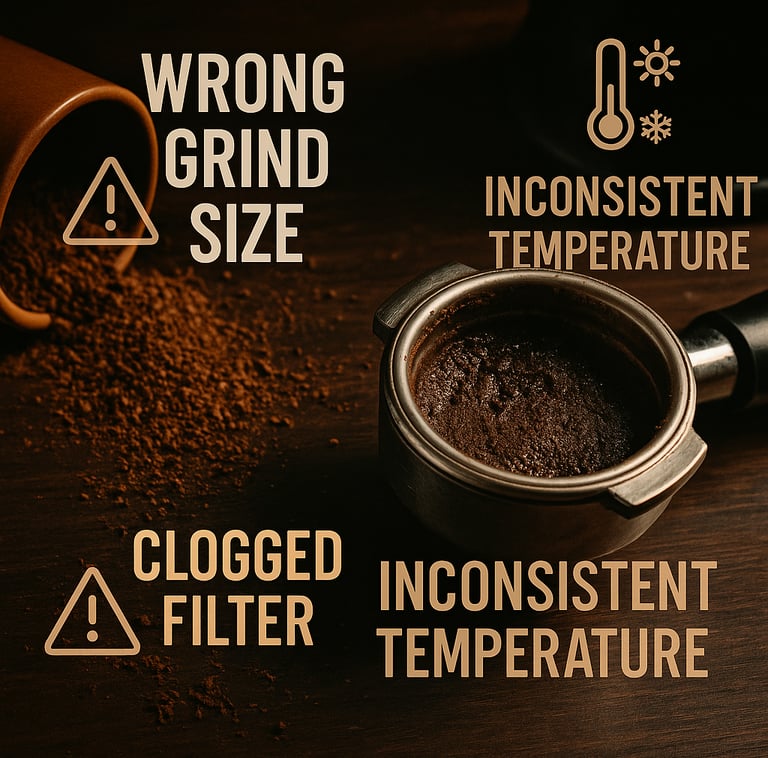
One of the most frequent errors is using an inappropriate grind size; too coarse leads to rapid flow and sour taste, too fine causes slow flow and burnt flavors. Incorrect tamping—either uneven or inconsistent pressure—often results in channeling and unpredictable extraction. Machine settings are another potential pitfall; pressure below or above 9 bars, or unstable water temperature, disrupts solubles' extraction ratio.
Brewing shots that are too short or too long are other pitfalls, commonly stemming from improper grind adjustment or neglecting dose changes. Finally, poor machine and grinder maintenance degrade performance and flavor subtly but significantly. These mistakes combine to create random variation in results, frustrating efforts to brew a predictable cup. If you're seeing repeated issues, reviewing Common Espresso Mistakes can help isolate patterns.
FAQ About Espresso Brewing
What grind size is best for espresso?
Espresso requires a very fine grind, finer than drip coffee but not powdery. Finding the right grind involves adjusting so extraction times fall between 25–30 seconds without channeling or excessive resistance.
What temperature should an espresso machine be set to?
A stable water temperature between 90°C and 96°C is ideal. Most machines settle around 93°C, balancing acidity and bitterness effectively.
How long should an espresso shot take to extract?
Aim for approximately 25 to 30 seconds for a single or double shot. Variations outside this range often indicate extraction imbalance.
What pressure is used in espresso brewing?
Around 9 bars of pressure is standard during extraction to force water uniformly through finely ground coffee.
Can I use pre-ground coffee for espresso?
Pre-ground coffee rarely delivers consistent results because it lacks freshness and precise grind calibration needed for espresso. Grinding fresh beans just before brewing is preferred.
How often should I clean my espresso machine and grinder?
Group heads and portafilters should be cleaned daily, while grinders warrant weekly cleaning and burr inspection every few months depending on use.
What are common signs of over-extracted or under-extracted espresso?
Over-extracted shots taste bitter, harsh, or hollow with prolonged extraction time. Under-extracted shots are thin, sour, or salty with quick flow and short extraction.
How much coffee should I dose for a single or double espresso?
Typically, 7–9 grams for a single shot and 14–18 grams for a double shot is appropriate, depending on your basket size and machine.
Practical Conclusion
Achieving the perfect espresso shot is less about owning the most expensive or complex equipment and more about systematically controlling variables that govern extraction. Focus first on dialing in grind size and dose, then fine-tune tamping, machine pressure, and temperature. Keep extraction time within a narrow window to find balance in flavor and body. Maintain your equipment rigorously, as even small residue or burr wear translates into inconsistency.
The Precision Brewer’s approach treats espresso as a repeatable process—not a creative spectacle—where every adjustment produces predictable outcomes. Through discipline and gradual refinement, you transform espresso brewing from a guessing game into a science of consistency. This is where reliable quality emerges, cup after cup. To expand your understanding, explore foundational brewing methods and grinder reviews on CoffeeTechBuzz.com, where equipment meets technique in pursuit of precision.
Contact@TheBuzzHQ.com
© 2026 Coffee Tech Buzz. All rights reserved.
Coffee Tech Buzz
Smarter brewing through better gear, clearer insights, and real-world performance testing.
Built for home users who want consistency without guesswork.
We focus on how machines actually perform — not just what they claim.
Home
Coffee Equipment Guide
Coffee Makers & Machines
Coffee Grinders
Espresso Gear & Guides
Coffee Beans & Roasts
Coffee Accessories & Tools
For educational purposes only.
We may earn commissions from qualifying purchases.
General Inquiries: