

Are Espresso Portafilters Universal? Understanding Compatibility
Explore the complexities of espresso portafilters compatibility, focusing on sizes, locking mechanisms, and proprietary versus universal designs for optimal brewing.
ESPRESSO
The Coffee Tech Buzz Editorial Team - Led by AJ “Buzz” Eichman
5/7/20268 min read
When building or upgrading a home espresso setup, one question often arises: are espresso portafilters universal? On the surface, this may seem like a simple yes-or-no matter — after all, portafilters serve the same fundamental purpose across machines, holding the coffee grounds and channelling water through them under pressure. Yet, the reality is more nuanced. The compatibility of espresso portafilters hinges on several interrelated factors, from diameters and locking mechanisms to material quality and design considerations. Understanding these connections is essential for anyone looking to maintain consistency, optimize workflow, and ultimately extract the best espresso possible without unnecessary frustration or inefficiency. A large part of building a consistent setup starts with understanding broader Espresso Gear & Guides instead of focusing on isolated accessories alone.
Coffee brewing gear functions as a system. A portafilter alone isn’t an isolated piece; it must fit precisely with the machine’s brew group, integrate seamlessly with baskets and tampers, and support stable pressure and temperature conditions. Mismatches or poor fits can cascade into uneven extraction, inadequate crema, or even mechanical wear over time. This article steps back to see the full system of espresso portafilters — their sizes, standards, locking mechanics, and design differences — to clarify when compatibility is achievable and when proprietary parts are necessary. If you’re still learning how sizing standards affect machine compatibility, the Espresso Portafilter Guide breaks down the major formats and workflow differences in more detail.
Quick Verdict
Espresso portafilters vary significantly between brands and models; most are not universal.
Diameter (typically between 49mm and 58mm), locking system type, and handle design are key compatibility factors.
Universal portafilters exist but often require adapters and may compromise seal and pressure consistency.
Proprietary portafilters optimize fit and performance but limit interchangeability.
Verifying machine specifications before purchasing replacements or upgrades is crucial for consistent espresso quality.
What Is an Espresso Portafilter and How Does It Work?
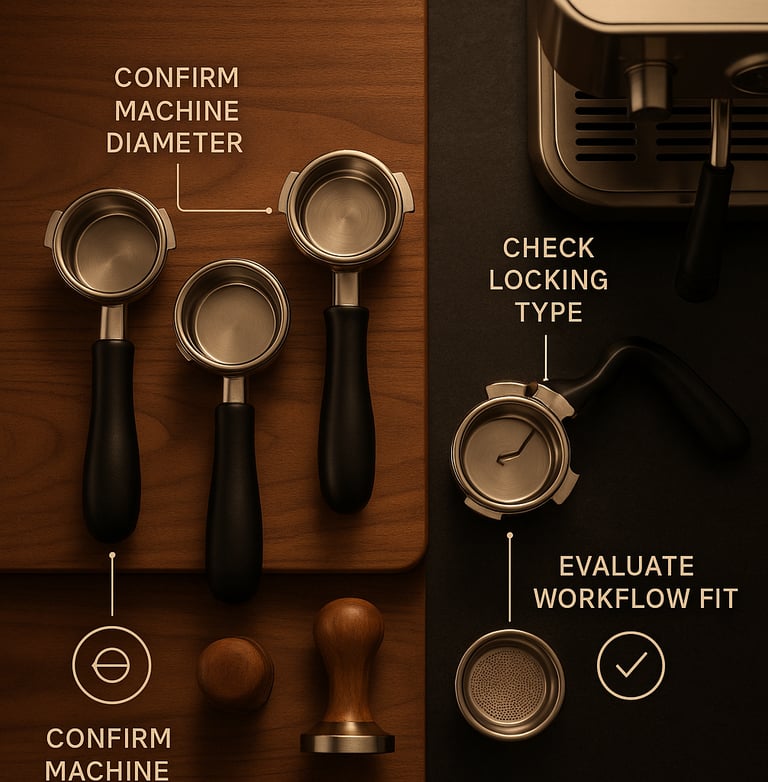
At its core, the espresso portafilter is the handled filter basket assembly that holds coffee grounds in place during espresso extraction. It locks into the machine's brew group, sealing the coffee puck against water pressure to ensure even flow and proper extraction. Though this may sound straightforward, the interaction between portafilter and brew group sets the tone for the entire brewing process.
The portafilter’s role as both a mechanical and fluid interface means any irregularity in fit or sealing can upset the brewing system’s balance. A loose portafilter allows water to bypass the coffee puck, leading to weak, channelled shots. Conversely, an overly tight or incompatible portafilter can stress the machine’s locking mechanism or create uneven pressure distribution. Beyond just holding coffee, it must support a workflow that is both stable and repeatable — qualities essential for consistent espresso.
Common Espresso Portafilter Sizes and Standards
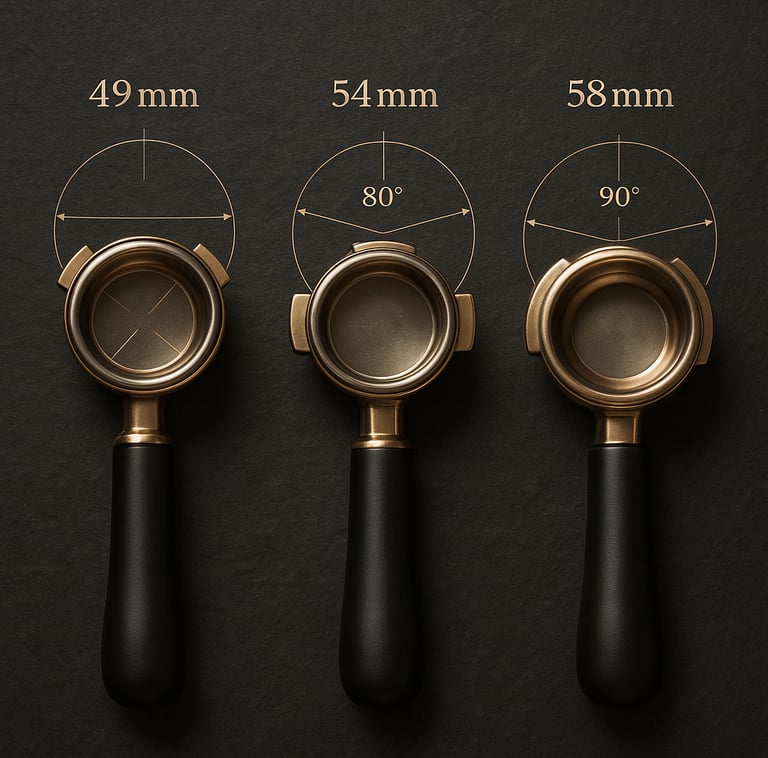
Size is often the first point of confusion when discussing espresso portafilters. Diameters typically range from about 49mm on smaller, entry-level home machines to 58mm on many commercial and prosumer machines. The 58mm diameter has effectively become the industry standard, favored for its balance of coffee dose capacity and manageable size, used by brands like Rancilio, La Marzocco, and many others.
Smaller home machines, especially capsule systems or compact semi-automatics, might have portafilters as small as 49mm or 54mm. The disparity in sizes naturally limits direct interchangeability. Even when two portafilters share the same nominal diameter, subtle differences in measurement points or tolerances can affect fit.
Additionally, basket depth and shape vary within these diameter standards, altering how much coffee fits in the portafilter, which directly impacts puck density, compression, and extraction dynamics. A deeper basket can hold more coffee but demands a grinder-brewer system calibrated to accommodate the increased volume. Understanding 54mm vs 58mm Espresso Baskets Explained also helps clarify why two similar-looking machines can behave very differently during extraction.
Understanding Portafilter Compatibility and Locking Mechanisms
Size alone is not the whole story. Portafilter compatibility depends equally on how the handle and basket interface with the espresso machine’s brew group. Locking mechanisms vary widely, ranging from traditional twist-lock designs common in many machines to proprietary bayonets or unique catches found in others.
These locking systems ensure the portafilter forms a pressure-tight seal when inserted, preventing water leakage and maintaining consistent extraction pressure. A portafilter’s engagement angle, latch position, and even handle ergonomics must align precisely with the machine’s brew group design.
Universal or generic portafilters sometimes attempt to bridge these differences via adapter rings or adjustable locking cams. While these adapters widen compatibility, the trade-off often manifests as reduced sealing reliability or inconsistent pressure profiles. The brew group’s internal geometry and water dispersion system are designed around specific portafilter dimensions and mechanics, so compromises here ripple through the entire extraction quality.
Compatibility discussions also become important when comparing the overall workflow differences between basket systems, especially in 54mm vs 58mm Portafilters where ergonomics and extraction characteristics can change noticeably.
Pros and Cons of Universal Versus Proprietary Portafilters
The idea of a universal portafilter — one that fits many machines across brands — is appealing, especially for multi-machine owners or those wanting to upgrade without replacing the entire setup. Universal models are often sold with adapter rings or adjustable locking systems to bolster compatibility.
However, this approach demands a systemic perspective on trade-offs. While adapters may allow physical fit, the integrity of the pressure seal and precise alignment with the brew group can suffer. In espresso extraction, minor leaks or misfits lead to channeling, weaker crema, and flavor inconsistencies. Universal portafilters, especially those not precisely engineered for a particular machine, often struggle to maintain the stability required for repeatable, high-quality shots.
On the other hand, proprietary portafilters are designed hand-in-glove with the machine’s brew group, ensuring an optimized pressure profile, ergonomics, and thermal stability suited to that system. These portafilters reinforce the machine's design goals by providing the exact sealing interface and basket support needed for ideal puck compression and water dispersion.
The downside is obvious: proprietary designs limit interchangeability, sometimes leading to higher costs or difficulties sourcing replacements, especially for discontinued models. But viewed from the lens of system integrity—how each component supports the brewing workflow—proprietary parts often deliver superior and more consistent performance.
How Portafilter Design Impacts Espresso Performance
Portafilters contribute more than just a physical container for grounds; their materials, basket designs, and spout shapes influence temperature stability, extraction uniformity, and user workflow. Stainless steel construction, common in quality portafilters, supports thermal retention, helping maintain brewing temperature stability which is critical to espresso consistency.
Basket variations—single wall, double wall, pressurized or non-pressurized—work in tandem with portafilter design and espresso machine pressure profiles to affect extraction. A pressurized basket may compensate for inconsistencies in grind size or tamping, but it alters flavor profile differently than a traditional non-pressurized basket. Switching basket types on a given portafilter requires understanding how those changes impact the whole system.
Spout design and positioning influence shot flow and crema formation. Side spouts guide espresso into cups more predictably and can affect any dripping or mess within a workflow. This ergonomic consideration ties back to the overall coffee prep routine, underscoring that portafilter design must fit not just mechanical but user needs within the entire recipe and workflow system.
Heavier commercial-style accessories can also improve thermal stability and extraction consistency, which is why many enthusiasts eventually explore What Makes a Heavy Portafilter Better for Espresso? when upgrading their setup.
Buyer Considerations: Choosing the Right Portafilter for Your Machine
When selecting a replacement, upgrade, or universal portafilter, the guiding principle should be system harmony rather than individual feature fascination. Begin by confirming the espresso machine’s specified portafilter diameter and locking mechanism. Manufacturers’ manuals or official service documents are the most reliable sources.
Next, consider how the portafilter integrates into your existing workflow. Is your grind consistent and fine-tuned for a particular basket size? Are you looking for improved thermal stability or durability? If upgrading to a pro-style portafilter, make sure your machine can physically support the added size and weight.
For multi-machine setups or experimental brewers, adapters can provide flexibility but introduce complexity. Use them judiciously, observing any decline in extraction consistency. Remember that even slight leaks in the seal or misalignments will force your grinder or tamping technique to compensate, adding effort without guarantee of better quality.
Exploring espresso machine accessories like tampers and distribution tools that fit your portafilter can also improve results, emphasizing that the portafilter's role is one part of a finely tuned ecosystem.
If your machine uses smaller home-oriented basket systems, browsing the Best 54mm Portafilters can help narrow down compatible options built specifically around those dimensions and workflows.
Common Mistakes in Portafilter Compatibility
A frequent pitfall involves assuming all portafilters with the same diameter are interchangeable. Even when sizes align, differences in locking angle or basket design can prevent proper fitting or compromise the pressure seal.
Another misstep is buying “universal” portafilters without checking if adapters or modifications are genuinely compatible with their machine’s brew group. Overlooking the importance of spout shape and basket depth may lead to workflow inefficiencies or unexpected extraction variability.
Neglecting material quality also matters—portafilters made of inferior materials may warp or fail to hold heat, undermining shot consistency over time. Finally, ignoring the role of portafilter fit in maintaining stable pressure seals can result in chasing symptoms of poor espresso with unnecessary grinding or tamping adjustments.
Many users upgrading to larger commercial-style machines eventually look toward the Best 58mm Portafilters because of the broader basket compatibility and accessory ecosystem built around the 58mm standard.
Frequently Asked Questions About Portafilter Compatibility
What are the most common espresso portafilter sizes?
The most common sizes range from 49mm on smaller, entry-level machines to 58mm on commercial and prosumer espresso machines. Among these, 58mm has become the widely adopted industry standard for many high-performance machines.
Can I use a portafilter from one machine brand on another?
Generally, no. Even if the diameters are similar, locking mechanisms, handle designs, and basket types vary, making most portafilters brand- or model-specific. Some universal options with adapters exist but often come with trade-offs in fit and performance.
What factors affect portafilter compatibility?
Key factors include the portafilter’s diameter (measured where it locks into the brew group), the locking mechanism type (twist-lock, bayonet, or proprietary designs), handle ergonomics, and basket depth and design.
Are universal portafilters reliable for home espresso machines?
Universal portafilters can work but often require adapters and careful testing to maintain a consistent pressure seal. Their reliability depends on matching the entire system, including the machine’s brew group geometry and brewing parameters.
How do proprietary portafilters improve performance?
Proprietary portafilters are engineered to match the brew group's dimensions and locking mechanism perfectly, supporting an optimal pressure profile, better thermal stability, and more ergonomic use, all contributing to more consistent espresso extraction.
Is it possible to upgrade to a better portafilter on my existing machine?
Yes, but upgrades should consider the entire system. Ensure the machine supports the new portafilter’s size and weight, and that baskets and accessories are compatible to avoid workflow disruptions or extraction issues.
Do portafilter spouts affect espresso taste or crema?
Spouts primarily influence flow and crema consistency by guiding espresso into the cup and minimizing drips or uneven flow. While they don't directly change taste, an appropriate spout design supports cleaner extraction and serving, indirectly improving perceived quality.
What should I look for when buying replacement portafilters?
Confirm machine diameter and locking mechanism specifications, prioritize sturdy materials like stainless steel for heat retention, assess basket compatibility for your brewing style, and consider ergonomic factors tied to your workflow for ease of use.
Conclusion
Espresso portafilters are rarely a one-size-fits-all component but part of a delicate extraction ecosystem where every detail interlocks with the broader system — from the size and locking mechanics to material properties and basket design. The pursuit of better espresso is less about chasing a universal portafilter and more about understanding how each piece supports the others in your specific setup.
For home baristas aiming for consistent results, verifying compatibility with your machine’s brew group is non-negotiable. Opting for proprietary portafilters often delivers tangible gains in pressure stability and ease of use, reinforcing the system rather than challenging it. Universal portafilters and adapters offer flexibility but require careful attention to ensure the entire system remains balanced.
In practice, the best espresso performance comes from thoughtful integration rather than isolated upgrades. Your portafilter is a critical node in the coffee-making workflow; when it fits harmoniously, the gear, grind, and technique can all align to create the rich, balanced espresso shots you seek.

Contact@TheBuzzHQ.com
© 2026 Coffee Tech Buzz. All rights reserved.
Coffee Tech Buzz
Smarter brewing through better gear, clearer insights, and real-world performance testing.
Built for home users who want consistency without guesswork.
We focus on how machines actually perform — not just what they claim.
Home
Coffee Equipment Guide
Coffee Makers & Machines
Coffee Grinders
Espresso Gear & Guides
Coffee Beans & Roasts
Coffee Accessories & Tools
For educational purposes only.
We may earn commissions from qualifying purchases.
General Inquiries: