

What Makes a Heavy Portafilter Better for Espresso?
Discover how a heavy portafilter enhances espresso quality by improving temperature stability and pressure consistency for better extraction results.
The Coffee Tech Buzz Editorial Team - Led by AJ “Buzz” Eichman
5/7/20268 min read
Quick Verdict
Increased portafilter weight enhances temperature stability at the brew group, reducing heat loss during extraction.
Heavier portafilters help maintain consistent pressure, which supports uniform espresso extraction and minimizes channeling.
Improved thermal and pressure stability contribute to better espresso quality with balanced flavor profiles and clearer crema.
For home espresso users seeking precise control, upgrading to a heavy portafilter can be a meaningful step toward repeatable, barista-level consistency.
What is a Portafilter and Its Role in Espresso Brewing?
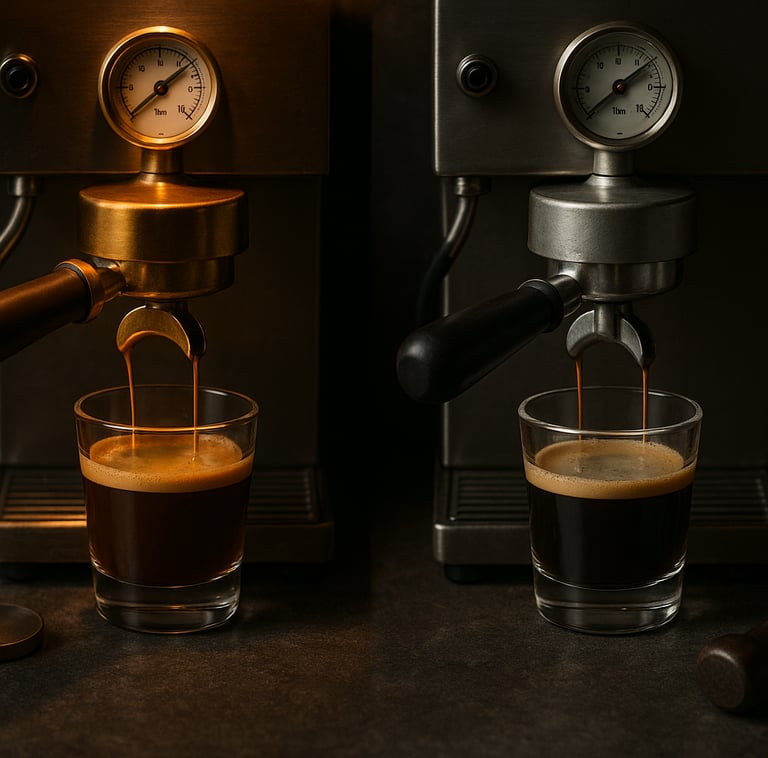
The portafilter is central to espresso brewing—it holds the coffee grounds and locks into the espresso machine’s brew group, forming the interface through which hot water is forced under pressure. Beyond this mechanical function, the portafilter’s physical properties influence thermal and pressure dynamics during extraction. When you consider espresso as a process, small factors such as the portafilter’s weight impact the stability of temperature and pressure within the brew group, affecting the quality and consistency of the shot throughout Espresso Gear & Guides.
A standard portafilter typically weighs between 300 to 400 grams and is often made from materials like aluminum or lighter alloys. These lighter portafilters cool down quickly, which can cause heat loss from the brew group during shot preparation. The result is temperature fluctuations that subtly but perceptibly change extraction outcomes from shot to shot. The heavier portafilter, often constructed from brass or stainless steel, increases thermal mass and acts as a heat reservoir, tempering sudden temperature drops. For users researching upgrades inside the Espresso Portafilter Guide, this is one of the biggest reasons heavier setups are associated with more repeatable espresso quality.
How Portafilter Weight Affects Temperature Stability
One of the most critical variables for espresso extraction is temperature stability. Espresso machines deliver water at precise temperatures, but the temperature at the coffee puck is influenced by the thermal state of the brew group and portafilter assembly. A heavier portafilter absorbs and retains heat longer, creating a buffer against temperature swings caused by repetitive use or environmental factors.
When a portafilter is light, the machine’s brew group may lose heat more rapidly when you remove or replace the portafilter during routine brewing. This heat loss translates to lower extraction temperatures, pushing you outside the optimal range for soluble extraction. Conversely, a heavy portafilter’s increased thermal mass helps maintain the group temperature closer to the desired setpoint throughout the brewing cycle, supporting a more consistent extraction.
Consistent temperature means predictable solubility of coffee compounds. Under stable thermal conditions, the flavors extracted align more closely with expected profiles, avoiding under-extraction or over-extraction. Many home users first begin noticing these differences while comparing accessories featured in Best 54mm Portafilters and Best 58mm Portafilters where material thickness and total weight vary substantially between designs.
Pressure Consistency and Its Impact on Extraction
Beyond temperature, pressure consistency during extraction is another factor modulated by portafilter weight. Espresso machines generate pressure, typically around 9 bars, forcing hot water through the tamped coffee grounds. The mass of the portafilter moderates how stable that pressure feels during ramp-up and steady-state flow.
Heavier portafilters act much like a mechanical stabilizer on the group head. They dampen micro-movements or vibrations that can cause pressure to fluctuate unintentionally. The additional mass resists sudden shifts induced by mechanical tolerances or operator handling, helping maintain a steadier pressure profile throughout the shot.
Pressure stability reduces the risk of channeling, where water finds preferential pathways through the puck rather than evenly saturating grounds. Channeling leads to uneven extraction, producing cups with inconsistency in strength and flavor clarity. A heavy portafilter supports an even distribution of water resistance, promoting uniform coffee contact and a more uniform soluble extraction. These extraction differences become even more apparent when comparing basket behavior in 54mm vs 58mm Portafilters and the flow dynamics covered in Why Portafilter Size Changes Espresso Extraction.
Material Differences: Why Heavier Portafilters Matter
The material used in heavy portafilters contributes directly not only to weight but to thermal conductivity and durability. Brass and stainless steel portafilters often weigh nearly double compared to standard aluminum models. They retain heat better, but denser metals also take slightly longer to warm up initially, which underscores the need for preheating the portafilter before brewing. This ensures the thermal mass is at equilibrium with the brew group temperature for optimal stability.
Beyond thermal benefits, heavier materials provide rigidity and resistance to mechanical wear over time. For daily home espresso use, this durability means the portafilter maintains its shape and sealing surfaces better, preventing leaks or losses in pressure consistency that can develop with lighter or softer materials.
The relationship between metal density, thermal retention, and extraction stability also overlaps with the principles discussed in Does Portafilter Material Affect Espresso Flavor or Heat Retention? which breaks down how different materials behave during brewing cycles.
Adjusting Your Brewing Technique for a Heavy Portafilter
Introducing a heavy portafilter requires calibrated adjustments in your brewing approach. The shift in thermal mass and pressure dynamics can change how your established grind size, dose, and tamp pressure translate into extraction outcomes. If you move to a much heavier portafilter without re-tuning, you might find your shots pulling differently—sometimes slower due to increased resistance, or hotter extraction due to better heat retention.
A methodical adjustment process follows the principle of controlling one variable at a time. Start by assessing how the heavier portafilter changes shot time and flow rate relative to your previous setup. Adjust grind size accordingly, often dialing finer if the shot time extends or coarser if it shortens excessively. Pay attention to dose consistency and tamp pressure as well, as minor tweaks may be needed to maintain the desired puck density.
This is usually where results start to drift without people realizing why. If you treat the heavy portafilter as simply an interchangeable part, you risk misattributing extraction faults to other variables prematurely. Instead, approach calibration patiently and document each change to reach repeatable results.
Common Mistakes When Switching to a Heavy Portafilter
One common misconception is assuming that heavier portafilters automatically guarantee better taste or espresso quality without further adjustment. The portafilter weight contributes to enhanced brewing conditions, but extraction quality always depends on controlling fundamental variables such as grind size, dose, and tamping technique.
Another frequent error involves neglecting compatibility. Heavy portafilters are not universal; they must fit precisely with the espresso machine’s group head. Using an incompatible or poorly designed heavy portafilter can compromise seal integrity, resulting in pressure leaks or flow inconsistencies.
Additionally, some overlook the necessity of regular cleaning. Even a heavy portafilter cannot compensate for buildup on the filter basket or leaks caused by poor gasket condition. Maintenance remains essential to preserve temperature and pressure stability.
Finally, expecting a portafilter upgrade to fix major extraction flaws caused by errors in dose measurement, grind calibration, or tamping technique will lead to disappointment. The portafilter weight is a factor within the broader process that requires disciplined control. Many of these extraction issues appear more aggressively in setups discussed in Why Cheap Espresso Portafilters Often Cause Bad Extraction where weaker materials and inconsistent machining introduce additional instability into the brewing process.
Is a Heavy Portafilter Worth It for Home Use?
For many home espresso enthusiasts, the question is whether the added investment and effort to recalibrate brewing parameters justify upgrading to a heavy portafilter. The answer hinges on your priorities for consistency and precision.
If you favor repeatability, value precise control over extraction variables, and are unwilling to accept variability in shot quality, a heavy portafilter delivers measurable benefits. It offers improved thermal inertia and pressure consistency comparable to what professional baristas rely on in commercial settings.
Smaller home setups pursuing occasional espresso shots with relative ease may not find the weight difference immediately impactful enough to warrant the upgrade. However, for home baristas aiming to replicate high-performance workflows and build muscle memory around a stable system, this is a crucial component.
Ultimately, the heavy portafilter is a tool that enhances your capacity to run espresso as a repeatable process rather than leaving results to chance.
FAQs About Heavy Portafilters and Espresso Extraction
Why does portafilter weight affect espresso extraction?
Portafilter weight influences the thermal mass at the brew group and contributes to pressure stability during extraction. Heavier portafilters retain heat longer, reducing temperature fluctuations that can alter soluble extraction. They also stabilize pressure by resisting micro-movements, ensuring more uniform water flow through the coffee grounds.
How much heavier should a portafilter be to notice a difference?
Portafilters weighing around 500 to 600 grams or more typically provide a noticeable improvement compared to standard 300–400 gram models. This range balances increased thermal mass without excessive unwieldiness. However, the perceptible impact depends on your existing machine and workflow consistency.
Can a heavy portafilter cause any issues with my espresso machine?
Heavier portafilters exert more static load on the group head, potentially accelerating wear on gaskets or group components if not designed to accept the weight. Some machines may require minor calibration to accommodate the altered group dynamics. Ensuring compatibility and gradual integration helps avoid mechanical issues.
Does portafilter weight affect the brewing time or pressure settings?
Indirectly, yes. Increased weight can influence flow resistance and thermal stability, which may lengthen or shorten shot times. It does not alter machine pressure settings directly, but you might need to adjust grind size to compensate for changes in extraction kinetics caused by the heavier portafilter.
Are there specific materials preferred for heavy portafilters?
Brass and stainless steel are the most common materials for heavy portafilters due to their density, thermal conductivity, and durability. Brass generally offers excellent heat retention and a tactile feel preferred by many baristas, while stainless steel provides robustness and corrosion resistance.
Do heavier portafilters cost significantly more than standard ones?
High-quality heavy portafilters tend to cost more because of the materials and manufacturing precision involved. Prices vary widely based on brand and compatibility, but the investment reflects the enhanced control they provide. For dedicated espresso enthusiasts, this cost is often justified by the consistency gains.
Is the benefit of a heavy portafilter noticeable for home espresso users?
For home users focused on precision and repeatability, the benefit is detectable, primarily in temperature and pressure stability leading to consistent flavor extraction. However, it requires disciplined calibration and controlled brewing technique to fully leverage this advantage.
How do I choose the right heavy portafilter for my espresso machine?
Start by confirming the portafilter’s compatible size and locking mechanism match your machine’s group head specifications. Consider material preference, weight range, and whether the portafilter’s basket size supports your typical dose. Consulting user forums and manufacturer recommendations can also clarify options tailored to your espresso setup.
Conclusion
The weight of the portafilter is more than just a physical characteristic; it is a vital element influencing espresso extraction stability and consistency. Heavy portafilters add thermal mass that moderates temperature losses and stabilize pressure dynamics during brewing. These factors collectively improve extraction uniformity, resulting in espresso quality marked by balanced flavors and persistent crema.
Switching to a heavier portafilter is not a standalone fix but a tool within the controlled brewing process. Success depends on adjusting grind size, dose, and technique attuned to this change. For home baristas dedicated to repeatable performance, a heavy portafilter represents an investment in precision that better aligns the brewing environment with the demands of high-quality espresso.
For a deeper understanding of optimizing espresso machine performance and achieving consistent shots, explore comprehensive guides on coffee makers and their related accessories. Integrating a heavy portafilter sensibly into your workflow establishes a stable foundation for control rather than leaving your espresso results to chance. This approach reflects the discipline of espresso brewing as a science, not a game of trial and error.
Contact@TheBuzzHQ.com
© 2026 Coffee Tech Buzz. All rights reserved.
Coffee Tech Buzz
Smarter brewing through better gear, clearer insights, and real-world performance testing.
Built for home users who want consistency without guesswork.
We focus on how machines actually perform — not just what they claim.
Home
Coffee Equipment Guide
Coffee Makers & Machines
Coffee Grinders
Espresso Gear & Guides
Coffee Beans & Roasts
Coffee Accessories & Tools
For educational purposes only.
We may earn commissions from qualifying purchases.
General Inquiries: