

Does Portafilter Material Affect Espresso Flavor or Heat Retention?
Explore how portafilter material impacts heat retention and espresso flavor, helping baristas achieve consistent extraction and taste.
ESPRESSO
The Coffee Tech Buzz Editorial Team - Led by AJ “Buzz” Eichman
5/7/20267 min read
When aiming for a consistent espresso shot, understanding every variable that influences extraction is critical. Among these variables, the portafilter often receives less attention than grind size or water temperature. However, the material from which a portafilter is made has tangible effects on thermal stability and therefore on espresso flavor and consistency. This discussion delves into how portafilter material impacts heat retention, thermal properties, and ultimately the espresso extraction experience inside Espresso Gear & Guides, helping home baristas and enthusiasts treat their gear as precision tools rather than mere coffee accessories.
Whether comparing premium brass accessories against lighter entry-level setups or troubleshooting inconsistent shots, material choice influences how stable the brewing environment remains from the first second of extraction to the final drop. Many of the upgrade considerations discussed throughout Espresso Portafilter Guide ultimately revolve around improving thermal consistency and extraction repeatability through better component quality.
Quick Verdict
Portafilter materials with higher thermal mass, such as brass, retain heat better, promoting stable extraction temperatures essential for flavor clarity.
Stainless steel portafilters lose heat faster, which can introduce unwanted temperature fluctuations during brewing.
Preheating less thermally stable portafilters can partly offset heat loss but rarely matches the thermal performance of high-mass materials.
Thickness and manufacturing quality significantly influence heat retention alongside base material choice.
What Is a Portafilter and Why Does Material Matter?
The portafilter is the espresso machine’s critical interface, holding the coffee grounds during extraction. It channels hot water through the coffee puck under pressure, and its thermal properties affect the temperature consistency around the coffee bed. We know stable temperature is a pillar of solid espresso brewing; even small temperature drops impact solubility and extraction uniformity, influencing taste and crema.
When the portafilter material fails to hold heat adequately, the flow of hot water cools prematurely, leading to under-extraction, sour notes, or thin crema. Conversely, sufficient heat retention keeps temperature stability through the shot, maintaining consistent extraction parameters like flow rate and pressure. This is why it is insufficient to think only about size, basket, or grind—portafilter material plays a subtle but measurable role in shot reproducibility.
These thermal differences become especially noticeable when comparing options featured in Best 54mm Portafilters and Best 58mm Portafilters, where brass-heavy commercial-style designs behave very differently from lighter budget alternatives during repeated brewing cycles.
Common Portafilter Materials: Brass, Stainless Steel, Aluminum
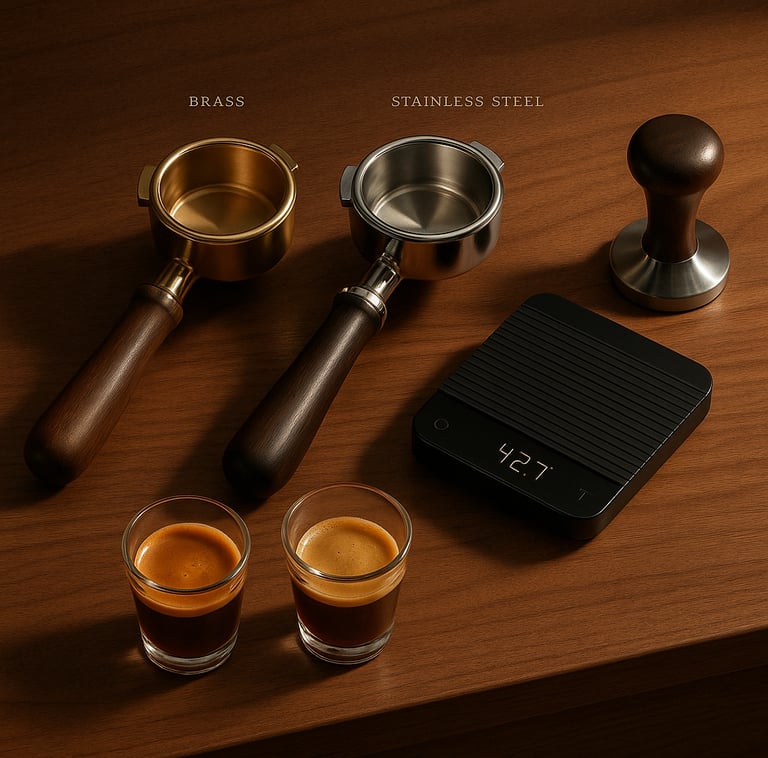
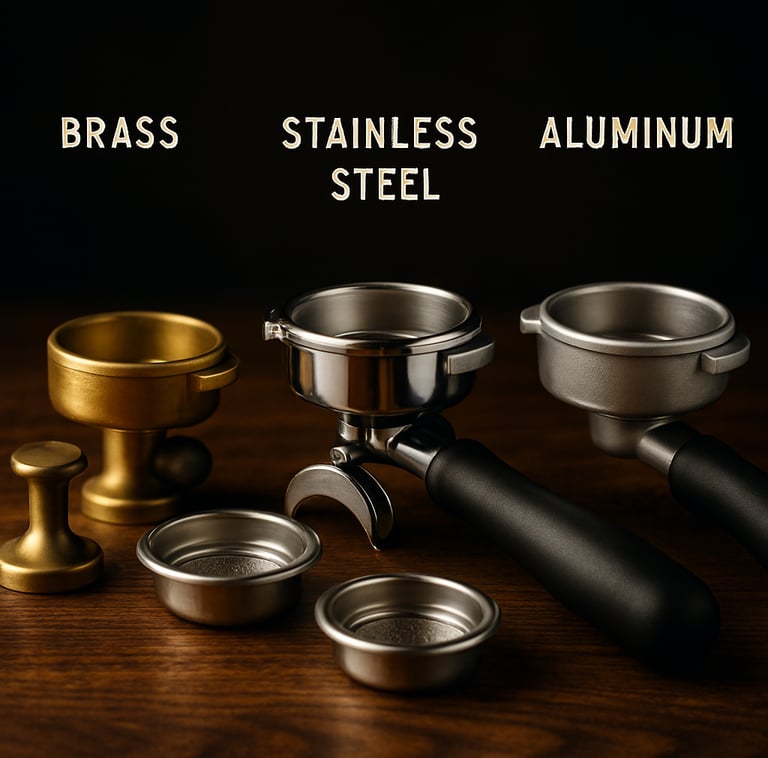
Brass has long been the standard in commercial portafilters due to its high thermal mass. It absorbs and holds heat, creating a buffer against the immediate temperature drop caused by the cold coffee puck and the water flow. This thermal inertia helps keep brewing temperatures steady from the first second until the last drop. Brass portafilters are typically heavier but contribute to a more controlled brewing environment.
Stainless steel portafilters, while durable and often less expensive, have a lower thermal mass and higher thermal conductivity than brass, meaning they dissipate heat faster. This quicker heat loss can be noticeable during consecutive shots or in cooler environments, where temperature dips become more pronounced. Stainless steel’s strength and corrosion resistance make it appealing, but its thermal properties are less ideal for maintaining extraction stability.
Aluminum, favored for its light weight, has the lowest thermal mass among common portafilter materials. While convenient for ease of use or travel, aluminum portafilters often cannot maintain stable brewing temperatures without additional interventions. As a result, aluminum is generally considered less suitable for home espresso setups aiming for precision and consistency.
The weight and thermal behavior differences between these materials closely overlap with the extraction stability principles explained in What Makes a Heavy Portafilter Better for Espresso? where thermal mass and pressure consistency become critical for repeatable shots.
Thermal Properties and Heat Retention Explained
Thermal mass refers to the capacity of a material to absorb and retain heat. A portafilter’s thermal mass governs how well it maintains heat during brewing, which is key for temperature stability at the coffee puck. High thermal mass materials like brass act as heat reservoirs, releasing heat slowly and resisting quick temperature drops.
Heat conductivity, on the other hand, dictates how readily heat passes through the material. Stainless steel tends to conduct heat quickly and also loses it faster to the environment, particularly when thin portafilters or cooler surroundings are involved.
Thickness compounds these effects: a thicker portafilter adds to thermal mass irrespective of material, improving heat retention. Conversely, a thin brass portafilter may perform closer to a thicker stainless steel one in some cases. Manufacturing quality—precision of fit, uniformity, and material consistency—also affects how well heat is conserved through the brewing cycle.
Impact of Portafilter Material on Espresso Flavor and Extraction
Stable temperature is one of the most reliable control levers in espresso brewing. When the portafilter maintains heat effectively, extraction proceeds more predictably. This typically translates into clearer flavor profiles, balanced acidity, and fuller-bodied shots. Consistent heat slows down temperature drift, reducing the likelihood of unexpected shifts in shot timing or flow rate.
If the portafilter cools too quickly, the initial phase of extraction—pre-infusion and ramp-up—may happen under cooler conditions, altering solubility rates. This can bring forward unwanted sourness or muted sweetness. Crema is also sensitive to temperature stability; insufficient heat retention often results in thinner, less resilient crema.
However, it’s important to recognize that portafilter material is one piece of the puzzle. Grind size, dose, tamping consistency, water temperature, and machine quality often have larger or more immediately noticeable impacts. When those are dialed in, the subtle gains from a better thermal performance portafilter become meaningful to the experienced brewer.
Extraction consistency also changes alongside puck resistance and basket geometry, especially when moving between machine standards discussed in 54mm vs 58mm Portafilters and the resistance behavior explained in How Portafilter Basket Depth Affects Espresso Shots.
Practical Tips for Improving Heat Stability with Your Portafilter
Regardless of portafilter material, preheating the portafilter is one of the most effective ways to mitigate heat loss during extraction. Running it under hot water or locking it in the machine and allowing warm water to circulate for 30–60 seconds can raise its temperature closer to brewing temperature. This practice is particularly important for stainless steel and aluminum portafilters with lower thermal mass.
Ensuring your portafilter has adequate thickness can also improve heat retention. Some aftermarket options offer heavy-gauge materials designed to approximate brass thermal performance at lower cost.
In cooler environments, it’s beneficial to minimize wait times between shots or maintain machine temperature through flushing or brief idling to prevent temperature dips exacerbated by portafilter cooling.
Regularly inspecting for manufacturing inconsistencies like thin spots or poorly fitting baskets helps maintain predictability in thermal transfer and extraction.
Common Misconceptions and User FAQs
Does brass really produce better espresso flavor than stainless steel?
Brass’s superior thermal mass means it better maintains temperature stability, which can enhance extraction consistency and clarity of flavor. However, if other brewing variables are inconsistent, any advantage may be muted. Brass does not guarantee better flavor outright; it supports consistent process control.
How much does portafilter heat retention affect espresso crema?
Better heat retention generally contributes to more stable extraction, which tends to produce thicker, more resilient crema. Temperature fluctuations can cause uneven crema development, but crema quality also depends on coffee freshness, roast, and grind.
Can preheating a stainless steel portafilter match brass thermal performance?
Preheating helps narrow the gap significantly but does not fully compensate for brass’s inherent higher thermal mass. The portafilter will still cool more rapidly during extraction if made of stainless steel.
Is portafilter material important for home espresso machines or just commercial setups?
It matters for both, but the impact is more evident in settings requiring frequent shots or where ambient temperatures vary. Home baristas focused on precision can benefit from choosing materials with better thermal properties.
What is the best portafilter material for consistent temperature stability?
Brass remains the preferred choice due to its high thermal mass and established use in professional machines. Thick, well-made stainless steel portafilters are next best, particularly when combined with proper preheating.
How does portafilter thickness influence heat retention during espresso extraction?
Increasing thickness adds thermal mass and slows heat loss, improving temperature stability throughout the extraction. Thin portafilters may cool quickly, negating some benefits of the base material.
Are there any unverified claims about portafilter materials changing espresso taste?
Some claims suggest dramatic flavor shifts simply from switching portafilter material. These are often overstated without accounting for the larger variables of grind, dose, tamp, water quality, and machine performance.
Choosing the Right Portafilter Material for Your Home Setup
When selecting a portafilter, the decision should begin with your machine compatibility and brewing goals. If your espresso machine came with a brass portafilter designed for the model, it is usually advisable to retain it or seek similar materials. Brass offers a stable thermal environment that aligns with consistent shot quality.
For budget-conscious setups or machines with stainless steel portafilters, incorporating a strict preheating routine helps manage heat loss. Investing in thicker aftermarket options may provide incremental improvements while controlling cost.
If you tend to pull shots sporadically or are in a warmer environment, the material’s heat retention effect might be less critical. However, for daily routines focused on repeatable performance, prioritizing thermal mass through portafilter material and thickness provides a more predictable foundation.
Internal considerations such as your machine’s PID temperature control, shower screen quality, and group head thermal properties should also factor into your choice, as the portafilter material interacts with these components to govern overall thermal stability. Users troubleshooting compatibility issues often first encounter these differences while researching Are Espresso Portafilters Universal? because fitment and material behavior vary substantially between espresso systems.
Summary and Performance Considerations
Portafilter material influences espresso flavor and heat retention fundamentally by affecting temperature consistency at the coffee bed. Brass, with its higher thermal mass, offers superior heat retention, which typically leads to more consistent extractions and clearer flavor profiles. Stainless steel portafilters lose heat faster but remain popular for their durability and cost-effectiveness; preheating these can reduce temperature drops but not fully equal brass thermal performance.
Aluminum portafilters, while lightweight, deliver the poorest thermal stability and are generally less suitable for precise espresso brewing. Thickness, manufacturing quality, and machine integration modulate these material effects, underscoring that portafilter material is an important but not isolated factor.
For home baristas prioritizing consistency and control, understanding and managing portafilter thermal properties helps make espresso outcomes more predictable. Attention to preheating, portafilter quality, and material choice should complement control over grind, dose, and water temperature to achieve a reliable and repeatable espresso extraction that matches expectations shot after shot.
Contact@TheBuzzHQ.com
© 2026 Coffee Tech Buzz. All rights reserved.
Coffee Tech Buzz
Smarter brewing through better gear, clearer insights, and real-world performance testing.
Built for home users who want consistency without guesswork.
We focus on how machines actually perform — not just what they claim.
Home
Coffee Equipment Guide
Coffee Makers & Machines
Coffee Grinders
Espresso Gear & Guides
Coffee Beans & Roasts
Coffee Accessories & Tools
For educational purposes only.
We may earn commissions from qualifying purchases.
General Inquiries: