
Espresso Machine vs Grinder: Which Matters More?
Explore the critical roles of espresso machines and grinders in crafting quality espresso, focusing on grind consistency, machine features, and their interplay.
COFFEE MAKERSCOFFEE GRINDERSESPRESSO
The Coffee Tech Buzz Editorial Team - Led by AJ “Buzz” Eichman
5/7/20269 min read
When crafting a truly excellent espresso, most enthusiasts naturally focus on two key pieces of equipment: the espresso machine and the coffee grinder. Each plays a vital role within the broader coffee brewing system, but understanding which carries more weight requires stepping back and viewing the process as a whole. Espresso quality is not merely the sum of a shiny machine or a precise grinder alone; it is the interaction between these components that determines extraction balance, flavor clarity, and consistency. This holistic perspective helps identify where investments truly matter and how improving one element affects the entire setup, especially when building around foundational gear in Coffee Grinders and Coffee Makers & Machines.
Quick Verdict
Grind size consistency and freshness from the grinder have a profound impact on extraction quality and flavor clarity.
Espresso machine features such as temperature stability, pressure control, and user workflow influence shot consistency and ease of use.
Upgrading the grinder often delivers a more noticeable improvement in espresso quality, especially for those new to brewing.
Optimal espresso is achieved through the interplay of precise grind adjustments and stable machine brewing parameters working cohesively.
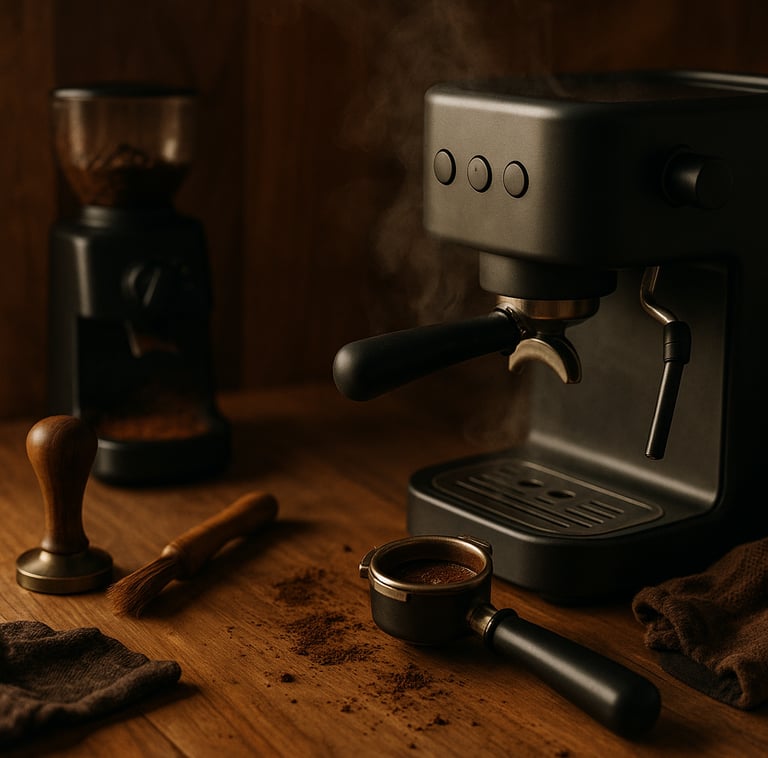
Understanding Espresso Quality: Machine and Grinder Roles
Espresso is a delicate brewing system in which the grinder and machine serve distinct but interconnected functions. The grinder’s primary contribution lies in producing a uniform grind size and preserving bean freshness. This consistency directly influences extraction dynamics since the espresso shot outcome hinges on how evenly water interacts with coffee particles. Uneven grinds lead to over-extraction of some particles and under-extraction of others, muddying the flavor profile.
On the flip side, the espresso machine governs the water temperature, pressure, and brewing duration. These parameters regulate the extraction process’s accuracy and stability, ensuring the desirable compounds dissolve at the right rates. Temperature fluctuations or unstable pressure profiles force the machine to compensate in unintended ways, often masking or exaggerating grinder limitations.
Together, the grinder and machine enable a flow where grind particle size distribution matches precisely with the machine’s temperature and pressure environment. Disrupting this synergy by focusing too heavily on either part creates system imbalance, negatively affecting espresso quality. That balance becomes much easier to understand once you work through the Complete Espresso Grinder Guide and learn how grinder adjustments shape extraction.
How Grind Size and Consistency Affect Extraction
Grinding coffee for espresso requires nuanced control over particle size within very tight tolerances. Minor shifts in grind size set the pace at which water penetrates and extracts flavor compounds from the coffee bed. A finer grind retards flow, increasing contact time and extraction intensity; a coarser grind accelerates flow, reducing extraction.
However, beyond size alone, uniformity is critical. A grinder producing uneven particles disrupts even water flow, causing channeling where water finds shortcuts through coarser grounds. This results in uneven extraction: some flavors are overdeveloped while others remain under-extracted, muddling the espresso taste.
Moreover, freshness ties directly into grinding because ground coffee oxidizes and loses aromatic compounds rapidly. A high-quality grinder used just before brewing locks in that freshness, making grind consistency and timing inseparable in describing extraction quality.
Many newer home baristas first notice these issues when troubleshooting Why Your Espresso Shot Is Too Fast or Too Slow, since grind inconsistency usually shows up there before anywhere else.
Key Espresso Machine Features Impacting Performance
Once grind quality is dialed in, the espresso machine’s role is to deliver stable, repeatable brewing conditions. Core machine features that impact performance include temperature stability, pressure profiling, and the design of the boiler system.
Temperature control within a narrow range of ±1°C is crucial to avoid flavor degradation or sourness caused by over- or under-extraction. Dual boiler machines tend to outperform single boilers here by simultaneously maintaining steaming and brewing temperatures without fluctuation, though this advantage becomes more apparent at higher skill levels or volumes.
Pressure profiling, where machines modulate pressure through different stages of extraction, allows experienced users to coax out nuanced flavor notes and customize the shot’s body and crema. While not essential for beginners, this feature demonstrates how machine capabilities extend beyond simple temperature regulation to actively shape extraction dynamics.
Ease of use and maintenance also affect workflow and consistency. Machines that maintain stable parameters but are complicated or slow to adjust increase friction in a home barista’s routine, introducing variability despite solid hardware. That’s part of the reason many users start with simpler setups from Best Espresso Grinders for Beginners and more approachable espresso machines before chasing advanced features.
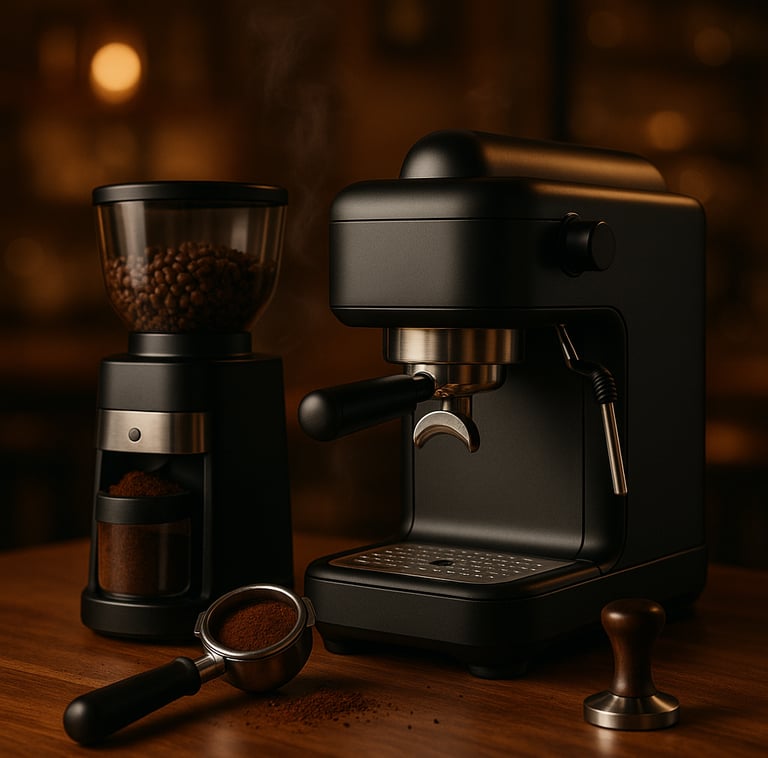
Interplay Between Grinder and Machine Parameters
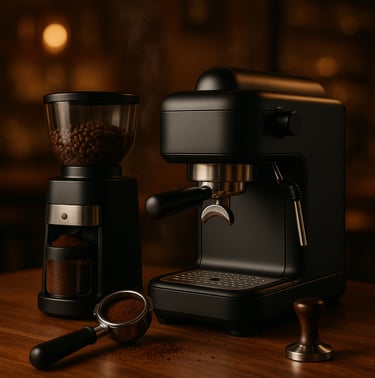
No single piece of gear exists in a vacuum, especially in espresso preparation. Changing the grinder impacts how the machine behaves during extraction, and vice versa. For example, a fine-tuned, consistent grinder enables the espresso machine’s temperature and pressure controls to work at their full potential because extraction begins from a stable foundation.
Conversely, an unstable machine environment forces the barista to compensate, often by adjusting grind size or dose, which can introduce new errors. In situations where a grinder produces inconsistent grinds, even the best espresso machine cannot fully salvage flavor clarity, forcing the user into a perpetual cycle of adjustment.
Building a harmonious system means recognizing that improving one component involves assessing if the rest of the setup can support it. Investment in a premium grinder without a machine capable of stable temperature control may yield diminishing returns. Similarly, a top-notch espresso machine paired with a budget grinder incapable of consistent particle size distribution sets limits on achievable flavor refinement.
This is also why grinder style matters more than many people realize, especially when comparing Flat Burr vs Conical Burr Grinders for Espresso in real-world home setups.
Common Equipment Mistakes That Affect Espresso Taste
Missteps in crafting a balanced coffee system often stem from overemphasizing one piece of equipment. A common mistake is over-investing in an espresso machine while neglecting grinder quality. Since grind size and consistency largely dictate extraction uniformity, a subpar grinder severely restricts the machine’s ability to produce quality espresso.
Ignoring crucial grinder adjustments or simply relying on a single grind setting irrespective of bean freshness is another frequent error. Espresso extraction requires ongoing fine-tuning tied to bean roast, origin, and age. Stubbornly fixed settings lead to worsening taste and obscure underlying issues.
Assuming all espresso machines guarantee perfect temperature and pressure control without periodic verification can also lead to disappointment. Machines require maintenance and calibration to retain their designed performance levels, and neglecting these routines deteriorates extraction parameters over time.
Failing to store beans properly diminishes freshness regardless of equipment and should be accounted for alongside gear choices. Lastly, underestimating the skill needed to dial in both grinder and machine intensifies frustration and inconsistent results, highlighting workflow and knowledge as crucial system components in their own right.
Buyer Considerations: Budget, Experience, and Use Case
When deciding which path to prioritize—the espresso machine or the grinder—context is everything. For those entering the home espresso world, investing first in a high-quality grinder often yields more immediate and pronounced improvements. This is because entry to mid-level machines generally have sufficient temperature stability for reasonable extractions, but poor grind consistency fundamentally limits shot quality.
Intermediate users who understand the impact of roast-specific grind size adjustments may benefit more from a machine upgrade focusing on temperature control, pressure profiling, and improved user workflow, especially if paired with an already competent grinder.
Daily workflow and maintenance ease matter as much as raw performance specs. A complex, feature-rich espresso machine may produce excellent results but slow down preparation and cleaning, reducing consistency in real-world conditions. Similarly, a grinder that requires constant burr replacement or complicated settings may discourage regular use or introduce variability.
Budget constraints also shape prioritization. High-end grinders tend to deliver more flavor gains within modest budgets than similarly priced espresso machines. For those limited in funds, focusing on grinder quality sets a solid foundation to build upon gradually. This is where categories like Best Espresso Grinders Under $300 and Best Espresso Grinders Under $600 become far more useful than chasing luxury machine features too early.
Real-World Examples of Home Espresso Setups
Consider a home barista upgrading from an all-in-one espresso machine to a separate grinder and machine setup. Initially, they might experience subtle variations caused by grind inconsistency and machine temperature swings. After switching to a precise burr grinder and refining grind size calibration, they notice marked improvements: espresso shots become sweeter, crema more stable, and extraction more balanced.
Conversely, upgrading to a dual boiler espresso machine without addressing the grinder may produce gains in shot temperature stability but still suffer from muddled flavor profiles due to uneven particle sizes. Users frequently report frustration here, revealing how the grinder-machine relationship directly shapes user experience.
Casual enthusiasts with simple daily routines may prioritize ease of use and maintenance, selecting user-friendly machines and consistent grinders that reduce preparation time and deliver reliable espresso without constant tweaking.
Experiments in flavor profiling further underscore system intricacy. A high-end grinder’s fine incremental adjustments paired with a machine capable of pressure profiling enable users to explore espresso’s complexity. These setups demonstrate that only when grinder precision and machine control align can baristas unlock refined flavor nuances. Comparisons like TIMEMORE Sculptor 064S vs Fellow Ode Gen 2 highlight how much grinder refinement changes workflow and clarity.
Upgrading Your Espresso Setup: Where to Start?
Improvement hinges on recognizing your current setup’s limiting factors. If grind consistency or freshness is questionable, directing funds towards a reliable grinder with stepless or precise stepped adjustments will recast extraction quality immediately.
If your current grinder performs well but your espresso machine’s temperature or pressure control is unstable, evaluating an upgrade to a dual boiler or digitally controlled machine may be appropriate. Yet do so only after ensuring your grinder can capitalize on improved parameters.
Workflow considerations should also guide decisions. If daily espresso preparation feels cumbersome or inconsistent, seek equipment options that harmonize with your habits and tolerate minor deviations without sacrificing quality.
Ultimately, investing in a system where grinder and machine complement each other, supported by refined workflow and maintenance routines, proves more effective than chasing features in isolation. That’s especially true for newer users still figuring out Beginner Espresso Setup: What You Actually Need before overspending on gear.
Common Mistakes
The most frequent errors in espresso system management revolve around imbalance and neglect. Over-investing in an espresso machine while neglecting grinder quality places unrealistic demands on equipment that can’t deliver uniform grounds, leading to flawed extractions.
Relying on static or inconsistent grind settings without re-evaluation ignores the dynamic nature of coffee beans and brewing conditions. This oversight directly causes extraction inconsistencies and poor espresso taste.
Assuming espresso machines inherently provide stable temperature and pressure without verification or upkeep is another pitfall. Over time, scale buildup, worn gaskets, or sensor drift degrade performance, making regular maintenance essential.
Neglecting proper bean storage alongside equipment choices results in stale coffee that no grinding finesse can rescue.
Underestimating the skill involved to fine-tune dose, tamp, grind, and machine parameters often slows progress and frustrates users, masking the importance of workflow and knowledge within the broader system.
FAQ
Which has a bigger effect on espresso taste, the machine or the grinder?
While both are critical, the grinder generally has a bigger initial impact on espresso taste because grind consistency and particle size uniformity directly influence how precisely flavors extract. However, without a stable machine environment, even a great grinder cannot fully reach its potential.
How does grind size affect espresso extraction?
Grind size controls water flow rate through coffee; finer grinds slow extraction increasing intensity, while coarser grinds speed up extraction reducing strength. Uniformity of particle size is equally important to avoid channeling and uneven flavor development.
What machine features improve espresso consistency?
Temperature stability within ±1°C, pressure profiling, dual boiler systems, and electronic controls all improve consistency. Equally important are user-friendly interfaces and maintenance accessibility to sustain optimal performance over time.
Can I get good espresso with a budget grinder and an expensive machine?
An expensive machine cannot compensate for a budget grinder’s inconsistent particle size. While some quality espresso may be achievable, lasting flavor clarity and consistent extraction require a grinder capable of precise, uniform grinding.
How often should I clean my grinder and espresso machine?
Regular daily cleaning of portafilter, group head, and grinding burr surfaces is recommended. Deep cleaning and descaling should be scheduled monthly or as needed based on usage to maintain equipment performance.
What is the ideal grind size range for espresso?
Espresso grind size is finely tuned but typically falls near a powdery consistency slightly coarser than flour. The exact setting adjusts with bean type and roast level to optimize extraction time, usually around 25–30 seconds per shot.
How do temperature fluctuations in the machine affect espresso?
Temperature instability causes inconsistencies in soluble compound extraction rates. Fluctuations can produce sour or bitter notes, as water is too hot or too cold to balance flavor extraction harmoniously.
What are common grinder mistakes that ruin espresso quality?
Using stale beans, not adjusting grind size for different coffees, failing to regularly clean burrs, and grinding inconsistently with worn or chipped burrs commonly degrade espresso quality.
Conclusion
Determining whether the espresso machine or the grinder matters more ultimately requires embracing the espresso setup as an evolving system rather than isolated components. Grind size consistency and freshness establish the foundation of extraction, while the machine’s temperature and pressure control refine and stabilize that process. Investing in one without considering the supporting requirements of the other limits improvements and creates workflow inefficiencies.
For most home enthusiasts, prioritizing a high-quality grinder yields clearer, more consistent espresso results sooner, especially within budget constraints. However, as skills and expectations advance, aligning machine performance and workflow with grinder capabilities becomes essential to unlocking espresso’s full complexity.
Understanding how these elements interact, compensate, and complement each other transforms the approach from chasing gear specifications to sculpting a balanced system. When each piece supports the others—grind size tailored to machine parameters, equipment maintained with consistent workflow—espresso preparation becomes not only more reliable but richly rewarding.
Contact@TheBuzzHQ.com
© 2026 Coffee Tech Buzz. All rights reserved.
Coffee Tech Buzz
Smarter brewing through better gear, clearer insights, and real-world performance testing.
Built for home users who want consistency without guesswork.
We focus on how machines actually perform — not just what they claim.
Home
Coffee Equipment Guide
Coffee Makers & Machines
Coffee Grinders
Espresso Gear & Guides
Coffee Beans & Roasts
Coffee Accessories & Tools
For educational purposes only.
We may earn commissions from qualifying purchases.
General Inquiries: