

How Coffee Makers Work
Discover how coffee makers work by exploring their systems, components, and workflows for consistent, flavorful brewing at home.
COFFEE MAKERS
The Coffee Tech Buzz Editorial Team - Led by AJ “Buzz” Eichman
3/31/20267 min read
Coffee makers stand as sophisticated assemblies of components and processes designed to transform raw coffee grounds and water into a flavorful cup of coffee. To truly grasp how coffee makers work, it’s essential to step back from evaluating individual parts and instead consider how those parts operate within the broader coffee brewing system.
Each coffee maker type—from drip machines to espresso setups—relies on a carefully balanced interaction between components such as water reservoirs, heating elements, filters, and brewing chambers. This balance governs water flow, temperature control, and extraction consistency, all of which shape the final cup.
By examining the overall system rather than isolated features, we gain better insight into how to optimize brewing performance and achieve dependable results at home. This is exactly why understanding the full system matters when exploring Coffee Makers & Machines.
Quick Verdict
Coffee makers function as integrated systems where water flow, heat, and ground coffee interaction must align precisely for consistent extraction.
Different types of coffee makers employ distinct mechanisms that affect workflow, timing, and grind size requirements.
Recognizing how components influence one another helps to identify and solve brewing inconsistencies more effectively than focusing on single parts.
Routine maintenance and understanding your system’s workflow improve not just the machine’s longevity but the quality and flavor of every cup.
Overview of Coffee Maker Components
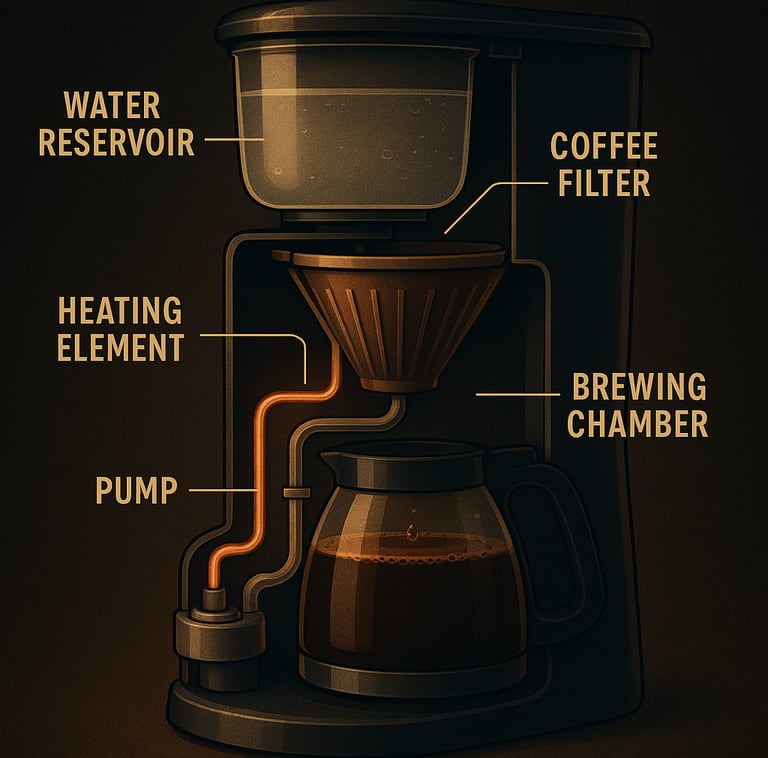
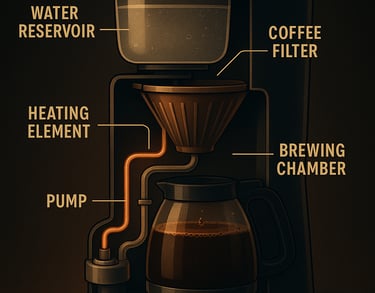
Any coffee maker, regardless of style, comprises several fundamental components that collaboratively orchestrate brewing. Central to this system is the water reservoir, where water waits before entering the machine.
The heating element then raises this water to the target temperature, typically between 195°F and 205°F, which is critical for extracting balanced flavors without bitterness or sourness. From there, water moves through a network—often tubing or channels—into the brewing chamber, where it meets ground coffee held in some form of filter.
Filters vary widely in design and material: paper filters trap fines and oils, creating a cleaner cup; metal filters allow more oils through, enriching body but potentially leaving sediment; cloth filters strike a balance but require extra care.
Each choice reflects trade-offs that ripple through the system; a change in filter material may demand adjustments in grind size or brewing time to maintain flavor balance. The brewing chamber itself also functions within this system, holding the grounds and regulating contact time between water and coffee solids—this interaction heavily influences extraction.
The Coffee Brewing Process Explained
At its core, coffee brewing is an extraction process where hot water dissolves soluble compounds from ground coffee. This extraction depends not just on component presence but on their dynamic relationships: temperature, flow rate, grind size, and contact time weave together into a precise choreography.
When water is too cool or the contact time too short, the coffee tastes weak and underdeveloped; conversely, excessive temperature or long brewing yields bitterness or astringency.
Water temperature control is often the keystone variable. Without stable heat, extraction becomes uneven as the coffee grounds are inconsistently brewed, making the system compensate with longer contact time or more aggressive flow, which introduces new challenges.
Similarly, the grind size must match the coffee maker’s mechanics. Espresso machines require an extremely fine grind to create the pressure needed for rapid extraction within about 20–30 seconds. Drip coffee makers utilize medium grind for balanced flow and extraction time, around 4–6 minutes, while immersion brewers like French presses use coarse grounds to slow extraction over several minutes.
Crucially, these variables don’t exist independently. Changing one affects the workflow of the entire system. For example, adjusting grind size necessitates tweaking water temperature or brew duration, or the outcome will degrade. This interplay defines why understanding coffee as a system rather than isolated elements provides a clearer path to consistency—something that becomes even more important when deciding How to Choose a Coffee Maker.
Types of Coffee Makers and Their Workflows
Coffee makers come in many forms, each tailoring their component interactions and brewing workflow to distinct performance goals and flavor profiles.
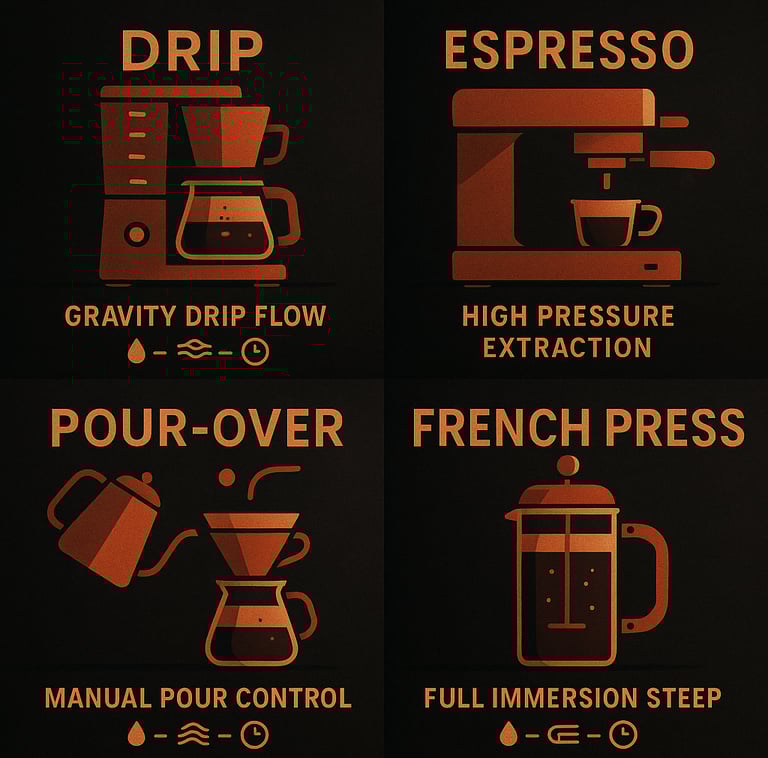
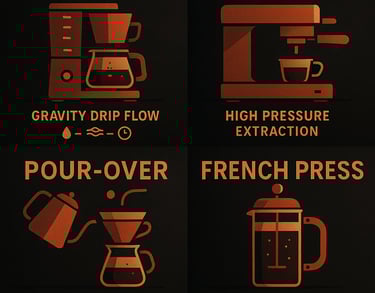
The drip coffee maker is among the most common household systems, operating by dripping hot water over medium-ground coffee held in a paper or metal filter. The water’s controlled flow and temperature rely on well-engineered heating elements and flow restrictors, shaping a workflow that favors ease and repeatability.
Espresso machines present another system archetype, emphasizing precision and speed. They use a pump to force nearly boiling water through very finely ground coffee under high pressure, requiring finely tuned coordination of grind size, tamping, temperature, and extraction time.
Manual brewers such as pour-over setups grant users granular control over water flow and saturation, manually adjusting pour rate and pattern to optimize extraction.
French press systems operate differently, offering full immersion by steeping coarse coffee in hot water, then separating grounds by plunging a mesh filter.
Across these types, the workflows differ surprisingly in how each system controls water contact and movement, shaping how components interact and how consistent results emerge. For a deeper breakdown of these systems, see Types of Coffee Makers Explained.
Key Brewing Variables and Their Impact
Drilling down into the pillars of coffee brewing, water temperature, grind size, contact time, and water-to-coffee ratio form the nucleus around which the system revolves. Each interacts with others, reinforcing how a change in one demands adjustments elsewhere.
Water temperature must not only reach the ideal range but be stable and accurate. Fluctuating temperatures reduce extraction consistency, and the choice of materials (e.g., stainless steel versus plastic) in reservoirs and heating chambers influences heat retention.
Grind size, too, is a system consideration. If your device uses a metal filter with higher permeability, a coarser grind may help reduce over-extraction. Conversely, paper filters might call for a medium grind to prevent rapid water passage.
Contact time, or how long water remains in contact with grounds, is intimately connected to water flow and grind size.
Lastly, water-to-coffee ratio dictates the final strength and flavor concentration. Even the best machine and grind cannot compensate for poor dosing.
Understanding these variables as interconnected allows us to pinpoint where inconsistencies originate and how to systematically address them—especially when evaluating What Coffee Maker Makes the Best Coffee for your specific setup.
Common Mistakes in Using Coffee Makers
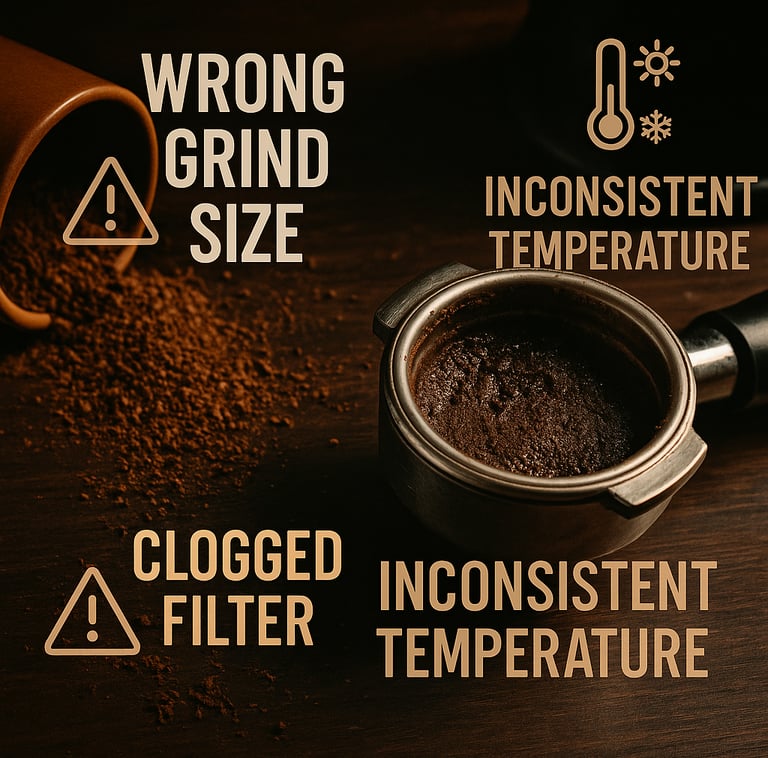
Most brewing inconsistencies trace back not to a single piece of gear but to system imbalances emerging from small, compounding errors across several factors.
One frequent mistake is mismatching grind size to coffee maker type—for example, using a fine grind in a drip machine, which accelerates extraction and produces bitterness, or too coarse a grind in an espresso, yielding weak coffee.
Neglecting regular cleaning impairs performance by clogging filters or reducing heating efficiency, introducing variables that interfere with temperature and flow control.
Water temperature control is another commonly overlooked element.
Assuming one workflow fits all coffee makers is a systemic error as well.
Material choices also matter more than often realized. Plastic reservoirs or heating chambers absorb and lose heat differently than stainless steel or glass, which affects thermal stability and extraction quality.
Maintenance and Care for Consistency
Consistency in coffee brewing is sustained through mindful maintenance embedded into daily or weekly routines.
Cleaning components like filters, water reservoirs, and heating elements prevents mineral buildup and residue accumulation that impair temperature control and water flow paths.
The lifespan and performance of coffee makers also hinge on maintenance practices tailored to the system’s materials and design.
Attention to workflow ease and cleaning also encourages consistent use patterns.
Incorporating preventive maintenance within your coffee brewing system ensures that components continue to function in harmony, reducing friction points that degrade results over time.
Choosing the Right Coffee Maker for Your Needs
Selecting a coffee maker is less about chasing standout features and more about aligning a system to your workflow, taste preferences, and maintenance willingness.
Consider how the type of coffee maker dictates the workflow you’ll adopt daily.
Budget and experience level also shape the suitable system.
Material considerations—like opting for stainless steel over plastic components—influence thermal stability and durability.
If you're ready to move from theory into real-world options, start with Best Coffee Makers for Home Use or explore budget-friendly options like Best Coffee Makers Under $200.
Frequently Asked Questions
How do different coffee makers control brewing temperature?
Coffee makers employ various heating elements such as simple coils, thermostats, or sophisticated PID controls to maintain target water temperature. Espresso machines often have more precise temperature regulation due to pressure and extraction timing dependencies, while drip makers focus on stable heating to achieve the optimal 195-205°F range.
What is the ideal grind size for various coffee makers?
Grind size aligns with brewing method: espresso requires very fine grounds for rapid pressure extraction, drip machines use a medium grind to balance flow and contact time, and French press demands coarse grounds to accommodate longer immersion without over-extracting.
How important is water-to-coffee ratio in home brewing?
The water-to-coffee ratio determines brew strength and extraction efficiency. Precise dosing is essential because it influences saturation and solute concentration. Incorrect ratios skew flavor balance regardless of machine quality.
What components affect the speed and consistency of brewing?
Heating elements, water flow mechanisms (pumps or gravity-fed), filters, and the brewing chamber design all impact brewing speed and extraction uniformity.
How often should I clean my coffee maker and its parts?
Cleaning frequency depends on usage and water type but generally involves daily rinsing of removable parts and more thorough weekly cleaning.
What are the main differences between drip and espresso coffee makers?
Drip coffee makers utilize gravity to slowly pass hot water through medium grounds over several minutes, while espresso machines employ pressure to rapidly extract flavor from fine grounds in under a minute.
Can I use the same coffee beans and grind for all types of coffee makers?
Using the same beans is possible, but grind size and sometimes roast profile should be tailored to the coffee maker.
What features should I consider when buying a coffee maker for home use?
Prioritize consistency-supporting features like temperature stability, ease of cleaning, and compatibility with your preferred workflow.
Practical Conclusion
Understanding how coffee makers work demands treating them as interconnected systems where components, workflows, and variables operate in tandem.
Rather than hunting for single-piece upgrades or flashy features, adopting a systems mindset reveals how meaningful improvements emerge from aligning grind size, temperature control, water flow, and maintenance.
Coffee brewing is more than just a device; it is a process ecosystem where balance and harmony dictate the quality and consistency of every cup.
By refining these relationships and streamlining your workflow, you build a resilient home coffee system that delivers satisfying results day after day.
Contact@TheBuzzHQ.com
© 2026 Coffee Tech Buzz. All rights reserved.
Coffee Tech Buzz
Smarter brewing through better gear, clearer insights, and real-world performance testing.
Built for home users who want consistency without guesswork.
We focus on how machines actually perform — not just what they claim.
Home
Coffee Equipment Guide
Coffee Makers & Machines
Coffee Grinders
Espresso Gear & Guides
Coffee Beans & Roasts
Coffee Accessories & Tools
For educational purposes only.
We may earn commissions from qualifying purchases.
General Inquiries: