
Best Grind Size for Pour Over: Dialing It In for Perfect Coffee
Discover the best grind size for pour over coffee and learn how to dial it in for optimal extraction, flavor, and consistency.
COFFEE GRINDERS
The Coffee Tech Buzz Editorial Team - Led by AJ “Buzz” Eichman
4/4/20267 min read
The process of brewing pour over coffee hinges on control—precisely controlling variables to extract the best flavors consistently. Among those variables, grind size is one that exerts a disproportionate influence on the final cup. The best grind size for pour over is not fixed but rather specific to your equipment, beans, and brewing parameters. Dialing it in thoughtfully means adjusting grind size incrementally to optimize extraction time, flavor clarity, and strength, all while maintaining repeatability. Without careful attention to grind size, even the most meticulous pour over routine risks producing a cup that is either dull and under-extracted or bitter and harsh.
If you want to understand how grind consistency starts at the equipment level, Coffee Grinders breaks down how grinder performance affects extraction from the beginning.
Quick Verdict
Start with a medium-coarse grind, roughly the texture of kosher salt, as a baseline for pour over brewing.
Use a burr grinder to achieve a uniform grind; inconsistent particle sizes undermine extraction control.
Adjust grind size in small increments and observe changes in brew time and taste to dial in your ideal setting.
Target an extraction time between 2.5 and 4 minutes for balanced flavor profiles in pour over.
Record your grind setting alongside pouring technique and water temperature for reproducible results.
What Is Grind Size and Why It Matters for Pour Over
Grind size refers to the average particle dimensions of coffee grounds after grinding. It acts as a gatekeeper regulating water flow and extraction rate during brewing. In pour over coffee, water passes through a bed of grounds, extracting soluble compounds as it flows. A finer grind increases surface area and resistance to water flow, slowing extraction and often accentuating acidity and bitterness. Coarser grinds allow faster water passage, risking under-extraction, which manifests as weak, sour, or flat flavors.
This dynamic means grind size affects extraction time, flavor balance, and cup clarity. Unlike espresso, where fine consistency is critical at very small scales, pour over tolerates a broader but still precise range. For most standard pour over devices, a medium-coarse grind delivers a good starting balance. However, ""medium-coarse"" alone is not definitive; factors such as bean density, roast level, brewing ratio, and water temperature all subtly shift the ideal grind size. This interdependence is precisely why dialling in grind size is more process than guesswork.
If you’re seeing flavor imbalance, How Grind Size Affects Taste helps connect grind size directly to cup clarity and balance.
How to Dial In Your Grind Size: Step-by-Step
Dialing in grind size for pour over is an iterative process rooted in observation and measured adjustments. Begin with a medium-coarse grind setting on a consistent burr grinder. Brew using your standard recipe and time the extraction from first pour to final drip. The target window commonly falls between 2.5 and 4 minutes, but your specific pour over cone and coffee variables may require slight adjustments.
Taste the coffee and evaluate extraction characteristics:
If the coffee tastes weak, overly sour, or insipid, your grind is likely too coarse. A coarser grind speeds water flow, reducing contact time and limiting solubles extracted.
If the coffee is harsh, bitter, or astringent, the grind is probably too fine. Finer particles increase resistance, prolong brew time and pull more bitter compounds prematurely.
Make a small grind size change—often just one or two notches on your burr grinder—then brew and taste again. Avoid changing multiple variables simultaneously; focus solely on grind size to isolate its effects. Repeat this cycle until extraction time falls within the ideal range and flavor demonstrates balanced sweetness, acidity, and bitterness.
Consistency in water temperature (generally between 195°F and 205°F) and pouring technique supports the repeatability of results and must remain constant during this dialing-in phase. Record each setting, extraction time, and tasting note in a brewing journal. This data forms the baseline for reproducing your best cup consistently.
If you want a more structured approach to this process, How to Dial in Grind Size walks through calibration step-by-step.
Tools for Consistent Grinding: Burr vs Blade Grinders
Uniform particle size distribution is fundamental to controlling extraction. Burr grinders excise coffee beans between two abrasive surfaces, producing relatively consistent particles. This uniformity ensures predictable water flow and extraction rates, indispensable for fine tuning grind size in pour over brewing.
In contrast, blade grinders chop beans erratically. The resulting uneven grind ranges from coarse chunks to powdery fines, which causes channeling, uneven extraction, and unpredictable flavors. This inconsistency is a primary reason blade grinders are ill-suited for pour over coffee aimed at clarity and balance.
Selecting a burr grinder appropriate to your budget and grinding volume does not necessarily mean purchasing the most expensive model, but rather a machine with stable adjustment mechanisms and consistent results. Conical burr grinders often provide a good combination of performance and value for home brewers.
If you're deciding between grinder styles, Manual vs Electric Coffee Grinders helps clarify workflow and control differences.
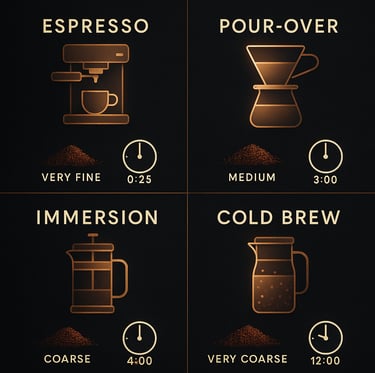
Impact of Grind Size on Extraction Time and Flavor
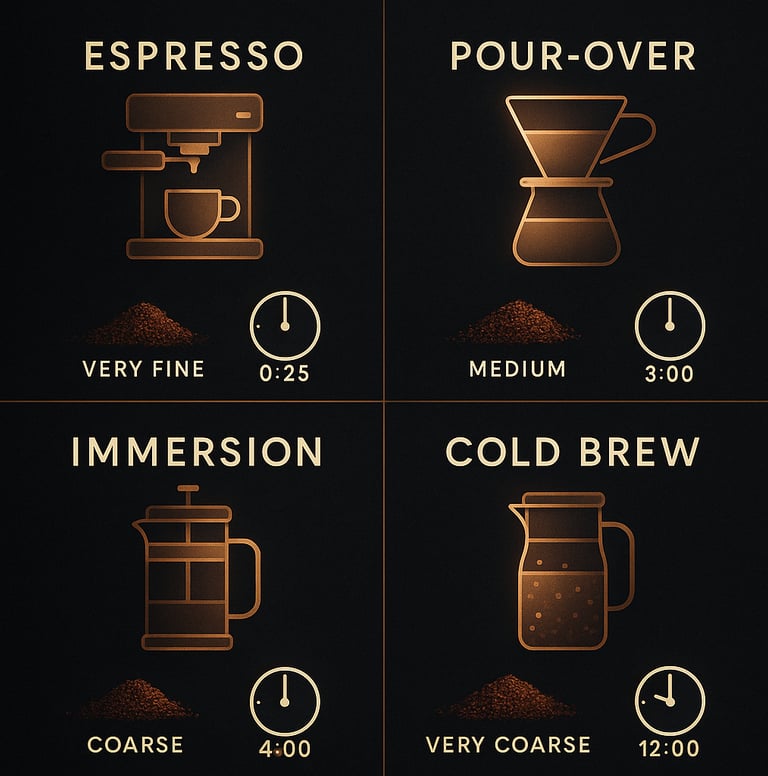
Extraction time and flavor intensity are tightly coupled with grind size because it governs the rate at which water permeates coffee grounds. Coarser grinds have larger particle sizes resulting in less surface area, so water passes through more quickly. This short contact time tends to pull fewer soluble compounds from the coffee, leading to under-extracted cups that feel thin, sour, or lacking sweetness.
Conversely, finer grinds increase effective surface area and create greater resistance. Water slows, extending contact with coffee solids. This allows for a more thorough extraction, often highlighting sweetness and acidity if balanced. However, going too fine risks over-extraction, which extracts excessive bitter and astringent compounds, disrupting balance and clarity.
If you want to compare these extremes directly, Fine vs Coarse Grind Coffee breaks down how grind size shifts extraction outcomes.
Common Mistakes When Adjusting Grind Size
Several pitfalls undermine efforts to dial in grind size for pour over. A frequent misstep is changing multiple variables simultaneously—such as grind size and water temperature—making it difficult to discern which adjustment drives flavor shifts. Focus on grind size first while holding other parameters stable.
Relying on blade grinders leads to uneven particle size distribution, which can give inconsistent brew times and flavor volatility. Home brewers targeting reproducible, balanced cups should opt for burr grinders.
Grinding excessively fine without considering brewing equipment resistance may cause clogging and extended brew times, prompting bitterness. On the other hand, grinding too coarse speeds flow excessively, resulting in thin and sour coffee.
Failing to record grind settings and extraction times prevents building a consistent routine. Because environmental factors such as humidity alter coffee absorption, periodic recalibration by revisiting grind size is necessary.
Tips for Maintaining Grind Consistency in Daily Brewing
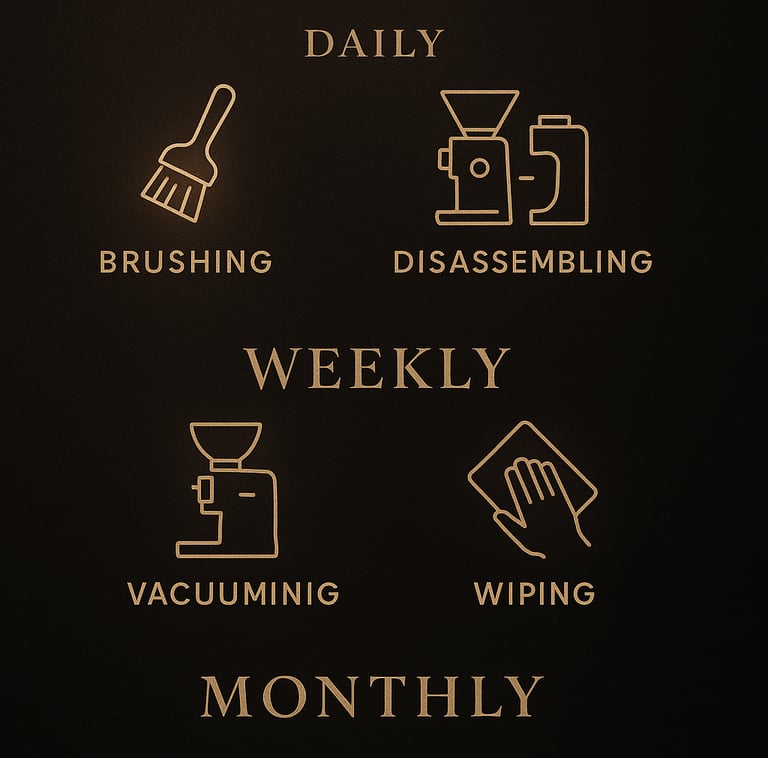
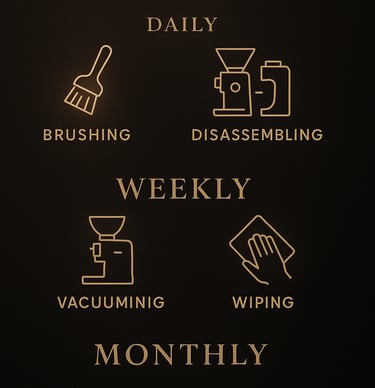
Once dialed in, maintaining consistent grind size is essential for repeatable pour over results. Ensure your burr grinder is clean and well-maintained; coffee oils and residue buildup can clog burrs affecting particle size distribution over time. Calibrate your grinder regularly by verifying settings and making minor adjustments as beans and conditions change.
Use a scale and timer each brew to measure coffee dose and extraction time reliably. Consistency in dose prevents variability in extraction independent of grind size. Similarly, keep water temperature steady, as it interacts subtly with grind size to shape extraction.
When changing beans or roast levels, expect some differences in ideal grind size due to bean density and solubility. Re-run the dial-in process rather than assuming prior grind settings apply universally.
Recording and comparing your brew logs across multiple sessions provides insight into how small adjustments affect the cup and further refines your brewing precision.
If you’re upgrading for better consistency, Best Coffee Grinders for Pour Over highlights grinders that maintain stable grind size in this range.
FAQs About Grind Size for Pour Over Coffee
What is the best grind size for pour over coffee?
A medium-coarse grind, similar to kosher salt, serves as the best initial setting. From there, dial in finer or coarser based on extraction time (2.5–4 minutes) and flavor balance.
How do I know if my grind size is too fine or too coarse for pour over?
If brew time is excessively long and the coffee tastes bitter or harsh, the grind is too fine. If brew time is too short and the coffee tastes weak, sour, or underdeveloped, it is too coarse.
Why does grind size affect my brew time and flavor?
Grind size alters water flow rate through coffee grounds by changing surface area and resistance. This controls contact time, affecting solubles extracted and thus flavor profile.
Can I use a blade grinder for pour over coffee?
Blade grinders produce unevenly sized particles, leading to inconsistent extraction and flavor. A burr grinder is recommended for precise, uniform grind size necessary for pour over.
How often should I adjust grind size when dialing in?
Make small, incremental adjustments between brew sessions and focus on one variable at a time. Adjust only when extraction time or flavor profile indicates under or over-extraction.
What is the relationship between grind size and coffee extraction?
Finer grind size increases surface area and resistance, slowing water flow and raising extraction. Coarser grind reduces surface area, speeding water flow and lowering extraction.
How does water temperature interact with grind size in pour over?
Higher water temperatures extract solubles faster, which may require a coarser grind to prevent over-extraction. Lower temperatures might need a finer grind to compensate for slower extraction.
Is there a standard grind size setting for different pour over brewers?
Settings vary by brewer geometry and flow rate, but medium-coarse is a common starting baseline. Dialing in is necessary for each device to achieve precise control.
Summary and Final Recommendations
Pour over coffee is, fundamentally, a process of controlled extraction. Grind size is among the few adjustable variables that decisively shape extraction time and flavor clarity. Starting with a medium-coarse grind and refining it through incremental adjustments, informed by timed brews and sensory evaluation, is the proven path to repeatable, balanced coffee.
Employing a quality burr grinder to achieve consistent particle size distribution removes a significant source of unpredictability. Coupling grind control with meticulous pouring technique, stable water temperature, and detailed brew recordings ensures high repeatability.
Resist the temptation to make simultaneous changes or chase “one-size-fits-all” grind settings. Instead, treat your grind size calibration as a meticulous calibration process tailored to your beans, equipment, and preferences. Over time, this precision will build into a reliable routine that consistently delivers the flavors and clarity pour over coffee is capable of producing.
For those refining their coffee workflow further, exploring grinder performance differences in Do Expensive Coffee Grinders Make a Difference helps frame when upgrading actually matters.
Contact@TheBuzzHQ.com
© 2026 Coffee Tech Buzz. All rights reserved.
Coffee Tech Buzz
Smarter brewing through better gear, clearer insights, and real-world performance testing.
Built for home users who want consistency without guesswork.
We focus on how machines actually perform — not just what they claim.
Home
Coffee Equipment Guide
Coffee Makers & Machines
Coffee Grinders
Espresso Gear & Guides
Coffee Beans & Roasts
Coffee Accessories & Tools
For educational purposes only.
We may earn commissions from qualifying purchases.
General Inquiries: