
Compact Espresso Machines for Small Spaces
Explore top compact espresso machines that fit small kitchens without compromising quality or ease of use for your daily coffee routine.
COFFEE MAKERSESPRESSO
The Coffee Tech Buzz Editorial Team - Led by AJ “Buzz” Eichman
5/7/20267 min read
Finding the right espresso machine for a small kitchen isn’t just about squeezing another gadget onto your counter. It’s about balancing space with reliability – a setup that fits your daily rhythm without turning your brew into a chore. This year’s crop of compact espresso machines keeps that balance in mind, offering solid espresso performance without hogging precious room. Whether you’re tight on counter space or just want a machine that feels at home in a cozy nook, these options deliver consistent results day in and day out, especially if you’re building your first setup with help from Best Espresso Setup for Beginners.
Quick Verdict
• Compact espresso machines deliver respectable espresso quality while freeing up counter space.
• User-friendly designs mean less fuss and more repeatable shots.
• Semi-automatic and automatic models bridge the gap between control and convenience.
• Build quality and thermal stability still make a difference in this category — smaller doesn’t mean second best.
Why Choose a Compact Espresso Machine?
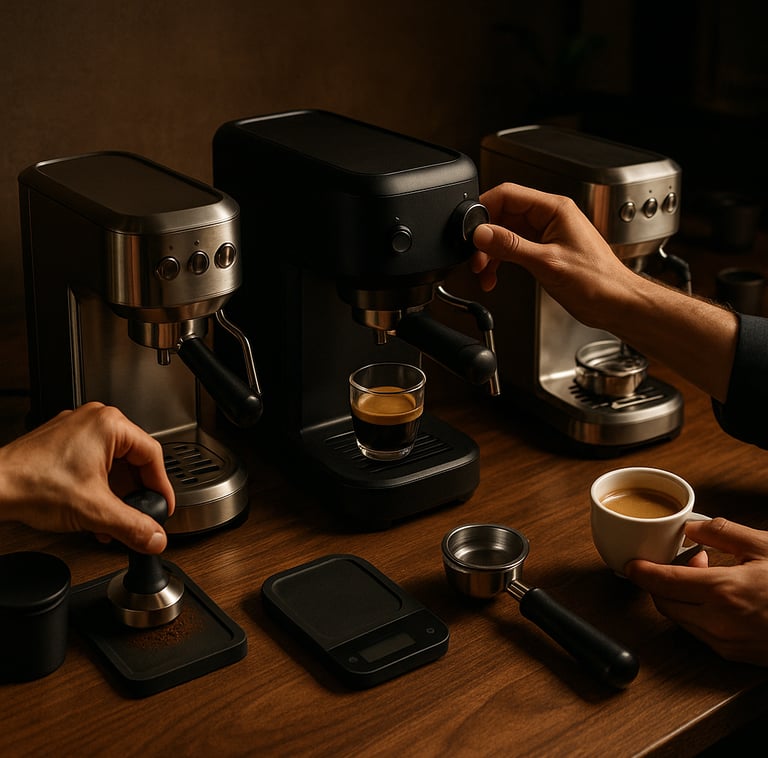
Small kitchens or limited counter real estate often force us to make compromises. But a good compact espresso machine avoids compromising on the essentials. Over time, I’ve noticed that smaller doesn’t have to mean inferior. What matters is that the machine fits neatly into your space and your routine so you reach for it every morning.
Most people don’t need a sprawling setup with a separate grinder, multi-boiler system, and endless dial adjustments. Compact espresso machines are designed to strip down the process to what genuinely contributes to a decent cup. They’re about smooth integration into everyday use rather than a grand barista experiment. Simplicity and reliability often outscore bells and whistles in the long run, especially for people comparing the different Types of Espresso Machines Explained before buying.
Key Features to Look for in Compact Espresso Machines
A smaller footprint is the obvious starting point, but it’s just one piece of the puzzle. In daily practice, these features matter more:
Thermal Stability and Boiler Type
Smaller machines usually feature a thermoblock or small boiler. Expect faster warm-up times but be mindful of temperature fluctuations. A machine that nails heat stability will save you from frustrating taste inconsistencies. Opt for models with good temperature control over those just focused on size reduction.
Pressure Consistency
Aim for a machine that reliably hits around 9 bars of pump pressure. This standard is crucial for extracting the right flavors without bitterness or sourness. Even compact machines can maintain good pressure, but some cheaper models fall short.
Ease of Use and Workflow
Look for straightforward controls and a workflow that suits your pace. Whether that means programmable shot volumes or a simple lever, your daily routine should feel natural. Semi-automatic machines often hit a sweet spot between control and convenience for most users and are commonly featured in Best Espresso Machines for Beginners.
Grinding and Bean Preparation
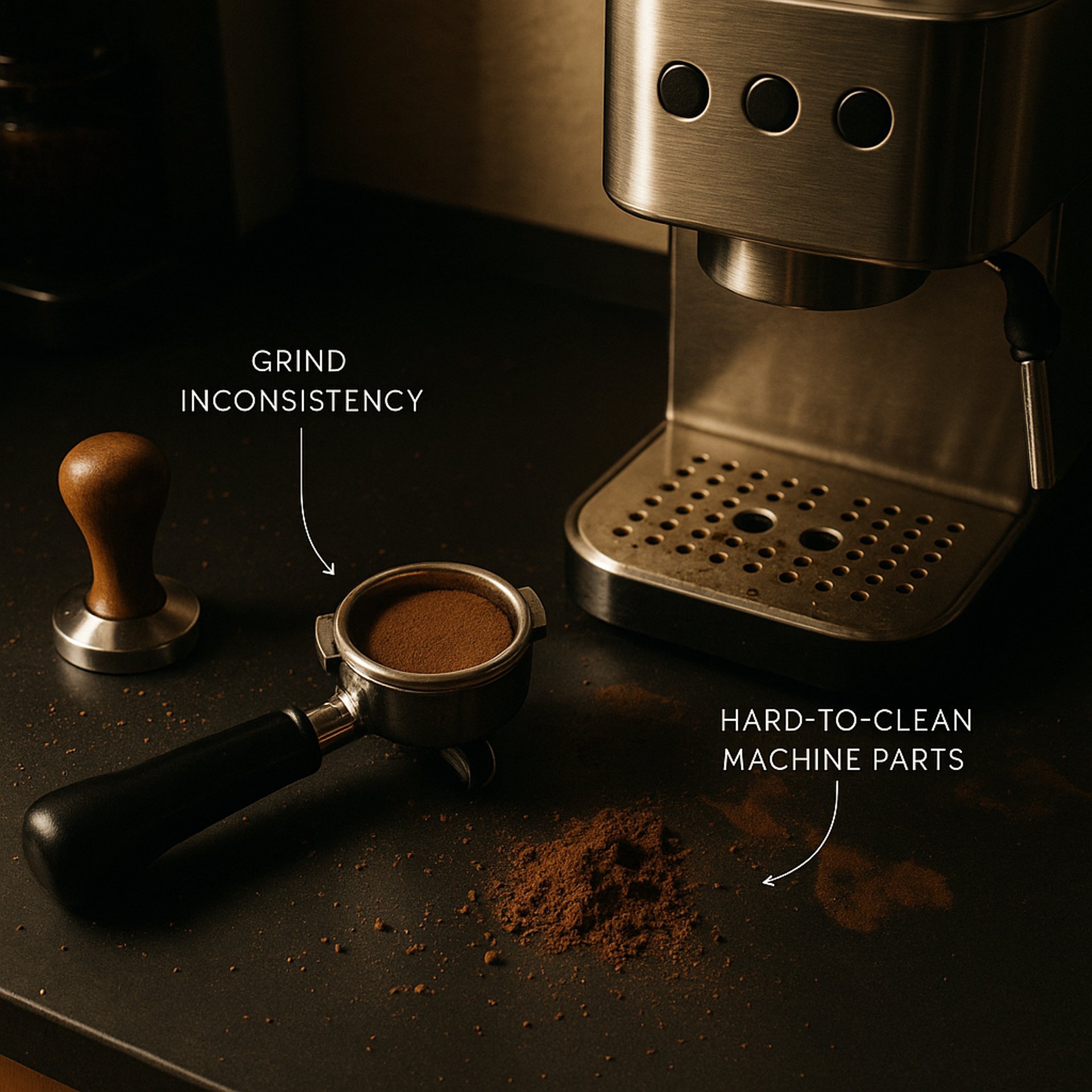
Grinding consistency is as important as the machine’s capabilities. If your compact espresso machine kicks in with an integrated grinder, make sure it handles the job well, or be prepared to invest in a separate grinder. Poor grind size control is often the weak link that ruins an otherwise good machine’s output, which is also why Why Espresso Tastes Bitter usually has more to do with extraction and grind quality than the machine itself.
Durability and Materials
While some compact models rely on plastics to keep size and cost down, stainless steel or aluminum builds tend to hold up better over time. If you want a machine that feels solid and can handle everyday use without hiccups, pay attention to the materials.
Portability vs. Countertop Stability
Portable compact espresso machines are convenient for travel or occasional use but usually sacrifice some performance compared to countertop models. If daily home espresso is your goal, prioritize machines designed for kitchen counters rather than mobile options.
Top Compact Espresso Machines of 2026 Compared
Even among compact machines, there’s a variety of approaches — from barebones devices to those with semi-automatic features. Here’s a snapshot of what works in small spaces this year.
Breville Bambino Plus
This one nails the blend of size and consistent performance. It’s not tiny, but it’s compact enough to fit most kitchens without struggle. The Bambino Plus heats up fast thanks to its thermocoil boiler and controls temperature well. It also simplifies milk steaming with an automatic steam wand, making it a favorite among daily drinkers who want convenience without giving up quality. It also performs well in comparisons like Breville Bambino vs Gaggia Carezza De Luxe Espresso.
DeLonghi Dedica Deluxe
A slim-profile machine with a small footprint, the Dedica Deluxe hits around 15 inches wide and fits snugly in narrow spaces. It’s straightforward, with enough manual control to dial in shots, but nothing overwhelming. Heat-up times are respectable, and it’s known for reliable pressure consistency. The price is also more approachable, which appeals if you want solid performance on a budget.
Rancilio Silvia Pro X
While not the smallest, the Silvia Pro X counts as compact compared to traditional full-sized machines. It is built tougher and is favored by those who want more control without jumping into commercial-sized gear. If your space allows, its temperature stability and dual boiler system make it stand out for espresso quality.
Flair Espresso Portable
For those leaning into portability, the Flair offers manual control in a fully hand-powered package. It can deliver surprisingly good espresso in a tiny footprint and travels well. The trade-off: you’ll put in more effort and attention to get consistent shots. It’s an option for someone who enjoys the ritual and needs an ultra-compact travel or secondary machine.
Wacaco Nanopresso
Another portability candidate, the Nanopresso lets you pull espresso shots almost anywhere. It’s simple, lightweight, and easy to clean. This suits minimalists or travelers who want espresso on the go, but it won’t replace a countertop machine for daily use due to the manual pump and smaller water reservoir.
Performance and Usability in Small Spaces
What I’ve learned from real-world experience is the daily grind isn’t about chasing the perfect shot — it’s about hitting a reliable groove. Compact espresso machines often get overlooked because of their size, but many are engineered to maintain solid performance with fewer variables to manage.
The fewer moving parts and simpler workflows often mean less going wrong. If your setup is too complex, you’ll reach for it less. On the other hand, some compact machines prioritize manual input, which is great for enthusiasts but might not fit everyone’s mornings. The key is matching the machine’s style to how you like to brew, which is something covered further in What Makes a Good Espresso Machine?
Cleaning and maintenance take a backseat in too many discussions but play a huge role in actual use. Compact machines that are easy to disassemble and clean naturally hold up better over time. If ease of maintenance fits your routine, you’re more likely to keep the machine in good shape and the espresso tasting fresh.
Maintenance and Longevity Considerations
Compact espresso machines handle smaller volumes, so boiler wear is usually less intense than commercial machines. Still, regular descaling and cleaning keep things running smoothly. Pay attention to water quality—using filtered water helps prevent scale build-up and reduces maintenance headaches.
The average lifespan for these machines can range from 3 to 7 years depending on build quality and care. Machines with metal boilers and higher-end components usually last longer, but daily use and how well you maintain the machine weigh heavily.
Replacing small gaskets or seals occasionally and following the cleaning schedule your machine recommends goes a long way. Don’t let surface-level convenience steer you away from models designed for straightforward upkeep.
Common Mistakes When Choosing Compact Espresso Machines
Assuming a smaller machine can’t make good espresso is misleading. Many models punch well above their weight. The real risk is selecting something that doesn’t align with your grind control or maintenance habits, which leads to disappointment.
Neglecting grind size consistency is another pitfall. Even the best compact machine won’t shine with an inconsistent grind. If your machine lacks a built-in grinder or adjustable settings, plan accordingly, especially if you’re still learning How Espresso Machines Work and dialing in extraction.
Overlooking the ease of cleaning and daily maintenance can mean buildup and poor performance before you know it. Compact machines with complicated disassembly or hard-to-reach parts get ignored quickly.
Ignoring your routine and space constraints — sometimes people pick compact machines that barely fit or don’t mesh with their morning flow. If it’s not a seamless fit, it ends up unused.
FAQ
What is the best compact espresso machine for a small kitchen?
Machines like the Breville Bambino Plus and DeLonghi Dedica Deluxe balance size and performance well for most small kitchens. Your decision comes down to available counter space and how much control you want over brewing.
How do compact espresso machines differ from full-sized models in performance?
Compact machines often use smaller boilers or thermoblocks, meaning faster heat-up times but sometimes less temperature stability. While they rarely match commercial setups, many deliver great espresso for home use without taking over your space.
Are portable espresso machines as good as counter-top models?
Portable machines like Flair Espresso or Wacaco Nanopresso are great for travel or small spaces but usually require more manual effort and don’t offer the consistent pressure or thermal stability of countertop models. They serve a different purpose more than replacing dedicated home machines.
What maintenance is required for compact espresso machines?
Regular descaling, cleaning brew groups and steam wands, and using filtered water extend machine life. Some machines have user-friendly cleaning cycles; others require manual care. Check your model’s instructions and keep up with maintenance to avoid performance issues.
Do compact espresso machines support adjustable grind settings?
Most compact espresso machines don’t have built-in grinders with adjustable settings. For best results, pairing with a separate grinder that allows precise adjustments is recommended. Some all-in-one compact machines exist but are less common and may have trade-offs.
What’s the average lifespan of a compact espresso machine?
A well-maintained compact espresso machine can last anywhere from 3 to 7 years. Build quality and how frequently you use and clean the machine impact longevity.
Which compact espresso machines are best for beginners?
Semi-automatic machines with simple controls like the DeLonghi Dedica Deluxe or Breville Bambino Plus tend to be beginner-friendly without overwhelming choices. They handle the basics well and allow room to learn without frustration, which is why they frequently appear in Best Espresso Machines Under $1000 and other beginner-focused recommendations.
How important is water quality for compact espresso machines?
Water quality is critical. Hard water causes scale buildup impacting heating elements and flavor, while filtered or softened water helps maintain machine health and espresso taste.
Practical Conclusion
In the end, the best compact espresso machine is the one that fits cleanly into your space and daily routine. Over time, simpler setups tend to stick. You don’t need top-tier tweaking options, but you do want a machine that consistently delivers a shot you’re happy with without extra hassle. Prioritize reliability over features you rarely use, and consider how much time and effort you want to put into grind control and maintenance. Do Expensive Espresso Machines Actually Make Better Coffee? usually comes down to consistency and workflow more than price tags alone.
The compact category is filled with machines that respect your space while honoring the essential mechanics of espresso brewing. Whether you pick a slim semi-automatic or a travel-friendly manual, the key is using it often enough to form a steady groove. That’s what truly elevates your daily espresso game.
Contact@TheBuzzHQ.com
© 2026 Coffee Tech Buzz. All rights reserved.
Coffee Tech Buzz
Smarter brewing through better gear, clearer insights, and real-world performance testing.
Built for home users who want consistency without guesswork.
We focus on how machines actually perform — not just what they claim.
Home
Coffee Equipment Guide
Coffee Makers & Machines
Coffee Grinders
Espresso Gear & Guides
Coffee Beans & Roasts
Coffee Accessories & Tools
For educational purposes only.
We may earn commissions from qualifying purchases.
General Inquiries: