
How Long Should a Coffee Grinder Last?
Discover how the coffee grinder lifespan varies by type, use, and maintenance to keep your morning cup perfect for years to come.
COFFEE GRINDERS
The Coffee Tech Buzz Editorial Team - Led by AJ “Buzz” Eichman
5/31/20268 min read
When it comes to making good coffee at home, the coffee grinder is often an overlooked piece of the puzzle. Yet, its lifespan and durability play a big role in how consistently you can get the grind right—and by extension, a satisfying cup every morning. So, how long should a coffee grinder last? The answer depends largely on the type of grinder you have, how often you use it, and how well you maintain it.
For a broader look at grinder types, performance, and buying considerations, start with our Coffee Grinders guide.
Understanding how grinder adjustments affect brewing results becomes much easier when paired with a proper Coffee Grinder Settings Guide.
Most people don’t realize a grinder’s life varies considerably between blade grinders, manual burrs, and electric burrs. While it’s tempting to chase the newest or fanciest models, the reality is that daily use and simple care routines have a bigger impact on how long your grinder sticks around. Over time, things like worn burrs, motor strain, and cleanliness will tell you when it’s time to take action. Let’s break down what you can expect and how to get the most from your grinder.
Quick Verdict
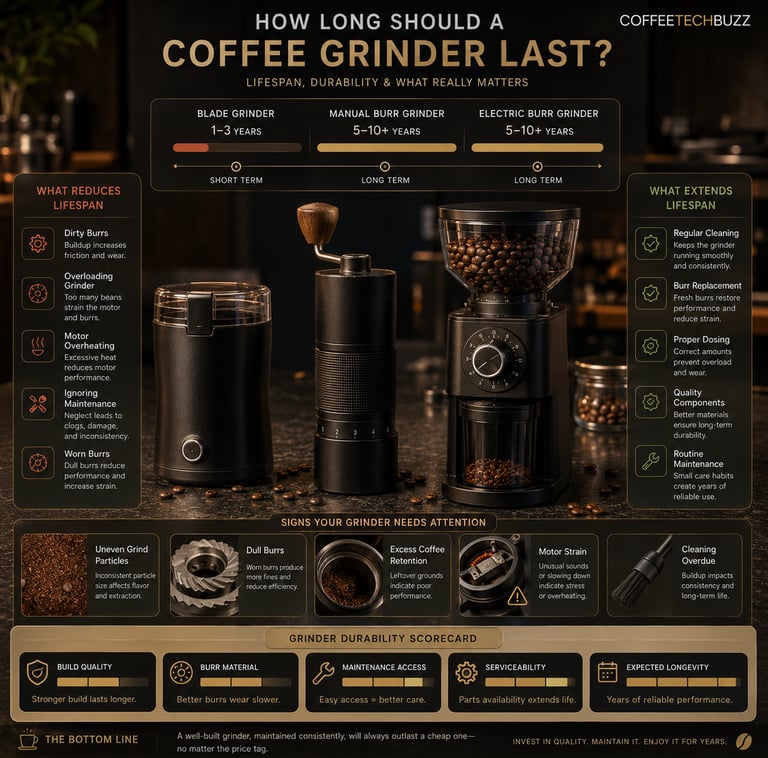
• Blade grinders usually last 1 to 3 years with regular daily use before performance noticeably drops.
• Manual and electric burr grinders, when properly cared for, can last anywhere from 5 to 10 years or more.
• Regular maintenance like cleaning and timely burr replacement greatly extends grinder durability.
• Signs like inconsistent grind size, unusual noises, or motor strain are your best indicators that something’s up.
Types of Coffee Grinders and Their Expected Lifespans
The question of how long does a coffee grinder last mostly comes down to its type and build. Blade grinders, for example, are the most basic—you’ll find them in many budget setups. These typically have smaller, less powerful motors and use spinning blades to chop beans unevenly. With daily use, they tend to wear out quicker, usually around 1 to 3 years. The motor can weaken, and grind consistency drops, making them less suitable for espresso or fine grind requirements.
Manual burr grinders, on the other hand, use a hand crank to grind beans with a steady burr mechanism. Because they don’t rely on a motor, the wear is mostly on the burrs themselves, which usually last several years before needing replacement. Their durability is impressive, especially if you’re not grinding huge volumes daily. These grinders fit well if portability and minimal upkeep matter. If you're trying to decide between grinder styles, see our Manual vs Electric Coffee Grinders comparison.
Electric burr grinders hit the sweet spot for most daily drinkers. Their motors are rated with wattage that often reflects their ability to handle frequent grinding without overheating. With proper maintenance, including regular cleaning and burr replacement, these grinders can last 5 to 10 years or longer. The best ones use metal burrs and robust motors, which makes all the difference in longevity.
Factors Affecting Coffee Grinder Durability
Beyond the grinder type, a few key factors determine how long it will last in your routine. Materials and build quality top the list—grinders with metal burrs and sturdy casings tend to hold up much better than plastic bodies and blade systems. Cheaper models often cut corners on motors, which can struggle with extended use and high volumes.
How you use the grinder also matters. Overloading the grinder or running it continuously for long stretches puts extra strain on the motor, which can shorten its lifespan. This isn’t a problem if you’re grinding a few doses per day, but it adds up if you’re doing several back-to-back batches.
Maintenance routines make a huge difference. Residue buildup inside the grinder can gum up moving parts and cause extra resistance on the motor, which wears it down faster. Neglecting to clean your grinder is probably the most common reason people see performance degrade prematurely.
Maintenance Tips to Extend Grinder Life
Maintenance doesn’t need to be complicated, but it does require attention. Most grinders benefit from a weekly quick clean where you brush out leftover grounds and wipe visible surfaces. For burr grinders, removing the burrs periodically for a deeper clean can prevent buildup that impacts grind consistency.
Replacing burrs at the right intervals is crucial for durability. Burrs dull over time—steel burrs generally last longer than ceramic but will need swapping out eventually. If you notice grind size becoming inconsistent or finer grind settings turning coarser, it’s likely burr wear.
Avoid overloading your grinder and give it short breaks during extended use. This helps prevent motor overheating and premature failure. If your grinder manual includes a duty cycle or max capacity, try to stick within those limits. For a deeper maintenance schedule, see How Often Should You Clean a Grinder? Essential Guide for Coffee Lovers.
Signs Your Coffee Grinder Needs Replacement
Knowing when to replace a coffee grinder is less about a fixed timeline and more about paying attention to performance cues. The clearest indicator is grind inconsistency—if your grind sizes start varying widely despite no change in settings, the burrs may be worn or the mechanism compromised.
Other signs include unusual noises like rattling or grinding that wasn’t there before, as well as a motor that struggles or slows down. A sudden increase in heat or smell of burning can also signal motor strain or electrical trouble.
Sometimes, replacing burrs or coils can restore performance without needing a whole new grinder. But if these repairs become frequent or parts aren’t available, it might be time to consider an upgrade.
When and How to Replace Burrs or Components
Replacing burrs is often the most cost-effective way to extend an electric or manual burr grinder’s life. Check the manufacturer’s guidelines for recommended intervals—commonly every 1 to 2 years depending on use. Some high-end grinders offer burr replacement kits that are straightforward to install, while others may require professional servicing.
When replacing burrs, use genuine or manufacturer-approved parts to maintain grind quality. For manual grinders, burr replacement tends to be simpler since there’s no motor assembly involved.
Replacing other components like motors or drive belts is less common in home grinders but may be possible in certain models. Usually, if major mechanical repairs are needed, a new grinder makes more sense unless you want to invest in service.
Buying Durable Grinders: What to Look For
If you’re in the market for a new grinder with durability in mind, focusing on build quality and ease of maintenance will pay off. Look for grinders with metal burrs rather than plastic, and robust housings that can take everyday use.
Motors with higher wattage generally indicate better capability to handle frequent grinding without overheating. Also, consider whether burrs are easy to access and replace—this makes routine maintenance much less of a hassle.
While manual grinders can last a long time with minimal care, electric burr grinders typically offer better grind consistency and convenience for daily routines. If you're shopping for long-term value, our roundup of the Best Coffee Grinders is a great place to start.
Comparison: Manual vs Electric Grinder Longevity
Manual grinders shine for durability due to their simple mechanics and lack of motors. They’re less prone to overheating and often made with solid materials. However, they do require more effort and time, which can be a barrier for daily use.
Electric burr grinders cost more upfront and have more parts that can wear out, but they’re convenient and can deliver consistent results with less fuss. If you keep up with maintenance like cleaning and burr replacement, these grinders can last many years and reward you with steady performance.
Blade grinders are the shortest-lived of the three, mainly suited for occasional use or entry-level brewing methods where grind consistency is less critical. They aren’t recommended for fine or espresso grinds.
Real-World Grinder Use Cases and Care Routines
If you’re a daily espresso drinker, a high-quality electric burr grinder that you clean weekly and service annually makes the most sense. Regular burr replacement ensures your shot quality doesn’t degrade over time.
For casual coffee drinkers who use a blade grinder, expect replacement every couple of years as you start noticing uneven grind or motor weakening. In this group, replacing the grinder entirely often makes more sense than servicing parts.
Families or households with multiple users tend to benefit from grinders with robust motors and easy maintenance access since volume and frequency increase wear.
Occasional manual grinder users will appreciate the longevity and portability, putting minimal effort into upkeep but relying on more hands-on use.
Common Mistakes People Make With Coffee Grinders
One of the most frequent missteps is neglecting to clean the grinder regularly. Leftover oils and grounds build up quickly, slowing down motors and causing uneven grinds. This doesn’t just reduce lifespan—it affects taste.
Another is pushing blade grinders to work beyond their limits, especially for espresso or fine coffee, where a burr grinder is a better choice. This leads to frustration with inconsistent extraction and premature wear.
Overloading grinders or using them continuously without breaks can cause motor overheating and early failure.
Ignoring strange noises or shifts in grind size is common, yet these are clear signs you should inspect or service your grinder.
Finally, some users replace the entire grinder when burr replacement would bring back performance. Knowing when to swap parts can keep costs down and your setup consistent. Understanding What Happens When Your Coffee Grind Is Uneven? can also help identify when wear is affecting coffee quality.
Frequently Asked Questions
How long does a blade coffee grinder typically last?
Blade grinders generally last around 1 to 3 years with regular daily use before motor decline and uneven grinding become noticeable.
What maintenance is needed to extend a grinder’s lifespan?
Regular cleaning to remove residue, timely burr replacements, avoiding overloading, and following manufacturer guidelines are key to prolonging grinder life.
When should I replace the burrs on my grinder?
Burrs usually need replacement every 1 to 2 years depending on frequency of use. Signs include inconsistent grind size and slower grind speeds.
What are the signs that my coffee grinder needs replacement?
Inconsistent grind size, unusual noises, motor strain or overheating, and a decline in grinding performance indicate it’s time to repair or replace components.
Are manual burr grinders more durable than electric ones?
Manual grinders often last longer mechanically due to simpler design and no motor, but require more effort and time to use regularly.
How does grind consistency indicate grinder wear?
As burrs dull, grind particle size becomes uneven and settings lose precision, negatively impacting extraction and taste.
Can cleaning the grinder improve its lifespan?
Absolutely. Cleaning prevents residue buildup that strains the motor and burrs, keeping the grinder running smoothly longer.
What grinder types offer the best durability for home use?
Electric burr grinders with metal burrs and solid build quality offer the best balance of durability, ease of use, and consistent grind quality for daily home brewing.
Practical Conclusion
If you want a coffee grinder that lasts, your best bet is to choose a quality burr grinder and make regular maintenance part of your routine. Blade grinders have a shorter lifespan and tend to fall out of favor once you want consistency. It’s not about chasing the fanciest model—it’s about a grinder that fits into your morning without hassle and keeps grinding well over time.
Remember, the longest-lasting grinder is the one you keep clean, don’t push past its limits, and swap burrs when the grind tells you to. When your grinder feels sluggish or inconsistent, check for simple fixes before replacing the whole unit. A little care goes a long way, and the peace of mind from a reliable grinder is one small ritual that pays dividends each day.
For more on grinder care and gear selections, you can explore our detailed guides on the best burr grinders for home use and essential coffee grinder maintenance tips. Setting up with durable, user-friendly equipment cuts down the guesswork and makes daily coffee something you never have to think twice about.
Contact@TheBuzzHQ.com
© 2026 Coffee Tech Buzz. All rights reserved.
Coffee Tech Buzz
Smarter brewing through better gear, clearer insights, and real-world performance testing.
Built for home users who want consistency without guesswork.
We focus on how machines actually perform — not just what they claim.
Home
Coffee Equipment Guide
Coffee Makers & Machines
Coffee Grinders
Espresso Gear & Guides
Coffee Beans & Roasts
Coffee Accessories & Tools
For educational purposes only.
We may earn commissions from qualifying purchases.
General Inquiries: