
How to Make a Spanish Latte
Discover how to make the perfect Spanish Latte recipe with fresh espresso, sweetened condensed milk, and properly steamed milk for a creamy, balanced coffee.
ESPRESSO
The Coffee Tech Buzz Editorial Team - Led by AJ “Buzz” Eichman
5/26/20267 min read
If you’re looking to switch up your daily coffee routine with something that’s creamy, sweet, and a little different from your usual latte, the Spanish Latte is a solid choice. It’s essentially espresso combined with sweetened condensed milk and steamed milk, delivering a smooth richness that regular sugar or syrups just don’t match. Over time, it’s become clear that the charm of this drink lies in its simplicity – you get a consistently enjoyable cup without fussing over complicated ingredients or gadgets. Drinks like this continue gaining popularity across both Espresso Drinks and Iced Espresso Drinks because they offer café-style sweetness while still keeping espresso at the center of the experience.
Quick Verdict
A Spanish Latte blends espresso with sweetened condensed milk and steamed milk for a creamy, balanced drink.
Using fresh, finely ground espresso beans paired with properly steamed milk makes all the difference.
This recipe fits well into a daily routine and doesn’t require over-the-top gear or extra steps.
Adjust the condensed milk for sweetness to suit your taste without overpowering the coffee.
What is a Spanish Latte?
At its core, a Spanish Latte isn’t reinventing the wheel but rather giving the classic latte a sweeter, creamier twist. Instead of plain sugar or flavored syrups, it uses sweetened condensed milk as the key sweetening and creaming agent. This substitution adds depth and silky texture while preserving the strong, bold espresso profile. The result is a drink that feels indulgent but remains straightforward enough for everyday use. If you’re familiar with regular latte recipes, this one is a slight shift in ingredients that can refresh your coffee lineup without adding complexity.
If you enjoy richer espresso drinks with sweetness layered directly into the coffee itself, there’s a good chance you’d also appreciate How to Make Vietnamese Iced Coffee since condensed milk plays a major role in both drinks.
Key Ingredients for an Authentic Spanish Latte
The simplicity of the Spanish Latte is what keeps it practical. You only need three main components:
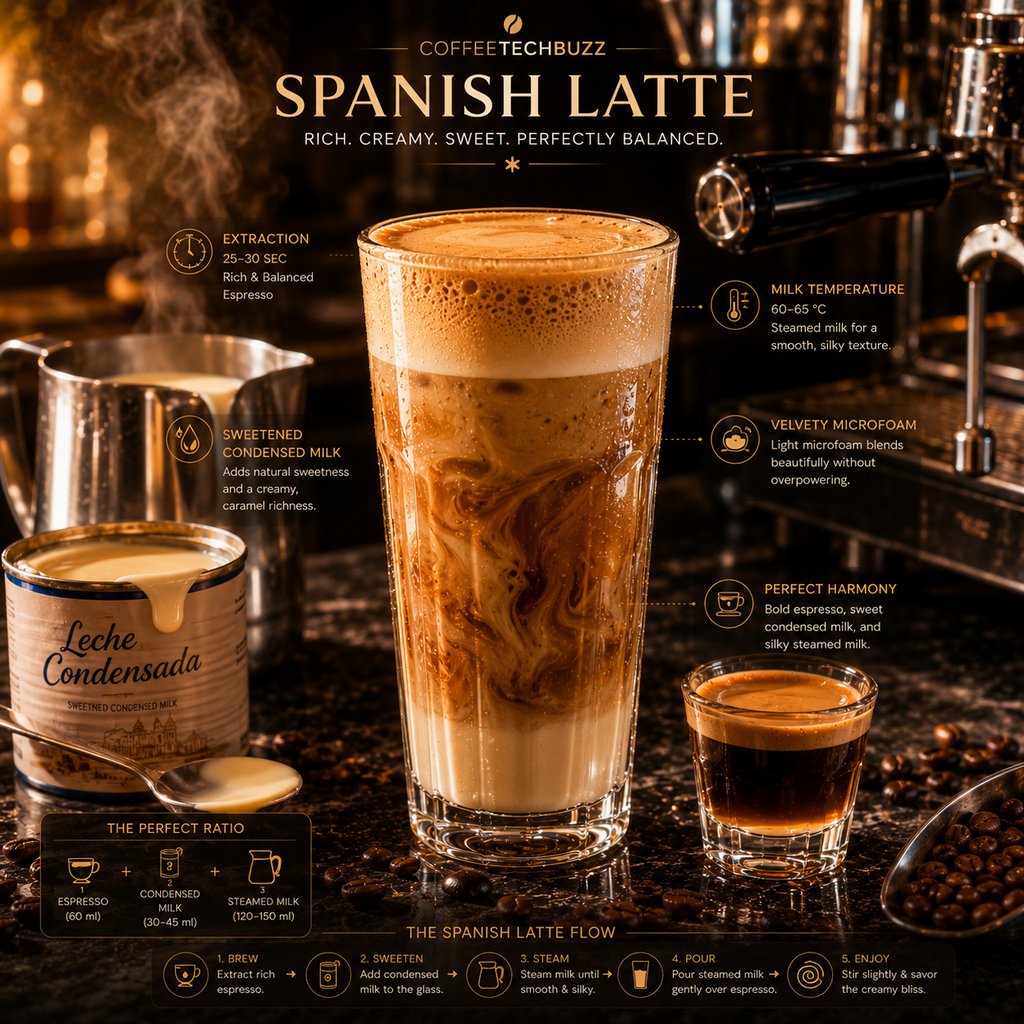
Fresh espresso shots: Use coffee beans roasted and ground just before brewing. A fine grind paired with proper tamping ensures you extract a bold but balanced shot.
Sweetened condensed milk: This is what sets the Spanish Latte apart. Adding two tablespoons usually hits the mark, though you can tweak it slightly depending on your preference.
Steamed milk: Heat the milk gently, aiming for a temperature around 60-65°C (140-150°F). This keeps the milk creamy and avoids a burnt taste or flat texture.
There’s no need for syrups or fancy sweeteners; the condensed milk does all the work, blending sweetness with a creamy mouthfeel.
Bean freshness and grind consistency matter a lot here too, especially if you’re using one of the Best Coffee Grinders for Espresso to maintain balanced espresso shots day after day.
Step-by-Step Preparation Guide
Getting your Spanish Latte dialed in follows an easy sequence if you keep things straightforward. The goal is to maintain a smooth workflow and consistently hit the same sweet spot every time.
Start with grinding your beans fresh — this can’t be stressed enough. Use a fine grind meant for espresso and tamp evenly to avoid uneven extraction. Pull your espresso shot, aiming for 25-30 seconds depending on your machine specs.
While your shot is brewing, steam the milk carefully. Avoid overheating; between 60 and 65 degrees Celsius is ideal. Tip your steaming wand position slightly off-center for velvety microfoam without big bubbles.
Once the espresso is ready, pour it into your cup or glass and add the condensed milk. Stir well to fully combine; this ensures the sweetness is balanced throughout the drink rather than settling at the bottom.
Finally, add the steamed milk, pouring slowly to keep the layers distinct but blended enough for a smooth finish. A light foam top gives you the right texture without overpowering the drink.
Tips for Perfecting Your Spanish Latte at Home
The beauty of this drink is that it adapts well to what you have and how you like your coffee. Over the years, a few practices stand out as worthy of attention:
Fresh beans and grind: Pre-ground coffee generally loses essential oils and fresh flavor, which compounds with the sweetness of the condensed milk. Keep it fresh for impact.
Measure your condensed milk: It’s easy to overdo it, leading to a cloying taste. Stick to one or two tablespoons unless you want it really sweet.
Watch your steaming temperature: Too hot and the milk tastes scorched; too cool and it lacks creaminess. Between 60-65°C strikes the right balance.
Stir the condensed milk well: To avoid pockets of intense sweetness, always mix after adding it to the espresso.
Adjust based on your machine and milk: Different espresso machines and milk types behave differently. Experiment with minor tweaks to find what fits your daily setup best.
If your espresso shots regularly taste inconsistent underneath the sweetness, understanding Espresso Ratio Explained can help stabilize extraction before tweaking milk or sweetness levels.
Common Variations and Customizations
Though the classic Spanish Latte is quite straightforward, it’s naturally flexible enough to suit different preferences:
Cold Spanish Latte: Use cold milk and pour the espresso over ice. Condensed milk blends differently when cold, so you might need less for the same sweetness.
Alternative milks: Almond, oat, or soy milk can replace dairy, but you might have to adjust steaming times and the amount of condensed milk to keep the balance right.
Extra flavor: Some add cinnamon or vanilla powder lightly on top, but keep it subtle. The drink already offers enough character without extra flavor bombs.
Double espresso: For those wanting a stronger coffee punch, two shots work well, especially if you stick to the standard amount of condensed milk.
If you enjoy experimenting with sweeter iced espresso drinks, How to Make an Iced Caramel Macchiato is another good option that leans into layered milk-and-espresso textures.
Equipment Recommendations for Home Brewing
To keep your Spanish Latte routine consistent and painless, picking the right gear helps. You don’t need high-end commercial tools, but a reliable espresso machine and efficient milk frother make the difference between a good morning cup and an annoying chore.
Espresso machines with adjustable temperature controls and pressure settings give you control over shot quality. Some reasonably priced home machines provide decent tamp pressure and maintain stable brew temperatures, making them good investments for daily use.
For milk, a simple steam wand that can hold 60-65°C without overshooting works best. Automatic frothers sometimes overheat or under-texturize milk, so go for one that lets you control the steaming. If you want to avoid steam wands, look for quality standalone frothers designed for consistent temperature and microfoam output.
A lot of home users upgrading their workflow eventually move toward Best Espresso Machines Under $500 because temperature stability and shot consistency become much more noticeable in milk-heavy espresso drinks like this.
Troubleshooting Common Mistakes
Making a Spanish Latte isn’t complicated, but a few missteps can throw off the final drink:
Overheating milk: Push the temperature too far and milk proteins break down, giving a burnt or flat taste. Use a thermometer or practice gauging by touch.
Using stale or pre-ground coffee: Without fresh grind, espresso tastes muted, and the creaminess of condensed milk ends up hiding that stale flavor instead of complementing it.
Too much condensed milk: Adding more than necessary drowns the espresso and makes the drink syrupy rather than smooth.
Poor tamping or grind size: This results in weak espresso shots that don’t stand up to the sweetness, making the drink feel diluted.
Not stirring well: Sweetened condensed milk sinks quickly if not mixed, leaving a layered taste rather than a uniform flavor.
Many of these issues come back to extraction balance and grind consistency. Learning Common Espresso Mistakes can help eliminate a lot of the problems that show up in sweeter espresso drinks.
Storing and Serving Suggestions
If you prepare your condensed milk in advance or buy in bulk, keep it sealed and stored in a cool place. Use fresh milk daily for steaming—milk left open or warm tends to develop off flavors quickly.
Serve your Spanish Latte in a clear glass or mug to appreciate the creamy color gradient. It works well anytime, particularly as a mid-morning boost or gentle afternoon treat. If serving guests, prepare espresso shots in advance and steam milk on the spot to keep texture fresh.
Answering Your Common Questions
What is the difference between a Spanish Latte and a regular latte?
The key difference is the sweetener. A Spanish Latte uses sweetened condensed milk instead of plain sugar or flavored syrups, giving it a richer sweetness and creamier texture.
Can I use regular milk instead of condensed milk?
Regular milk won’t provide the same sweet creaminess. If you want less sweetness, you can add sugar or syrup, but it won’t have the characteristic texture or flavor of a Spanish Latte.
What grind size works best for Spanish Latte espresso shots?
A fine grind suitable for espresso is best. It ensures balanced extraction without bitterness and works well with the condensed milk’s sweetness.
How do I steam milk properly for the Spanish Latte?
Heat milk to about 60-65°C (140-150°F) to keep it creamy without scorching. Use a steam wand to create velvety microfoam, avoiding large bubbles or overheating.
Are there popular variations of the Spanish Latte?
Yes, cold versions with ice, alternative milks, and adding light spices like cinnamon are common, but the classic recipe remains the most straightforward and reliable.
What type of coffee beans are best for this recipe?
Freshly roasted beans with a medium to dark roast work well to balance the sweetness and richness of the condensed milk.
How do I make a cold Spanish Latte at home?
Brew your espresso shots normally, add condensed milk, then pour over cold milk and ice. Adjust your condensed milk amount because the cold dilutes sweetness as ice melts.
Is there a recommended espresso machine for consistent results?
Look for home espresso machines with stable temperature control and adjustable pressure. Brands known for consistent home results include Breville and DeLonghi, which suit daily drinkers without over-complication.
Bringing It All Together
The Spanish Latte is a reliable addition to your brewing repertoire because it’s straightforward and rewarding every time you make it. You don’t need to chase perfection with expensive gear or extra syrups — fresh espresso, quality condensed milk, and well-steamed milk get you where you want to be. Over time, setups that keep your routine simple and consistent tend to be the ones that stick. If this fits your style, the Spanish Latte can confidently become part of your daily coffee experience.
For more on optimizing your home brewing workflow and selecting equipment that suits your routine, check out Espresso Brewing and Best Espresso Machines for Beginners for practical setups that keep your coffee routine simple while still delivering café-quality drinks at home.
Contact@TheBuzzHQ.com
© 2026 Coffee Tech Buzz. All rights reserved.
Coffee Tech Buzz
Smarter brewing through better gear, clearer insights, and real-world performance testing.
Built for home users who want consistency without guesswork.
We focus on how machines actually perform — not just what they claim.
Home
Coffee Equipment Guide
Coffee Makers & Machines
Coffee Grinders
Espresso Gear & Guides
Coffee Beans & Roasts
Coffee Accessories & Tools
For educational purposes only.
We may earn commissions from qualifying purchases.
General Inquiries: