

Iced Latte vs Iced Coffee: What’s the Difference?
Explore the key differences between iced latte and iced coffee, from ingredients and preparation to taste, caffeine, and ideal home brewing methods.
ESPRESSO
The Coffee Tech Buzz Editorial Team - Led by AJ “Buzz” Eichman
5/26/20268 min read
Cold coffee drinks have become a staple for many daily drinkers, especially as warmer months roll around or when a refreshing pick-me-up is needed. Yet, despite their shared chill, iced lattes and iced coffee often get mixed up. Understanding their differences matters if you want a drink that fits smoothly into your routine without the guesswork or disappointment. This isn’t about chasing some fancy café trend — it’s about knowing what you’re getting and what works best for your taste and ease of preparation. Whether you’re exploring Espresso Drinks or branching deeper into Iced Espresso Drinks, knowing the difference helps you build a better daily coffee routine.
Quick Verdict
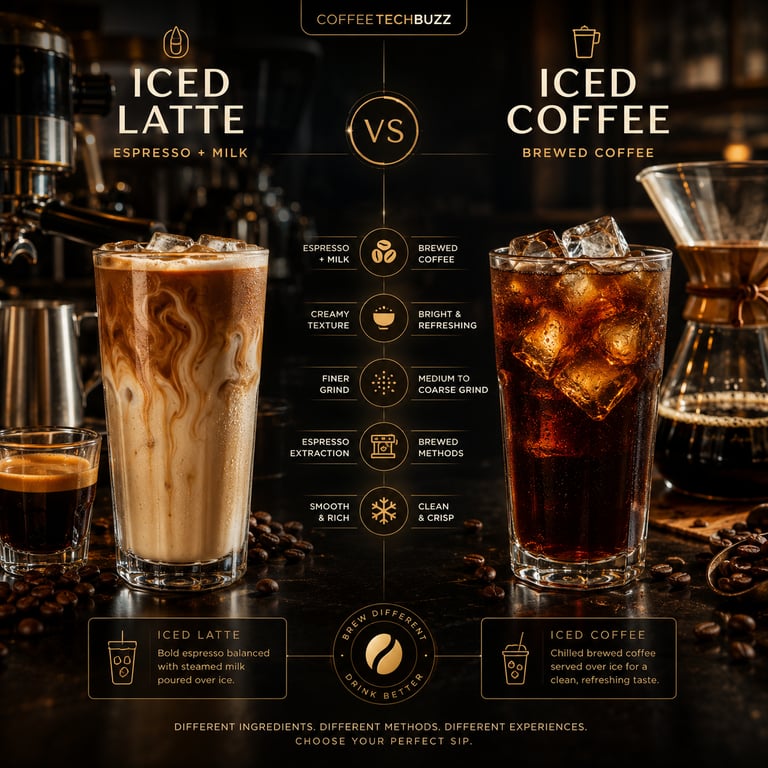
• Iced lattes are espresso-based with cold milk and ice, delivering a creamier, smoother texture.
• Iced coffee is brewed coffee chilled and poured over ice, lighter and sometimes more variable in strength.
• Preparation methods and grind sizes differ notably between these drinks, affecting flavor and mouthfeel.
• Both drinks can be customized simply but benefit from consistent brewing and fresh beans for best results.

What Is an Iced Latte? Ingredients and Preparation
When you hear “iced latte,” think of espresso first. This is the foundation that sets it apart. An iced latte typically starts with one or more shots of espresso pulled from a finely ground bean—usually ground to about the consistency you’d expect for hot espresso extraction. This espresso gets poured over ice and then topped with a generous amount of cold milk, often whole or 2%, though many drinkers today choose plant-based alternatives without losing that creamy mouthfeel.
The trade-off here is a smoother, milk-forward drink that’s not overly bitter or acidic. The ratio leans heavily toward milk, so the espresso’s intensity is mellowed out, but it still carries that espresso punch you expect. Since the milk is cold, it's important it’s fresh and well-chilled to maintain the right balance and texture. While some use frothed milk, most daily drinkers stick to cold, unfoamed milk for speed and simplicity—fewer steps, less fuss, just a reliable drink.
Pulling good espresso shots matters, but it’s less about chasing a perfect crema and more about consistent extraction to avoid bitterness or sourness in the final iced latte. Over time, many settle on a setup that delivers shots within a narrow window so every morning tastes familiar. If you’re just getting started, Best Espresso Setup for Beginners can help simplify the process without overcomplicating your gear choices.
What Is Iced Coffee? Brewing Methods and Variations
Iced coffee, on the other hand, is much more straightforward but also more variable. It starts with brewed coffee—usually drip, pour-over, or cold brew. The beans are ground coarser than espresso, adapting to your brewing method. Brewed hot and then cooled quickly over ice is the simplest at-home approach; cold brew involves steeping coffee grounds in cold water for 12-24 hours for a smoother, less acidic result.
Iced coffee’s appeal lies in its variability. Depending on your brew method, water-to-coffee ratios, and brewing time, you can dial it to a lighter or stronger flavor. Pouring hot coffee over ice may be convenient but risks dilution if the coffee isn’t strong enough to hold its own as the ice melts—something daily users learn to manage by using double strength or letting the coffee cool before serving. Cold brew naturally sidesteps this since it’s brewed cold and ready to drink.
Unlike iced lattes, iced coffee doesn’t usually have milk unless added later by choice, which means it keeps the coffee’s original brightness and acidity intact. It’s a drink that feels a bit leaner and more refreshing but can also be less forgiving if the initial brew isn’t right. A lot of this comes down to grind consistency, which is why understanding Coffee Grinder Settings Guide becomes more useful once you start experimenting with different cold coffee methods.
Key Differences in Taste and Texture
Taste-wise, iced lattes deliver a creamy and smooth experience with balanced bitterness thanks to the milk softening the espresso. This makes iced lattes a bit richer and rounder on the palate — good for drinkers who want their coffee strength but aren’t chasing sharp acidity or strong caffeine jabs.
Iced coffee is lighter and often brighter. The flavor varies with brew method: hot brewed offers more brightness and acidity; cold brew leans towards smoothness and low bitterness. Its texture is thinner compared to the milky iced latte. If you add milk or sweetener, that changes things, but the base remains less creamy.
The mouthfeel difference is clear when you hold the glass: iced latte feels like a drink in its own right, almost like a milk-based refreshment, while iced coffee is basically brewed coffee turned cold and easier to sip on hot days. If you enjoy smoother milk-based espresso drinks, you’ll probably also appreciate Flat White vs Latte for understanding how texture changes the overall experience.
Caffeine Content Comparison
Caffeine content depends mostly on how the coffee is brewed and how much espresso or brewed coffee you use. Espresso shots in an iced latte are concentrated but smaller in volume, so you might get less caffeine per serving compared to a large cup of iced brewed coffee. On the other hand, iced coffee’s caffeine varies widely based on brew strength and serving size.
For a daily drinker, the distinction rarely affects routine much. If you want a consistent caffeine boost, iced latte’s controlled espresso shots offer predictability, while iced coffee requires more attention to ratios to keep caffeine levels steady.
How to Make Iced Latte and Iced Coffee at Home
Making these drinks at home doesn’t have to be complicated. For iced lattes, if you have an espresso machine, pull one or two shots, pour over a glass full of ice, and top with cold milk. No need for fancy frothing unless you enjoy that. Stick to a grind size consistent with your espresso machine’s specs, and ensure your beans are fresh to keep shots tasting good.
Iced coffee is even simpler: brew your coffee either hot with a slightly stronger brew ratio or cold brew it in advance. Once brewed, cool the coffee to room temperature if hot brewed, then pour over plenty of ice. Adjust concentration to avoid excessive dilution. Milk is optional; if adding, choose what fits your preference without watering down the coffee’s character. For grind size, medium to coarse is standard depending on your brew device.
You can find gear suited to both drinks whether you’re after a good grinder, espresso machine, or cold brew maker at CoffeeTechBuzz.com’s selection of Best Espresso Machines and cold brew coffee makers — these help keep your routine smooth rather than complicated. Pairing the right machine with the right grinder also matters more than many beginners expect, especially when dialing in espresso-based drinks consistently.
Common Mistakes to Avoid
A frequent mix-up is confusing iced coffee and iced latte by appearance alone, often leading to wrong expectations. A clear iced coffee can look milky if milk’s added afterward, making it easy to mistake.
Using brewed coffee that’s too hot when pouring over ice creates excessive melting and dilutes the flavor, which is a pitfall many home brewers face. Let your coffee cool properly or brew cold to prevent this.
Adding milk to iced coffee without adjusting concentration often leaves the drink weak. It’s better to start with strong brew if you plan to milk it.
Inconsistent espresso pulls create uneven flavor in iced lattes. This is less about perfection, more about routinely getting shots extracted within a certain range. Learning How to Dial in Grind Size helps prevent a lot of these flavor inconsistencies before they become frustrating daily problems.
Neglecting the ice quantity also plays a role. Too little ice heats the coffee too fast; too much dilutes it. Balance is key.
Finally, stale or poor-quality beans are a commonly overlooked issue, causing flat or bitter-tasting drinks no matter the method. Bean choice plays a surprisingly large role here, especially when comparing lighter and darker espresso styles like Light vs Dark Roast.
Which Should You Choose? Use Cases and Preferences
If you want a creamy, balanced drink that fits neatly into your morning caffeine fix—especially if you have access to an espresso machine—iced lattes tend to hold up well for daily use. They give you that espresso flavor smoothed out with milk, and once you find your shot timing, the process stays consistent.
If simplicity, batch brewing, or a lighter coffee with flexible strength is your priority, iced coffee—particularly cold brew—is a solid pick. You can make large quantities in advance, tweak strength easily, and consume across the day without the need for milk unless you want it.
For entertaining or variety, both drinks offer room for customization with different sweeteners, milk types, and flavor add-ins. Drinks like How to Make a Brown Sugar Shaken Espresso or How to Make a Spanish Latte are good examples of how versatile iced espresso drinks can become once you start experimenting.
Expert Tips for Better Cold Coffee Drinks
Fresh beans and a consistent grind are basic but often neglected. For iced llattes, aim for a fine, uniform grind that your espresso machine pulls well every time to maintain shot quality.
With iced coffee, adjusting grind size and brew time to fit your brewing method matters. Medium grind for drip, coarse for cold brew, to keep the flavor clean.
Keep an eye on ice volumes to control dilution. Many find using reusable ice cubes or coffee ice cubes made from brewed coffee helps preserve flavor better.
When adding milk, cold and fresh is better than frothed for iced lattes if speed and ease matter most. For iced coffee, add milk sparingly to keep the coffee’s personality intact.
Finally, invest in equipment that fits your routine. An espresso machine with straightforward controls or a reliable cold brew maker makes day-to-day preparation seamless rather than a chore. Pairing one of the Best Espresso Grinders Under $300 with a beginner-friendly espresso machine is often enough to massively improve consistency at home.
FAQ
What is the main difference between iced latte and iced coffee?
Iced latte is made with espresso shots and cold milk over ice, resulting in a creamy texture, while iced coffee is brewed coffee cooled and poured over ice, lighter and more variable in strength.
How do you make an iced latte at home?
Pull one or two shots of espresso over ice and add cold milk to taste. No frothing needed unless you prefer.
Can I use cold brew to make iced coffee?
Yes, cold brew is a popular method for iced coffee that yields a smoother, less acidic taste without needing to brew hot coffee first.
How does the caffeine content differ between iced latte and iced coffee?
It varies by preparation, but iced coffee can have more caffeine depending on brew strength and serving size, while iced latte caffeine comes mainly from espresso shots.
What type of milk works best for iced lattes?
Whole or 2% milk is common, but plant-based options like oat or almond milk work well if chilled and fresh.
Is iced coffee always brewed hot first?
Not always. Iced coffee can be brewed hot then cooled or brewed cold as cold brew.
How does grind size affect iced coffee and iced latte?
Finely ground coffee suits espresso for iced lattes; coarser grind matches drip or cold brew methods for iced coffee to avoid over-extraction.
Can I use the same espresso machine for making iced lattes and hot coffee?
Yes, an espresso machine serves both purposes well, making it a versatile choice for daily drinkers.
Conclusion
For daily drinkers, iced lattes and iced coffee each bring something different to the table, shaped largely by what you want from your coffee and how you plan to prepare it. Iced lattes lean creamy and consistent, ideal if you have an espresso machine and like your coffee smooth. Iced coffee is simpler, versatile, and suits batch prep well, especially cold brew versions that take the edge off acidity.
The key isn’t chasing fancy tweaks or the latest gadgets — it’s finding what integrates into your morning or afternoon routine without slipping off track. Keeping things fresh, balanced, and straightforward makes these cold coffee drinks practical staples, not projects you have to think twice about. Pick what fits your time, taste, and equipment, and you’ll get a cup that keeps showing up. That’s the real win.
Contact@TheBuzzHQ.com
© 2026 Coffee Tech Buzz. All rights reserved.
Coffee Tech Buzz
Smarter brewing through better gear, clearer insights, and real-world performance testing.
Built for home users who want consistency without guesswork.
We focus on how machines actually perform — not just what they claim.
Home
Coffee Equipment Guide
Coffee Makers & Machines
Coffee Grinders
Espresso Gear & Guides
Coffee Beans & Roasts
Coffee Accessories & Tools
For educational purposes only.
We may earn commissions from qualifying purchases.
General Inquiries: